
“Bagatelles” for Piano Opus 1 (1) by Valentin Silvestrov (courtesy of Gio):
“There are dark shadows on the earth,
but its lights are stronger in the contrast.”
Charles Dickens, “The Pickwick Papers”
“Songs My Mother Taught Me” by Antonin Dvorák, performed by Camille Thomas who dedicates this video to the children all around the world and to UNICEF (courtesy of Deutsche Grammophon – DG):
This week we return to the endlessly fascinating River Thames. A studio guest Samuel L. Jackson was impressed with the backdrop of ITV’s This Morning show, telling the boss Martin Frizell “I love your CGI. That screen is fantastic.” Replied Frizell: “No, actually that’s the real Thames. That’s the river out there.”
“When The Thames Froze” by Smith & Burrows:
The Thames, like all big rivers, attracts winter fog and mist. In past centuries, it was prone to freezing solid. One of the freezes in 1683 was described by a few diarists of the time, including Pepys. The Thames became land. There were market stalls everywhere on the frozen water, children played football, and the ice was estimated as 45cm thick. Fish could be seen suspended in the ice. It was such an extraordinary event that verses were written to commemorate it:
Behold the wonder of this present age,
A famous river now become a stage:
Question not what I now declare to you.
The Thames is now both fair and market too.
Courtesy of Museum of London:
“What Power Art Thou” (The Cold Genius) by Henry Purcell (courtesy of AntPDC):
As the Thames’ flow has increased in later times, it is predicted that the river will never freeze again. London was devastated after two World Wars, and while rebuilding the capital, many old and beautiful structures were demolished. But public interest in preserving London’s architectural heritage saved many of these. Here, I will feature a few less known but very much worth visiting when coming to London. And please remember when admiring the interesting places featured below, none would exist if it would not be for one of the greatest of rivers — The Thames.

YE OLDE CHESHIRE CHEESE
This pub, regarded as the most beautiful in Britain, is situated next to Wine Court, at 145 Fleet Street, EC4A 2BU
It was built in 1667, just after the Great Fire, and its rambling interior gives a rare glimpse of what taverns were like in 17th and 18th century London. Outside, its circular 19th-century lantern marks the pub’s entrance. To the right of the entrance is a list of the 15 monarchs who have reigned during the pub’s lifetime. Another list proudly gives the names of famous visitors; from Dr Johnson and his friend Boswell to Dickens, Tennyson, Thackeray, Hood (the man who knew everything), Thackeray, Mark Twain, Theodore Roosevelt, Conan-Doyle, Chesterton, and many, many others.
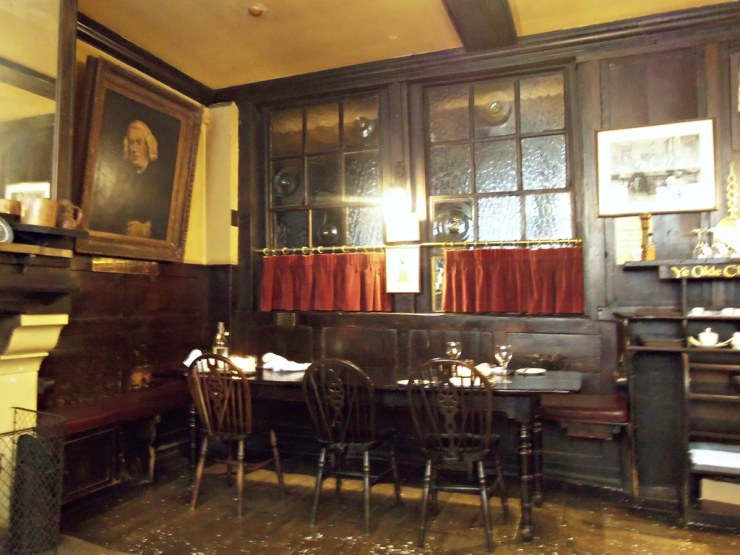

To the right, there is the Gentlemen’s Bar, a dark room with an open fire, where Charles Dickens used to sit. Above the fireplace hangs a large 1829 portrait of William Simpson, a former waiter, which was commissioned by the clientele of the time as an expression of esteem in which the old retainer was held. Dickens who was a frequent visitor used this pub as a model for a pub in his book ‘A Tale of Two Cities’.
Why should you read Dickens? (courtesy of TED-Ed):

To the left is the Chop Room resplendent with high-backed oak settlers where are served famous meat puddings that were mentioned in Galsworthy’s Forsyte Saga. In this room are Dr Johnson’s chair and Dictionary. A grand late 18th-century staircase leads to a series of panelled upper floor rooms that are used for private dining. Downstairs in the basement, there are vaulted cellars which pre-date the pub and are believed to originate from the earlier 13th century.
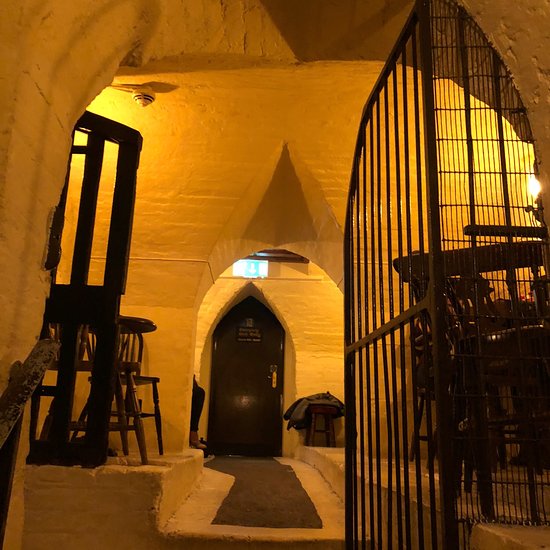
For many years the pub was the home of Polly, a parrot given to speak in foul language. After she died, age 40, in 1926, she was stuffed, and is now sitting in the ground floor bar. Her death was announced to a distraught public by BBC Radio and in 200 newspaper obituaries around the world. The Sunday Review launched a competition to mark her death. The winning epitaph read:
‘Enough! No maudlin tear be shed
Not all of Polly shall be dead.
Though silent here upon the shelf
I stand in memory of myself,
A special prize was awarded for:
Our talking parrot, native of the East
Has now gone West.’

PETRIE MUSEUM OF EGYPTIAN ARCHAEOLOGY
Located at Malet Place, Bloomsbury, WC1E 6BT
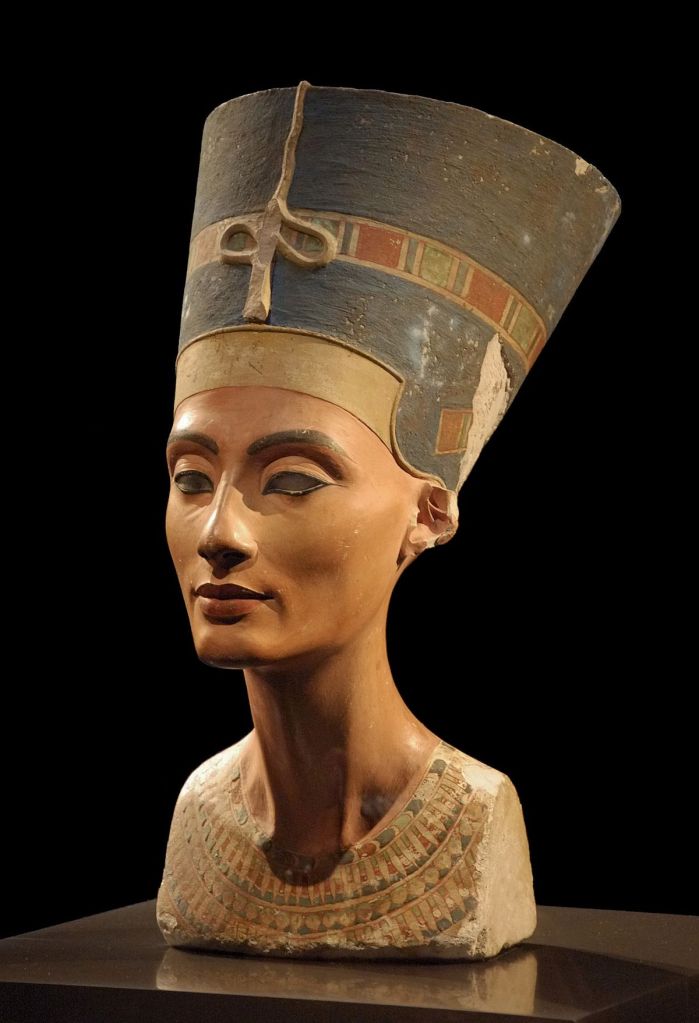
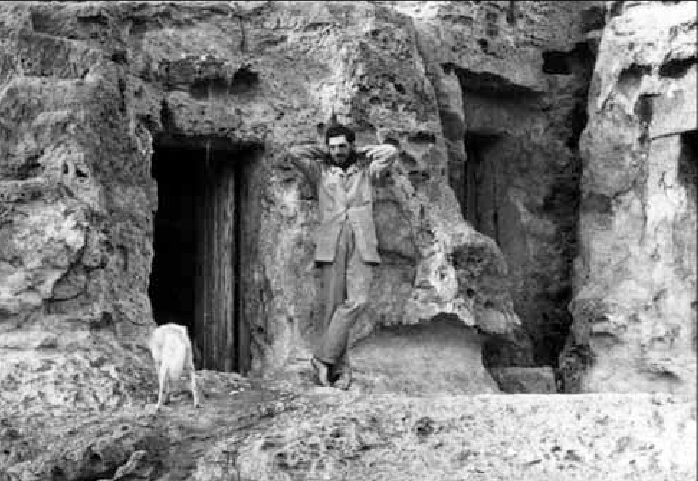
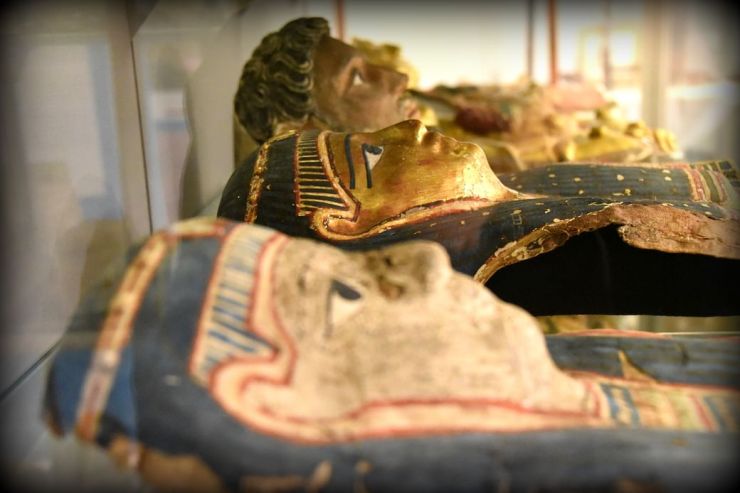
The Petrie Museum is a treasure trove of over 80,000 objects covering 7000 years of ancient Egyptian and Sudanese artefacts. It was started by the writer Amelia Edwards, who in 1882 co-founded the Egypt Exploration Fund dedicated to research and preservation of ancient Egyptian monuments. She endowed the Edwards Chair of Egyptology, the first to be established in Britain. The first appointed Professor was William Petrie (1853-1942), the most renowned Egyptologist, who excavated many of the most important sites including Tanis, Abydos, and Amarna, the city founded by the monotheistic Pharaoh Akhenaten.

Petrie’s collection was intended for academic use, but after his retirement, his successor added to it extensively. In the early 1950s, it was recovered from wartime storage and moved into its present home in Malet Place, and is part of the Science Library of University College. The collection is full of some of the oldest Egyptian objects and many ‘firsts’, including the earliest example of worked metal, the first worked iron beads, the earliest example of glazing, the oldest wills on papyrus and one of the earliest fragments of linen along with a beaded dress of a dancer from 2400BC, a suit of armour from the royal palace in Memphis and the world’s largest collection of Roman mummy portraits from the first and second centuries AD.


The Museum is open:
Saturday – 1 – 5 pm
Sunday and Monday closed
Tuesday to Friday 1 – 5 pm
Excavating in Egypt (courtesy of NationalMuseumsScotland):

JAMES SMITH & SONS
Hazelwood House, 53 New Oxford Street, WC1A 1BL
When I lived and worked in London, on Charing Cross Road, I passed the shop in New Oxford Street every day. Even on the outside, it looks striking. The firm’s beginnings are equally interesting. In 1830 James Smith & Sons opened his first umbrella shop of Regent Street. It was so successful that his son, also called James, opened a second shop in New Oxford Street. It was followed rapidly by six other businesses in other parts of London, including a hatter and a barbershop.

The first man in London reputed to carry an umbrella was Jonas Hanway, a traveller and philanthropist. Many leading figures of that time who bought their umbrellas in the by-now famous shop of James Smith & Sons included Lord Curzon, Gladstone, and Andrew Bonar Law. The company was one of the first to use the famous Samuel Fox frames, the first steel umbrella frames created in 1848. In addition to umbrellas, Smith’s specialised in making canes and military swagger sticks, as well as ceremonial maces for tribal chiefs in South Africa, Nigeria, and elsewhere.
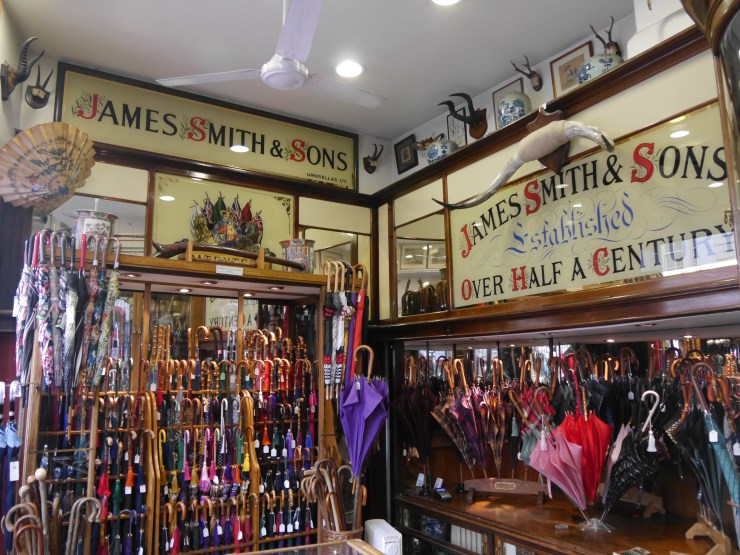
Their attractive and eye-catching shopfront and the interior are beautifully preserved examples of a high-class Victorian West End shop, with cast-iron cresting to the faceted gilt and glass fascias, inscribed brass sills, elaborate black and gilt lettering to the upper panels of the windows and a splendid traditional box sign. Inside, the original mahogany counters and display cases are stocked with an array of highest quality canes, sticks and umbrellas, most of which are still manufactured in the basement.

James Smith & Sons is the largest and oldest umbrella shop in Europe, and its shopfront and interior one of the landmarks of central London.
Best Of British (courtesy of DW Euromaxx):
Origin of the umbrella (courtesy of Draw The Life TikTak):
PS Umbrellas have inspired many artists – Gene Kelly, Rihanna and her catchy song, and the art of Pete Rumney, below:

“Singin’ in the Rain” performed by Gene Kelly (courtesy of Turner Classic Movies):

CHURCH OF ST JAMES THE LESS
Thorndike Street SW1V 2PS
The Church of St James the Less is one of London’s finest Victorian churches, built in 1859-61 by George Edmund Street, later the architect of the Royal Courts of Justice. The church has a distinctive short pyramidal spire with four corner spiralets above a high tower and is enclosed by elegant railings. Inside it is pure Gothic, with walls of banded red and black brick arches, a floor of red and yellow glazed tiles, and short, opulent granite columns with stiff-leaf carved capitals carrying notched and moulded brick arches.

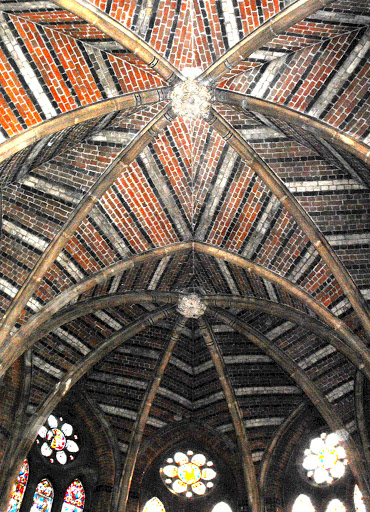
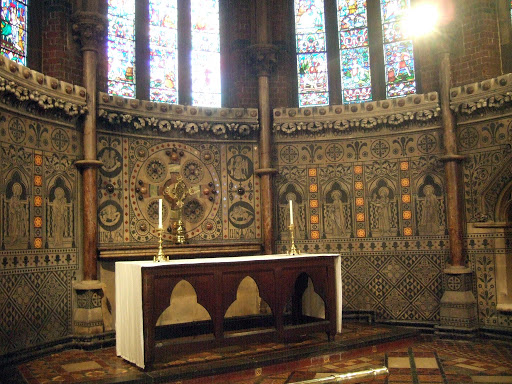

Over the font is an exuberant gilded wrought-iron canopy that was shown at the 1862 Exhibition. The carved stone pulpit is widely regarded as one of the finest works of Thomas Earp, an architect and sculptor, working in the late 19th century. There is also a wonderful brick vault over the crossing and chancel. Above is a magnificent, vast mosaic of the Last Judgement by George Frederic Watts. The stained glass windows depict the apostles and biblical scenes.

The church is surrounded by Lillington Gardens. The Church of St James the Less is only 10 minutes walk from Victoria underground or 5 minutes walk from Pimlico tube. Access can only be gained via Moreton Street, turning into Thorndike Street.

POLLOCK’S TOY MUSEUM
1 Scala Street, W1T 2HL


“If you like art, folly or the bright eyes of children, speed to Pollock’s,” wrote Robert Louis Stevenson after a visit to London in the 1880s. The museum is a house of wonders, but also a hidden gateway into the magical world of childhood. Benjamin Pollock (1836-1937) was a furrier who, while still in his teens, married Eliza Redington, whose family were printers and bookbinders. The Pollocks inherited the business which contained a mass of copperplate engravings, lithographs, and souvenirs of the stage stars of the time. Pollock adopted the lithograph press, which he operated for over 60 years. By the 1870s, Pollock operated from Hoxton, and his hand-coloured, folk-art designs were legendary. By the 1920s, the leading lights of the London stage beat a path to his door, among them Gladys Cooper and Charlie Chaplin. The famous Diaghilev promoted his Russian ballet in 1927 with decor ‘after Benjamin Pollock’.

In 1951 Marguerite Fawdry bought the entire stock, and together with three other friends who were collectors of dolls and toys, established a museum. It has since flourished in a Georgian house in Scala Street as one of London’s genuine curiosities. Up the narrow staircase is the timeless enchanted word of childhood. Every surface of every room is lined with delightful displays of toys, dolls, board games, mechanical and tin toys, teddy bears, folk toys, tableaux, and even a young girl’s nursery of 1900.
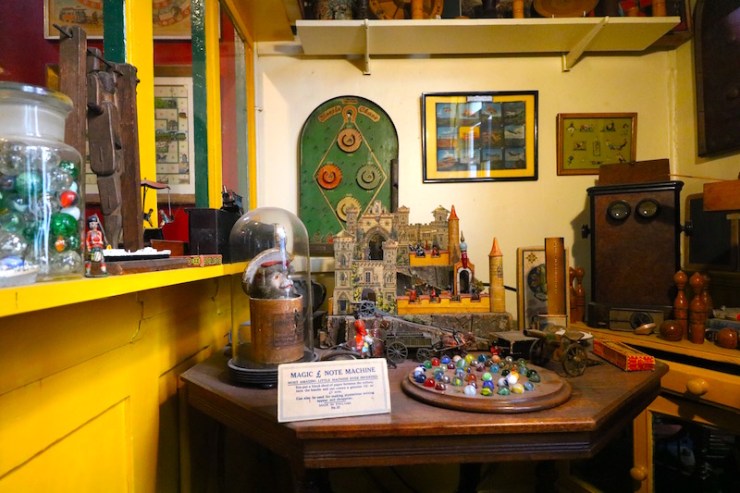
The museum also has a toy shop, both are open Monday to Saturday, 10 – 5 pm, closed on Sunday.
See you next week for more amazing places.
In the meantime, a taster of London, courtesy of Expedia:


A wonderfully crafted journey through London’s hidden treasures, woven together by history, music, literature, and the timeless presence of the Thames. The stories of Ye Olde Cheshire Cheese, the Petrie Museum, and Pollock’s Toy Museum bring the city’s soul vividly to life. I especially loved the reminder that great rivers, like great civilizations, quietly nurture the beauty that flourishes along their banks. Thank you for this fascinating and enriching exploration.
Vijay
LikeLiked by 1 person
Thank you, dear Vijay, for the wonderfully analytical comments, which I love and greatly appreciate!
Joanna
LikeLiked by 1 person
A wonderful travel guide for anyone going to London. It makes me wish I still had the ability, now that I do have the time. So much to see in that historic city. I remember quite well the parts I was familiar with but that was 70 years ago! As a child, I was fascinated by the idea of the Thames being frozen over and I seem to recall in the 70’s once there was talk of it drying up, though I daresay that was an exaggeration. It is very nice following your series about it with so many interesting details of the country and of London. What fun Horst Friederich must have had gathering information for his book. I would love to explore old factories like that. Thank you for another great piece.
LikeLike
Thank you so much, Carolyn, for the wonderful comments, which I love and greatly appreciate!
Joanna
LikeLike
My wife and I were last in London in 2012. We hope to get back there again in the foreseeable future. It’s such a great, beautiful and fascinating city.
LikeLike
Love this continuation of your report about the Thames Joanna! Thanks for sharing! ❤️
LikeLike
Love the anecdotes, Joanna. Very edifying.
LikeLike
It is so wonderful that so much history was saved. Where I live, rivers and lakes usually freeze over in the winter months. So, I can easily picture the Thames frozen. What a sight it must have been. Thanks for a wonderful post!
LikeLike
London is filled with treasures around every corner Joanna. Thanks for showing us a few of them. Have a wonderful Friday. Allan
LikeLike
Thank you, Allan, for the wonderful comments! You are, as always, very welcome!
Joanna
LikeLiked by 1 person
Thank you, Diana, for the wonderful comments, which are greatly appreciated!
Joanna
LikeLiked by 1 person
Thank you, Pat, for the kind comments, which are much appreciated.
Joanna
LikeLiked by 1 person
Thank you, Kym, for the wonderful comments, which I love and greatly appreciate!
Joanna x
LikeLiked by 1 person
Thank you, Neil, for the wonderful comments, which are greatly appreciated!
Joanna
LikeLiked by 1 person
What an enchanting journey along the Thames!
The historic images and the wonderful musical selection, especially the evocative piece by Henry Purcell, perfectly capture its foggy, chilly atmosphere of the past.
I also really enjoyed the videos.
Thank you for this wonderful fusion of art, history, and music!
LikeLike
Thank you so much, dear Luisa, for the wonderful comments, which I love and greatly appreciate!
Joanna x
LikeLiked by 1 person
As always, you are more than welcome, dear Joanna
LikeLike
Thank you!
Joanna x
LikeLiked by 1 person
Thank you so much, Joanna, for this third installment on the Thames, which is every bit as captivating as the previous two. I was especially enchanted by the old, colourful architecture, so dreamy and exquisite in its charm.
The journey from the Great Frost of 1683 on the Thames to the famous pub and its parrot, Polly, James Smith & Sons, the Church of St. James, and Pollock’s Toy Museum made for a delightful and fascinating ride through history. Incidentally, the Dal lake of Srinagar also freezes in winter season and the name Thackeray sounds intriguingly Indian.
What fascinated me most, however, was the Petrie Museum of Egyptian Archaeology. Your photograph of Akhenaten and Nefertiti immediately brought back memories of my own trip to Egypt, where I saw their statues in several places, including the Grand Egyptian Museum in Cairo. Egyptology is a great subject for archaeologists. I even brought home a painting on papyrus, which now adorns my drawing room and serves as a cherished reminder of that remarkable journey.
The videos on the origins of the umbrella and the Egyptian excavations were riveting. I also thoroughly enjoyed the Smith & Burrows song. Music is an essential element of your posts, and it is something I always appreciate.
Thank you once again, Joanna, for another engaging and informative installment, filled with fascinating insights into London and the country’s rich heritage, beautifully complemented by relevant images, videos, and music.
LikeLiked by 1 person
Thank you so much, Kaushal, for the extensive and analytical comments, which I love and deeply appreciate! Your kind words made my day!
Joanna
LikeLiked by 1 person
It’s truly my pleasure, Joanna. You’re always welcome. Namaste !!
LikeLike
Thank you, Kaushal! Namaste!!
Joanna
LikeLiked by 1 person
You’re so very welcome my dear Joanna! My pleasure! 💖💖💖
LikeLike
Thank you, Kym, for being so kind!
Joanna x
LikeLiked by 1 person
🥰🥰🥰
LikeLike
Goodness, Joanna, there is so much I really don’t know about this wonderful city, even having worked there for nearly 30 years! I think that is part of its magic and I must return! Thank you again for this amazing series; it’s simply the BEST! 🤗💓🙇♂️
LikeLiked by 1 person
Thank you so much, Ashley, for the wonderful comments, which I love and greatly appreciate!
Joanna
LikeLiked by 2 people
Another of your enriching post on the amazing historic spots in London ,Joanna !James Smith & Sons, the Church of St. James, and Pollock’s Toy Museum made for a delightful and fascinating journey through history.The Church of St James the Less is one of London’s finest Victorian churches, built in 1859-61.
What fascinated me most, however, was the Petrie Museum of Egyptian Archaelogy !Thank you ,Joanna, for another engaging and informative post, filled with fascinating insights into London and the country’s rich heritage, beautifully complemented by relevant images, audio/visual treat to the ear & eyes ,Namaste
LikeLiked by 1 person
Than you so much, Dhirendra, for the wonderful comments, which I love and deeply appreciate! Namaste!
Joanna
LikeLiked by 2 people
🙏
LikeLiked by 1 person
A fascinating journey through the history and beauty of London along the River Thames and its enchanting spots. Thank you for sharing so many details; it feels like traveling through the city and discovering its hidden stories.
Warm regards and hugs from afar, my friend Joanna.
LikeLike
Thank you, Lincol, for the wonderful comments, which are greatly appreciated!
Joanna
LikeLike