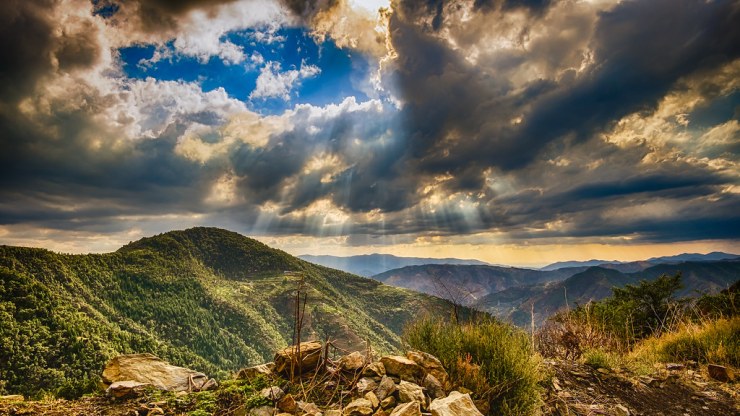
“The weather is like road here, smooth sometimes with potholes.
Rains are coming more often. We are still in the greener part of the Himalayas,
as it is raining and snowing in the higher mountains.”
Narayan Tushar Kaudinya
Writer, currently walking in the Himalayas
gathering knowledge for his next book

“Fight hard for the things you love. Don’t settle for less than a life worth remembering.”
Christo N of Sailor Songs – Poetry from the deep…

The closest thing to being there yourself… relax and enjoy this wonderful short film Monsoon in the Himalaya!
“It is only when we become aware or are reminded that our time is limited
that we can channel our energy into truly living”
Ludovico Einaudi
I Giorni (The Days) by Ludovico Einaudi, based on a 12th-century folk song from Mali:
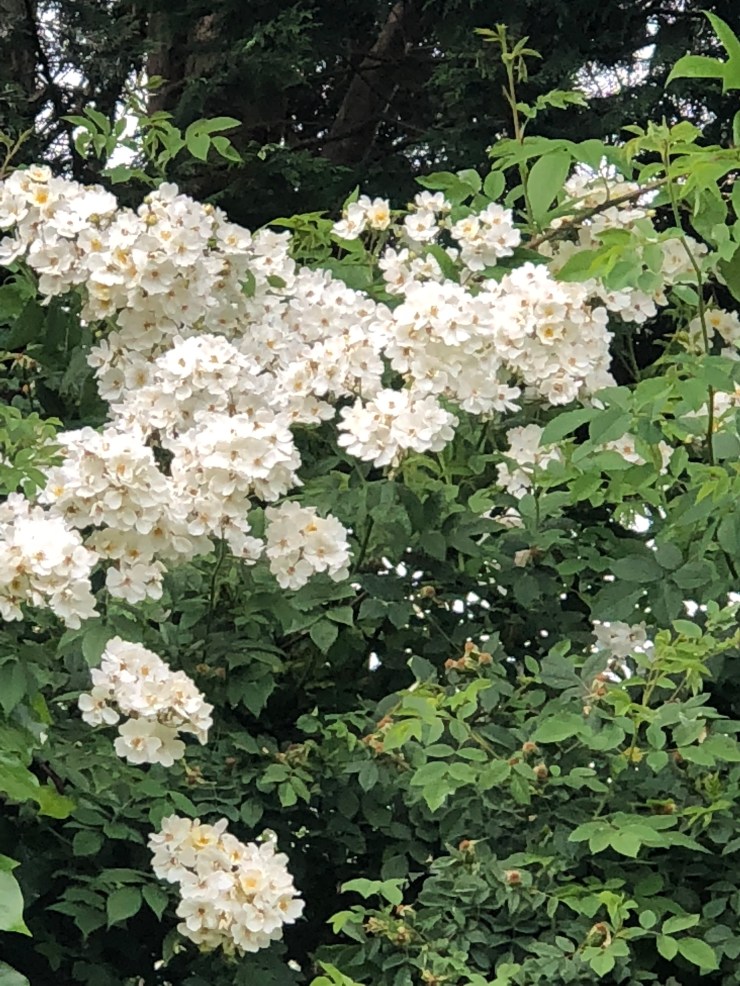
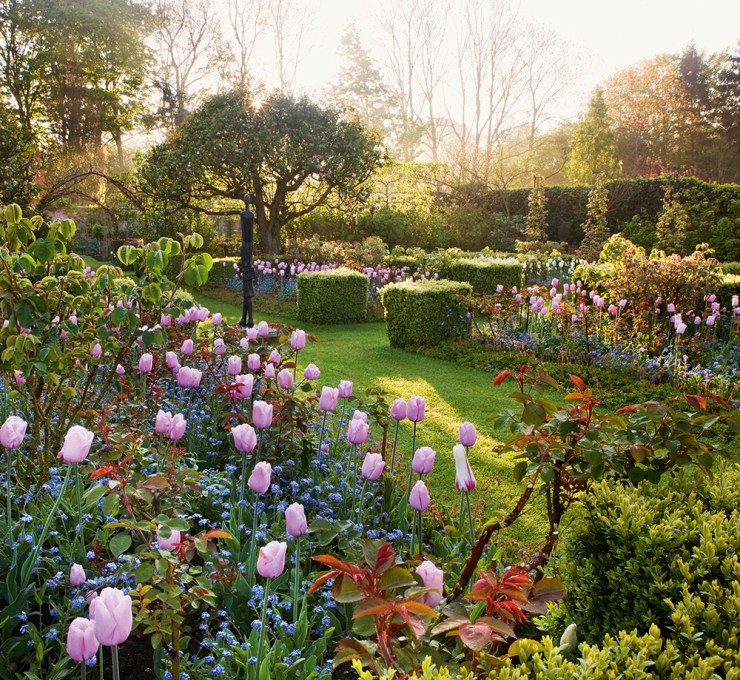
Not so long ago, an article in the Clinical Medicine Journal of the Royal College of Physicians written by Sir Richard Thompson, the past president, highlighted increasing evidence that plants, green spaces, and gardening benefit mental and physical health. Sir Richard Thompson referred to a Japanese study that found that looking at plants alters electrocardiogram readings (which check the electrical activity of the heart), improves mood and reduces pulse rate, muscle tension, and blood pressure. It cannot be stressed enough that it is impossible to think of a drug taken in isolation that could achieve this. Spending time among nature can be transformative. In our extraordinary difficult times, we can keep our spirits up by appreciating the arrival of summer. My big, beautiful bumblebees are busy among my many flowering blossoms, and with the sunlight comes the scent of summer.


No matter how turbulent is the daily news or how stressful my daily life can be, just five minutes into my work in the garden takes all that garbage away as if a heavy coat has slipped off my shoulders. It is a form of meditation but I don’t need to think of my big toe or the end of my nose and empty my head of thoughts, instead focusing on what is needed to be done to make plants, living creatures, happy. It makes me feel blissfully relaxed and satisfied. Of course, those who work long hours, commute or have young families, meditation for a short time is without doubt beneficial. The plaque on the wall of my garden carries a Roman maxim: ‘Who plants a garden, plants happiness.’ To paraphrase a saying: ‘If you want to be happy for a month, fall in love; if you want to be happy for a year, get married – but if you want to be happy for life, tend a garden.’
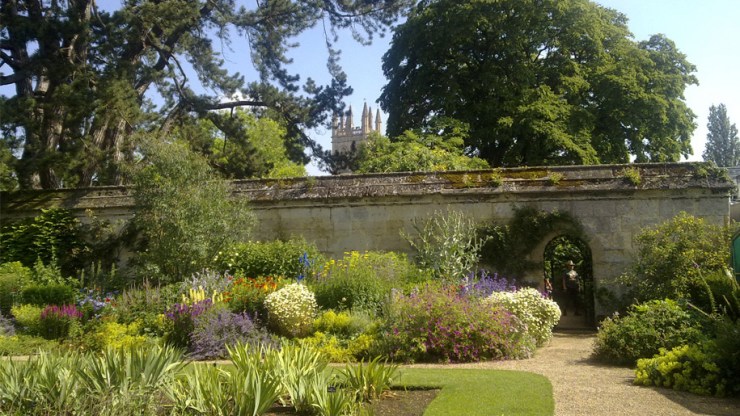
We need to keep calm and carry on. It is essential to walk in the garden, park or forest because as you walk, something wonderful happens. The pace of your steps changes as you find the rhythm of the day. As someone once said ‘You can walk fear into the ground.’ To watch the birds while walking, you became part of their real world, a place of pure existence. In these worrying times, try to look at the world as they see it with trees and bushes blossoming like fireworks. As a writer, Horatio Clare, wrote: ‘As the new warmth falls on your face and sets the grass glowing, you can almost believe sunlight has a scent. The rough fields give up a smell of mud and sedge green-gold, earthy and reedy. It is the tang of the turning of the year, the return of colour and hope. And then the treasures of spring. Moss on a wall, a lance of sunlight, a shadow blueing, a chaffinch singing: these are the gifts of life.’

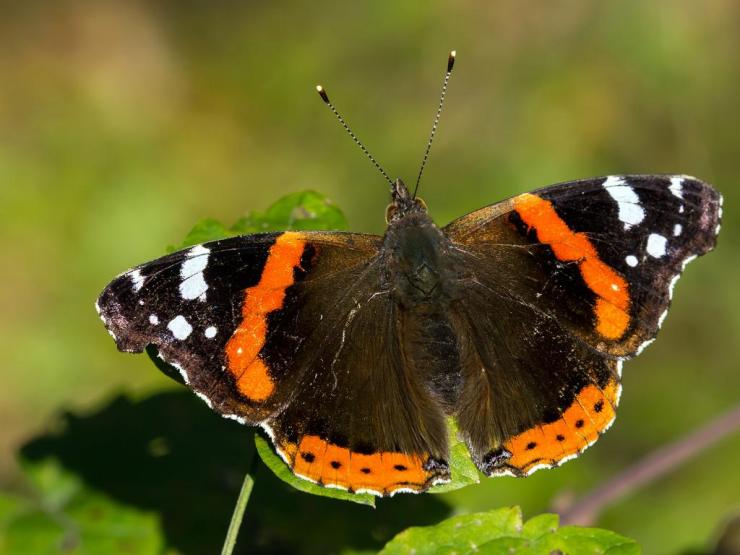
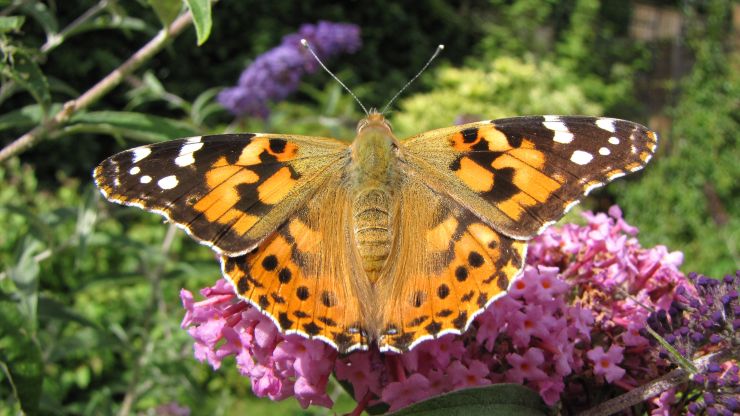
We will survive. The beauty of nature surrounds us. The swallows will come back and the swifts will return. The starlings already swoop across the blue of the sky. Nest-building has started in my trees. The residing squirrels slide down the branches. The good news is that the numbers of various butterflies are rising. Recent years have been their most prolific since 1997, with more than half of species seeing a population increase. The number of red admirals tripled, with 12 times more painted ladies and more than twice as many peacock butterflies.
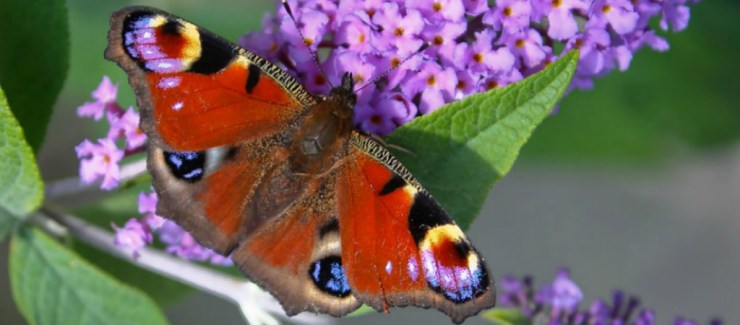
Life, as we have known, will come back. Try to smile and greet the oncoming summer.
To help us to smile, I will copy a very funny story told by one of the UK’s best-loved comedians, Barry Cryer, who as one literary critic wrote: ‘… has probably contributed more to the merriment of the nation than any other living person.’ Here are his two stories:
“A man goes into a pub and says to the landlord: ‘If you give me free drinks all night, I will entertain your customers so much they will stay all night and buy lots and lots of drinks.’ ‘Oh yes,’ says the landlord. ‘How are you going to do that?’ The man gets a hamster out of his pocket and puts it on the piano. The hamster runs up and down the keyboard playing the greatest piano music anyone had ever heard. ‘That’s incredible!’ says the landlord. ‘Have you got anything else?’ The man gets a parrot out of his other pocket and puts it on the bar. The hamster begins to play the piano again and the parrot sings along – sounding just like Pavarotti. Everyone in the bar is amazed and stays all night drinking and listening to the hamster and parrot. The landlord is delighted. ‘I must have these animals. Will you sell them to me?’ The man shakes his head: ‘No.’ ‘Will you sell just one then?’ asks the bartender. ‘OK, I will sell you the parrot for £100′ the man says. The landlord is delighted and hands over the money. Another man standing next to the man who owned the hamster says: ”You are a bit stupid selling that clever parrot for only £100.’ ‘No, I am not’, the man replies. ‘The hamster is a ventriloquist.’

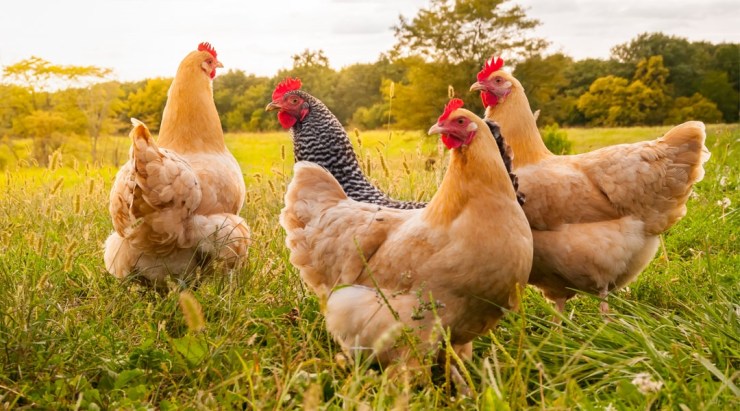
And the second one: A guy was driving down a country lane and he ran over a cockerel and was very upset. He went to the farmhouse and knocked on the door and a woman opened it and he said: ‘I appear to have killed your cockerel. I would like to replace him.’ And she said: ‘Please yourself, the hens are at the back.’

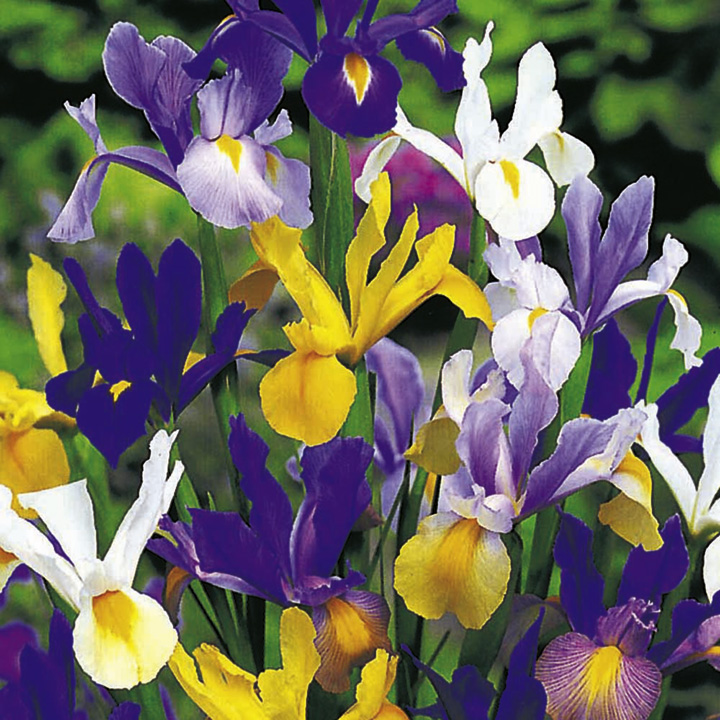
In the peaceful period between the wars, gardening and art become intertwined and an exceptional number of artists were serious plantsmen. In this golden age of garden painting, artists sought sanctuary in turning back to nature after the traumas of the First World War. Country living was cheap and, for those old enough to have been at the Front, this was the vision of England for which they had fought. Most renowned was Cedric Morris – although he was declared medically unfit to fight – who achieved equal stature as artist and plantsman, cultivating over 90 new irises.

Paul Nash considered himself lucky to be alive after being invalided back to London, just days before most of his unit was killed in 1917. His younger brother, John, based his most famous painting “Over The Top” on his experience of a counter-attack that same year, in which 68 out of 80 men in his unit were killed or wounded in the first few minutes. The Nashes were both appointed official war artists, and painted their Western Front pictures in a rented seed shed. John Nash later bought a farmhouse while another painter, Stanley Spencer painted cottage gardens in his home village of Cookham, which was his idea of heaven on earth. Many other artists bought pieces of wasteland, unkempt acres of rhododendrons and bracken, created gardens and found inspiration for the rest of their lives.


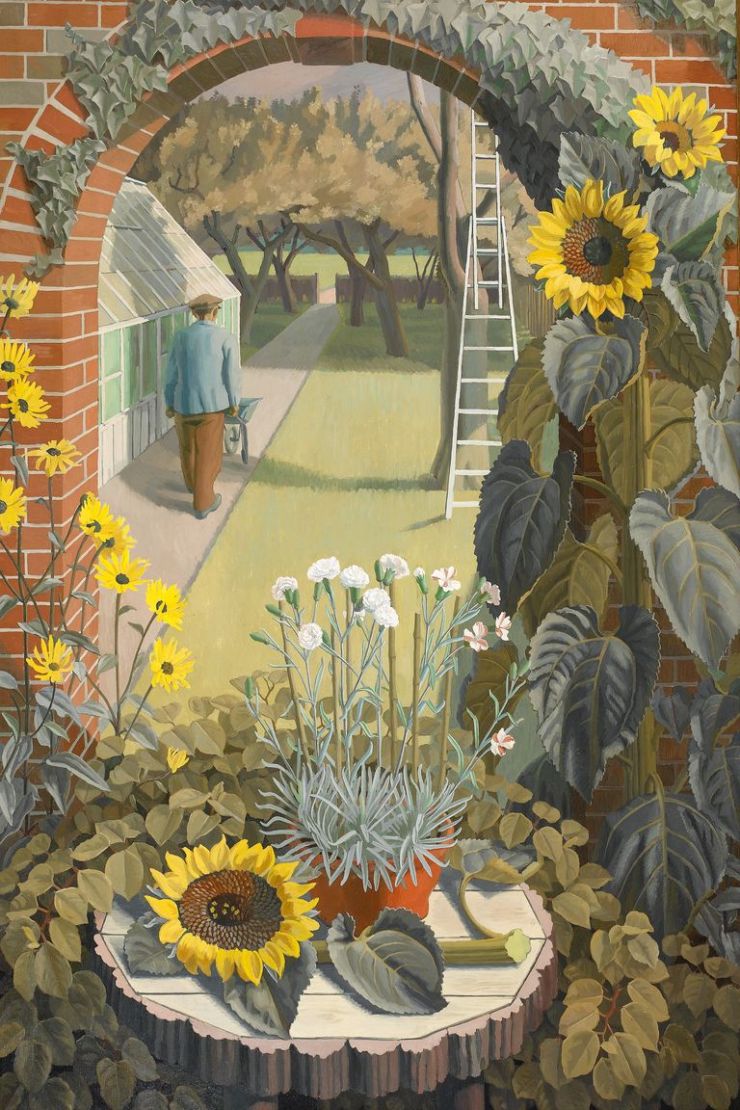
Above is shown ‘The Garden’ by Charles Mahoney who had a passion for giant architectural plants, painted the sunflowers that other friends planted.
I am thinking that the same solace can be achieved now in our time of coronavirus horror. We live in enforced isolation and the time can be used to tidy and plant our gardens, yards, and balconies. Those who are devoted gardeners already say that it keeps them calm, making them feel worthwhile, it keeps demons at bay and boosts mental health. It is often written that gardens and green spaces are vital for people and the planet. Not enough young people garden or even know how to.
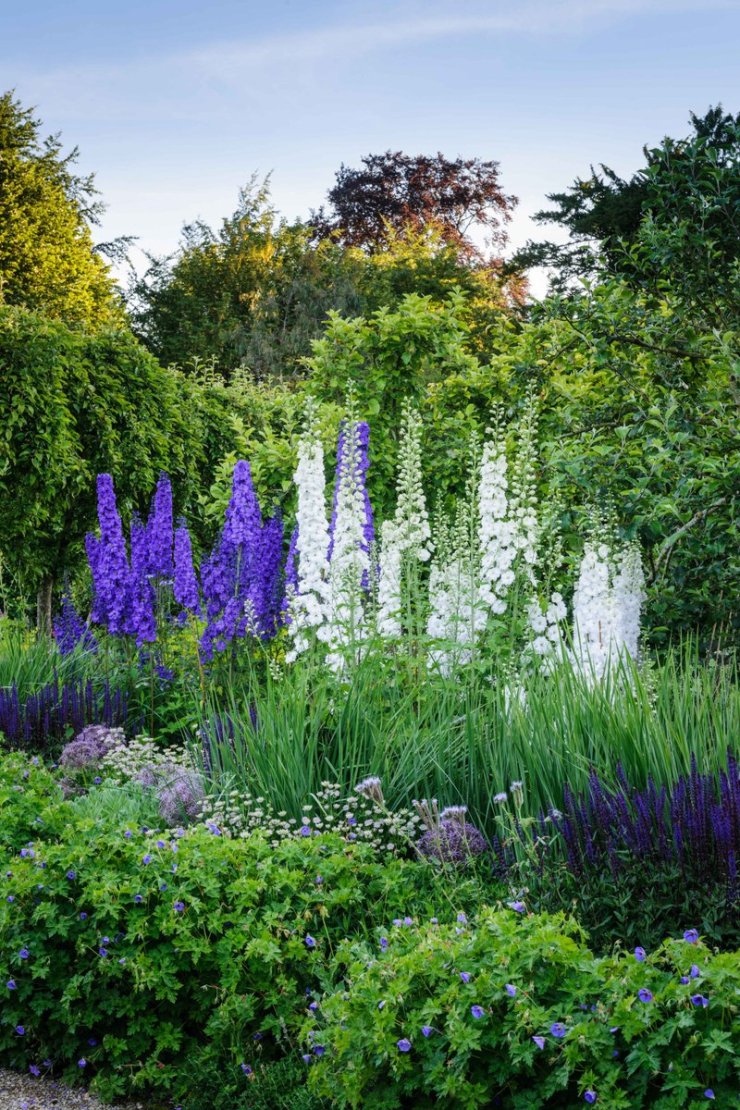
Gardening is about learning and learning and learning. I discovered that throwing handfuls of raw oats on my plant beds, watering, then covering with a little layer of compost increased the number of worms tenfold. This improves the quality of the soil and the plants flourish. Adding height to my beds gave leg room to plants. Noticing that babies like eating soil, a science writer, Lucy Jones, investigated and discovered that soil bacteria act as an organic antidepressant and decided to investigate the link between nature and mental health. She encourages us to spend time outdoors, especially urgent in these days of confinement.
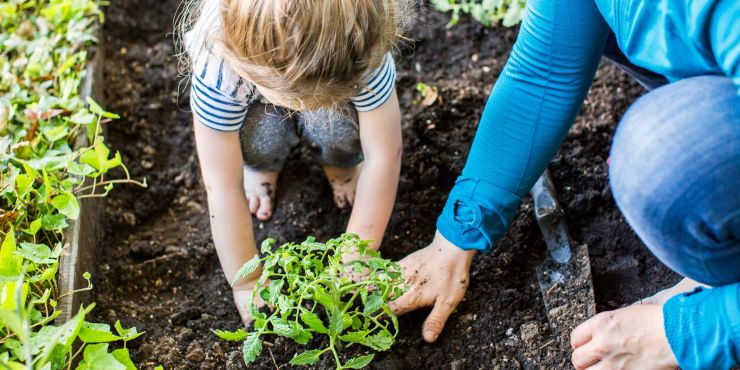

Jones interviewed experts in neuroscience, psychology, and biology and learned that urbanites’ limited exposure to the microbes found in soil weakens immune systems and raises chances of depression. The measurable impact of nature contact is striking. When Philadelphia’s government cleaned and greened areas of vacant land, gun violence dropped by 29 percent. Prison gardening programmes report strong results. An eminent doctor, Max Pemberton, writing in his newspaper column recalled a study that was done at the State Prison of Southern Michigan in the U.S. during the Seventies. Half of the prisoners’ cells looked out over rolling farmland and trees, while the other half looked out onto a bare brick wall. It was found that those who had a green, rural view were 24 percent less likely to have physical or mental health problems, which proves just how important green spaces are for our mental health.
In Japan, doctors regularly prescribe ‘forest bathing.’ It’s unsurprising that the Oxford Junior Dictionary replaced ‘buttercup’ with ‘broadband’ when three-quarters of the UK’s children spend less time outside than its prisoners. Hence the growing popularity of the forest school movement – improving concentration and ADHD all over the country. Nature, Jones argues, must become a key factor in health policy and town planning. As the world faces an environmental crisis, we must be ‘galvanised’ by our ecological grief to shift our anthropocentric mindset and develop more holistic healthcare.
The uplifting “Morning Mood”, the first of four movements that make up Peer Gynt Suite No.1 by Edvard Grieg, was written to depict the sun rising:
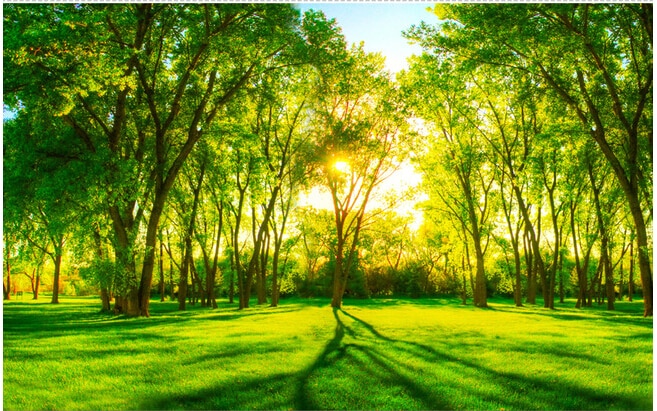
Two years ago, the Chelsea Flower Show was dedicated to trees with several gardens full of woods, streams, stones and one in particular, the RHS Back to Nature Garden designed by the Duchess of Cambridge was greatly admired. The mantra being: ‘Gardening can save the Earth.’


A couple of years ago, during The Chelsea Flower Show, I wrote:
The recent technological takeover of the lives of children and even their parents has resulted in the fragmentation of family life. Often seen as a joke, at which to poke fun, in adverts showing everybody everywhere looking, checking or texting their mobiles, even when dining out, in reality, it has resulted in a huge rise in mental problems among the young and their sense of isolation. It was wonderful to see that so many people agree that nature is the only answer. With that in mind, the garden designed by the Duchess of Cambridge is my favourite. With its woodland setting, a brook, a treehouse, luscious ferns with slabs and pebbles galore, it was loved by her own three children, and indeed it was a wonderland, where they played, learning while being active. Some of the pictures above are of her garden.
The world-famous show, normally a riot of colour, this time mostly calming green in the section of individual gardens, as can be seen in some above. This reflects the growing concern about climate warming, the campaign to destigmatise mental problems and offer help, and the overwhelming evidence that nature can be a powerful antidote to the turmoil and chaos of our daily lives. The designers of all these gardens spoke in their interviews about feeling renewed, free of anxiety, free of the pressure of modern living, within minutes of strolling among the trees, or sitting by the softly burbling waterfall and inhaling unpolluted air. Many gardeners, including myself, know well this surreal feeling, which is as if a heavy coat had fallen from our shoulders within a moment of entering our gardens. Instantly, our attention is diverted to a bumblebee busy among the bushes, or a bird singing on the branch above, or the twigs that need pruning… The list is endless, and we seem to cease to care what shenanigans the politicians or big businesses get up to, we are safe in our own paradise. This is another constantly used word – paradise because our gardens are the closest places, we know, to heaven.
Tutto è Bellissimo (Everything is Beautiful) by Alberto Giurioli:
PS For my fellow book lovers, here are recent upcoming publications, which explore themes in this post:
“Everybody Needs Beauty: In Search of the Nature Cure “by Samantha Walton looks at the connection between nature and health.

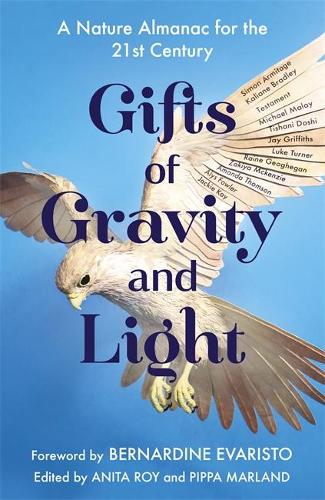
“Gifts of Gravity and Light: A Nature Almanac for the 21st Century”, edited by Anita Roy and Pippa Marland, contains many descriptions of diverse encounters with the natural world.
 naturetails
Very true, Joann8. Buddy would agree.
LikeLike
This is a topic that had been much on my own mind. I believe that embracing and honouring Nature is the only thing that may save us, so I am grateful for all those who study it, write about it and celebrate it. Just scrolling through your post already lifts my mood, Joanna, beginning with that wonderful film of the thunderstorm. Storms of that kind are both terrifying and invigorating and there is nothing as wonderful as the apres-storm, so beautifully shown there. I shall look out for the books you recommend. Many thanks, Joanna!
LikeLike
Thank you Joanna for this wonderful post. The addition of the short video about the Indian monsoon is amazing.!
🤗❤️🙏
LikeLike
You are preaching to the choir Joanna. Nature is our salvation and yet we continue to shun and degrade it. I will never understand those that could take a walk in a garden and choose to scroll instead. Love the music of Ludovico Einaudi. I think you were the one who introduced his music to me. Thank you for that. Happy Thursday Joanna. Allan
LikeLiked by 1 person
For the last year and a half or more, I’ve looked up at the sky (when I’m outside) a lot more often than I used to. The skies are always interesting and inspiring. They are a great part of the natural world.
LikeLiked by 1 person
Absolutely true, Joanna! Time in natural surroundings is bliss, I wish more people would realise this. Thanks for the jokes too!
LikeLiked by 1 person
Every day, a reminder we are not separate from nature but a part of it.
LikeLiked by 1 person
Beautiful photos! And I agree. A lovely garden or a walk in the park always makes me feel better.
LikeLiked by 1 person
Hypnotic—though I think much of this film was better to watch from the comfort of my home!
LikeLiked by 1 person