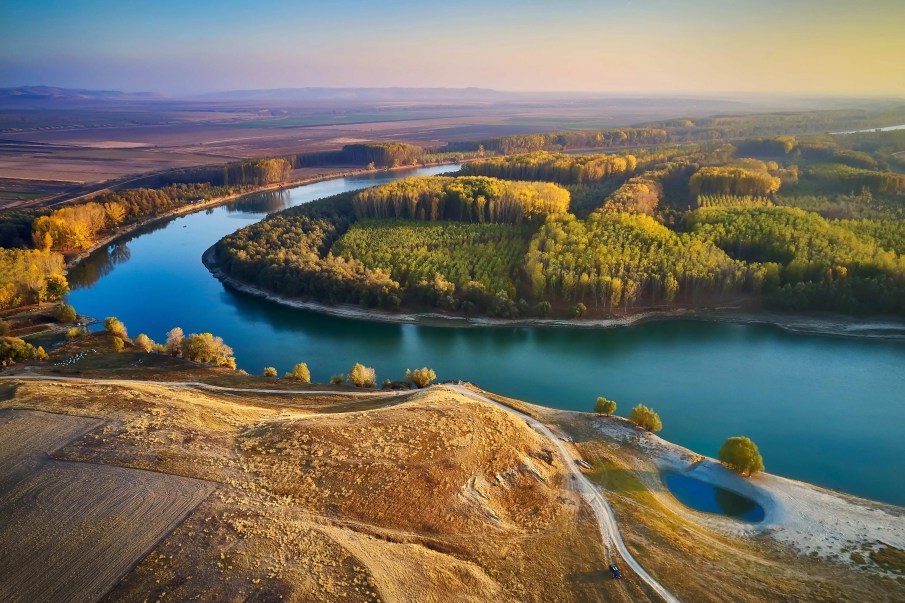
“Where would I be without Johann Strauss’s beautiful ‘Blue Danube?’
Without this piece of music I wouldn’t be the man I am today.
It’s a tune that brings out the emotion in everyone
and makes them want to waltz.”
André Rieu
“Danube Love Medley”, performed by André Rieu and Johann Strauss Orchestra (courtesy of Sergei Egorov):
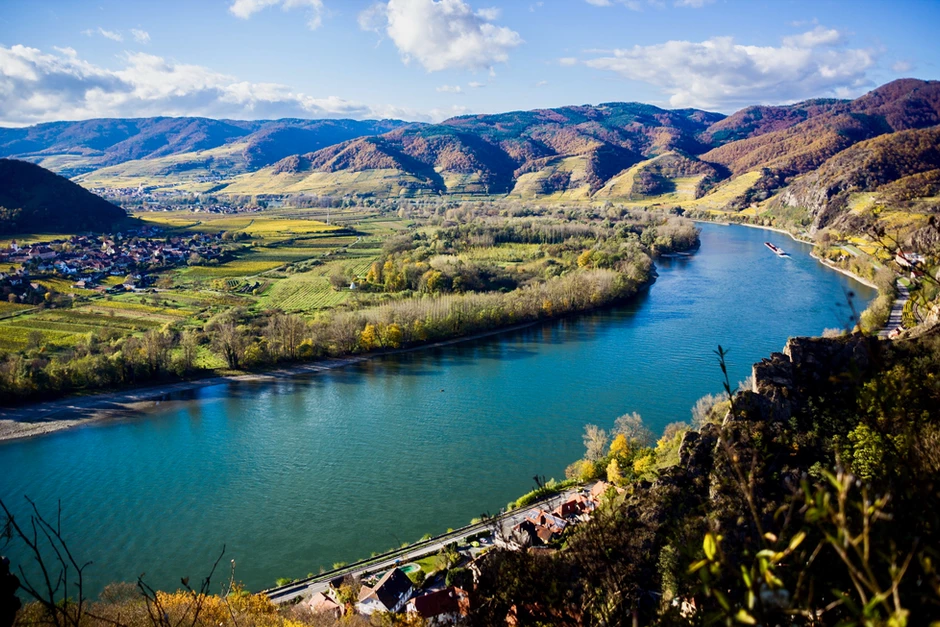
“The rhythm of the ‘Blue Danube’ waltz rippled and rang and sang in his head,
the lights of a thousand chandeliers glinted and prismed,
and for a heartbeat Shadow was a child again,
and all it took to make him happy was to ride the carousel:
he stayed perfectly still, riding his eagle-tiger at the center
of everything, and the world revolved around him.
“American Gods”, Neil Gaiman
Courtesy of Little Big World:
A river that is unusual, to say the least, flows through ten countries in Central and Eastern Europe. In each country, it has a different name and has witnessed over the centuries a different history unfolding. This river is Europe’s second-longest one, after the Volga, and it is the Danube. Its length is an impressive 2,860 km.
Courtesy of Kwik Facts:
There are various theories as to the origins of the Danube’s name. One links it to the old European German name for river – Donau. Another originates from a mythological source – the Latin Roman river god known as Danubius. Others point to the ancient indigenous Slavonic tribes who called the river Great Water.
The Roman god Danubius

The Danube was once a long-standing frontier of the Roman Empire.
Courtesy of romanfrontiers:
The Danube flows through the countries: Germany (Schwarzwald), Austria, Slovakia, Hungary, Croatia, Serbia, Bulgaria, Romania, Moldova, and Ukraine. The cities it touches are Ingolstadt, Linz, Belgrade, Bratislava, Vienna, and Budapest.
Below is the city of Linz in Austria:

Linz from the air, courtesy of Skyviews 4K:
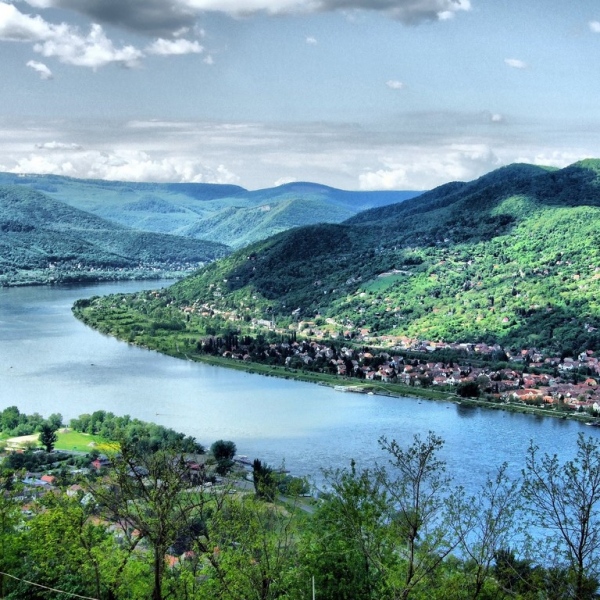
“The Danube in Serbia” (courtesy of National Tourism Organisation of Serbia):
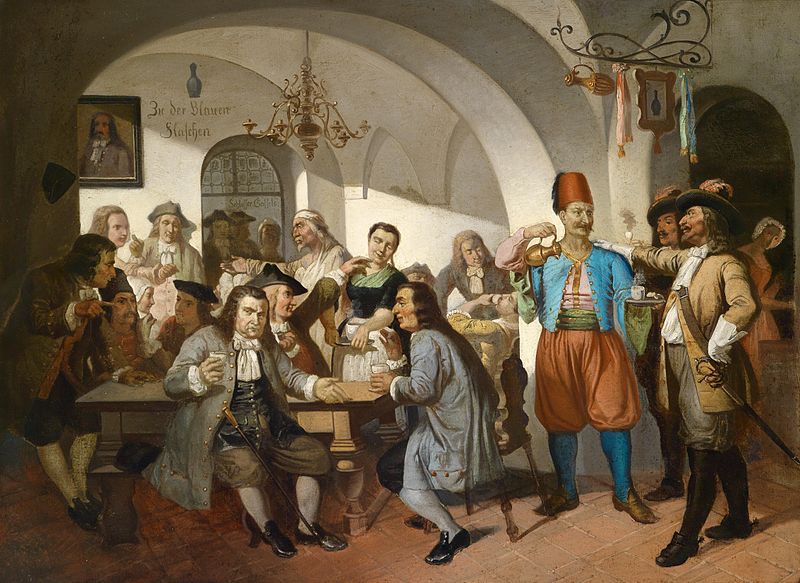
The Danube starts in Germany and after a lengthy journey ends in the Black Sea. The most important economic use of the Danube is the movement of freight. It is a well-known fact that out of all the cities connected with the Danube, Vienna is the most liveable capital city in Europe and in the world. After watching many documentaries about Vienna, I had to agree. It also reminded me of the extraordinary story about the way coffee was first introduced to Europe. It was during the siege of Vienna by the Ottoman Empire led by Suleiman the Magnificent. A Polish man, Jerzy Franciszek Kulczycki, a traveller and an explorer living at the time in Vienna, decided to help King John Sobieski to repel the siege. As he spoke eight languages, including Turkish to perfection, he dressed in Turkish clothes and during the night left Vienna for the Turkish camp. Talking to the men in the camp he was able to find out what was planned. Back in the city, he was able to warn the king and prevent problems during the attack. After the siege was destroyed and the Turks repelled, the King asked him what he would like to have as a reward. To everyone’s surprise, Kulczycki asked for a huge number of bags of brown beans. No one could think what they were for. In a short time, Kulczycki opened a shop/drinking establishment, called The Blue Bottle where he served an aromatic drink – coffee made tastier to European likings by the addition of milk and honey. Everyone, including the King, loved the beverage, and that is how coffee conquered Europe.
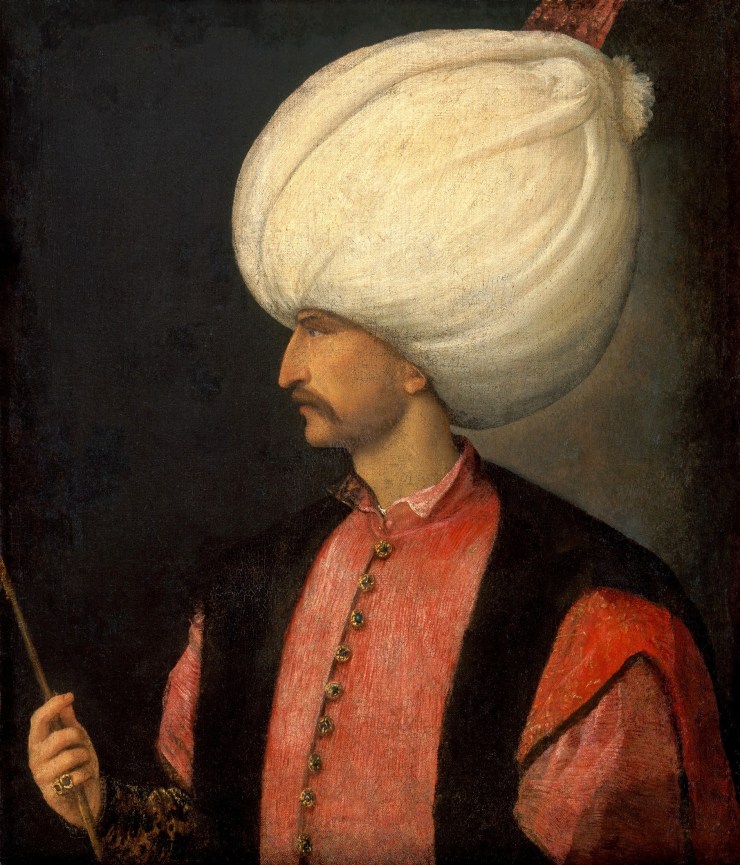
The Turkish invader – Suleiman the Magnificent
A whirl around Vienna’s coffee houses (courtesy of The Guardian):
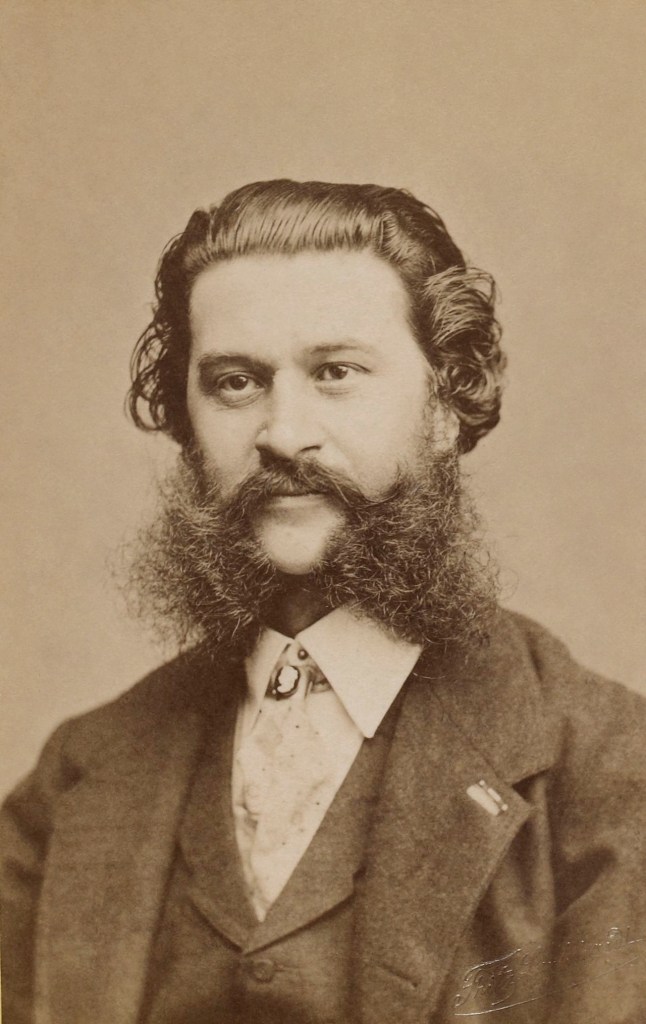
Vienna gave the world two other gifts. The Austrian composer, Johann Strauss II, composed the waltz ‘By the Beautiful Blue Danube’. In the beginning, it received a lukewarm reception. When in 1867 at the Paris World Fair the waltz was presented in an orchestrated version, it become a worldwide sensation. It became the unofficial Austrian national anthem. And the other gift? Why, the famous patisseries about which I can hardly write without drooling onto my laptop.
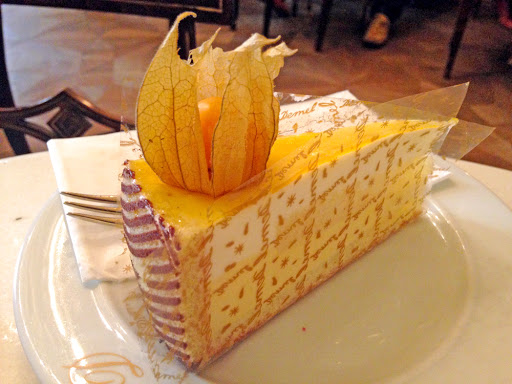
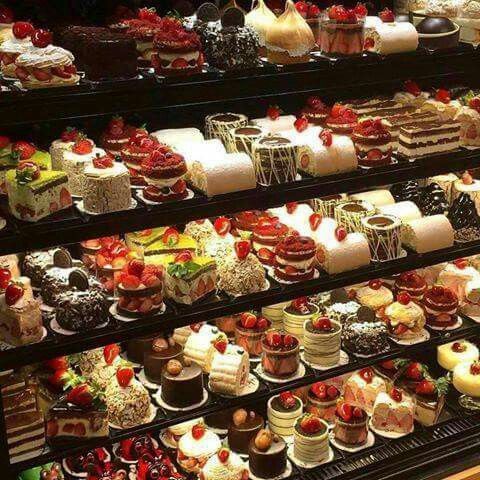
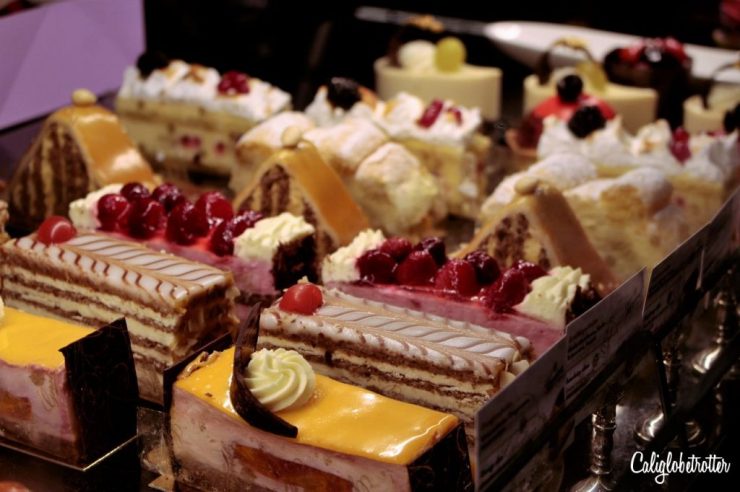
What did I tell you? Who would resist the temptation?
Courtesy of Cookist, how to prepare Danube Wave Cake:
This waltz also made the fortunes of a violinist André Rieu. For many years he has delighted audiences all over the world with his enchanting version of waltzes, the Blue Danube, and many others. Not quite knowing why he was so popular, one day I had the chance to see a whole concert of his, and it was a revelation. He and his artists, singers, and dancers perfectly represent sunny, happy Vienna. His message was obvious: be happy, enjoy life, it is the only one you will have. Others have written about him – he is quite simply a musical phenomenon like no other, a true King of Romance, having sold a massive 40 million CDs and DVDs and having had 30 Number Ones.
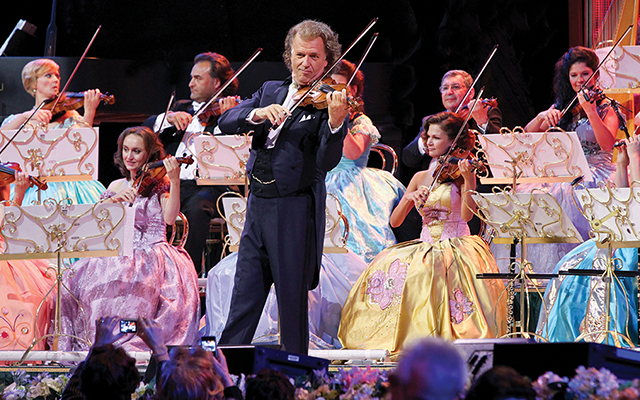
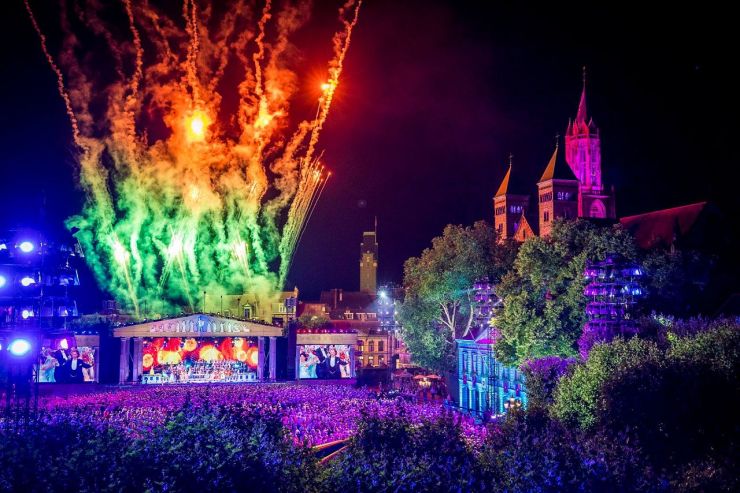
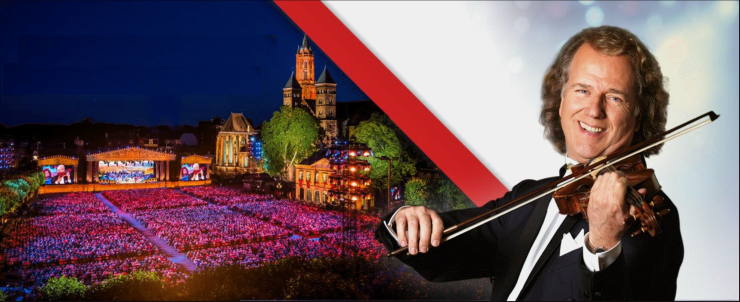
“The Beautiful Blue Danube”, performed by André Rieu and his Johann Strauss orchestra:
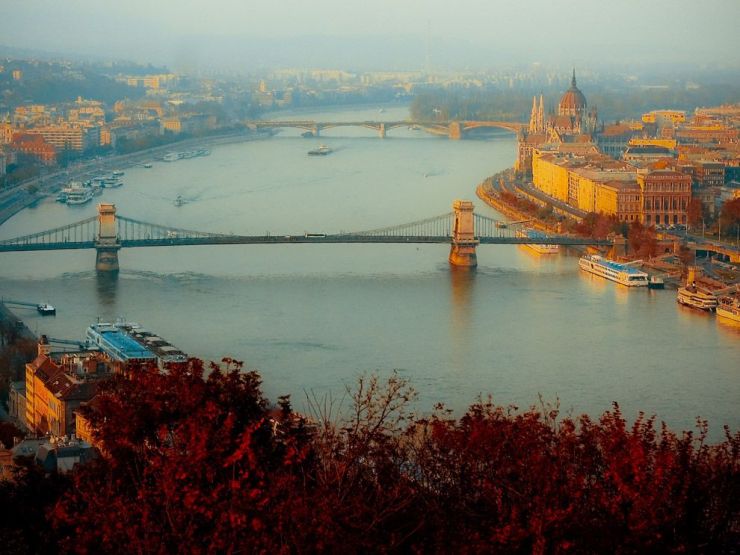
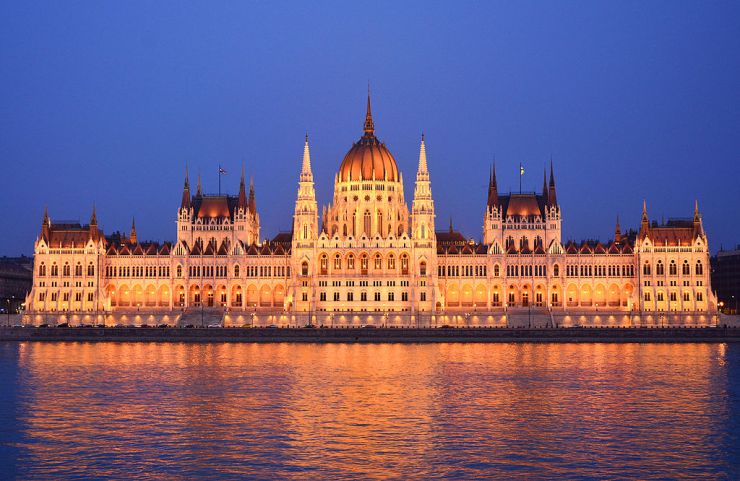
The Danube bisects the Hungarian capital, Budapest. The two parts of Budapest, Buda and Pest, are connected by the 19th-century Chain Bridge, which connects the hilly Buda district with the flat Pest. The imposing buildings of the Hungarian Parliament framed by the vast expanses of the Danube are the only thing I can mention of Hungary. In contrast to joyous Vienna, Budapest has a tragic history from the time of the Communist regime.
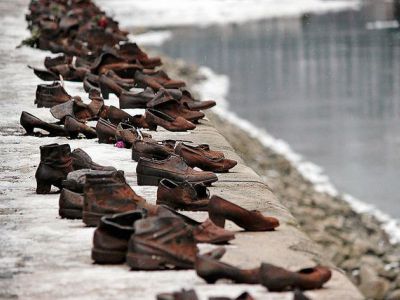
The Shoes on the Danube Bank is a memorial erected on April 16 2005, in Budapest, Hungary. Conceived by film director Can Togay, he created it on the east bank of the Danube River with sculptor Gyula Pauer to honour the Jews who were killed by fascist Arrow Cross militiamen in Budapest during World War II. They were ordered to take off their shoes, and were shot at the edge of the water so that their bodies fell into the river and were carried away. It represents their shoes left behind on the bank.
Courtesy of Discovering Travel:
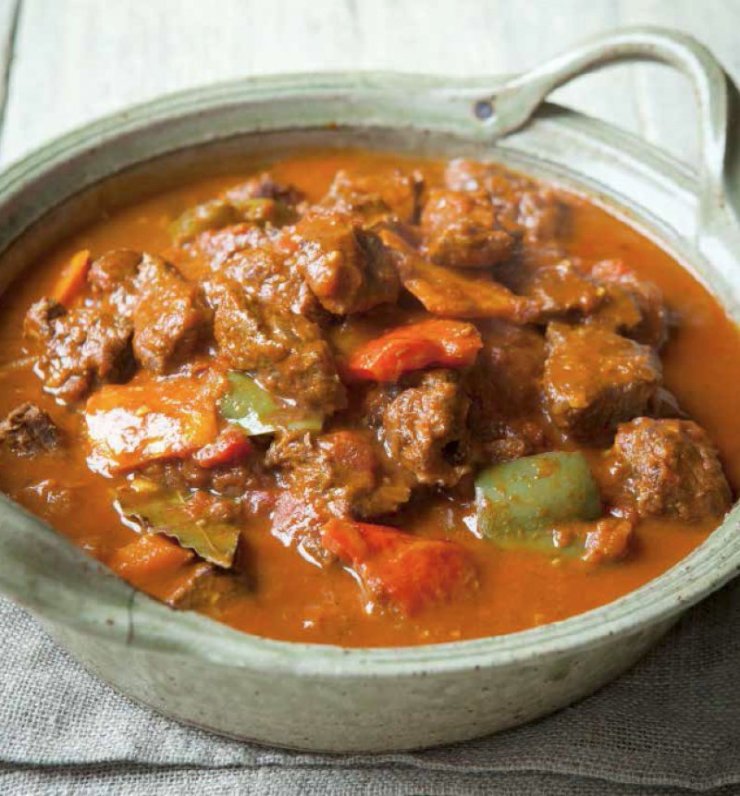
The other thing worth mentioning is Hungary’s world-famous culinary invention – goulash. If you don’t know the taste of goulash – you have not lived! Here is the recipe for Goulash from The Hairy Bikers:
Ingredients:
- 1kg good braising steak, preferably chuck steak
- 1 tbsp sunflower oil
- 3 medium onions, cut into 12 wedges
- 3 garlic cloves, crushed
- 2 tsp hot smoked paprika
- 1 tbsp paprika
- 1 beef stock cube (Oxo works well here)
- 600ml cold water
- 400g can of chopped tomatoes
- 2 tbsp tomato purée
- 2 bay leaves
- 1 red pepper
- 1 green pepper
- 1 orange pepper
- flaked sea salt
- freshly ground black pepper
- Preheat the oven to 170°C/Fan 150°C/Gas 3½. Trim any hard fat off the beef and cut the meat into rough 4cm chunks. Season well with salt and freshly ground black pepper.
- Heat the oil in a large flameproof casserole dish. Add the steak and fry over a high heat until nicely browned all over, turning regularly. Tip the onions into the pan and cook with the beef for 5 minutes until softened. Add the crushed garlic and cook for a further minute, stirring regularly.
- Sprinkle both paprikas over the meat and crumble the beef stock cube on top. Add the water, tomatoes, tomato purée and bay leaves. Season with salt and pepper, stir well and bring to a simmer. Cover with a tightly fitting lid and transfer the dish to the oven. Cook for 1½ hours.
- While the beef is cooking, remove the core and seeds from each pepper and chuck them away. Cut each pepper into chunks of about 3cm. When the beef has cooked for 1½ hours, carefully remove the dish from the oven. Stir in the peppers, put the lid back on and put the goulash back in the oven for a further hour or until the beef is meltingly tender.
- Serve with small portions of rice and spoonfuls of soured cream if you like, but don’t be too generous – soured cream contains less fat than double cream but still has 30 calories per tablespoon!
The Danube flows through the Black Forest, a beautiful part of Germany, Bavaria. The district capital is Munich which was originally a duchy, established in the 6th century, and between 1801-1918 was the Kingdom of Bavaria. Years back, I was passing through Bavaria with my family and I was very impressed. The little towns, colourful and so clean that you might think they were only built yesterday, the noisy pubs full of happy people, the tables groaning with plates of sausages, sauerkraut and potatoes, sublime crusty rolls, and of course the beer. The forests envelop the Danube and the towns; it is a lovely place to visit.
A charming polka inspired by the Black Forest: “Im Scharzwald, Polka Francaise Op. 164” by Carl Michael Ziehrer (courtesy of ziehrereien478):

The Black Forest and the source of the Danube (courtesy of zitania):

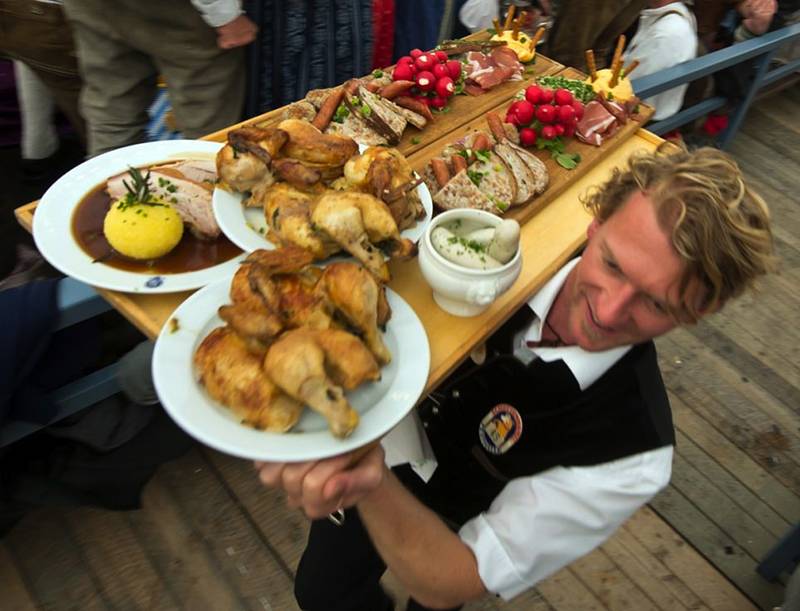
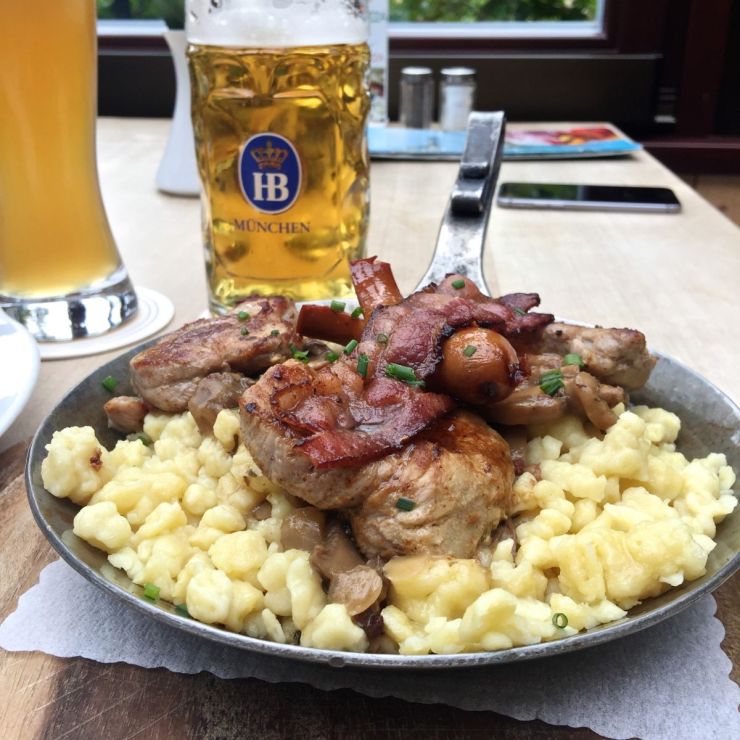
I have a reader in Germany who writes to me often, always commenting very positively about the weekly posts in the blog and reading the latest one first thing on a Saturday morning (when it is published), with a cup of coffee. I thank her.
Danube, Europe’s Amazon (courtesy of ScienceVision Filmproduktion):
For those readers who have time to immerse themselves longer….
Courtesy of Nedercondor:
“The Voice of the Danube” (courtesy of The Secrets of Nature):
I also recommend the stories to to be found at the Route of Emperors and Kings blog:
routeofemperorsandkings.com/blog/


Love this tribute to the Danube. I had the pleasure of living in Hungary of 46onths in 1997. It included a few days in Budapest and I had goulash too. I was surprised that almost everyone in Hungary seemed to have a cellphone but continued to use scythes to mow and in the little village of Taszar seemed to have a household farm with small animals like chickens or pigs in a small neighborhood of cottages, rather than actual farms.
LikeLike
Beautiful and the food looks delicious too.
LikeLike
Thank you so much, Pat, for your very interesting and additional information about living in Hungary, which is greatly appreciated.
Joanna
LikeLiked by 1 person
Thank you, Annie, for the wonderful comments, which are very much appreciated! I remember your family came from Hungary a long time ago!
Joanna
LikeLiked by 1 person
Wow!! I am also ‘drooling’ looking at those delicacies 🤤
LikeLike
Thank you, Indira, for your amusing comments, which I love and appreciate!
Joanna
LikeLiked by 1 person
How marvelous it would be to float slowly down the Danube, stopping at all these wonderful places and hopefully seeing every one of those magnificent creatures! It would take e a very long time as there is so much to absorb. I have read many stories of the Roman Empire and the Danube featured often. Such a fascinating history. This was lovely Joanna. Thank you.
LikeLike
Thank you, Carolyn, for the wonderful comments, which I love and very much appreciate!
Joanna
LikeLike
Nope, sorry Joanna. You have me mixed up with someone else. But you are still very welcome. 🙂 My dad was from Australia and my mom was from Texas. I am originally from Southern California, but now live in Colorado. 🙂
LikeLike
Apologies, Jeanne, I was sure it was Annie! Thank you for your wonderful comments, which are greatly appreciated!
Joanna
LikeLiked by 1 person
I love this post Joanna. We had the pleasure of cruising a portion of the Danube through part of Germany and Austria way back in 1984. We loved the cruise and the scenery. Also enjoyed your dsiplay of the Viennoiseries, the goulash and bratwurst and spaetzle. So many delightful pastries and cakes in Vienna, including the famous Sacher Torte. Have a wonderful evening. Allan
LikeLike
Thank you so much, Allan, for the wonderful comments, which I love and greatly appreciate!
Joanna
LikeLiked by 1 person
Thank you so much, Joanna, for yet another fascinating post in your river series, this time on the Danube. I especially enjoyed reading about the various theories surrounding the origin of the Danube’s name and its economic significance.
The stories behind Austria’s national anthem and the gateway to Europe were truly engaging, but what touched me most was the account of the Shoes on the Danube Bank memorial. It is deeply moving and painful; a powerful reminder that the Holocaust must never be forgotten. The suffering endured by the Jewish people is unimaginable, and one cannot help but feel empathy for their grief.
I also enjoyed the delightful recipe section for food lovers. The cake images looked absolutely tempting. It was interesting to read the detailed recipe for goulash and discover that one of its main ingredients is beef. Curious about the name, I looked up its meaning and found that goulash comes from the Hungarian word gulyás, meaning “herdsman” or “cowboy.” Interestingly, in Hindi, gau means cow, an animal revered by us as sacred and regarded as motherly; so goulash is certainly not for us.
As always, the images and videos were outstanding and made the post every bit as captivating as your previous ones. The video on the Danube, Europe’s Amazon, stood out especially for me. The Voice of the Danube was a bit longer, but definitely worth watching.
Thank you once again, Joanna, for sharing another gem from your treasure of knowledge and insight.
LikeLike
Thank you so much, Kaushal, for the wonderfully analytical and thoughtful comments, which I love and deeply appreciate! Your kind words made my day!
Joanna
LikeLiked by 1 person
No worries Joanna. we all do that from time to time. 🙂
LikeLike
Thank you, Jeanne!
Joanna
LikeLiked by 1 person
My pleasure. 🙂
LikeLike
It’s my pleasure, Joanna. You’re always welcome! Namaste!
LikeLike
Thank you so much, Kaushal, for your kindness! Namaste!
Joanna
LikeLiked by 1 person
The Shoes on the Danube Bank memorial is both touching and haunting. Thank you again for a such a wonderful, detail essay on a great river!
LikeLike
Thank you, Diana, for the thoughtful comments, which are greatly appreciated!
Joanna
LikeLiked by 1 person
Dear Joanna,First of all, please accept my apologies for commenting so late.But honestly, after reading your magnificent article, I felt that a few hurried words would never do justice to it. It needed reflection much like the silence that follows the end of a great symphony, when the listener remains still, absorbing the beauty long after the final note has faded away.
Your essay is not merely a journey along the Danube; it feels like a voyage through the very soul of Europe its memories, its joys, its tragedies, and its cultural heartbeat. In the manner of a brilliant inventor who gathers scattered elements and transforms them into something extraordinary, you have woven together history, music, architecture, cuisine, war, compassion, and human emotion into one seamless and flowing narrative.
Your description of Vienna’s coffee houses was enchanting. Reading about Jerzy Franciszek Kulczycki, I felt as though coffee ceased to be just a beverage and became instead a symbol of civilization, conversation, and cultural awakening. What a remarkable irony of history that from the ashes of war emerged a tradition that would later define Europe’s intellectual and artistic life. Through your words, history does not appear as dry information; it breathes, speaks, and lives.
When Johann Strauss II and The Beautiful Blue Danube entered your narrative, the entire article itself seemed to turn into music. And your mention of André Rieu added a modern heartbeat to that timeless melody. You captured something profoundly true about him his performances are not merely concerts, but celebrations of life itself. While reading, I almost felt Vienna smiling warmly, inviting the reader into a graceful waltz beside the river.
And then came Budapest…Your deeply sensitive description of the Shoes on the Danube Bank memorial was profoundly moving. Few memorials in the world express human sorrow with such silence and dignity. What makes your writing so exceptional is that it does not only celebrate beauty it also preserves the tears of civilization and the lessons of history.Then suddenly came the aroma of goulash, the mystery of the Black Forest, the colourful towns of Bavaria, the lively beer halls, and the warmth of European hospitality. You transformed a travel narrative into an experience of all the senses. It no longer felt as though the reader was simply reading; it felt as though one was travelling beside you, hearing the music, tasting the food, and breathing the air of those landscapes.
Joanna, your writing possesses a rare and beautiful quality you do not merely provide information; you create entire worlds.Each paragraph feels like the workshop of a gifted inventor, where history meets emotion, music meets memory, and culture meets the human soul.Thank you sincerely for this extraordinary, elegant, and deeply researched piece of writing.You did not allow the Danube to remain just a river through your words, it became the living pulse of Europe itself. 🙏
LikeLike
Oh, my goodness, dear Vijay, I cannot find words to thank you for the beyond wonderful comments, which I love and deeply appreciate! Your unique ability to put into words the thoughts that lift my spirit, made my day and make my world a better place to be. Thank you again, dear Vijay, from the bottom of my heart!
Joanna
LikeLiked by 1 person
What a beautiful journey along the Danube. More than just a river, it feels like a bridge between cultures, histories, cities, and memories. I loved how it weaves together music, cuisine, landscapes, and historical events, showing that every stretch of the Danube has a unique story to tell. A very interesting and inspiring read.
Hugs, Joanna.
LikeLike
Thank you so much, Lincol, for the wonderful comments, which I like and greatly appreciate!
Joanna
LikeLike
You’re welcome, Joanna. Thank you for sharing your beautiful work.
Best regards,
Lincol 😊
LikeLike
This is a beautiful post of one of the great rivers of the world!
LikeLike
Thank you for the kind comments, which are greatly appreciated.
Joanna
LikeLiked by 1 person
You are most welcome!
LikeLike