
“A man of wisdom delights in water”
Confucius
Courtesy of worldsystem1:

“Be still like a mountain
and flow like a great river.”
Lao Tzu
Courtesy of National Geographic:
Courtesy of Century Cruises:
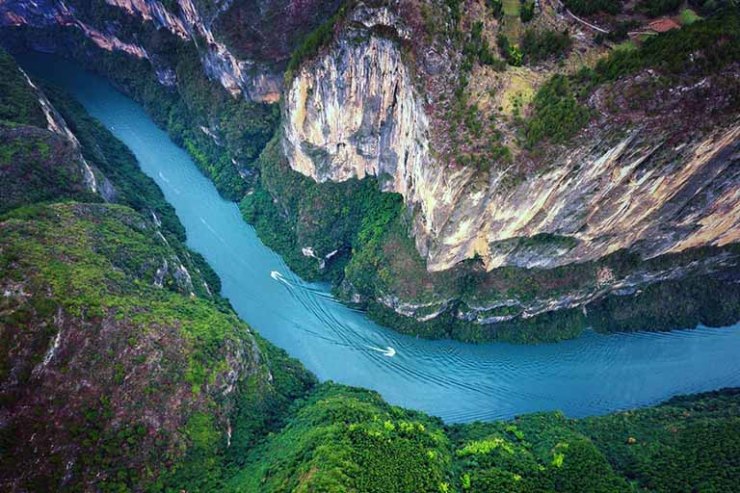
The main paradox is that there is no Yangtze River. This name is unknown to most Chinese, who call it Ta Jiang, ‘Great River’, or Chang Jiang, ‘Long River’ unless they live above Chongqing – there the swift silt-filled waters are referred to as Chin-sha Jiang, ‘the river of Gold Sand’. A few decades ago, in the winter months when the level dropped, the Chinese squatted at its edge and panned for gold, sluicing the mud and gathering gold dust. European travellers reported seeing washerwomen wearing thick gold bangles, made of metal that had been carried from where the River Yangtze rises in Tibet. The river is almost 3,500 miles long.
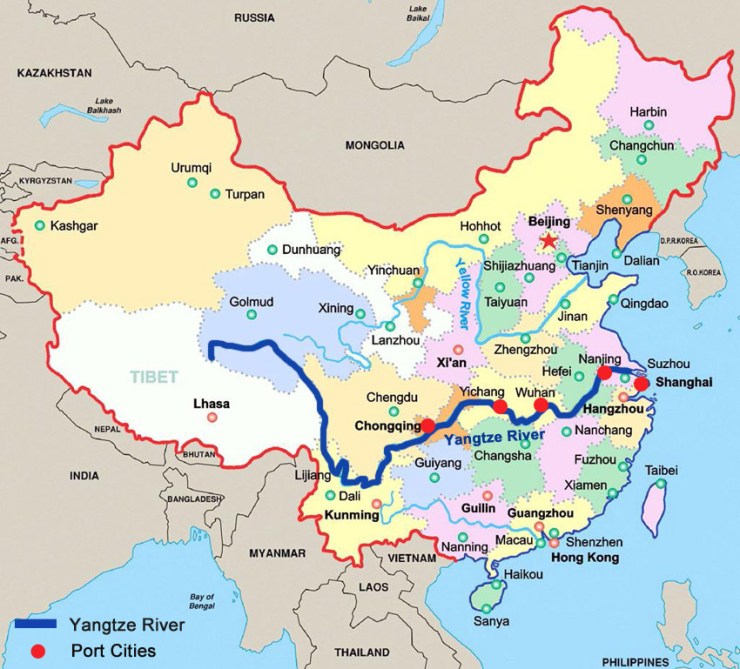
Map showing course of River Yangtze
Courtesy of New China TV:
The Yangtze River has more moods than names. ‘I am careful to give the date of each day’s notes’, Archibald Little wrote in Through the Yangtze Gorges (1887). ‘The river varies so wonderfully at different seasons that any description must be carefully understood only to apply to the day upon which it is written.’ Captain Little compared the Yangtze to the Amazon and to the Mississippi; he said it was indescribable. It has in many stretches a violent magnificence. It causes murderous floods, and its winter levels create rapids of such turbulence that the river captain steers his ship through the foam and travels down the rapids, praying that no junk will lie in his path, as it is impossible for him to stop or reverse. But it is not all so dramatic. Its four divisions are like four separate rivers: above Chongqing, it is associated with gold and landslides; the Upper River ( Chongqing – Yichang), is the wildest – here are the gorges and the Chinese landscape of Walter Scott’s classic, The Romance of the Three Kingdoms; the Middle River (Yichang – Wuhan), is serene and a mile wide; the Lower River (Wuhan – Shanghai) is slow and sticky and populous.
“Yangtze River” by Derek Fiechter (courtesy of Fantasy & World Music by the Fiechters):
One Chinese ship captain, when asked if he thought the Yangtze had a personality, said, ‘The mood of the Yangtze changes according to season. It changes every day. It is not easy. Navigating the Yangtze is always a struggle against nature. And there is only one way to pilot a ship well. It is necessary to see the river as an enemy. I worked my way to captain, starting at fifteen. I never went to school. You can’t learn about this river in a school. You can only learn it by being on the bridge.’ He added later that in the course of one afternoon not long ago, he had counted nine human corpses bobbing hideously down the river.
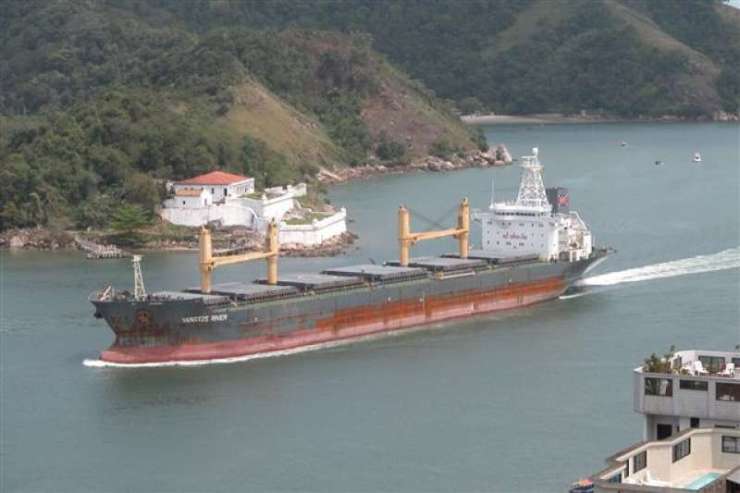
The Yangtze is China’s main artery, its major waterway, the source of many of its myths, the scene of its history. On its banks are some of its greatest cities. It begets many superstitions; it provides income and food to a large part of the population. It is one of the most dangerous rivers in the world, in some places one of the dirtiest, in others the most spectacular. The Chinese drink from it and bathe in it and wash clothes in it, and defecate in it. The Yangtze represents both life and death. It is a wellspring, a sewer and a tomb, depthless in the gorges, shallow at its rapids. The Chinese say if you haven’t been up the Great River, you haven’t been anywhere. They also say that in the winter, on the river, the days are so dark that when the sun comes out, the dogs bark at it. A thick sulphurous fog covers some of the towns upstream of the borders. The fog muffles morning noises and gives an air of solemnity. It also stinks like poison.
Courtesy of New China TV:
Although China is now a modern power, the Yangtze has altered very little. The cities are bigger and more industrialised, the rapids have been dynamited, there are more ships, but the river today is the same river Archibald Little sailed on in 1886, Abbe David botanised on it in the 1860s, and Italian missionaries tried to convert the natives in the seventeenth and eighteenth centuries. The river and the ways of many of the river dwellers are as old as China. There is a painting in the Shanghai Museum of junks and sampans on a river, by Zhang Zheduan. These vessels have the same sails, mast rigging, rudders, and oars as ones on the Yangtze today. But it is a Song Dynasty painting, 1000 years old.
One version of the painting Along the River During the Qingming Festival

The painting comes to life (courtesy of South China Morning Post):
Just above Changshou, the Yangtze narrows to about seventy-five feet, and mottled hills appear in the mist on both sides of the river. Abbe David saw fortifications on the top of these hills. In his Diaries is a wonderful account of his Yangtze trip. He wrote, ‘These are refuges in time of trouble for the country people, where they can go with their possessions and be safe from the depredation of rebels and brigands.’ Banditry was widely spread on the Yangtze from the earliest times, and there was no peace on the river until 1949 when the government took over. Now, every inch of these hills is farmland. On the deepest slopes are terraces of vegetables. How was it possible to water the gardens on these cliff-faces? Here and there, you can see a man climbing up the hillside, carrying two buckets on a yoke. They tip the water into a ditch and without pausing further, they start down the hill. No one is idle on the Yangtze.
Terrace farmers irrigating their crops
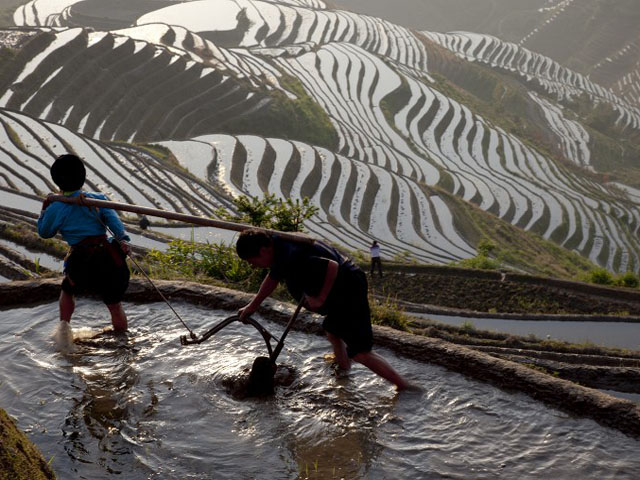
Terrace farming along the Yangtze river

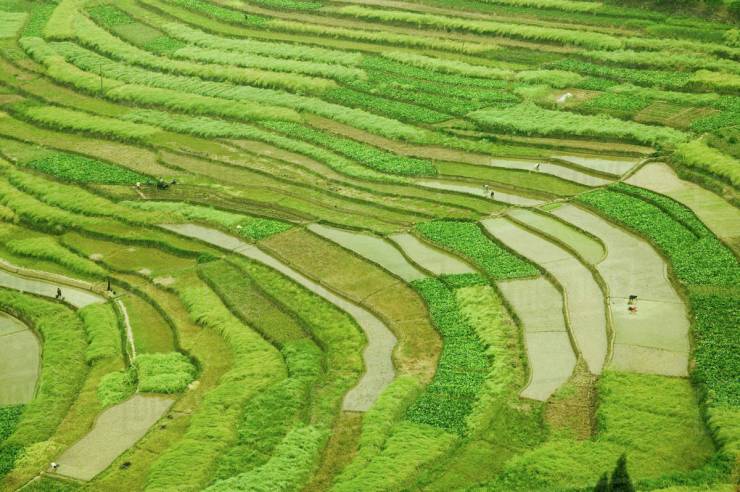
Courtesy of Daan van Reijn:

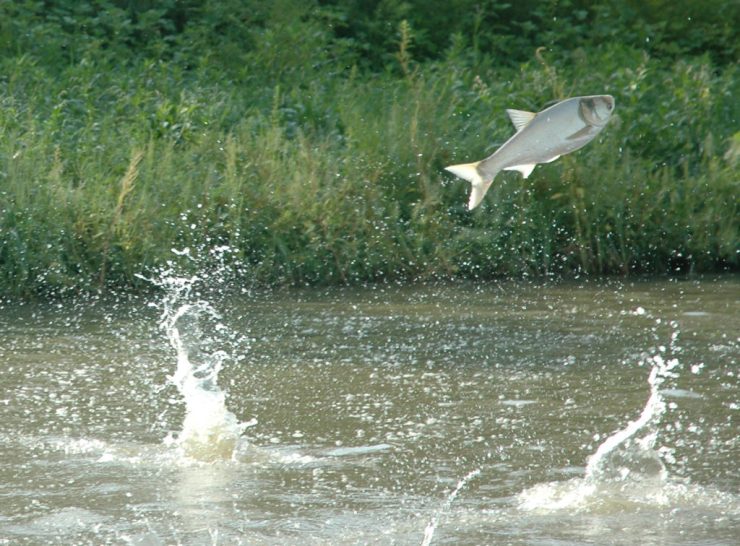
There are no birds on the Yangtze, indeed China is no place for a bird-watcher. It is hard to say if the absence of trees, the use of powerful insecticides or the plain hunger of the people who seem to kill anything that moves, is the reason for the scarceness of birds. The old beliefs changed with modern times. One was that if a fish jumped out of the water onto the deck of a ship, you could not eat it because such fish were regarded as demons. They were not thrown back into the water but taken ashore and buried in a hole. Now they are being eaten.
Silver Carp jumping
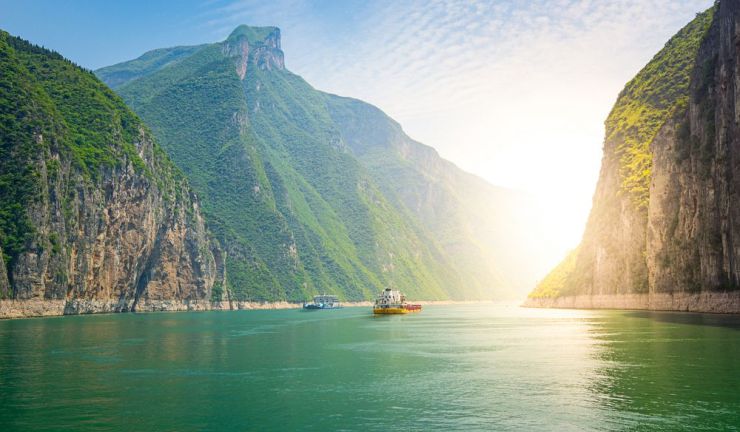
Many people come to the Yangtze to see the gorges alone. The gorges are wonderful, and it is impossible to exaggerate their splendour, but the river is long and complicated, and much greater than its gorges. The great gorges lie below Bai De (White King City), the lesser gorges just above Yichang. They are enormous limestone cliffs on each side of the river. There is no shore: the sheer cliffs plunge straight into the water. They were formed at the dawn of the world when the vast inland sea in western China began to drain east and wear the mountains away. As limestone occurs in blocks, it has cracks and corners; and so the flow zigzagged, controlled by the stone, and made right angles in the river. Looking ahead through the gorges you see no exit, only the end of what looks like a blind canyon. There is graffiti on the gorges. Some are political (Mankind Unite to Smash Capitalism), or poetic (Bamboos, flowers, and rain purify the traveller), while other scribbled characters explain that this is Wind Box Gorge, and those holes are where General Zhuge Liang made a ladder to scale the height and smash the Shu army on the top in the second century AD. The wind blows fiercely through the gorges, and it is a good thing, too, because the junks can thus sail upstream. Every rock and cliff has a name, ‘The Seated Woman and the Pouncing Lion’, ‘The Fairy Princess’. The Yangtze is a river of precise nomenclature.
Qutang Gorge on Changjiang

Entering the Three Gorges (courtesy Jean-Marc Abela):
Below an example of ancient Chinese battle art.

At Wuhan the Yangtze becomes wider, the banks lower and flatter, but the cities grow more interesting. All over the river people are fishing, some with hooks and lines, others with circulating weighted nets; some are still fishing with trained cormorants and otters. The river widens again and it is seldom possible to see the far bank. It is difficult navigating on the Yangtze for two main reasons – from December to March, the water is very low and the channel is narrow. This makes things difficult because there is a lot of traffic on the river. The second is the weather. There are fog and mist from October to April, and it is impossible to see what lies ahead. Radar is often no help. To avoid accidents some nights the junks anchor until the weather clears.
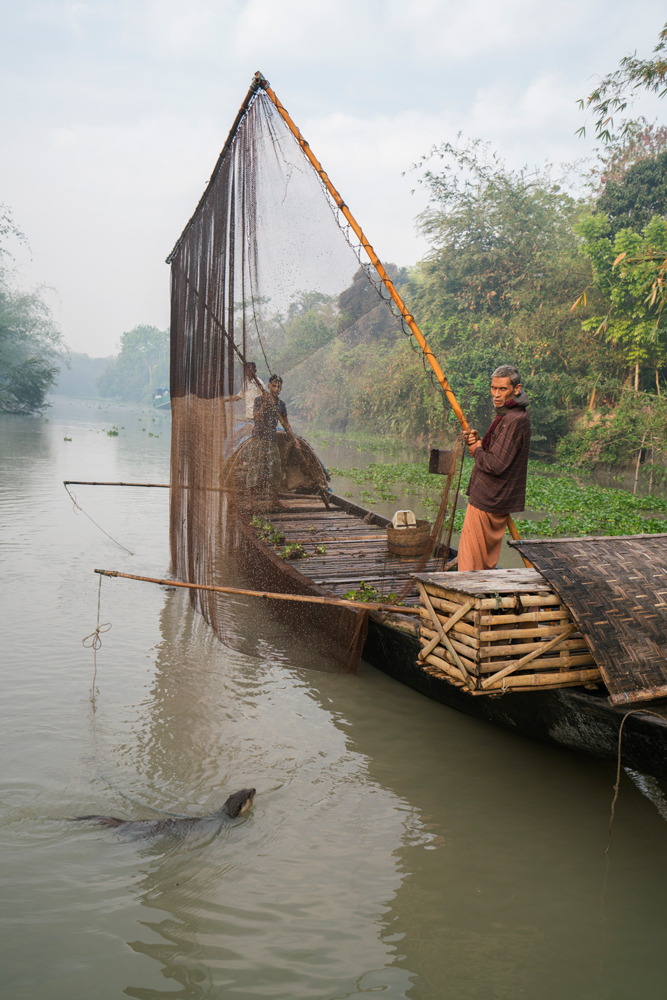
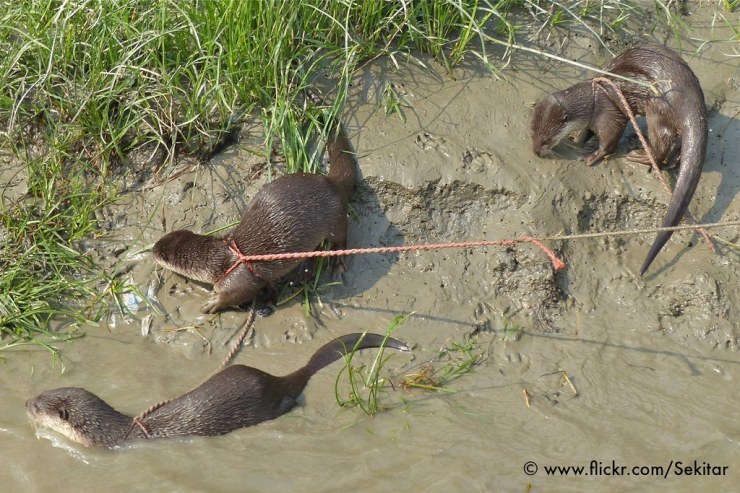
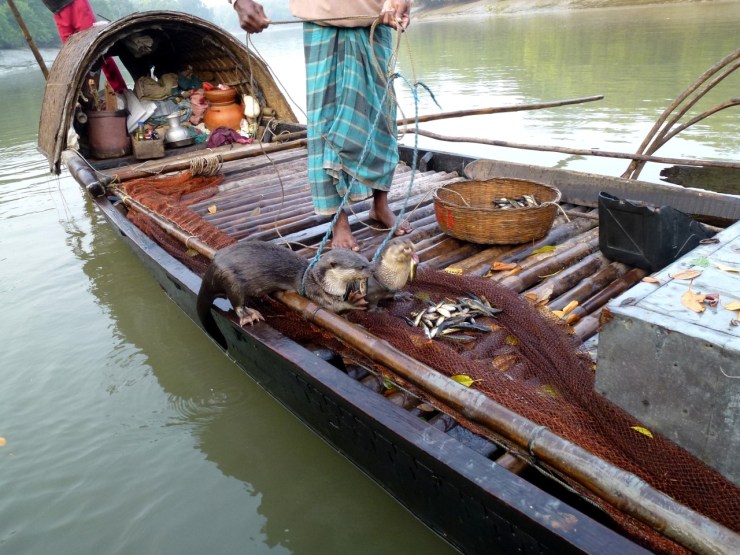

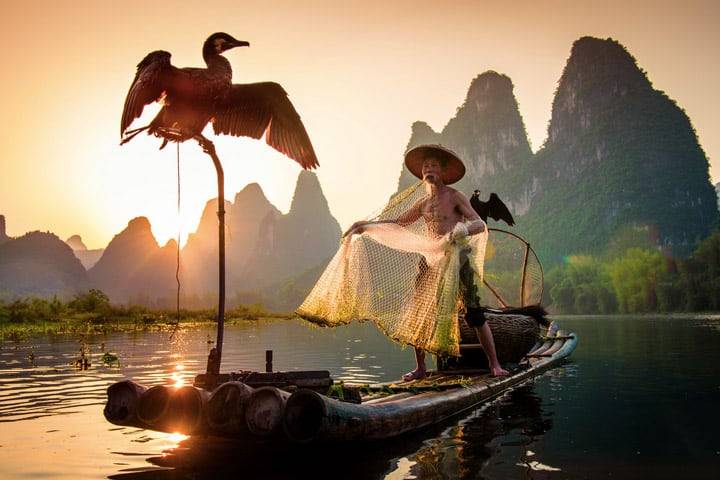
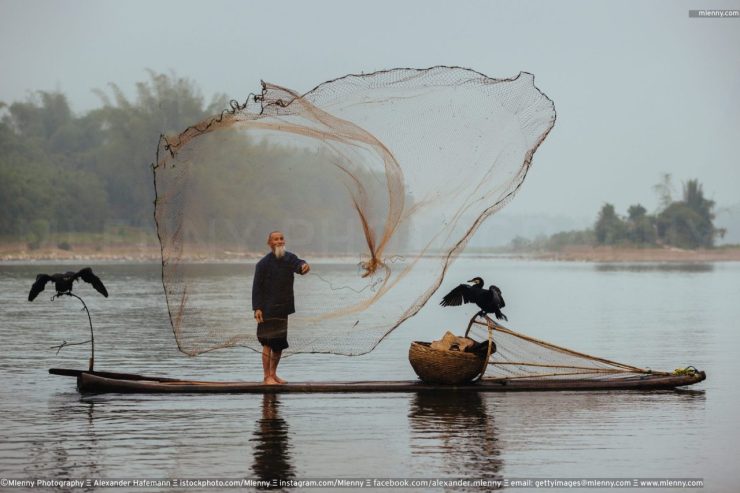
The art of fishing with birds (courtesy of Great Big Story):
At the Nanjing quays, the Yangtze is flowing to Shanghai. On the whole, very little has changed in China. People still fish in the old way, they sail and row and tow wooden junks; they water their fields carrying buckets on yokes, women wash clothes, clubbing together bundles of laundry and thrashing them in the muddy water. But Shanghai is different.
Courtesy of Aaron Shao:
The Yangtze is China: seeing it, you are prepared for everything else. It seems to contain the whole of Chinese culture, the ineradicable past and the convulsed and sometimes contradictory present. It is a great river.
Courtesy of thomeisa:


For those who have the time, a longer journey along the Yangtze (courtesy of Amazing Places on Our Planet):
 naturetails
Amazing photos and videos. Thank you.
LikeLike
Thank you, John, for the kind comments, which are appreciated.
Joanna
LikeLiked by 1 person
A wonderful collection of photos and film. There is much to admire about China which has certainly a vast range of extraordinary scenery and an impressive history. My friend Tim was one of the first tourists to visit after the bamboo curtain was opened and he went to many of these places, bringing back lots of photographs. I remember that the fishing cormorants were among them. I was there only very briefly, on our way back from Tibet which coloured my feelings terribly. While I admire the Chinese people and all they have accomplished, I find their oppressive government reprehensible. But then, I find ours equally so at present. The Yangtze is a tremendous river. I can appreciate that you could only learn to navigate it through experience and not book-learning! I so enjoyed the journey with you Joanna. Thank you for this.
LikeLike
Thank you so much, Carolyn, for the wonderful comments, which I love and greatly appreciate!
Joanna
LikeLike
Fabulous article with so many lovely pictures, videos and great information! Great job, Joanna!!
LikeLiked by 1 person
Thank you, Indira, for the wonderful comments, which are greatly appreciated!
Joanna
LikeLiked by 1 person
An amazing mystical river Joanna. Such wonderful scenery, despite what human activity has done to change it. Loved the videos, the photos of the lotters and cormorants. Happy Thursday. Allan
LikeLike
Thank you, Allan, for the wonderful comments, which I love and appreciate!
Joanna
LikeLiked by 1 person
This is a wonderful article, Joanna. It’s informative and comprehensive. It makes me want to visit China and go on a voyage on the Yangtze!
LikeLike
Fabulous, Joanna. So much to learn.
LikeLiked by 1 person
Thank you, Neil, for the beautiful comments, which I love and appreciate!
Joanna
LikeLiked by 1 person
Thank you, Pat, for the kind comments, which are greatly appreciated!
Joanna
LikeLike
I’d love to go on an expedition to follow this river but it is unlikely now. A wonder-filled post, Joanna, thank you. 🙇♂️
LikeLike
Thank you, Ashley, for the kind comments, which are much appreciated!
Joanna
LikeLiked by 1 person
Thank you, Joanna, for such an insightful and engaging post on the Yangtze River. You’ve aptly highlighted its role as China’s lifeline and one of the busiest waterways in the world.
The piece is rich with fascinating details, terrace farmers carrying water with yokes, women washing clothes, and the unique practice of fishing with birds. While these traditions are intriguing, some of them do feel like they belong to a time that perhaps needs rethinking. The visuals you’ve shared truly bring these scenes to life. That said, the idea of birds being used or harmed is quite disheartening, watching and appreciating them in their natural habitat feels far more meaningful.
The mention of the superstition about fish jumping onto decks was particularly interesting. The Yangtze’s devastating floods also reminded me of the Kosi River in Bihar, often called the “Sorrow of Bihar” due to its destructive annual floods that damage fertile land and disrupt rural livelihoods. Having worked in the Kosi-affected regions, I’ve witnessed firsthand the havoc it can cause, especially given its tendency to frequently change course.
Thank you once again, Joanna, for sharing yet another gem. As always, your choice of images and videos is spot on and deeply engaging.
LikeLike
Thank you so much, Kaushal, for the wonderful and analytical comments, which I love and deeply appreciate! Thank you for your thoughts on using the birds in fishing, as I share your concerns. Your kind words made my day!
Joanna
LikeLiked by 1 person
It’s truly my pleasure, Joanna, to go through your well researched posts. You’re always welcome! Namaste 🙏
LikeLike
Thank you, Kaushal! Namaste.
Joanna
LikeLiked by 1 person
Joanna,it was great description of ” Yangtze” the great river of China !It seems to contain the whole of Chinese culture, the ineradicable past and the convulsed and sometimes contradictory present. It is the life line of China.Quite interestingly, there was a popular superstition that if a fish jumped out of the water onto the deck of a ship, you could not eat it because such fish were regarded as demons. They were not thrown back into the water but taken ashore and buried in a hole. Now they are being eaten !At Wuhan, on the Yangtze river people are fishing, some with hooks and lines, others with circulating weighted nets; some are still fishing with trained cormorants and otters. You have very well described the Terrace Farming along the Yangtze & the ship ride on the great river of china along the challenges faced !Thanks for sharing,Joanna
LikeLike
Thank you so much, Dhirendra, for the wonderful comments, which are very much appreciated!
Joanna
LikeLiked by 1 person
You did it again: A wonderful, detail description of the great river and the people whose lives are tied to it.
LikeLike
Thank you, Diana, for the wonderful comments, which are greatly appreciated!
Joanna
LikeLiked by 1 person
What a beautiful music video and photos to wake up to Joanna! Thank you! 🙏 💕
LikeLike
Thank you, Cindy, for the kind comments, which are greatly appreciated!
Joanna
LikeLiked by 1 person
❤️❤️❤️
LikeLike
XXX!
Joanna
LikeLiked by 1 person
I found your post, as always, wonderful, dear Joanna.
It gave me the opportunity to learn so much.
Thanks a lot for posting it.
LikeLike
Thank you, dear Luisa, for the wonderful comments, which I love and greatly appreciate!
Joanna x
LikeLiked by 1 person
You’re so very welcome!
LikeLike
Thank you Joanna, for a wonderful and interesting post. 🌿🌺☘️💟
LikeLike
Thank you, Morag, for the wonderful comments, which are greatly appreciated!
Joanna
LikeLiked by 1 person
You are welcome, my wi-fi is playing up as usual so I couldn’t see your videos posts but I will come back again when the WiFi is back. That’s my only complaint about living out in nature… WiFi is slow (which could also be seen as a blessing 😉) xx
LikeLike
Thank you, Morag!
Joanna
LikeLiked by 1 person
This is fabulous, Joanna! Thank you for taking us on a wonderful journey of exploration of Yangtze.
LikeLike
Thank you, Punam, for the wonderful comments, which are greatly appreciated!
Joanna
LikeLiked by 1 person
My pleasure, dear Joanna.
LikeLike
Thank you, dear Punam!
Joanna x
LikeLike
What a beautiful and impressive story about the Yangtze River… it’s not just a river, it seems like a mirror reflecting the history, culture, and life of an entire people. Its landscapes, its power, and the stories it holds make it truly fascinating.
Hugs, my friend Joanna.
LikeLike
Thank you, Lincol, for the wonderful comments, which are greatly appreciated!
Joanna
LikeLike