

“At first, I thought I was fighting to save rubber trees,
then I thought I was fighting to save the Amazon rainforest.
Now I realize I am fighting for humanity.”
Chico Mendes, Brazilian Environmentalist
“Mother Earth” by Wuauquikuna (courtesy of Wuauquikuna Official):

“Destroying rainforest for economic gain is like
burning a Renaissance painting to cook a meal.”
E. O. Wilson – American researcher, theorist, naturalist, and author
“Dreams of the Winds” (courtesy of bardmyUTube):


The Amazon River in South America is the largest river by discharge volume of water in the world. There is some dispute about whether the Amazon is actually longer than the Nile. Its length is at least 4000 miles from its source Mantaro River to its mouth in the Atlantic Ocean on the northeastern coast of Brazil; a length that is similar to the distance from New York City to Rome. The Amazon River runs through Guyana, Ecuador, Venezuela, Bolivia, Brazil, Colombia, and Peru.
Exploring in Peru (courtesy of Drink Tea & Travel):

A quick guide to the Amazon (courtesy of FactSpark):
The Amazon River was named after the fierce women of Greek mythology known as Amazons. On Sunday 12th February 1542, a small party of Spaniards, led by Francisco de Orellana, a one-eyed conquistador, chanced upon the river while looking for cinnamon.
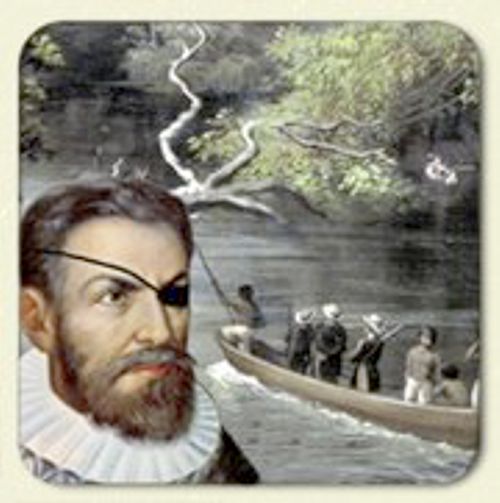

Above is the bust of Francisco de Orellana in his birthplace of Trujillo, Extramadura, in Spain.
De Orellana gave the river its name after reporting pitched battles with tribes of female warriors, whom he likened to the Amazons of Greek mythology. His awe and amazement at the river in flood are registered in his writing: “It came on with such fury and with so great an onrush that it was enough to fill one with the dreadest fear to look at it, let alone to go through it… and it was so wide from bank to bank from here on that it seemed as though we were navigating launched out upon a vast sea.” Orellana’s discovery brought Europeans to descend on the river of the Amazons. It wasn’t a happy time for the natives.
Lost Cities of the Amazon (courtesy of National Geographic):
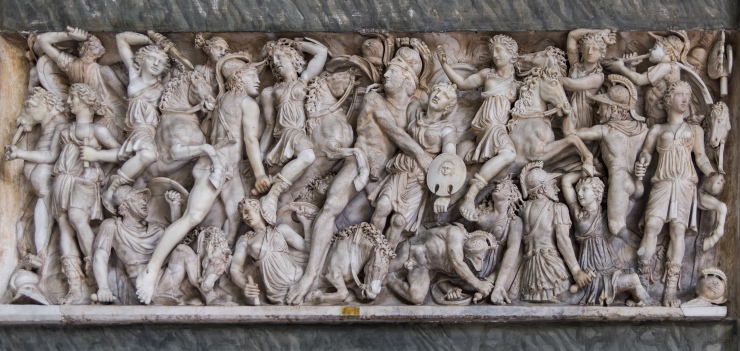
The image below shows the battle between the Greeks and the Amazons depicted on a marble sarcophagus on display in the Octagonal Court of the Pio Clementino Museum in Vatican City.
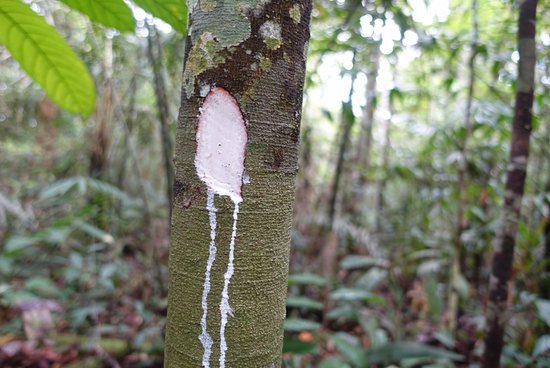
Later on, Europeans noticed a tree that the natives called ‘the wood that weeps’. A French polymath, who travelled down the river in 1736, sent a specimen to Paris. But for a century the West had no serious need of rubber. The Industrial Revolution, and Charles Goodyear’s vulcanisation process which ensured rubber’s constant consistency, changed all that. The Amazon became a second Klondike and rubber its black gold. Under the auspices of Kew Gardens, Henry Wickham smuggled 70,000 Brazilian rubber seeds to London. Only 2,000 germinated, but it was enough to start plantations in Malaya and Ceylon. The riches of the Amazon were no more.
Below is shown latex sap oozing from the rubber tree.

The story of Chico Mendes (courtesy of Vox):
The Amazon river runs through the rainforest rather than alongside roads and for that reason it didn’t have bridges until one was built in 2011 in Manaus, the largest city on the border of the Amazon in Brazil.
Below is shown the Rio Negro bridge in Manaus.

Flight over the Amazon and Manaus (courtesy of Georg Fietz):
In 2007 a Slovenian man named Martin Strel swam a record-breaking length of the Amazon River (3,273 miles), covering ten hours a day for 66 days. It was a great achievement, but all I can say, rather him than me. If I was tempted to attempt such a journey, I think my family would wait at the end of the my swim with the men in the white coats. You will understand why when you read about the animals that live in this river. To ensure that you are fully dissuaded from attempting his endeavour, you should note that the escort boats which were following Martin were prepared to pour blood into the river to distract meat-eating fish such as piranhas!

Above is Martin Strel undertaking his epic swim along the Amazon River.
Courtesy of UPROXX Studio:
The Amazon River is one of the natural wonders of the world, flowing through the remote Amazon rainforest. The river is made up of over 1,100 tributaries, seventeen of which are longer than 1,600 km. Marajo, the world’s largest river island with an area of 48,000 square km is located on the Amazon and is about the size of Switzerland.
Image below shows the mouth of the Pará River in Brazil, part of the greater Amazon River system. The river is separated from the larger part of the Amazon delta by Ilha de Marajó (Marajo Island).

“River Journey” by Wayra:
The Amazon River is 11 million years old. It originated as a transcontinental river, and it took its present shape approximately 2.4 million years ago. Its great importance is the fact that the rivers connected with the Amazon flow directly into the ocean maintaining the ocean currents, and therefore controlling the region’s climate.
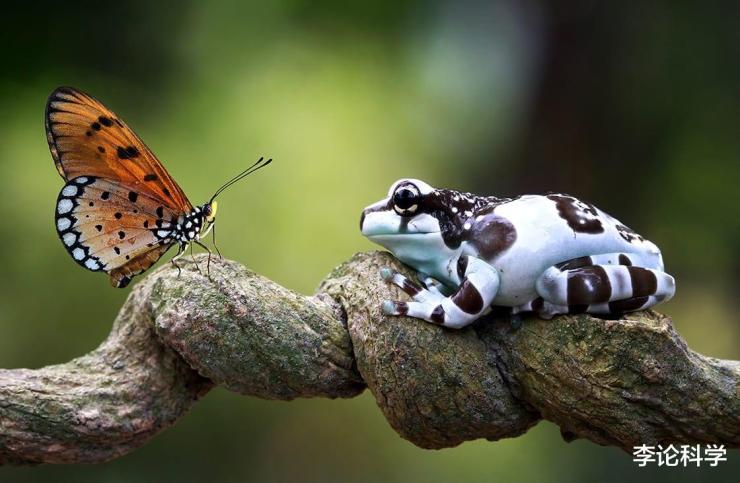
Animal life of the Amazon River is difficult to assess fully because of the great diversity of its flora, some still not identified. The river is vibrating with about 2,500 fish species, and the forest canopy above resonates with the cries of many birds, monkeys and chirruping insects. There is a notable paucity of the largest terrestrial mammal species, indeed many mammals are arboreal. Among the many animals are caimans, river turtles, and the largest semiaquatic capybara, the largest in the world rodent.
Below is Black Caiman (image courtesy of International Expeditions).

Below is South American River Turtle (image courtesy of International Expeditions).
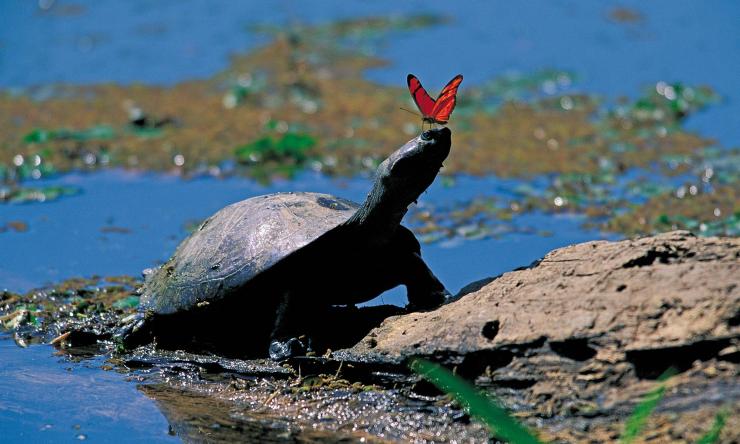
Below is a family of Capybaras (image courtesy of International Expeditions).

In the river, the most important ones are the Pirarucu, one of the world’s largest freshwater fish, and various giant catfish. The small flesh-eating piranha generally feeds on other fish but may attack any animal or human that foolishly enters the water.
Below is shown the benign countenance of the red-bellied Piranha.

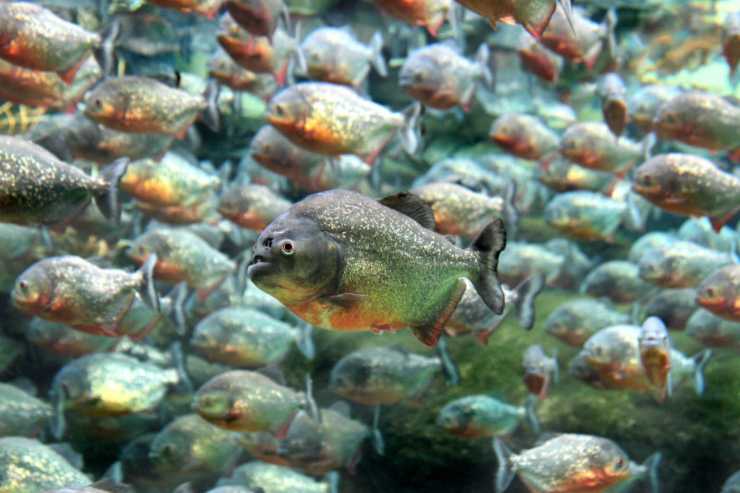
The Amazon River is the prime habitat of Boto, the largest species of river dolphins and which is also known as the Amazon River Dolphin. Another dolphin, the Tucuxi is also found in the Amazon basin and coastal waters. The largest freshwater fish in the world, the Pirarucu have been found to reach a length of 4 metres and can weigh close to 200 kilograms.
Below is Boto, the pink Amazon river dolphin (second image courtesy of International Expeditions).


Courtesy of BBC Earth:
Below are Tucuxi river dolphins in the Amazon

The Mighty Amazon and River Dolphins (courtesy of BBC Studios):
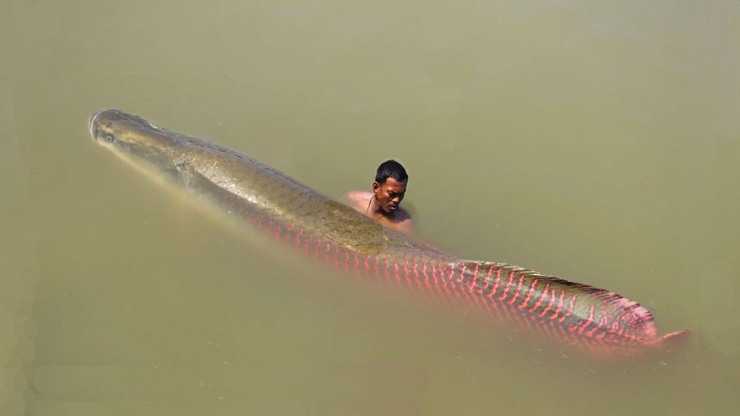

Above are shown photos of Pirarucu (arapaima gigas).
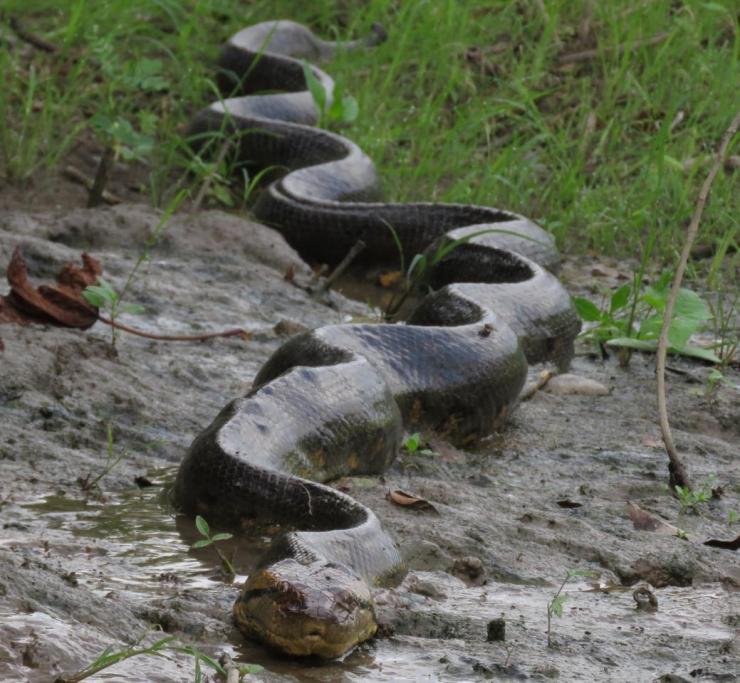
And now try to read with your hands over your eyes, the way I am writing: in the shallow waters of the Amazon Basin lurk Anacondas, the largest snakes in the world. They grow to 5 metres (17 feet), and weigh 550 pounds! They occasionally attack larger animals, like goats, that have got too close to the water, but they wouldn’t say no to a tasty human. Goodbye, Amazon! I am not, ever, coming to see you!
Below is Green Anaconda (image courtesy of International Expeditions).
Perhaps more than you wish to know about these creatures (courtesy of Nat Geo WILD):
Some adventurers braver than me! (courtesy of BigAnimals Expeditions):
By the way, the Italian composer Ottorino Respighi faced his fear of coming face to face with snakes at Rio’s zoo in his “Brazilian Impressions.”
“Butantan” (In a snake-garden) from “Brazilian Impressions” (courtesy of Billy Stewart):
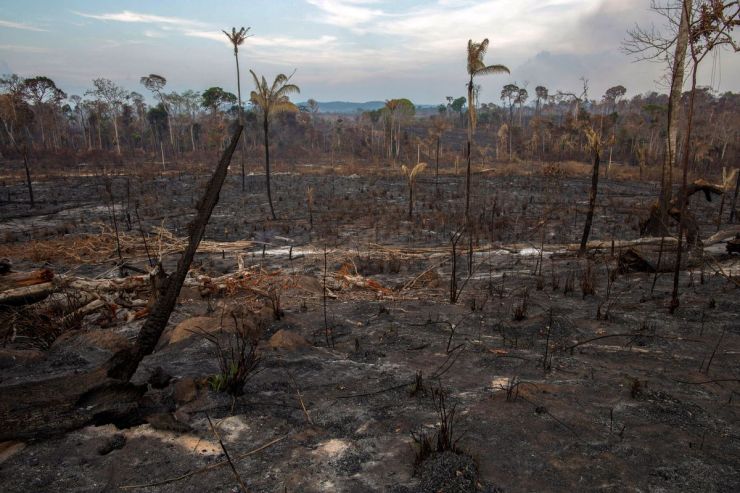
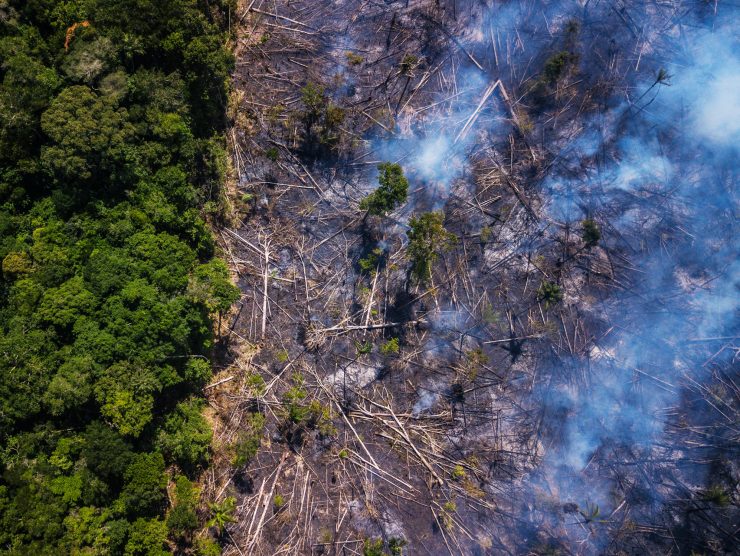
The forest fires in the Amazon rainforest happen naturally, but in the last year or so most were started by farmers and loggers clearing land for crops. Shame.


Courtesy of Behind the News:
“Under The Canopy” (courtesy of Conservation International):
The man who grew his own rainforest (courtesy of BBC World Service):
And finally, I think that you may have noticed that the most frequently used words in this post are:
THE LARGEST IN THE WORLD!


Fantastico! Siempre que encuentro tu blog, me gusta. Te mando un gran abrazo desde mi rincón del mundo!
LikeLike
Such a wild beautiful place Joanna. It is too bad humans can not coexist better with nature. Somebody always has to exploit it for financial gain. Happy Thursday. Allan
LikeLike
Joanna ji, your article is not just informative it feels like a profound awakening of consciousness.
From the powerful words of Chico Mendes to the timeless warning of E. O. Wilson, the way you have woven emotion, history, and ecological truth together is deeply moving.
The Amazon River emerges in your writing not merely as a river, but as the very heartbeat of our planet. Through your words, one can feel both its magnificence and its silent suffering.
What makes this piece truly remarkable is how seamlessly you connect nature, human history, biodiversity, and the consequences of human greed reminding us that this is not just a fight for forests, but for the future of humanity itself.
While reading, an unspoken truth keeps echoing within:
When we destroy nature, we unknowingly reduce our own future to ashes.
Your article does more than inform it instills a deep sense of responsibility and inner reflection.
Thank you, Joanna ji, for such a sensitive and thought-provoking creation. May your writing continue to awaken hearts and inspire a deeper connection with our Earth.
Vijay Srivastava
LikeLike
Thank you, Allan, for the wonderfully thoughtful comments, which I love and appreciate!
Joanna
LikeLiked by 1 person
Thank you, dear Vijay, for the wonderfully analytical comments, which I love and deeply appreciate! Your kind words made my day!
Joanna
LikeLiked by 2 people
Thank you for the beautiful comments, which are greatly appreciated!
Joanna
LikeLiked by 1 person
Amazing Joanna. Love the dolphins less fond of the snakes.
LikeLike
Thank you, Pat, for your thoughts on the wildlife of the Amazon.
Joanna
LikeLiked by 1 person
Fascinating article on the River Amazon with superb supporting materials of images and videos! Well done, Joanna!
LikeLike
Thank you, Indira, for the wonderful and uplifting comments, which I love and greatly appreciate!
Joanna
LikeLiked by 1 person
The Amazon is one of those places I would have gone, if I’d had the time and funds, but alas. Just to see the wildlife (bar anacondas and piranhas) would have been wonderful but that vast jungle too is so amazing and the indigenous peoples so fascinating. It makes me weep to think of it on fire. When will people learn? I enjoyed the story of Martin Strel…can’t believe he survived! Many years ago I saw a wonderful film about the Peruvian Amazon, not entirely true but based in fact about a steamship that was transported across the Andes by a man obsessed with opera who hoped to open an opera house in Manaus. It is called Fitzcarraldo. Perhaps the Amazon inspires people to mad endeavours! A wonderful piece Joanna. Let us hope mankind will wise up before it is too late.
LikeLike
Thank you so much, Carolyn, for the wonderfully thoughtful comments, which I love and deeply appreciate!
Joanna
LikeLike
Strel swam 3,273 miles??
Unbelievable!!!!!!!!
LikeLike
Great post, Joanna!
“At first, I thought I was fighting to save rubber trees,
then I thought I was fighting to save the Amazon rainforest.
Now I realize I am fighting for humanity.”
Chico Mendes, Brazilian Environmentalist
“Mother Earth” by Wuauquikuna (courtesy of Wuauquikuna Official):”
I’ll be coming back to this all week.. Thank you❣️
LikeLiked by 1 person
Thank you, Cindy, for the wonderful comments, which are greatly appreciated!
Joanna
LikeLiked by 1 person
Thank you, Neil, for your thoughts on my post about Amazon! Very much appreciated!
Joanna
LikeLiked by 1 person
❤️❤️❤️
LikeLike
A fascinating read, Joanna. Another post full of wonderful insights into what is surely an amazing river. Thank you. Enjoy your weekend. 🤗💓🙇♂️
LikeLike
Thank you, Joanna, for this thoroughly researched and captivating post on yet another magnificent river, the Amazon. It was a real pleasure reading about it, especially after your post on the Ganges. The opening words of Chico Mendes beautifully capture the essence of the post.
The mention of Morazo brought to mind Majuli Island in Assam, India. I was truly amazed to learn about Martin Strel’s extraordinary feat, swimming the entire stretch for 66 days, ten hours each day. Remarkable indeed.
It was fascinating to discover that the Amazon derives its name from the legendary warrior women. The references to dolphins, deadly anacondas, and piranhas add to the river’s mystique. Equally surprising was the fact that the Amazon had no bridge until 2011. Your note on rubber plantations reminded me of Kerala, India’s largest rubber-producing state, where I’ve seen such landscapes firsthand.
Forest fires, too, struck a familiar chord. I once witnessed them in the forests of Uttarakhand, where locals mentioned that while some fires occur naturally, others are deliberately ignited for selfish political or financial gains. In that context, E. O. Wilson’s quote-“burning a renaissance painting to cook a meal”- feels painfully apt.
Your post powerfully underscores the urgent need to reassess and repair our relationship with nature i.e. plants, animals, and the earth itself, since all are deeply interconnected. The destruction of rainforests and the displacement of indigenous communities must be halted. Human greed, it seems, knows no limits, but one can only hope that wisdom will ultimately prevail.
I truly enjoyed this enriching and thought-provoking post. Your selection of videos is awesome and a treat to watch, especially the ones on Mother Earth and Dreams of the Winds stood out for me. Omar Tello’s contribution was equally insightful. Thank you once again, Joanna, for sharing such an enlightening piece this week.
LikeLike
Thank you, Ashley, for the kind comments, which are greatly appreciated.
Joanna
LikeLiked by 1 person
Thank you so much, Kaushal, for the wonderfully analytical and thoughtful comments, which I love and deeply appreciate! As always, your kind words lift my spirit and make my day!
Joanna
LikeLiked by 1 person
It’s truly my pleasure, Joanna, to go through the varied contents of your posts which are not available elsewhere. You’re so very welcome!
LikeLike
Thank you so much, Kaushal, for the wonderful reply!
Joanna
LikeLike
Absolutely fascinating post. The Amazon is awe-inspiring, and it is sad that the greed and short-sightedness of humans are a threat it.
LikeLike
Thank you, Diana, for the thoughtful comments, which are greatly appreciated!
Joanna
LikeLiked by 1 person
Thank you dear Joanna!
A tremendous post!
Sharon 💕💐
LikeLike
Thank you, dear Sharon, for your wonderful comments, which I love and appreciate!
Joanna x
LikeLiked by 1 person
My pleasure! ♥
LikeLike
Thank you!
Joanna x
LikeLiked by 1 person
Thank you, Joanna, for the well researched and engaging post on the magnificent river, the Amazon which was real pleasure reading about the longest river. The opening para of Chico Mendes beautifully captures the essence of the post. This creation of yours is truly remarkable in connecting with nature, the human history, vast biodiversity.The consequences of human greed are pointing out to us that its not just a fight for forests, but for the future of humanity itself and is a great awakening call for the wise ones to make amends .Your details on the deadly anacondas ,fishes ,Dolphins &rubber plants are quite amazing!Thanks for your painstaking efforts to assimilate precious information & for the excellent presentation to your sincere readers & followers ,Joanna
LikeLike
Thank you so much, Dhirendra, for the wonderfully analytical comments, which I love and deeply appreciate!
Joanna
LikeLiked by 1 person
All my pleasure, Joanna! Namaste🙏
LikeLike
Thank you so much, Dhirendra! Namaste.
Joanna
LikeLiked by 1 person
Such a well-researched write, Joanna. You bring alive a river that is fascinating and magnificent.
LikeLike
Thank you, Punam, for the wonderful comments, which are greatly appreciated!
Joanna
LikeLiked by 1 person
My pleasure, Joanna.
LikeLike
The Amazon is an immense treasure of life, nature, and history that we must all protect.
Its beauty, its animals, and the power of its river—the largest in the world—are truly impressive.
A very interesting post that makes us reflect on the importance of protecting our planet.
Greetings, Joanna.
LikeLiked by 1 person
Thank you, Lincol, for the thoughtful comments, which are greatly appreciated.
Joanna
LikeLiked by 1 person