
“I never think of the future. It comes soon enough.”
“If you want to live a happy life, tie it to a goal, not to people or things.”
Albert Einstein
Courtesy of Prince Ea:
The posts of scientific discoveries are dedicated to some of the people whose brilliant minds and perseverance have helped shape the modern world. They are by no means the only geniuses in history, nor are they only inventors, but those whose biographies feature here are icons in the history of technology. Discoveries in physics, chemistry, and biology underpinned most of the other important advances of the nineteenth century, including the electric motor and generator, photography and antiseptic surgery, and later on, the telephone, the motor car, electrification, television, radio, sound recording, cinema, the aeroplane, the helicopter and artificial fertilisers. But innovations have not faltered then: the second half of the twentieth century saw rockets reach the Moon, the rise of electronic computers, tremendous advances in medicine and the invention of the World Wide Web. And so without delay, let’s continue our stroll through the ‘Second Industrial Revolution.’
“Sleeping Satellite” by Tasmin Archer (courtesy of Alex G):
VLADIMIR ZWORYKIN
30 July 1889 – 29 July 1982

Television changed the way of life of hundreds of millions of people in the twentieth century, but the history of this far-reaching invention is far from simple: dozens of inventive people contributed to its development, one of the most significant pioneers was Russian-born inventor Vladimir Zworykin, who also made important contributions to the development of the electron microscope.
Below is Murom, Russia

Vladimir Zworykin was born in the town of Murom, in what was then the Russian Empire. As a child, he spent time installing and repairing electric doorbells in family-owned passenger steamships. In 1912, he obtained a degree in engineering from the Saint Petersburg Institute of Technology. At the Institute, one of Zworykin’s Professors, Boris Rosing (1869-1933) showed him a project he had been working on in secret. Rosing called it ‘electric telescopy’ – one of the early names for television; several other people in other countries were working on the same idea.
Below is the Saint Petersburg Institute of Technology

Below are Boris Rosing and a drawing of his design for a television system

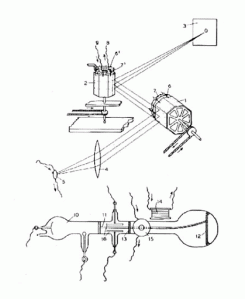
Indeed, as early as 1908, the Scottish engineer A A Campbell Swinton (1863 – 1930) had published a letter in which he outlined his concept for ‘distant electric vision’ using the cathode-ray tube, invented in 1897 by German physicist Karl Ferdinand Braun (1850-1918). A cathode-ray tube is a glass tube, from which the air has been removed, in which a beam of electrons strikes a flat screen. The inside of the screen is coated with chemical compounds called phosphors, which glow wherever electrons collide with them. Electromagnets positioned around the tube control the direction of the beam, and the television signal fed to the magnets causes the beam to scan in horizontal lines across the screen.
By scanning the whole screen in this way several times every second, while also varying the intensity of the electron beam, it is possible to display a moving image. Swinton never attempted to build the system he has conceived, and while Rosing was a pioneer, his system was crude and unwieldy and never worked.

In 1919, after the Bolshevik Revolution during the Russian Civil War, Zworykin emigrated to the USA. Within a year he began working at the Westinghouse Electric and Manufacturing Company in Pittsburgh. In 1923, after spending a considerable amount of his spare time working on television, he applied for a patent.
Pittsburgh, USA

Courtesy of Dustin McGrew:
Westinghouse Electric and Manufacturing Company
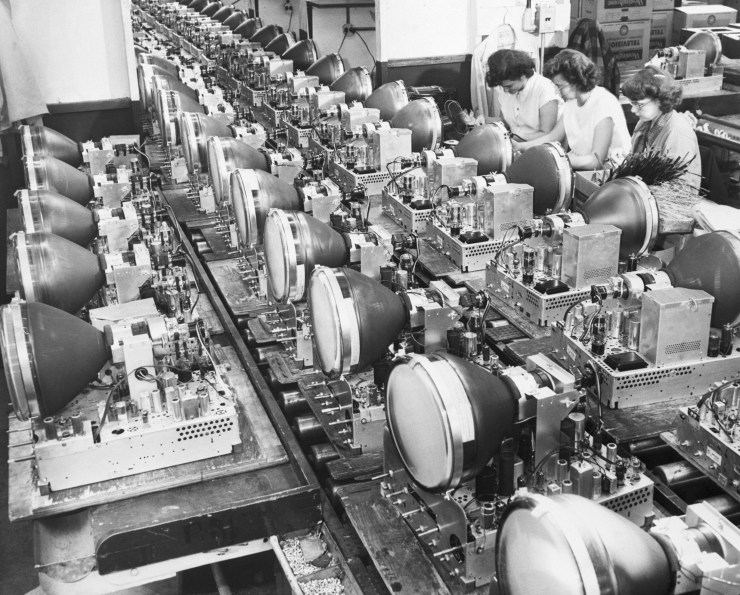
As an aside, the founder of the above company was a remarkable individual too (courtesy of Great Documentaries):
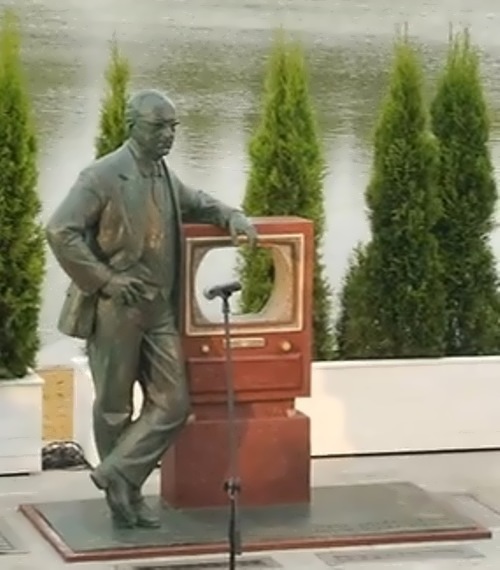
Zworykin’s system used one cathode-ray tube to display pictures and another one in the camera. Inside his television camera, the light fell on the screen of the cathode-ray tube. Instead of phosphors, this screen was coated with light-sensitive dots made of potassium hydride. An electron beam scanned the screen, as in the picture tube, and each light-sensitive dot produced a signal that depended on the brightness of the image at that point. After submitting an improved patent application in 1925, Zworykin demonstrated his television system to his employers at Westinghouse. The images were dim and stationary, and his employers were not impressed.
Below is Radio Corporation of America and its symbol Nipper in His Master’s Voice
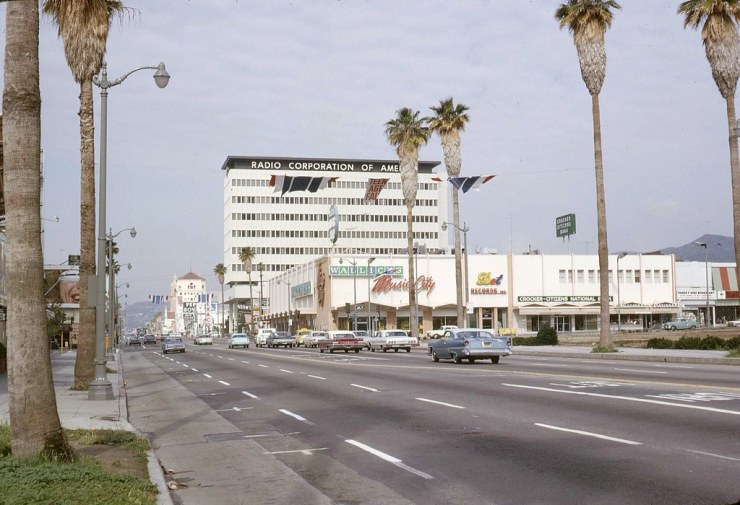
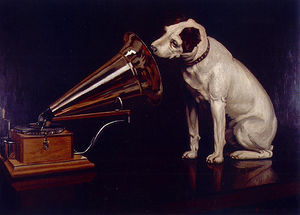
He had a more favourable response when he showed it to the Radio Corporation of America (RCA) in 1929. Zworykin’s camera, later dubbed the Iconoscope, would become the standard way of producing television pictures. Zworykin developed the technology further at the RCA. In 1939, the company demonstrated it at the New York World Fair, and, in 1941, the RCA began regular commercial television broadcasts in the USA.
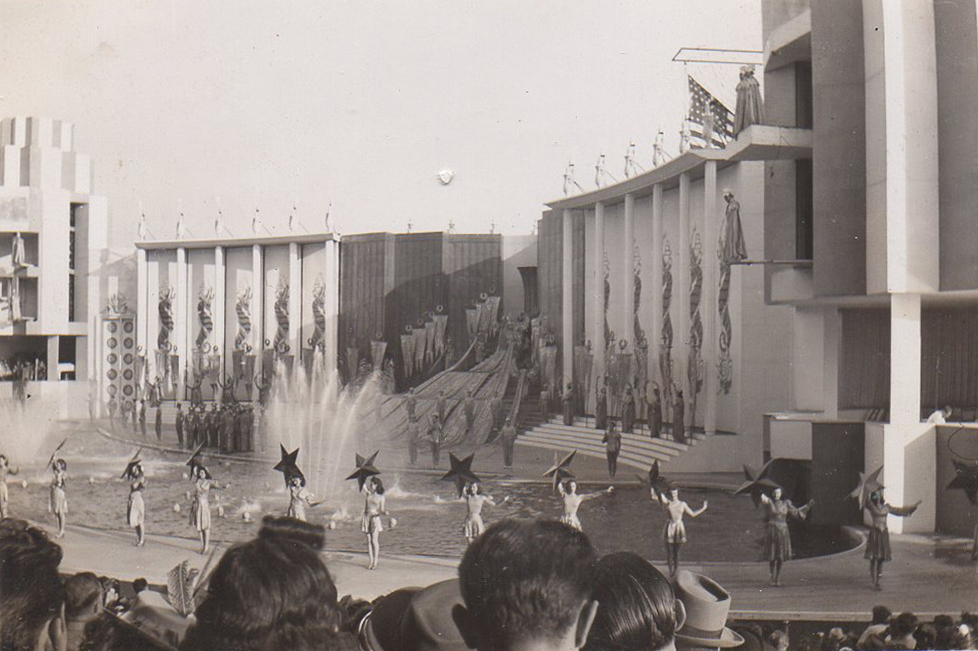
Courtesy of The History of TV:
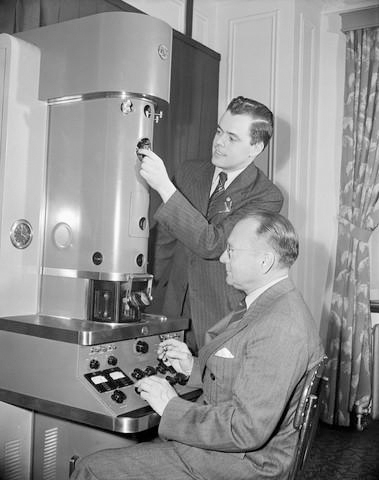
Zworykin’s work on the electron microscope stemmed from his wealth of experience working with images and electrons. In 1938, he employed a Canadian electronics engineer James Hillier (1915-2007), and worked with him to improve upon the electron microscope, which had been invented in the early 1930s in Germany. In particular, the team developed the scanning electron microscope, in which a beam of electrons scans a sample – not unlike what happens inside a cathode-ray tube. In 1940, Zworykin’s team achieved the first magnification greater than 100,000x – a huge improvement in the technology.
Below Vladimir Zworykin demonstrates the first electron microscope in the US in 1940
In addition to his work in television and electron microscopy, Zworykin developed infrared ‘night vision’, missile guidance system, and security systems that used ‘electric eyes’. He received a total of 120 US patents. The night-time vision device, the Snooperscope, was sensitive to infrared radiation – or ‘heat rays’ – which warm-blooded animals (including humans) emit with greater intensity than non-living things, by virtue of their warm bodies. Zworykin’s device helped soldiers in night-time conflicts during World War II.
The Snooperscope

I would like to end with my only slightly exaggerated view of the television, as I do watch the news, nature, and science documentaries, and I am grateful to Mr. Zworykin, with the famous Groucho Marx quote:
“I find television very educating. Every time somebody turns on the set, I go into the other room and read a book.”


“Rocket Man” by Elton John (courtesy of Lone Wolf):
WERNHER VON BRAUN
23 March 1912 – 16 June 1977
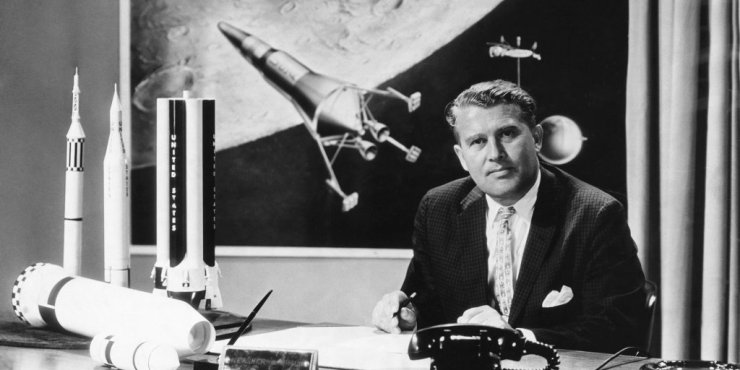
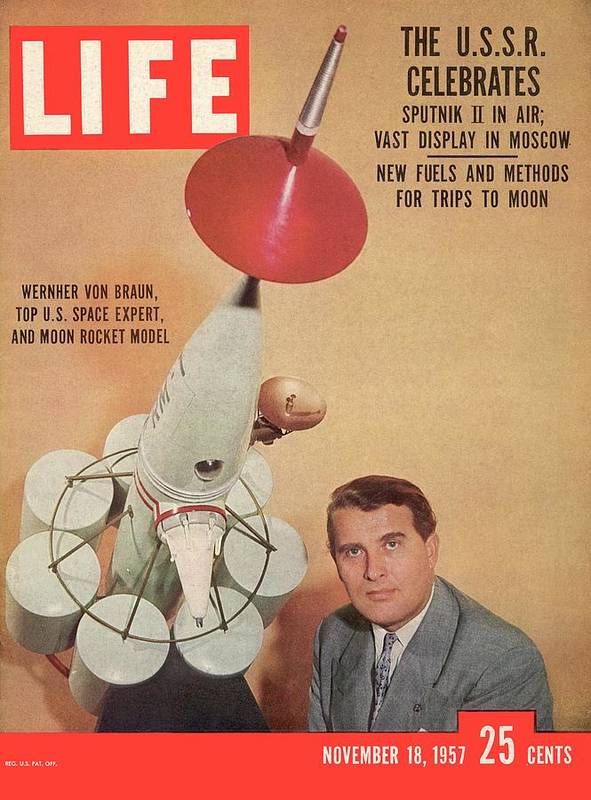
The German-American rocket engineer Wernher von Braun designed the first rocket-powered long-range ballistic missiles – but his real achievement was in spaceflight. His determination in following his boyhood dream of sending people to the moon, together with his excellent technical and leadership skills, made him the ultimate spaceflight pioneer of the twentieth century.
Courtesy of Sigma Rockets:
Wernher von Braun was born a baron, to an aristocratic family in the town of Wirsitz, in the then German Empire (now Wyrzysk in Poland). After the First World War, his family moved to Berlin, Germany. Young Wernher became interested in space when his mother, a serious amateur astronomer, gave him a telescope – and he was mesmerised by stories of journeys into outer space. Von Braun studied mechanical engineering at the Charlottenburg Institute of Technology, in Berlin. While there, he joined the Verein fur Raumschiffahrt (VfR) – the Society for Spaceship Travel – and became involved in building and firing early liquid-fuel rockets.
Charlottenburg Institute of Technology in Berlin
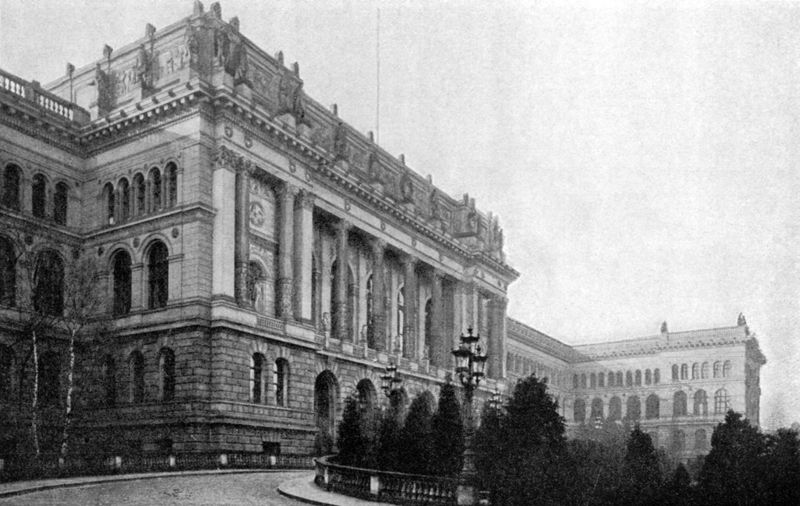
Von Braun joined the German army’s Ordnance Division in October 1932, developing and testing rockets at an artillery range in Kummersdorf, near Berlin. He became technical head of the ‘Aggregate’ programme, whose main aim was to design rockets for use as long-range ballistic missiles. In 1935, the von Braun team moved to Peenemunde, on the Baltic coast, where the programme continued until the end of the Second World War, in 1945. Each rocket in the proposed Aggregate series was bigger and more ambitious than the last.

The A9/10, had it ever been launched, would have been a 100-tonne, two-staged rocket aimed at New York, United States. The A12 would have been a true orbital launch vehicle, able to place satellites into orbit. The only Aggregate rocket to see service was the A-4, better known as the V-2. Designed by the von Braun team, this was the world’s first reliable liquid-fuel rocket. By the end of the war, more than 3,000 had been launched; these terrible weapons, built by prisoners-of-war, rained destruction upon England, Belgium, and France from 1944 onwards. Von Braun’s involvement in the weapon’s developments and his membership of the Nazi party remains controversial, but he was always preoccupied with his real goal of sending rockets into space.
Launch of V2 rocket at Pennemunde
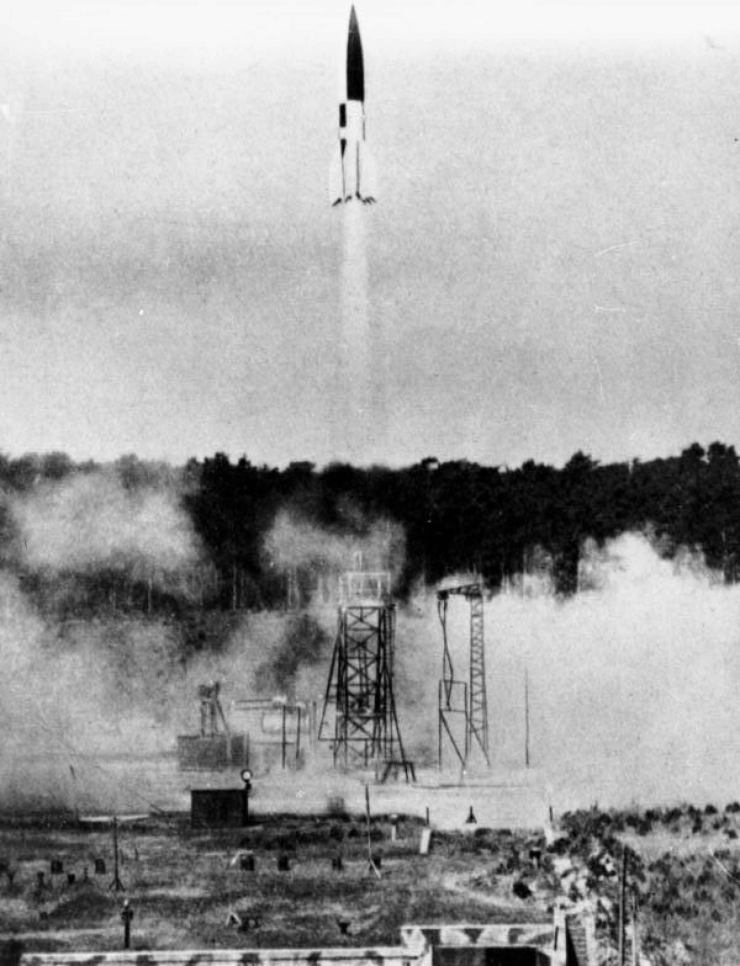
When the war ended, the US Army took von Braun and his team of workers to the United States. In 1950, von Braun settled in Huntsville, Alabama, where he headed the US Army rocket team.
Courtesy of American Genius:
The von Braun family
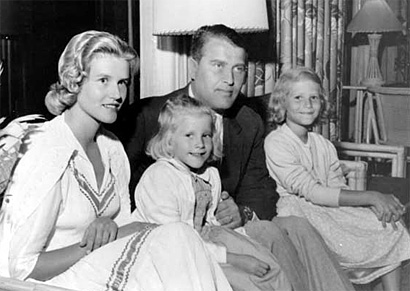
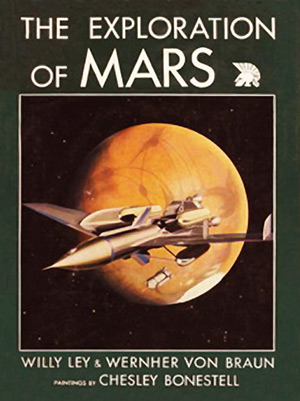
At that time, the Cold War was intensifying, and the United States was worried that the Soviet Union might dominate the new territory of space. Throughout the 1950s, von Braun became something of a celebrity, promoting the idea of space travel in books, magazines, on television, and in films – inspiring the American people with his dreams of space stations and the journeys to the Moon and Mars.
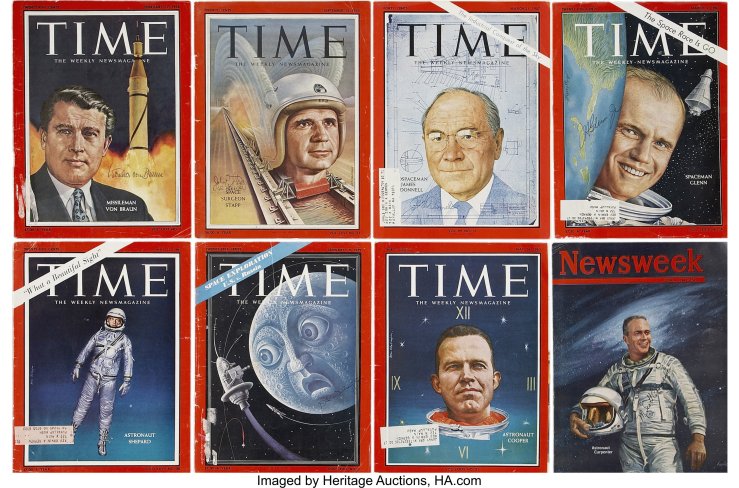
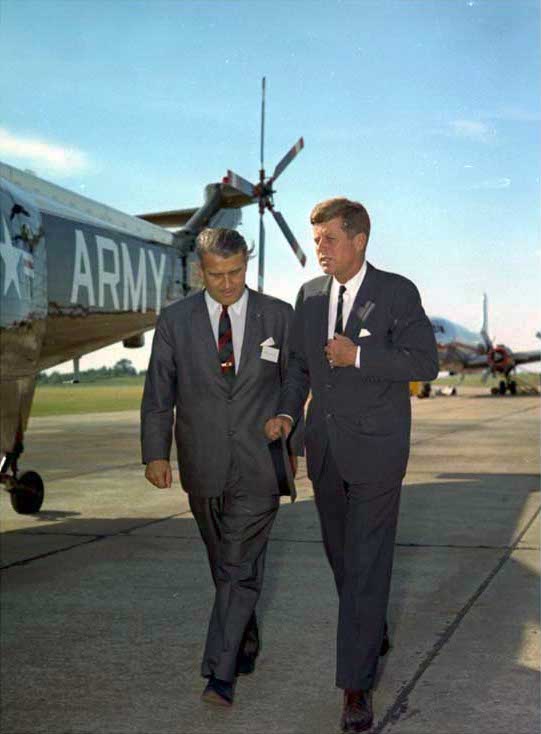
Wernher von Braun and John F Kennedy below
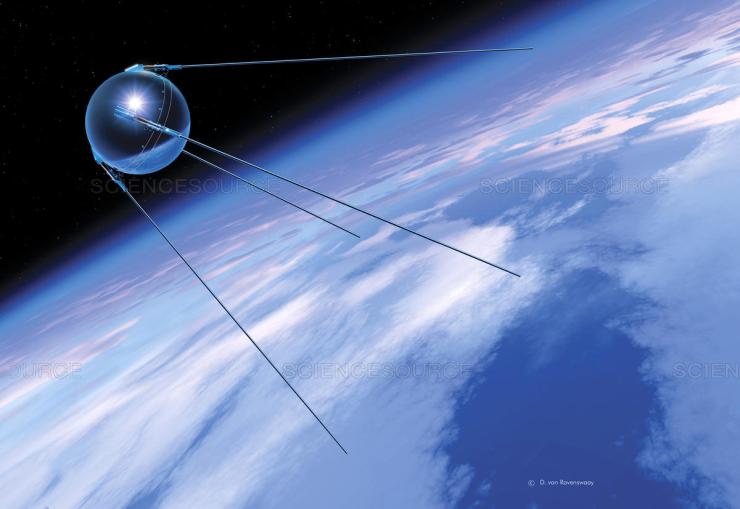
The Space Age officially began on 4 October 1957, when the Soviet Union launched the first satellite, Sputnik 1, into orbit.
The news prompted the United States Government to form NASA (the National Aeronautics and Space Administration).

In 1958, a Redstone rocket, designed by von Braun, put America’s first satellite into orbit. Two years later NASA opened its Marshall Spaceflight Center, in Huntsville, and von Braun became its director.
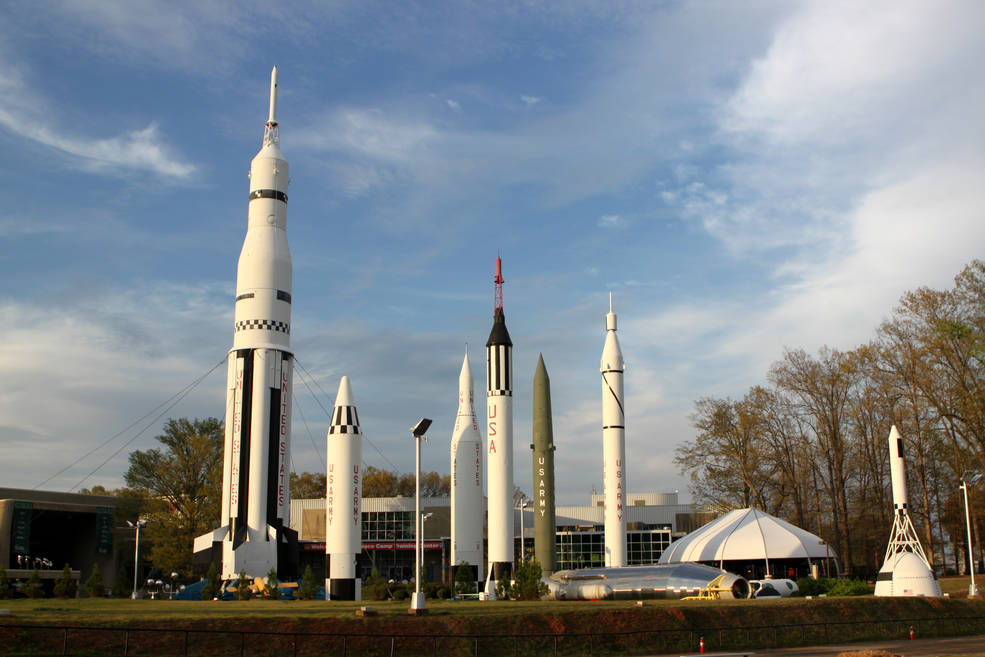
The Soviet Union got the upper hand again in 1961 when it launched a human into space for the first time. The United States retaliated by launching Alan Shepherd into space less than a month later, again with a von Braun Redstone rocket.
A Redstone rocket

In May 1961, to von Braun’s delight, the United States president John F Kennedy (1917-1963) announced the country’s intention of ‘landing a man on the Moon and returning him back safely to the Earth’. The United States succeeded – and the astronauts of the ‘Apollo’ programme travelled to the Moon in modules launched into space atop huge Saturn V rockets, designed by von Braun’s team at the Marshall Space Center.
Saturn V launch (courtesy of Starship Trooper):
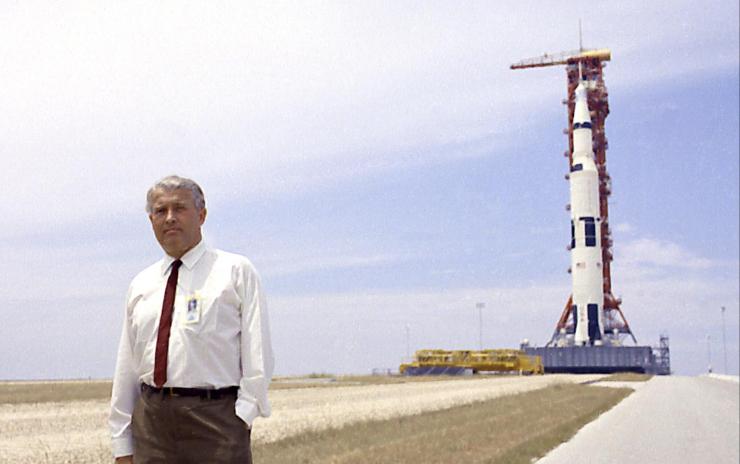
Wernher von Braun died in June 1977 at age 65, after two years of suffering from cancer.
“Fly Me To The Moon” performed by Diana Panton (courtesy of Leading Pictures):
Von Braun had finally achieved his goal of interplanetary travel and NASA called him ‘without doubt, the greatest rocket engineer in history.’
“Clair de Lune” by Debussy (courtesy of Paul Barton):
“I Have A Dream” by ABBA, performed by Andre Rieu (courtesy of Sergei Egorov):

 naturetails
Very informative and inspirational account, Joanna!
LikeLiked by 1 person
Thank you, Indira, for the wonderful comments, which are greatly appreciated!
Joanna
LikeLiked by 2 people
Two very important inventions/discoveries Joanna. We never had a television in our house until I was 9 and then, it was in black and white and we only got 3 channels. We were limited to perhaps 1/2 hour a day, except Sunday nights, we got the works…Wonderful World of Disney, Ed Sullivan and Bonanza. Admittedly, we watch too much TV these days, but winter is like that. As to space flight, the inventor not only had to invent the rocket, he had to persuade people to believe they would not die during launch. I don’t think I could have been that trusting. Have a great Thursday. Allan
LikeLiked by 1 person
I had a librarian friend and her husband who were proud to live in the same neighborhood as Von Braun. She kept mentioning the connection for years, after perhaps moved he had away or passed away.
LikeLike
I’m pretty sure I hadn’t heard of Zworykin before. In any case, he changed the world immensely. A brilliant person.
LikeLike
I remember the launching of Sputnik and the Space Race. Those were exciting times. Then, after Challenger it all went quiet, though I know people still look out into the far reaches of the Universe. I can understand the excitement but what courage it must take to leave Earth’s atmosphere. I don’t wonder people are affected when they look back at our tiny world. I love the video of the Saturn V launch. We watched a few launches on television. Terrifying. Exhilarating. How far could man travel if we abandoned war and put all our efforts into research? Another great post Joanna!
LikeLike
Thank you, Carolyn, for the wonderfully interesting thoughts, which are very much appreciated!
Joanna
LikeLike
Thank you, Neil, for the thoughtful comments, which are greatly appreciated!
Joanna
LikeLiked by 1 person
Thank you, Pat, for the interesting thoughts, which are much appreciated!
Joanna
LikeLike
Thank you, Allan, for the wonderful comments, which I love and appreciate!
Joanna
LikeLiked by 2 people
Thank you, Indira, for the beautiful comments, which are much appreciated!
Joanna
LikeLiked by 2 people
Yet another inspiring and thought-provoking post, Joanna, highlighting two more remarkable inventors in the realm of great scientific discoveries. The opening quote by Einstein is especially apt; it beautifully conveys how a clear vision can illuminate both the path we take and the destination we seek.
Television and electron telescopy are among those transformative innovations that have profoundly reshaped human life. While Groucho Marx’s quote brings a touch of humour, it also reflects, quite realistically, the present state of television channels. Nevertheless, immense credit is due to Zworykin and his team for pioneering the invention of television and advancing electron telescopy.
I recall seeing the building of the St. Petersburg Institute of Technology, though I couldn’t go inside. The HMV emblem, meanwhile, transported me back to childhood memories of gramophones and vinyl records.
Wernher von Braun, too, nurtured a childhood dream of sending humans to the Moon. Equally commendable is the role of his mother, whose gift of a telescope helped shape that dream, eventually contributing to the success of the Apollo mission. It would also be fascinating to delve into the life of Sergei Korolev, whose contributions were pivotal in launching Sputnik 1, the first artificial Earth satellite, along with other significant Russian space missions.
It is through the dedication and perseverance of such scientists, who draw inspiration from the world around them and transformed those ideas into innovations, making our lives more advanced and refined.
Thank you, Joanna, for yet another rich collection of knowledge, complemented by engaging videos and images. Your time and effort are truly appreciated.
LikeLiked by 1 person
Thank you so much, Kaushal, for the wonderful, beyond words comments, which I love and deeply appreciate! Your kind words lifted my spirit and made my day!
Joanna
LikeLiked by 2 people
It’s truly my pleasure, Joanna. You’re welcome, always!
LikeLiked by 1 person
Thank you, Kaushal!
Joanna
LikeLiked by 2 people
Thank you for another interesting post! I can remember the earlier years of TV—before things like cable and streaming, and the history of how it all came to be is very interesting. I knew very little of that. And of course, the history of “rockets” is also interesting. I knew a bit of that, but you added much to my knowledge base. Thanks again!
LikeLiked by 1 person
Thank you so much, Diana, foe the wonderful comments, which I love and appreciate!
Joanna
LikeLiked by 2 people
Very welcome, Joanna.
LikeLike
Hi Joanna!
The elephant listening to classical piano is the greatest most peaceful experience, yet! So beautiful!
Thank you for the wonderful post.
Kindest Regards,
Sharon 💕 🤗
LikeLike
Thank you so much, Sharon, for your wonderful comments, which I love and greatly appreciate!
Joanna x
LikeLiked by 1 person
You are most welcome, Joanna! ♥
LikeLike
Thank you, Sharon!
Joanna x
LikeLiked by 1 person
Thanks a lot for sharing this other inspiring and thought-provoking post, Joanna, about two extraordinary inventors.
I don’t think I’d ever heard of Zworykin before.
LikeLike
Thank you, dear Luisa, for the wonderful comments, which I love and much appreciated!
Joanna x
LikeLiked by 1 person
You’re so very welcome as always, Joanna.
I’m grateful for all I learn on your blog! 🌹
LikeLike
Thank you, dear Luisa, for being so kind! I learn heaps from you!
Joanna x
LikeLiked by 1 person
🙏🤗🙏
LikeLike
What a wonderful post as always Joanna! So much to remember here and to learn from as well. I love the opening quote and fascinating videos and songs so artfully shared. If we can do all of these things and land on the moon, why the heck can’t we have peace~! ❤️
LikeLike
Thank you, Cindy, for the wonderfully thoughtful comments, which I love and appreciate!
Joanna x
LikeLiked by 1 person
It’s my pleasure always, Joanna❣️
LikeLike
Thank you, Cindy!
Joanna x
LikeLike
❤️❤️❤️
LikeLike
Thanks for your remarkably enriching & inspiring post on the great discoveries & inventions ,Joanna !Television and electron telescopy are among those transformative innovations that have deeply transformed human life. While Groucho Marx’s quote brings a touch of humour, it also reflects, quite realistically, the present state of television channels.All credit is due to Zworykin and his team for pioneering the invention of television and advancing electron telescopy !Wernher von Braun had a childhood dream of sending humans to the Moon.His perseverance & hard work eventually contributed to the success of the Apollo mission. Another remarkable scientist Sergei Korolev, whose contributions were pivotal in launching Sputnik 1, the first artificial Earth satellite !Along with beautiful pictures & videos your educative post is quite enriching for all your valued readers, Joanna
LikeLike
Joanna, thank you so much for expanding my horizons about scientific discoveries with your in-depth and very intersting write up.
LikeLike
Thank you, Punam, for the wonderful comments, which I love and greatly appreciate!
Joanna
LikeLiked by 1 person
My pleasure, Joanna.
LikeLike
Thank you, Punam!
Joanna
LikeLiked by 1 person
An excellent article that shows us that great discoveries are the result of many collective efforts, personal dreams, complex historical contexts (such as the Cold War), and difficult moral decisions. Technology advances, but it always goes hand in hand with history and the human condition. These inventions (television, rockets, computers) have shaped the modern world. And we must get to know their protagonists, with all their strengths and weaknesses.
Best regards.
LikeLike
Thank you, Lincol, for the wonderful comments, which are greatly appreciated!
Joanna
LikeLiked by 1 person