
Everything is theoretically impossible until it is done.
Robert Anson Heinlein
“What’s Possible”, a film by Louie Schwartzberg for the UN Climate Summit (courtesy of Moving Art):
“Marie” by Alberto Giuroli, an homage to the concept of love in our lives. Love that we have forgotten, love towards someone close to us and love towards nature. Alberto’s inspiration comes from the love he felt in his life from experiences, people, animals and places such London – anything that made him feel that warmness inside his chest. Love that everyone needs especially in these times.
“Wings of Life” (courtesy of Happy Ending):
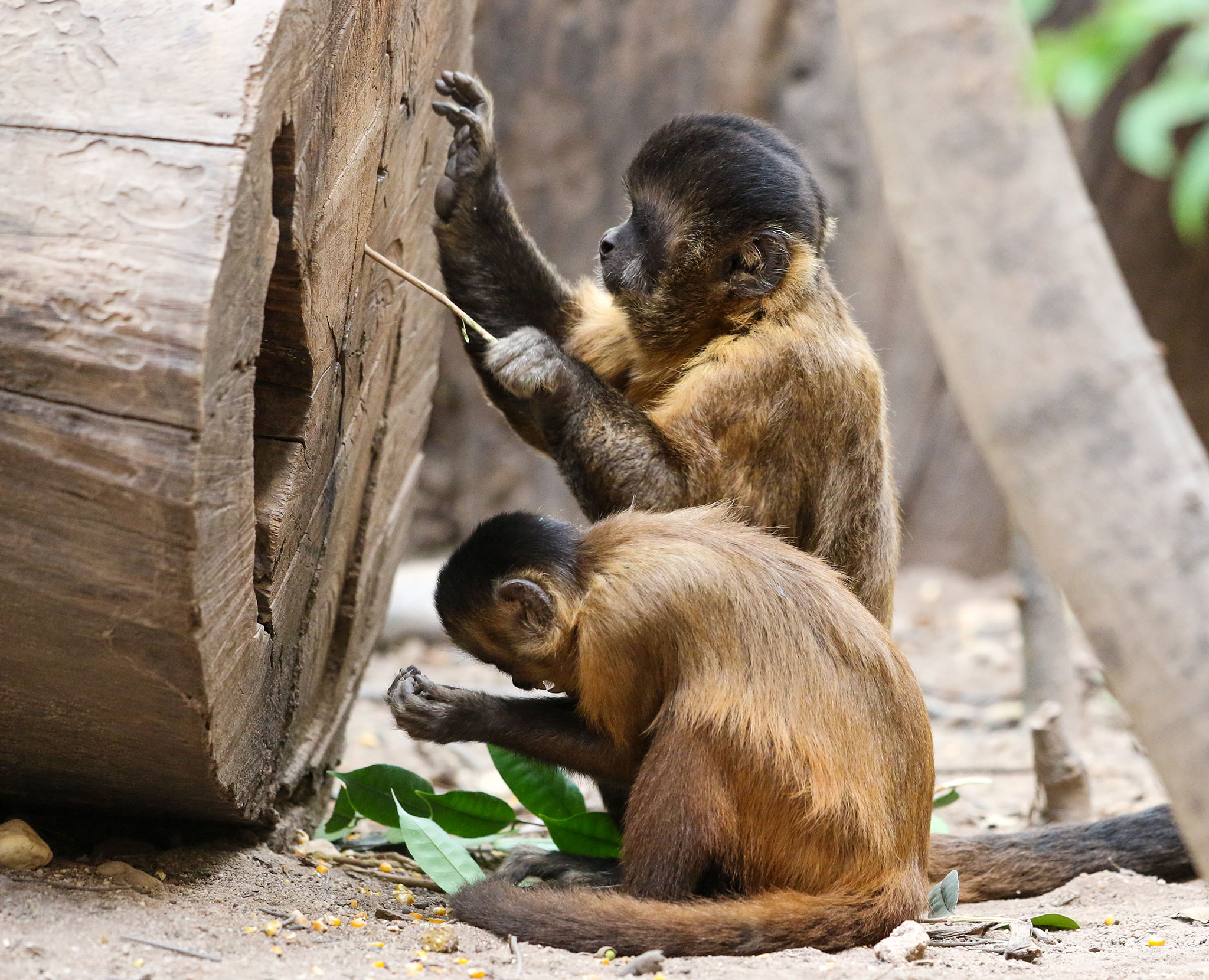
Invention characterises our effort to adapt to the environment. It is found in the animal kingdom as well as in humankind. In Africa monkeys have been seen to use a stick to get at food which is out of reach: they have invented a tool. This ability is not restricted to mammals: birds can be watched dropping thick shells on rocks in order to break them and then eating the molluscs inside.

Courtesy of Nat Geo WILD:
However impressive, animal inventions are limited, and traditionally the history of inventions starts with the appearance of humans. Here are a few more great inventions and their inventors who we can call, with justification, geniuses.
GUGLIELMO MARCONI
25 April 1874 – 20 July 1937

An excerpt from “The Wizard of the Waves” (courtesy of MarconiMagicBox):
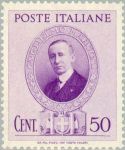
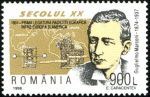
The early history of the radio is complex, but one of the most important and successful inventors was the Italian inventor Guglielmo Marconi, who helped bring radio into everyday use. He was born in Bologna, Italy to an Italian father and an Irish mother. From an early age, he took an interest in science and was particularly interested in electricity. In late 1894, Marconi became aware of the experiments of the German physicist Heinrich Hertz (1857-1894), who succeeded in proving the existence of radio waves during the late 1880s.
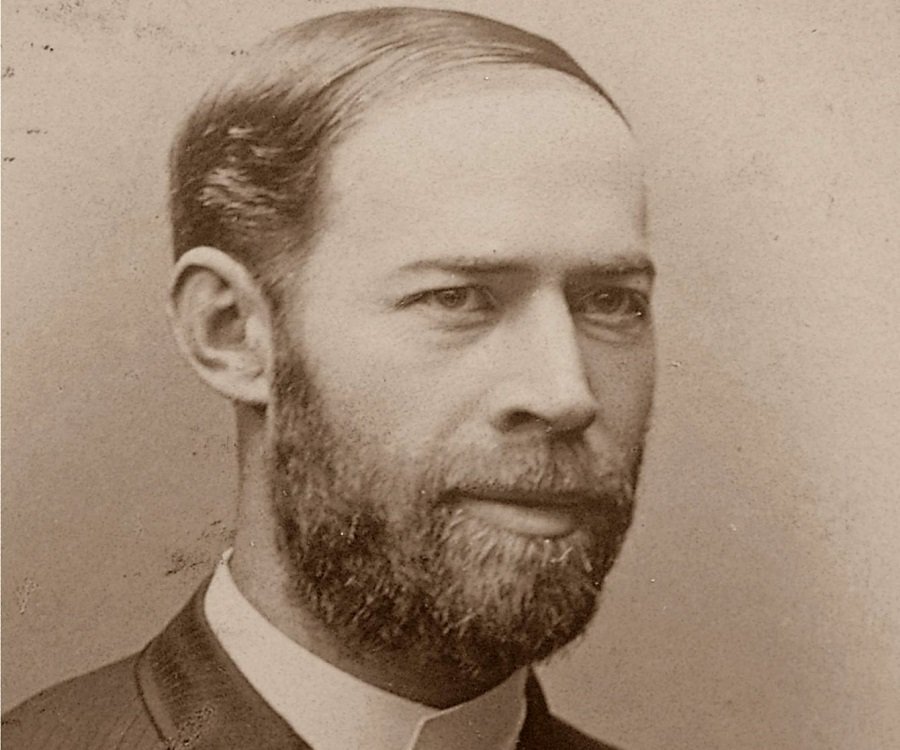
Hertz produced radio waves by sending a rapidly alternating current up and down a vertical antenna, and detected the waves up to 20 metres away. Marconi also read about a demonstration that the English physicist Oliver Lodge (1851-1940) had recently performed. Lodge sent Morse-code messages wirelessly, using ‘Hertzian’ waves. At the time, telegraph messages in Morse code could only be sent as electric pulses along wires, and Marconi was excited at the prospect of ‘wireless telegraphy’.

Marconi decided to carry out experiments of his own, with the aim of making wireless telegraphy a useful, practical technology. He set up a laboratory in the attic room of his family home and assembled the necessary components. He was soon sending and receiving Morse code wirelessly over increasingly large distances. In 1896 he patented his system. On being refused funding by the Italian government, he decided to travel to Britain to seek interest there.
Below is shown an example of Marconi’s telegraphic receiver.

Following a series of impressive demonstrations during 1887, Marconi got the support of the Post Office, which was in charge of Britain’s telegraph system at the time. In that year he formed the Wireless Telegraph and Signal Company to expand his work. In 1900, he decided to try extending the range of his transmissions yet further: across the Atlantic Ocean. In 1901, he created a worldwide sensation when he announced the successful transmission of a Morse code letter ‘S’ (three short bursts of radio) from Poldhu, in Cornwall, England to St John’s, Newfoundland (then a British colony, now in Canada).
Below is the Marconi Memorial Monument in Poldhu, Cornwall.

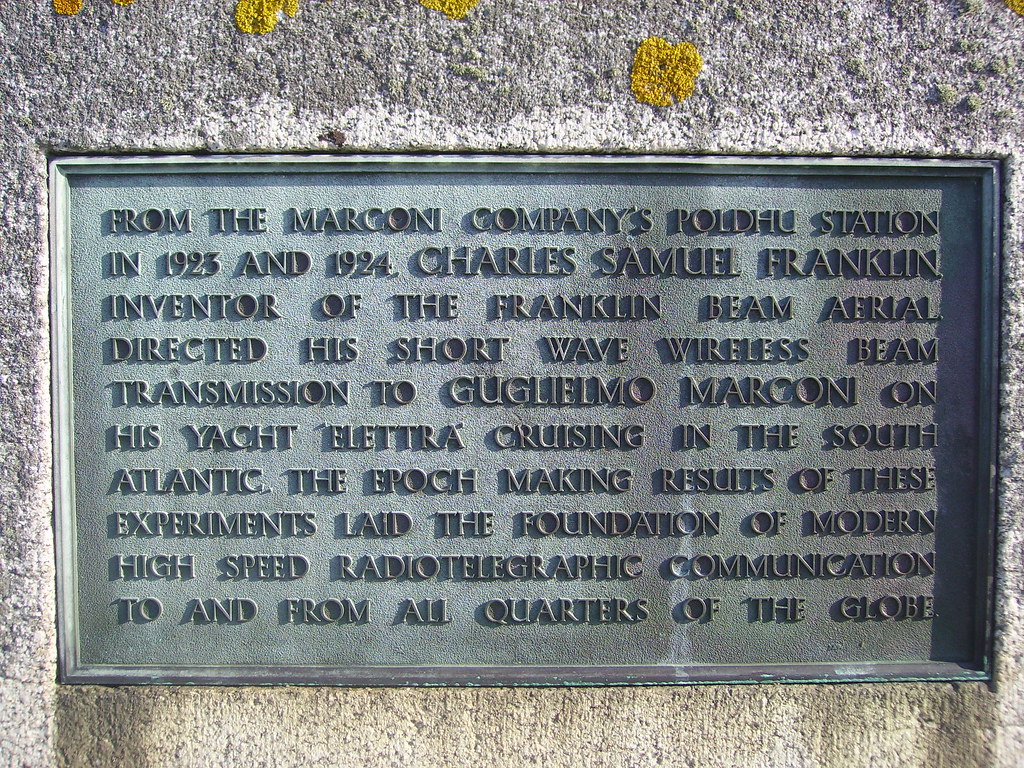
After suggestions that he had faked the transmission, he carried out another, carefully monitored experiment the following year. Abroad a ship close to the Canadian coast, he received signals from Cornwall more than 3,200 kilometres away. During the years that followed, Marconi made several important improvements to his system of radio transmission, and in 1907 he instigated the first commercial trans-Atlantic radio service.
Below is Marconi’s Morse device.
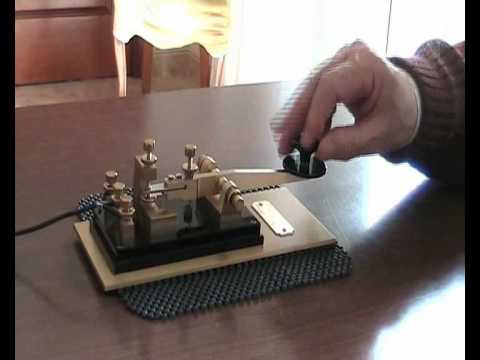
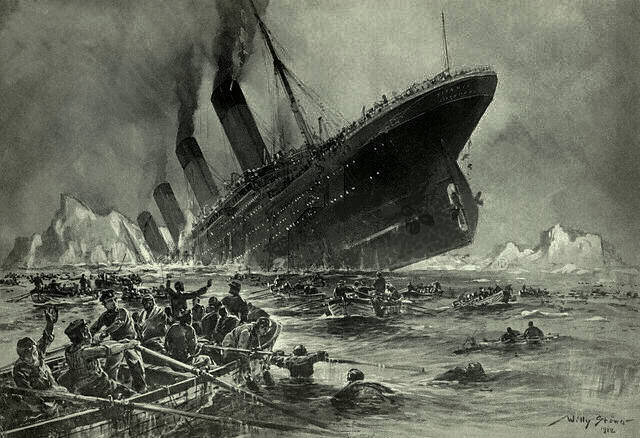
He found fame again when the British ocean liner RMS Titanic hit an iceberg and sank in 1912. A Marconi-radio operator abroad the sinking ship managed to broadcast radio distress signals and summon help from nearby ships.
Shown below is the Titanic, on which Morse code was used and was instrumental in saving the people in life-rafts fleeing the sinking ship.
“My Heart Will Go On (Instrumental)” by James Horner, performed by David Abel:
During the 1920s, Marconi experimented with much higher-frequency radio waves. These short waves can be focused by a curved reflector behind the transmitter, like the parabolic dishes used to receive satellite communication. This arrangement made radio more efficient and less power-hungry since the waves were concentrated into a beam and not radiating in all directions. By this time, radio operators, including Marconi, were transmitting not only Morse code but also speech, music, and audio signals.
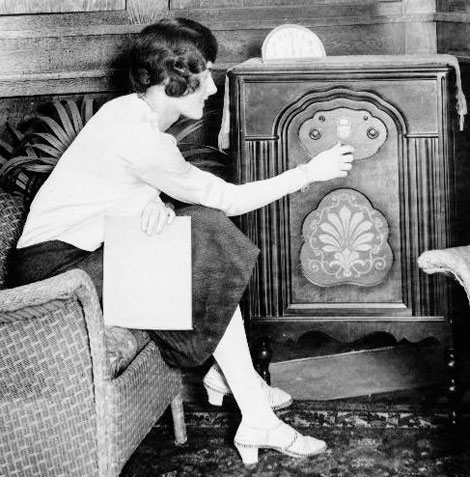
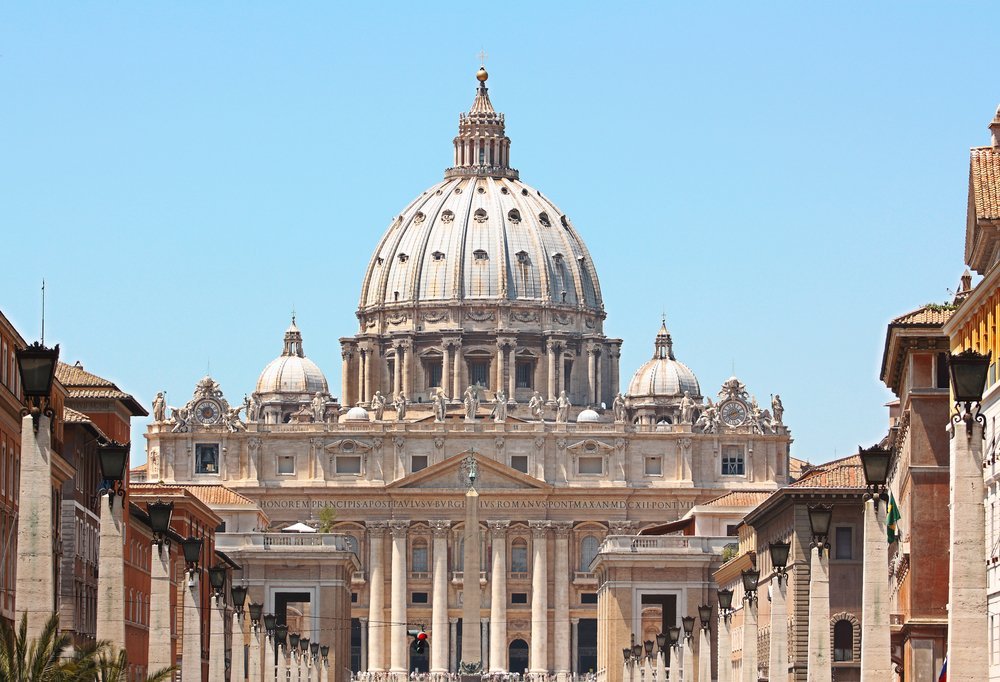
In 1931, Marconi experimented with even higher-frequency, shorter-wavelength radio waves-microwaves, and a year later, he installed a beamed, microwave radio-telephone system between the Vatican and the Pope’s summer residence.
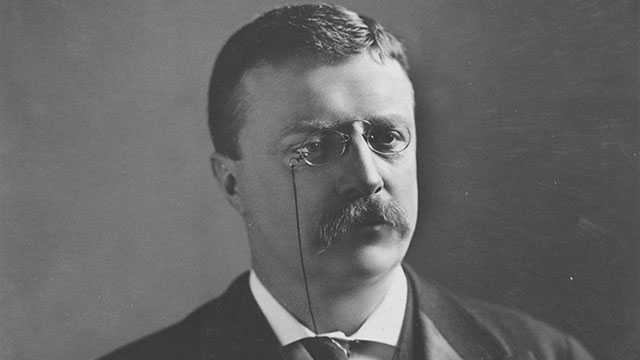
From South Wellfleet station, Massachusetts, in 1903, Marconi sent a message from US President Theodore Roosevelt to King Edward VII, in London – a distance of more than 5,000 kilometres.


Marconi did not invent the radio, but he did make several important improvements to it, and his determination to turn a complicated laboratory curiosity into something useful and commercially successful helped make the world feel a bit smaller. In 1909, he received the Nobel Prize for Physics, for his contribution to wireless telegraphy, and in 1930, he became president of the Royal Italian Academy.


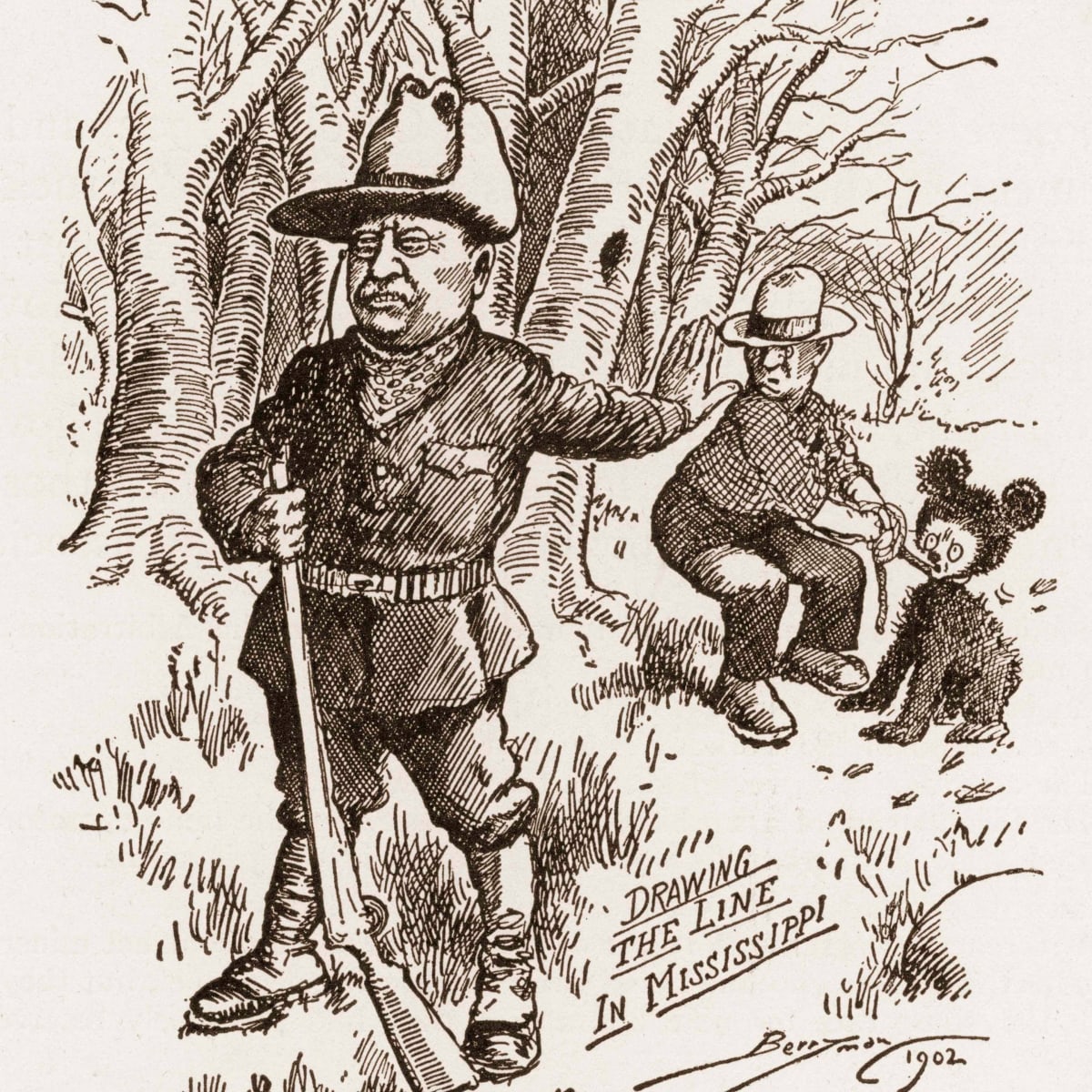
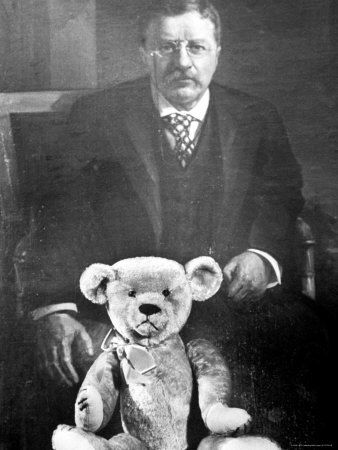
PS There is something, in my view, important, about Theodore Roosevelt that many people are not aware of, that the teddy bear was invented in his honour. Here is the story: he was invited by the Mississippi Governor to a hunting trip taking place on November 14, 1902, near Onward, Mississippi. It was noticed that unlike other hunters, President Roosevelt had not located any bear. His assistants cornered and tied a young bear to a willow tree and summoned the President and suggested that he shoot it. Theodore Roosevelt (bless him!) refused to shoot the little bear.

Clifford Berryman’s cartoon in 1902 gave the idea to a New York shopkeeper to create a stuffed toy of the bear. He asked Theodore Roosevelt permission to call his toy ‘Teddy Bear’. The toy gained rapidly worldwide popularity, and most people had a teddy in their childhood; many kept their teddy forever.

“Piano Concerto in A Minor II. Adagio” by Edvard Grieg (courtesy of Lilianna):
WILBUR AND ORVILLE WRIGHT
16 April 1867 – 30 May 1912 and 19 August 1871 – 30 January 1948

Courtesy of Discovery Channel Southeast Asia:
At the dawn of the twentieth century, two brothers from a small town in the USA became the first to achieve sustained, powered flight. The key to their success was the combination of their inventive, mechanical skill with the application of scientific principles to flight. Prudently, they learned to become pilots in a gradual, thoughtful way, rather than risking everything on one short trial, like so many other pioneers.

The brothers grew up in Dayton, Ohio, in a family of seven children, although two died in childhood. They were mechanically minded from an early age: in 1886, they built their own lathe; in 1888, they built a printing press, which they used to produce their own local paper; and in 1892, they opened a bicycle repair shop. They used the profits of the shop to finance their efforts in aviation. The dream of human flight stretches back to antiquity – Icarus’s tragic attempt at flying on wings that were glued with wax and had fallen apart when the sun melted the wax.

“Icarus” by Bastille (courtesy of marcteam):
In the late 18th century people finally took to the air with the help of the invention of ‘lighter-than-air’ balloons. In the nineteenth century, scientists and inventors began giving serious consideration to the idea of flying. During the 1880s and 1890s, people flew in unpowered gliders and kites. In 1899, the Wright brothers built a large box kite. Wilbur hit on the idea that by twisting the box shape, it would be possible to change the airflow over the wings and make the kite bank and turn. He called this ‘wing warping’, and it would be crucial to the brothers’ later success.
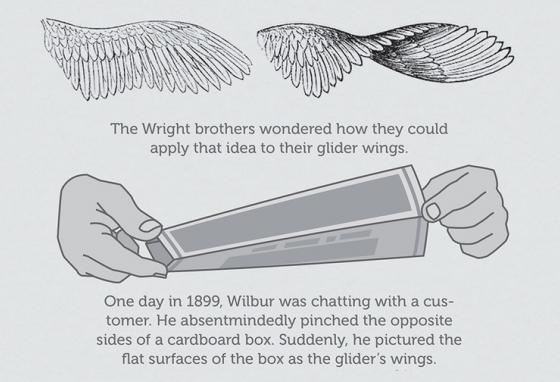
It was Wilbur who was first struck by the desire to build a powered flying machine, after reading a magazine article about Otto Lilienthal (1848-1896), a German gliding pioneer. Lilienthal realized that to develop successful flying machines, any inventor needed to understand the scientific principles behind flight but also needed first-hand experience of flying. The Wright brothers took the same approach and paid tribute to Lilienthal as their inspiration.

Lilienthal began his quest to fly by studying birds, and then carried out a huge amount of research into aerodynamics. In the 1890s, he made nearly 2000 flights, mostly from an artificial hill near Berlin, in gliders he had designed and constructed. During what was to be his last flight, a gust of wind made him stall at an altitude of 15 metres. He crashed to the ground and died the next day from his injuries. According to legend, his last words were: “Sacrifices must be made.”
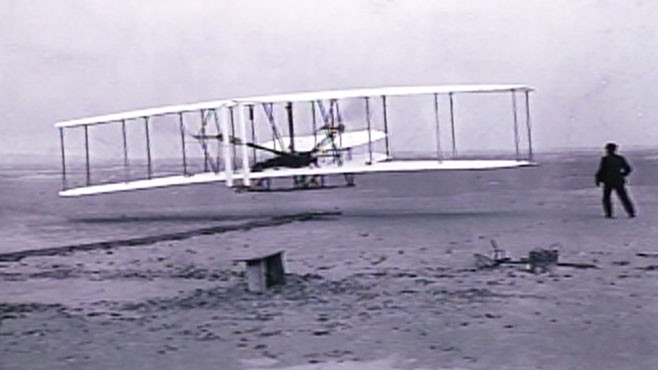
Courtesy of Paul Dinning:
After their kite performed well, the brothers decided to build full-size, piloted gliders, with wing warping effect via control cables. They constructed their first glider in 1900, and also added a front ‘wing’, called an elevator, for pitch control. They chose an open area on the coast, near the tiny fishing village of Kitty Hawk in North Carolina, for its steady on-shore winds.
For powering their aeroplane, they designed and built large wooden propellers, and, with the mechanic from their bicycle-shop, Charlie Taylor, they built in 1903, a lightweight, powerful engine. It was relatively light, thanks to the fact that the cylinder block was made of aluminium. In December 1903, at Kill Devil Hills, the Wright brothers were ready to put all their ideas, experiments, and calculations to the test. The first successful flight took place on December 17. There were four flights that day, two by each brother. The first, with Orville piloting, lasted 12 seconds and covered 37 metres. The final flight of the day, with Wilbur as the pilot, lasted 59 seconds and covered 260 metres, By 1905, the Wright brothers’ flying machines were routinely staying in the air for several minutes at a time, taking off, landing, and manoeuvering with ease. At first, the world was slow to recognize the Wrights’ achievement, despite the fact that there were several witnesses on the day. This was partly because the media and the public were unwilling to believe that the age-old dream of flight had finally come true, but also because the brothers became secretive about their work, hoping to sell their invention to a government or large corporation.

Wilbur and Orville were awarded a patent in 1906, for a ‘Flying Machine’. Three years later they founded The Wright Company, to take advantage of the patent. Unfortunately, Wilbur died within three years, from typhoid. Orville went on to become a long-time advisor to the US Government’s National Advisory Committee for Aeronautics and was able to appreciate the incredibly rapid developments in aviation that took place within a few decades of those first flights.

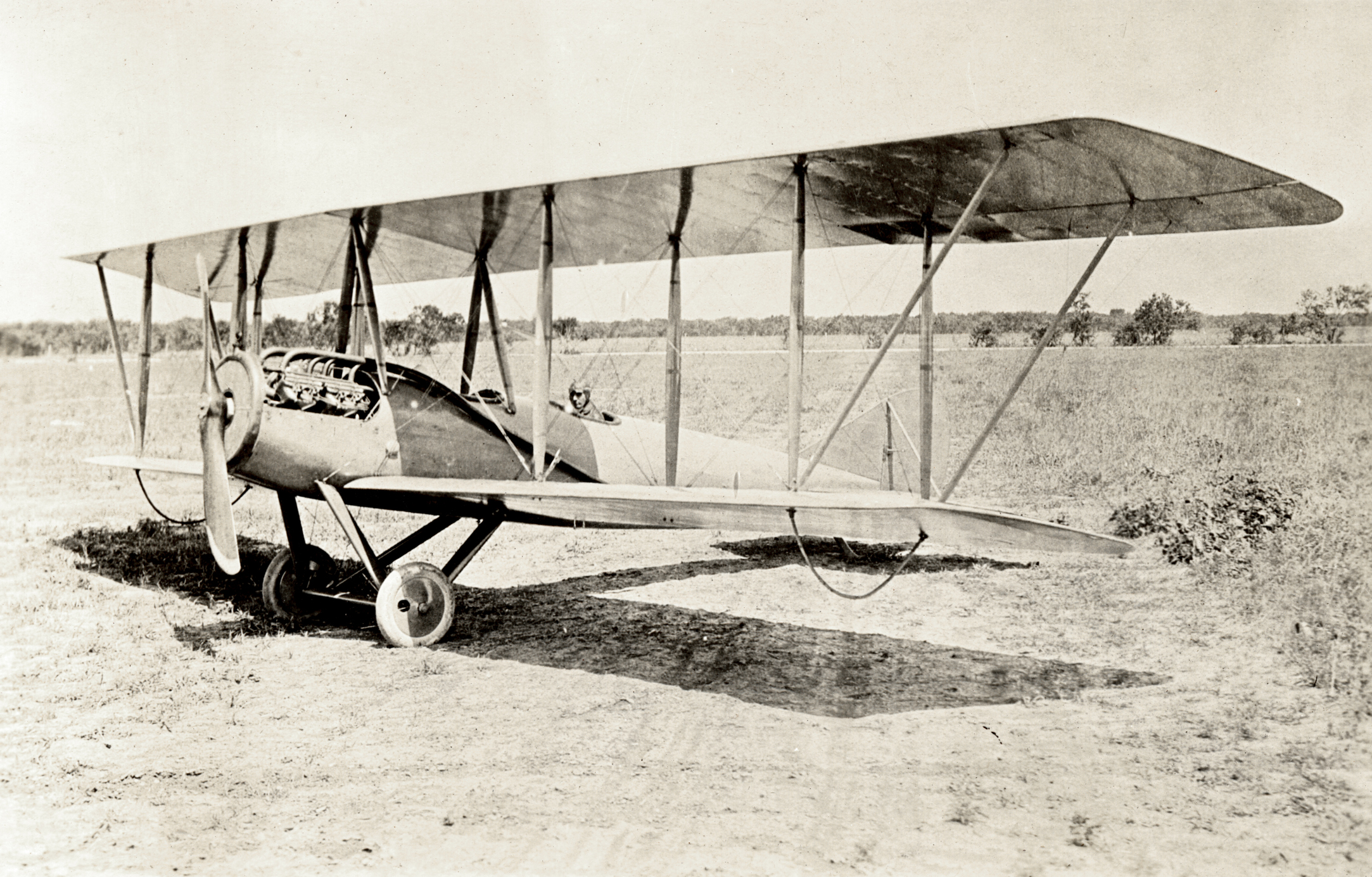
Above is shown Henri Farman in the Voisin 1907 biplane winning the Archdeacon Prize for the first closed-circuit kilometre flight in Europe.
“Jazz Suite No. 2 VI: Waltz 2” by Dmitri Shostakovich, performed by the Philadelphia Orchestra (courtesy of BearJune Selection):
BRICK
A brick has been also found in Sumer dating from the 3rd millennium BC. It was an unfired brick, which was left to harden in the sun and with which thick walls were built, using clay or bitumen as mortar. This material apparently resisted the rain better than the action of the sun, which resulted in it becoming crazed. The bricks were prepared in wooden moulds.

More recent findings were discovered in Southern Turkey at the site of an ancient settlement around the city of Jericho.
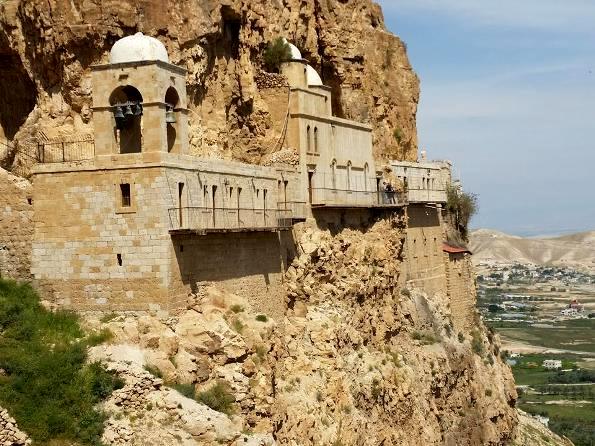
In India, there are remains of a 3rd-century Hindu brick temple in Tamil Nadu.

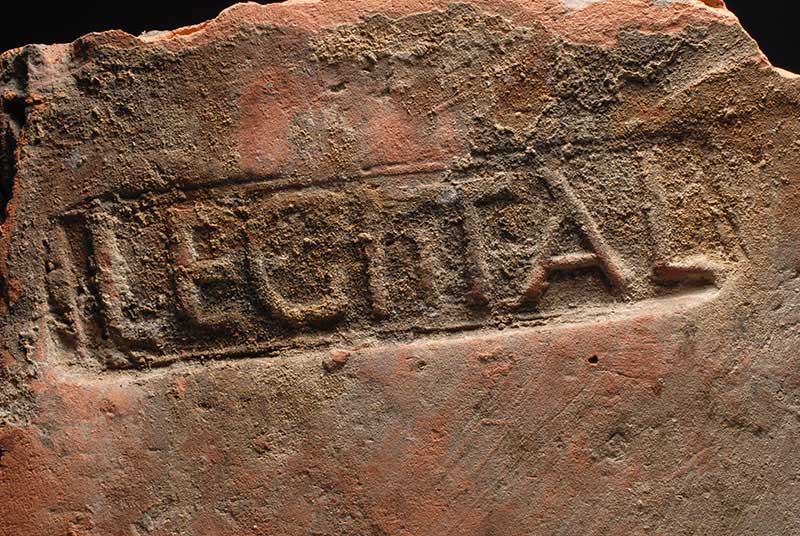
This was the only type of brick known in antiquity until the Greeks invented the fired brick in the 4th century BC. The Roman legions operated mobile kilns, and built large brick structures throughout the Roman Empire, stamping the bricks with the seal of the legion.
“Earth” by Hans Zimmer (courtesy of Elliot Walsh):
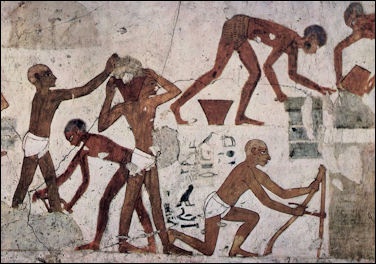
The use of the brick, unfired or fired, depended firstly on what other materials were available in the area in which the building was taking place. In the whole of Mesopotamia, there was no wood or stone, and so the brick was widely used since it constituted the principal building material.
Courtesy of CGTN Africa:
In Egypt, where stone was available, brick was only a secondary material used to build people’s dwelling houses. The Greeks themselves did not make much use of the fired brick. The increase in population and the rising cost of stone nevertheless assured the growing success of the fired brick. It even found its place in certain parts of noble buildings like the cathedrals at Lubeck and Ratzeburg in the Middle Ages.


And the rest is history….. and thus I decided to devote a small part of this post to the invention that helped to create the cities and magnificent world of today’s architecture.
Some final thoughts:
Courtesy of TED-Ed,
Courtesy of Gerd Leonhard:

 naturetails
Another excellent post Joanna. Where would the world be without these three inventions? Every great invention starts with an improbable idea. Thanks for sharing. Allan
LikeLiked by 2 people
Thank you, Allan, for the wonderful comments, which are greatly appreciated!
Joanna
LikeLiked by 3 people
You commenced with a quote and by the end of your post we are also sure how true it is!
LikeLiked by 2 people
Thank you so much, Indira, for your thoughtful comments, which are very much appreciated!
Joanna
LikeLiked by 3 people
An amazing collection of the impossible!
LikeLiked by 2 people
I love your impressive emphasis on how necessity is the mother of invention to adapt to our environment and invention advancement, Joanna.
Thanks for spotlighting the inventions of pioneers like Guglielmo Marconi, Oliver Lodge, the Wright brothers, and Otto Lilienthal. Thanks for sharing another well-rounded presentation my friend! 🤗📚🥰✍🏼😊
LikeLiked by 2 people
Thank you, dear Kym, for the wonderful comments, which I love and greatly appreciate!
Joanna x
LikeLiked by 3 people
Thank you, Dorothy, for the kind comment, which is greatly appreciated!
Joanna
LikeLiked by 3 people
I remember, when an Air Force officer, was able to recognize that the powerful of muscular development in angel wings that it was a sign that humans had begun to recognize that undersized wings, where things of the past. It was one of the many subsequent steps that lead to the Wright Brothers bringing the first military flight in 1909 to Ft Myer, near Arlington Cemetary.
LikeLiked by 2 people
You’re so very welcome my dear Joanna! Enjoy the rest of your week my friend! I appreciate you! 😍💯😉
LikeLiked by 2 people
Hi. This is a fine article.
South Wellfleet is on Cape Cod. The area of South Wellfleet where Marconi worked is now part of a lengthy, protected section of the ocean coastline. That area is known as Marconi Beach. I’ve been there many times. There are displays there explaining everything that Marconi accomplished.
LikeLiked by 2 people
Thank you, dear Kym, I appreciate you too!
Joanna xx
LikeLiked by 3 people
I love the TED talk and the piece by Leonhard although it bends my feeble mind! How far the planet has come in my lifetime and especially the last 20 years proves how inventions are accelerating. It is all a little terrifying. But to have a scientific mind and the support to use it must be a wonderful thing. If only all inventions could be used for our betterment and not deplete our natural resources. A most enjoyable piece Joanna!
LikeLiked by 2 people
Thank you, Neil, for the wonderful comments, which I love and appreciate!
Thank you also for the additional information!
Joanna
LikeLiked by 3 people
Thank you so much, Carolyn, for the wonderfully thoughtful comments, which I love and very much appreciate!
Joanna
LikeLiked by 2 people
Thank you, Pat, for the interesting comments, which are very much appreciated!
Joanna
LikeLiked by 3 people
Great post! I liked the opening quote: “Everything is theoretically impossible until it is done.” It remains true to this day, and it is interesting that the quote, I believe, is from a novelist—not a scientist. As your posts illustrates, it seems to me that inventors and others in the scientific fields need to be creative, capable of “problem-solving,” and persistent. And I agree with you; they are geniuses. P.S. I loved the teddy bear story. I had heard it before but had forgotten it. So, it was a nice reminder.
LikeLiked by 2 people
🥰💖🤗🦋🌞
LikeLiked by 1 person
Thank you, Diana, for the wonderful comments, which I very much appreciate!
Joanna
LikeLiked by 3 people
Like the earlier two parts of the Great Scientific Discoveries, this third part too unfolds a panorama of mind-boggling inventions and discoveries. I was especially struck by the opening quote: “Everything is theoretically impossible until it is done.” It sets the tone beautifully for all that follows.
From monkeys wielding sticks to birds dropping thick shells, and humans shaping bricks from mud, it proves that necessity is the mother of invention, as you have so rightly highlighted.
Yet what Guglielmo Marconi, Otto Lilienthal, and the Wright brothers achieved went far beyond necessity; it was ingenuity inspired by observation, courage, and relentless curiosity. From the lathe to the printing press, from a humble bicycle repair shop to the dream of flight, the journey of the Wright Brothers reflects extraordinary passion and perseverance.
The tragic death of Lilienthal, who dared to imitate the birds he so closely studied, was heartbreaking. Yet as he himself believed, progress often demands sacrifice. Because of such courage, their names continue to soar through time.
The story behind the invention of the teddy bear in honour of Theodore Roosevelt adds a delightful historical touch. The demonstration of mud bricks being made in Egypt is fascinating. The music and videos, as always, elevate the experience; your choice of music is truly commendable, and the “What’s Possible” video is both powerful and deeply thought-provoking.
Thank you so much, Joanna, for yet another engaging and beautifully rounded presentation on inventions and discoveries.
LikeLiked by 2 people
Thank you so much, Kaushal, for the wonderful comments, which I love and deeply appreciate! Your kind words made my day!
Joanna
LikeLiked by 3 people
Joanna, thank you for a very inspiring post. How hard and long people have struggled to envision, invent, and develop the technologies we take for granted today!
I loved the videos of primates and birds using tools. So far, their inventions seem only to have inhanced their lives.
At a time when we ponder the possibility that AI technology may replace many jobs, I especially enjoyed the timely video, “Humanity Versus Technology.” Our work defines us. Who will we become without it?
Will large numbers of human beings simply become obsolete and disposable?
Can we become better human beings and discover a way to live in harmony ?
LikeLiked by 2 people
Thank you, dear Cheryl, for the wonderfully thoughtful comments, which I like very much and greatly appreciate!
Joanna xx
LikeLiked by 3 people
It’s truly my pleasure, Joanna. You’re welcome!
LikeLiked by 2 people
Thank you!
Joanna
LikeLiked by 3 people
Thank you for the wonderful research and writing on fascinating topics. My pleasure to read! 💕
LikeLiked by 1 person
Thank you so much, dear Cheryl! A few more posts to follow!
Joanna xx
LikeLiked by 1 person
Another amazing post, Joanna, wonderfully researched and presented here. As a child growing up in the 50’s the “wireless” was such a marvelous way for me to learn about the big world, outside of the small town where we lived. We all owe so much to Marconi and of course to the many others mentioned in your post. It is important that these inventors are not forgotten. 🤗💓🙇♂️
LikeLike
Thank you so much, Ashley, for the wonderful comments, which are greatly appreciated! I agree with your thoughts, and more posts about inventors will follow.
Joanna
LikeLiked by 1 person
Thank you so much for yet another of your very inspiring & enriching post ,Joanna.You have so elaborately narrated how hard people have toiled to observe, invent, and develop their findings into technological advancements to benefit the masses globally !What Guglielmo Marconi, Otto Lilienthal, and the Wright brothers achieved inspired by observation, courage, and curiosity.The story behind the invention of the teddy bear in honour of Theodore Roosevelt is quite touching .I loved the beautiful videos too.
LikeLike
Thank you so much, Dhirendra, for the wonderfully thoughtful comments, which I greatly appreciate!
Joanna
LikeLiked by 1 person
Namastey, Joanna 🙏
LikeLike
Thank you, Dhirendra! Namaste!
Joanna
LikeLiked by 1 person
A great post of impossibles that became possible!
LikeLike
Thank you, Punam, for the poignant comments, which are much appreciate!
Joanna
LikeLiked by 1 person
You are very welcome, Joanna.
LikeLike
Thank you, Punam!
Joanna
LikeLike
LikeLike
I have sent you a link to my first post on the WordPress !You may find it interesting !Kindly find time to go through it as & when you may find time ,Joanna !Namaste
LikeLike
Yes, I will, Dhirendra.
Joanna
LikeLiked by 1 person
🙏🙏🙏
LikeLike
Where is the new post, Dhirendra?
Joanna
LikeLike
LikeLike
It’s my first post on WordPress posted on 27/11/2019
LikeLike
Yes, but how can I read it? Why cannot post it to me the way I publish my posts?
LikeLike
I don’t have details of posts from years back, I need your details now, please.
Joanna
LikeLike