
“Great lives never go out; they go on.”
Benjamin Harrison
“Curiosity” featuring Richard Feynman (courtesy of melodysheep):
“The Spheres” from “Sunrise Mass” by Ola Gjeilo, performed by Tenebrae and The London Chamber Orchestra:
 Yoga, one of India’s inventions
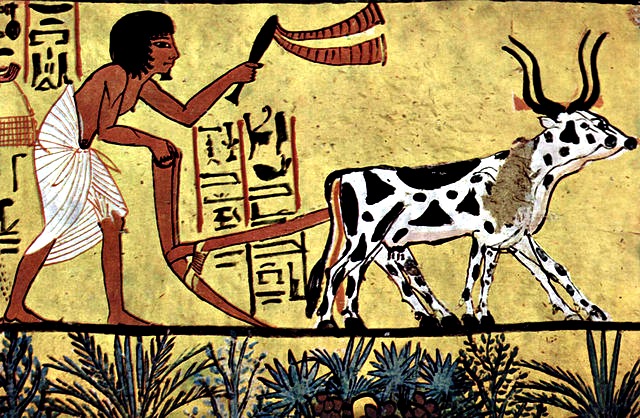 The plough, one of Egypt’s inventions
This series of scientific discoveries profiles some of the people whose brilliant minds have helped to shape the modern world. The great discoveries started with the fashioning of the first stone tools by our distant ancestors more than two million years ago. More recently, old stone age (Palaeolithic) people invented weaponry, fire-making, and clothing. The great civilizations that followed – in ancient Mesopotamia, China, India, and Egypt – introduced many fundamental technologies. Innovations such as the wheel, bricks, boats, ploughs and the smelting of metals are still of great importance today, but in most cases, little or nothing is known of the inventors.
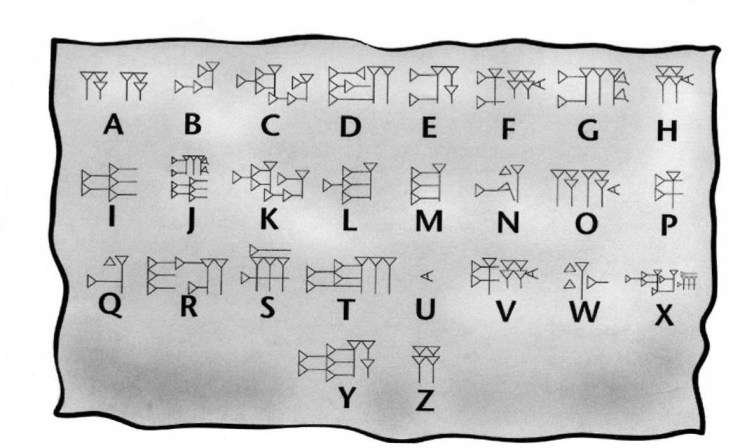
Alphabet, one of Mesopotamia’s inventions.
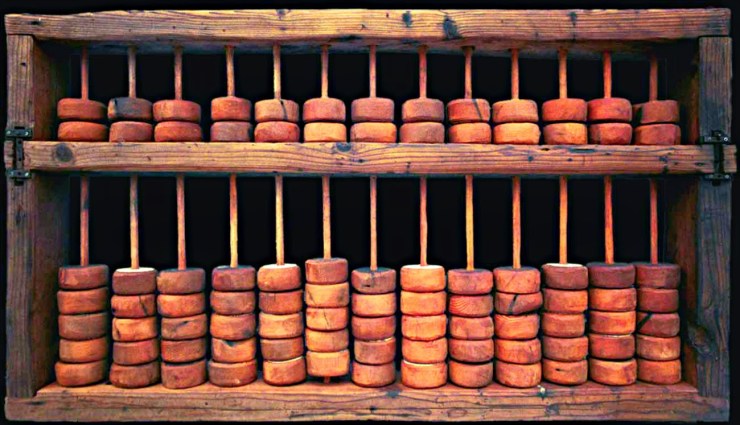 Abacus, one of China’s inventions.
I will continue with those Greats whose lives have been recorded.
JOHANNES GUTENBERG
c.1400 – 3 February 1468
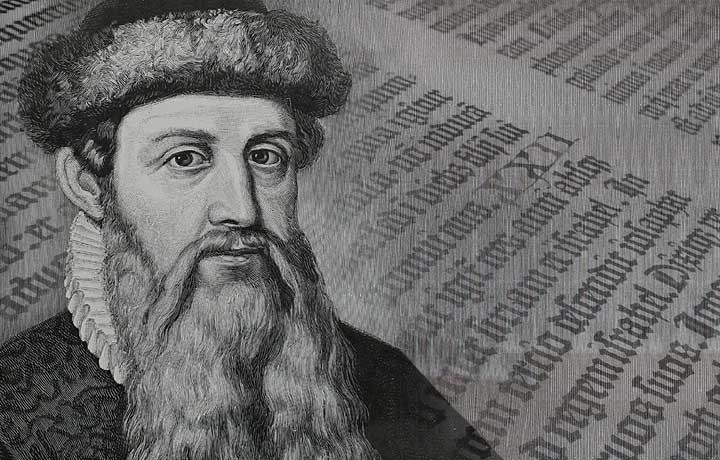
One cannot overestimate the importance of the printing press in the history of the world. The mass production of books made them affordable, which promoted literacy. The inventor of this new technology was the German goldsmith, named Johannes Gutenberg. He was born in Mainz, Germany, around 1400, and came from a privileged background. He attended the University of Mainz and trained as a goldsmith.
Courtesy of HumanProgress:
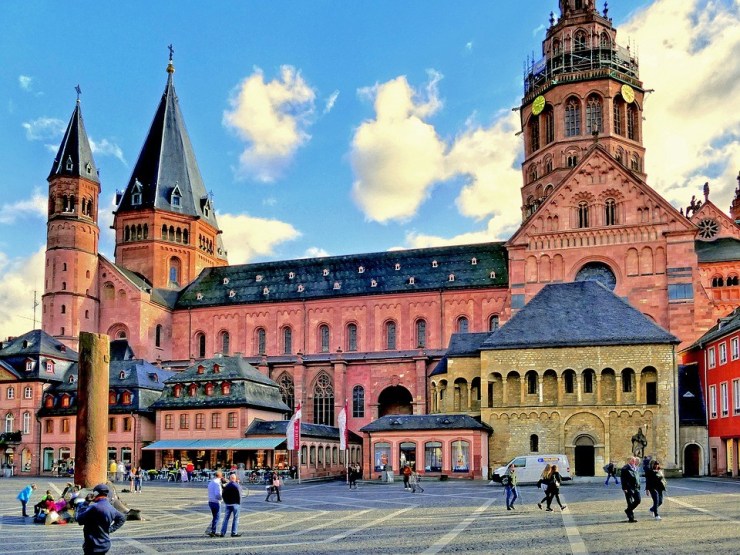
Around 1420, several families were exiled from Mainz after a rebellion by the tax-paying middle class. Gutenberg was among them, and he travelled to Strasbourg, where he was involved in several ventures. One of them, he told his financial backers, was ‘a secret’. It is very likely that this secret was the development of the printing press.
 Strasbourg
At the time, nearly all books were painstakingly written out by scribes. Books, therefore, were rare and extremely expensive, and literacy was confined to religious and political leaders. Woodblock was used to print a few books – but each block, representing a whole page, had to be carved in its entirety. Gutenberg’s important innovation, ‘moveable type’, changed all that.

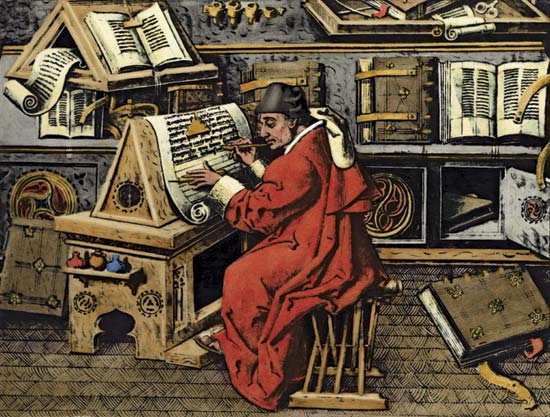
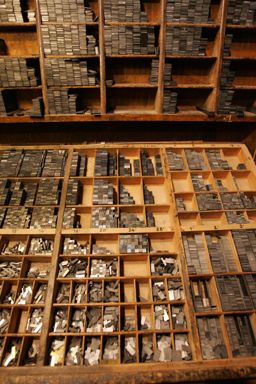
Moveable type is a system of printing in which a page of text is arranged in a frame by slotting in individual, raised letters. The letters are then inked and pressed onto paper. Gutenberg’s method was simple and efficient. First he made punches of hardened metal, each with the raised shape of a letter. With these, he punched impressions of the letters into copper. Next, he fitted the ‘negative’ copper pieces into a hand-held mould of his own invention, and poured in molten metal cast as many perfect copies of the letters as he needed. The metal Gutenberg used was an alloy of lead, tin and antimony that has a low melting point and solidified quickly inside the mould.
While still in Strasbourg in the 1440s, Gutenberg experimented with another crucial element of his printing system: the press. The Gutenberg press was adapted from winemakers’ screw presses. The inked typeset text was slotted face-up on a flat bed, covered with paper, then slid underneath a heavy stone; turning the screw then pressed the paper onto the type. Repeating the process gave exact copies time after time.
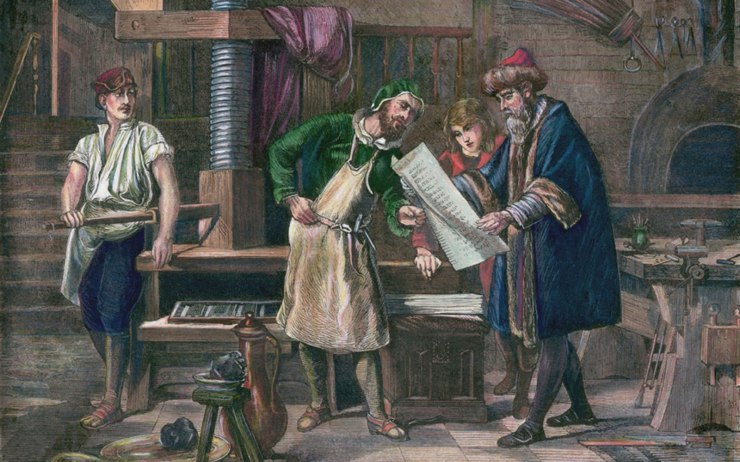 Gutenberg workshop
Gutenberg also formulated oil-based ink, which was more durable than the water-based inks in use at the time. He knew that by putting all these technologies together he was onto something very important.
“Quanta Qualia” by Patrick Hawes, performed by the Choir of the Earth and Jiaxin Chen on cello:

By 1448, Gutenberg was back in Mainz. He borrowed money from a wealthy investor, Johann Faust, to set up a printing shop there. Knowing that the church would be the main source of business, Gutenberg decided to print bibles. Work on the Gutenberg Bible began around 1452, after several test prints of other works, including books on Latin grammar. The relatively low price of the bibles, and their exquisite quality, secured the success of Gutenberg’s technology, which then spread quickly across Europe. By 1500, millions of books had been printed. Gutenberg produced 180 copies of his bible. Some were on vellum, others on paper; some were decorated by hand, others were left plain. The books caused a sensation when they were first displayed at a trade fair in Frankfurt in 1454.
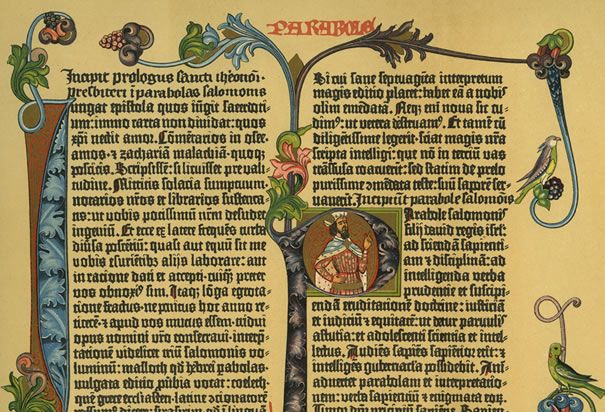
Courtesy of The Morgan Library & Museum:
Unfortunately for Gutenberg, Johann Faust demanded his money back, and accused Gutenberg of embezzlement. A judge ordered Guteberg to hand over his printing equipment as payment. Faust went on to become a successful printer, and Gutenberg set up a smaller printing shop in the nearby city of Bamberg. Gutenberg later moved to a small village where, in 1465, he was finally recognised for his invention and given an annual pension. He died three years later in relative poverty.
 Above is Bamberg as it is today, a UNESCO World Heritage site.
Although Gutenberg’s invention dramatically changed the course of history in a very short time, printing was still a laborious process. It required several people and produced only a hundred sheets per hour. The invention of cast-iron presses and the introduction of steam power in the nineteenth century improved that rate to about a thousand pages an hour. A further major step was the invention of the rotary press in 1843, by American inventor, Richard March Hoe (1812 – 1886), shown below.
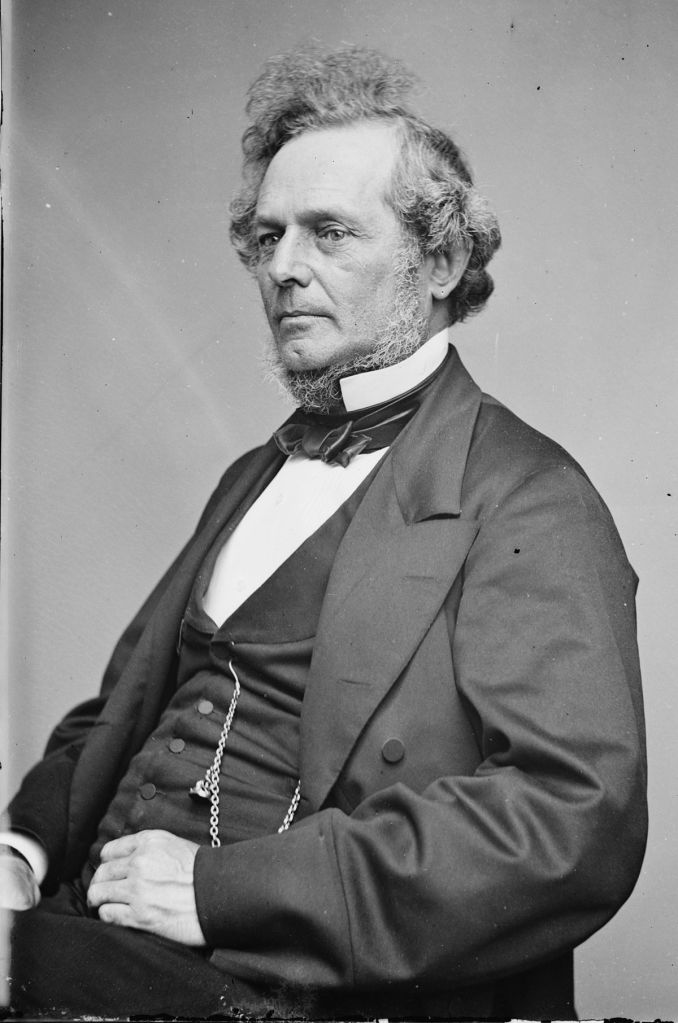
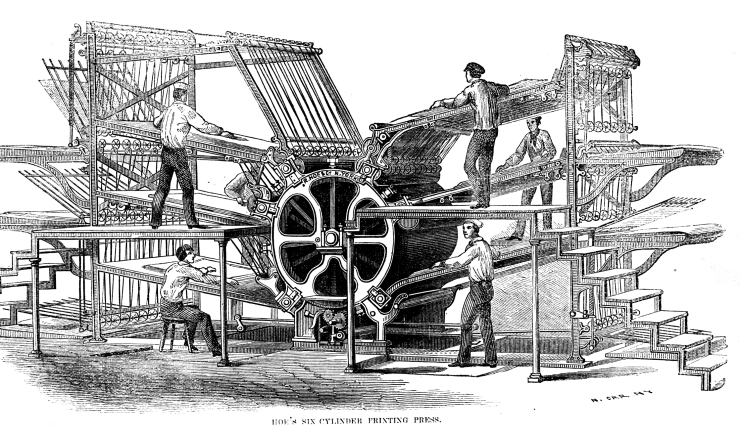
Below is Hoe’s 6-cylinder rotary press:
Courtesy of wareboilers:
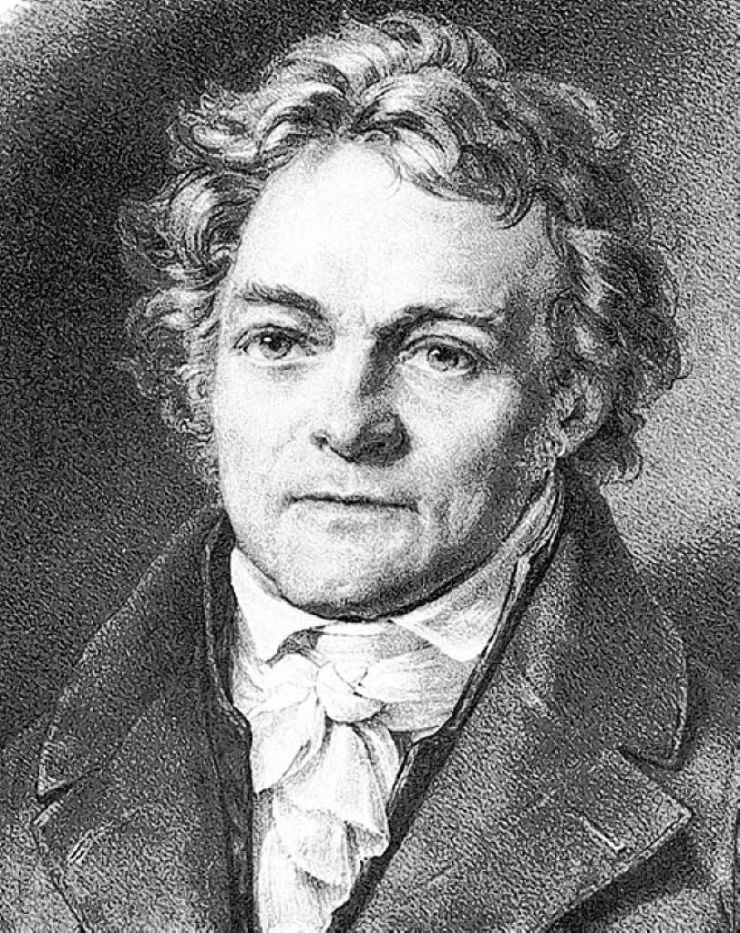
Hoe’s steam-powered invention could print millions of pages per day, largely due to the fact that paper could be led in through rollers as a continuous sheet. Hoe’s device relied upon lithography, a process invented by Bavarian playwright Aloys Senefelder (1771 – 1886). In lithography, ink is applied to smooth surfaces rather than to raised type, which was ideally suited to to the drums of Hoe’s press.
Below is Aloys Senefelder, inventor of lithography.
Courtesy of nationalgalleries:
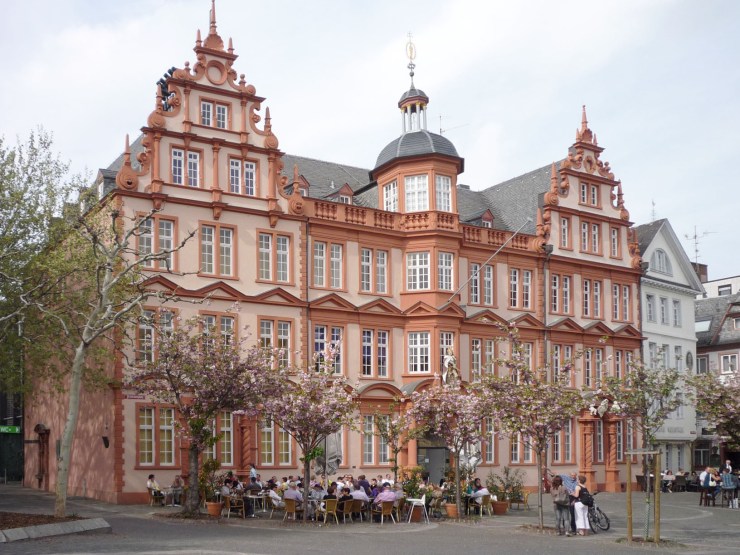 Johannes Gutenberg Museum in Mainz
Courtesy of TED-Ed:
ASPIRIN

Courtesy of TED-Ed:
Aspirin, the commercial name for acetylsalicylic acid, is one of numerous inventions which have been the object of claims which contradict their paternity. The use of natural remedies to relieve fever or pain goes back to time immemorial. Stone tablets dating from the Sumerian period describe the use of willow leaves by Assyrian physicians to treat inflammatory rheumatic diseases. Ancient Egyptians were also aware of the special property of willow leaves and used them to treat various inflammatory disorders. Hippocrates, Father of Medicine, recommended the use of extract of willow bark to alleviate the pain of childbirth and to reduce fever. It is said that the active ingredient has been known since at least 4th century BC. Numerous archaic recipes for fevers and headaches contain the decoction of the bark of the willow tree and the silver birch tree, and the leaves of the numerous plants species such as Spiraea, which are plants from the Rosaceae family, they include meadowsweet (below), and wintergreen. All these plants contain salicylic acid.

This compound was only actually ‘reinvented’ in 1763, when the English clergyman Reverend Edward Stone gave a paper to the Royal Society of London on the effects of the use of willow tree bark in the treatment of fever. Thus the practice of decocting this product was taken up again and extended.
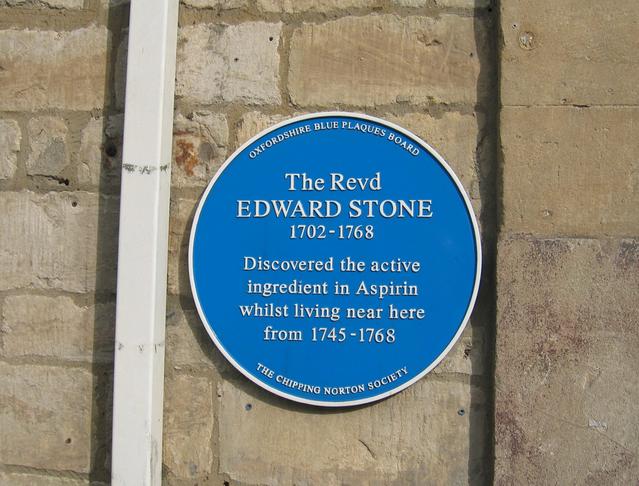
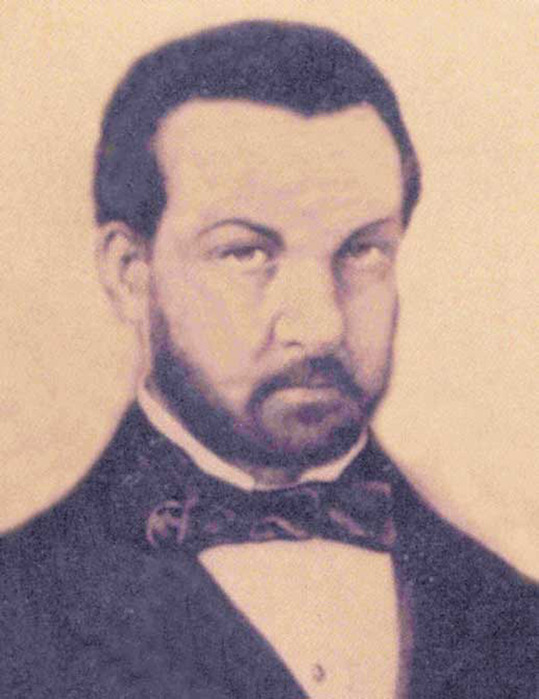
In 1829 a French pharmacist Henri Leroux identified the active element in willow bark to be salicin. The modern age of aspirin began in 1838 when an Italian chemist, Raffaele Piria, isolated pure salicylic acid for the first time, extracting it from methyl salicylate taken from birch tree bark.
Below is Raffaele Piria
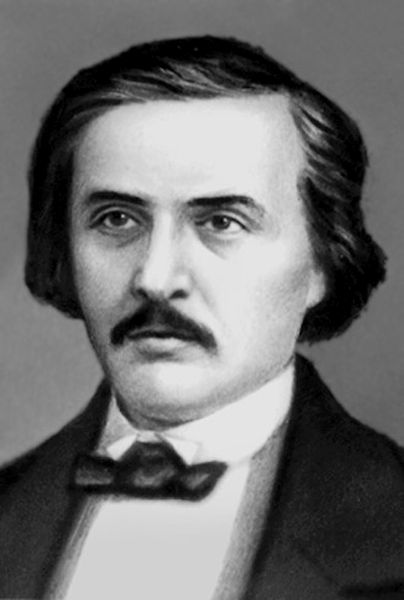
The modern inventor of aspirin can also be said to be the French chemist, Charles Frederic Gerhardt, who in 1853 was the first to synthesise acetylsalicylic acid by treating sodium salicylate with acetyl chloride, itself extracted from birch tree bark.
Below is Charles Gerhardt
Making tea with the bark of the willow tree was once used for medicinal purposes.
“Willow” by Jasmine Thompson:
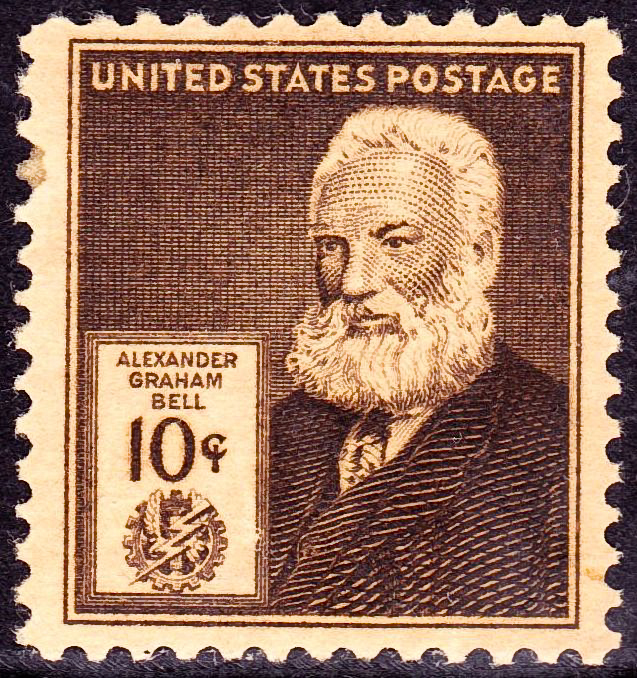
ALEXANDER GRAHAM BELL
3 March 1847 – 2 August 1922
The most lucrative patent of all time was awarded to a Scottish-Canadian-American inventor in 1876, for a device that had the magical ability to transmit the sound of the human voice across long distances. The inventor’s name was Alexander Graham Bell, and the invention was the telephone.
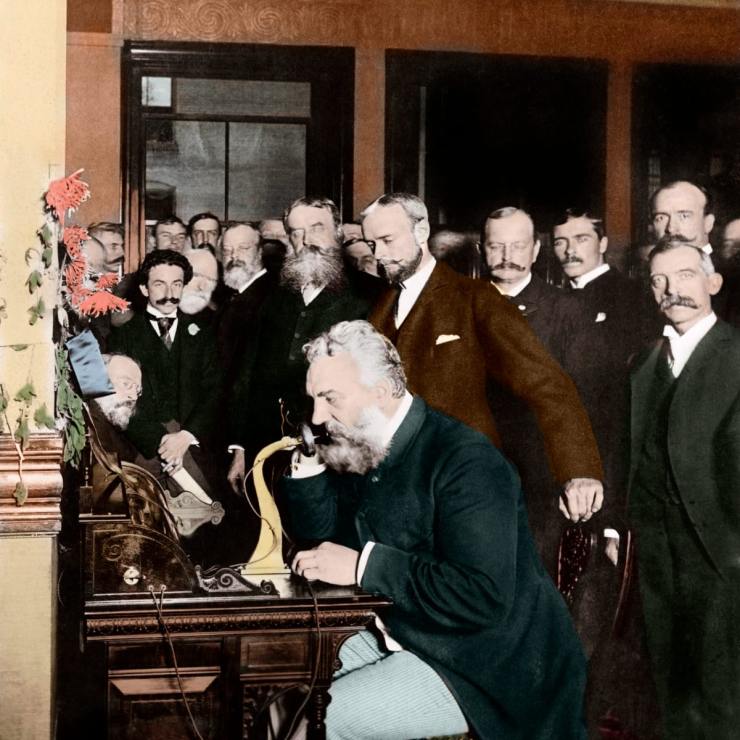
Courtesy of CloudBiography:
Alexander Graham Bell was born in Edinburgh, Scotland. His father and grandfather were pioneers in the field of speech and elocution, and his mother had a condition that resulted in progressive hearing loss. These influences inspired Bell to study language and the human voice. The young Bell attended a prestigious school in Edinburgh, and when he left school, he went on to study in Edinburgh and London. After his studies, Bell taught deaf people to speak, using methods his father had developed, and it was at this time he began experiments in the transmission of sound using electricity.
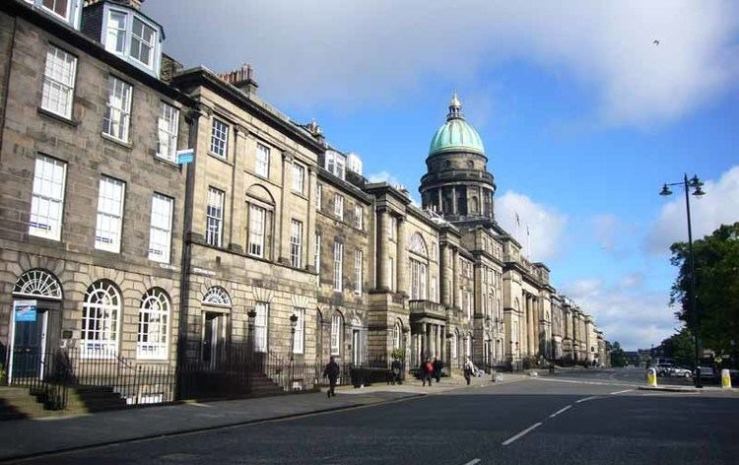
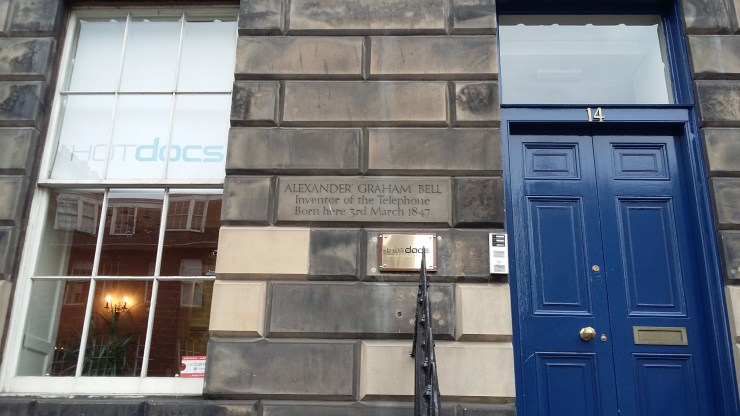
Bell lost both his brothers to tuberculosis, and in 1870, his own precarious state of health deteriorated. His parents decided the family should emigrate to Canada. Within a year of arriving he became a Canadian citizen, and his health had improved. The family settled on a farm, and Bell continued his experiments with sound and electricity. He spent time teaching deaf people in Montreal.

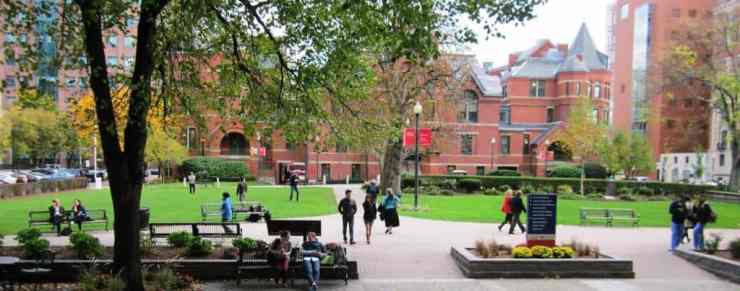
Bell eventually settled in Boston, where he founded a school for the deaf and became professor of vocal physiology at Boston University. In 1873, as he become increasingly preoccupied with his attempts to transmit sound with electricity, he resigned his position. He retained two deaf people as private students; as luck would have it, their wealthy parents became interested in what he was trying to achieve, and helped fund his work.

In 1874, Bell built a device called a harmonic telegraph, which was designed to transmit several telegraph messages at the same time through a single wire. Each message was sent as pulses of electricity with a distinct frequency of alternating current. Bell’s financial backers were keen for him to perfect his device, but Bell was much more interested in trying to adapt his device to transmit the human voice through a wire, that many thought impossible.
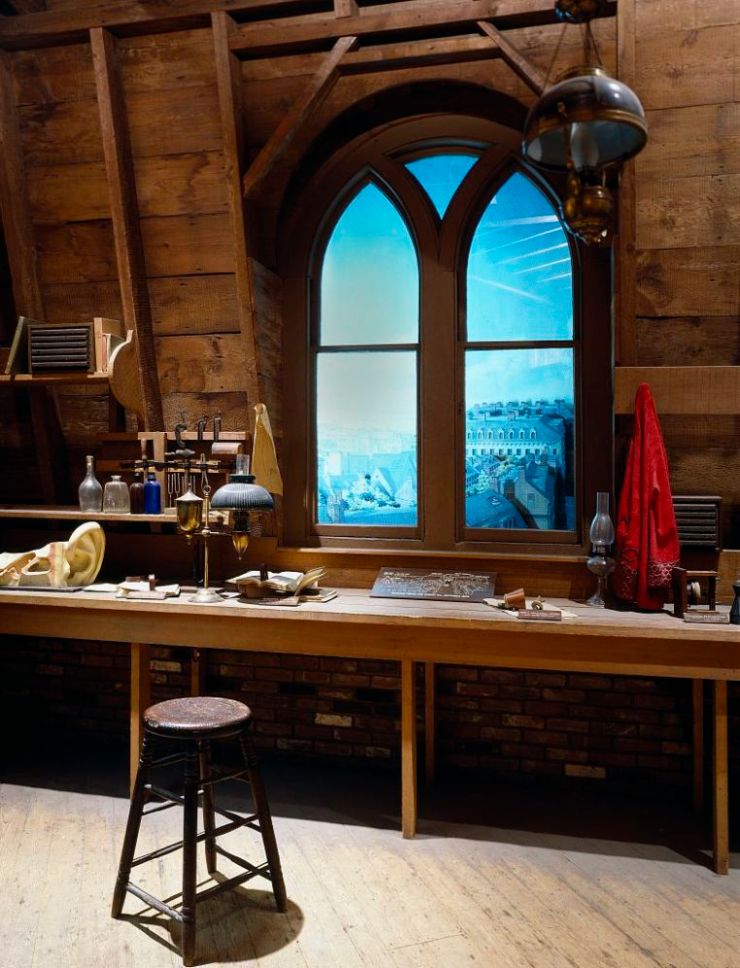
In 1875, Bell was getting close, but his knowledge of electricity was lacking. Fortunately, that year he met an electrical technician called Thomas Watson (1854 – 1934), whom he engaged as his assistant. When Bell was granted the patent for the telephone, his device had not yet transmitted any speech. But three days later, on 19 March 1876, Bell and Watson achieved success. Bell, in one room, spoke into the device, and in an adjoining room, Watson heard the now famous words, ‘Mr Watson, come here – I want to see you.’
Alexander Graham Bell (left) and Thomas Watson below.

In the following months, Bell made improvements to the microphone, and his device transmitted speech over increasing distances – and began to generate huge interest from scientists and the press. In 1877, he and his financial backers formed the Bell Telephone Company.
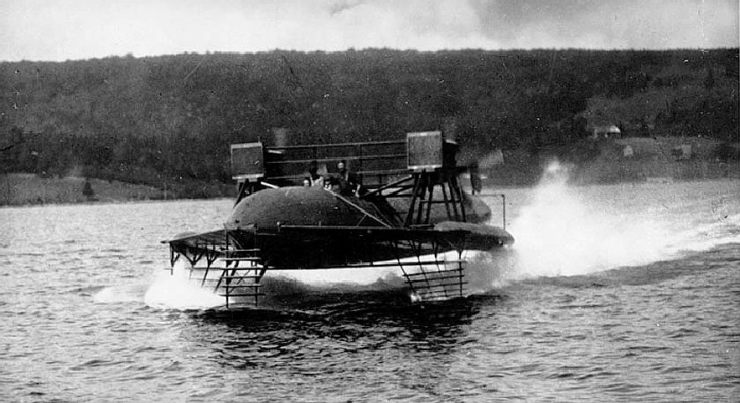
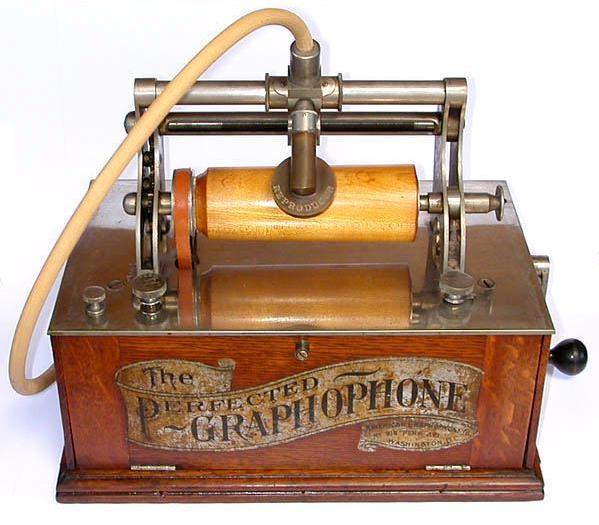
Bell’s inventions were not restricted to the to the telegraph and the telephone. He improved Edison’s most famous creation: an early sound-recording device called the phonograph. He also invented a record-breaking speedboat that rose up out of the water on submerged ‘wings’ called a hydrofoil, and a chamber to help people with respiratory problems breathe (an early version of the iron lung), and the first metal detector. Bell’s HD-4 hydrofoil boat, set a marine speed record of 114.04 kilometres per hour. Bell became interested in the hydrofoil – which can lift a boat, like submerged wings – just after the Wright Brothers had successfully lifted into the air with aerofoils.
Below is the Graphophone, the phonograph refined by the laboratory of Bell.
In his later years , he spent a great deal of time and effort experimenting with flight. The invention of which he was most proud was the photophone, a device that transmitted sound using light rather than electricity.
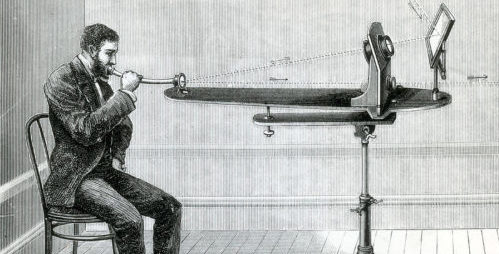
In 1880, Bell’s photophone made the first ever wireless transmission of speech, across a distance of more than 210 metres. Although the idea never took off at the time, it is similar to the way telephone signals are transmitted today using laser light passing through optical fibres.
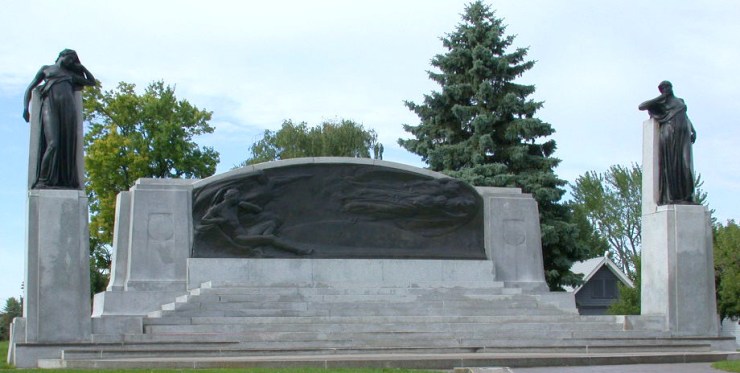
Below is the Bell Monument in Brantford, Ontario in Canada.
The Bell family home, Beinn Bhreagh Hall at Baddeck on Cape Breton Island, Nova Scotia

Courtesy of HGTV Canada:
The evolution of technology (courtesy of WatchMedia):
“Time” by Hans Zimmer (courtesy of nopleaseyes):


A wonderfully interesting assembly of information and history, accompanied with such lovely music and great videos. It is extraordinary how one man’s invention can so drastically affect humanity as a whole and change seems to accelerate ever faster as time rolls on. It is rather breath-taking, I think. I am certainly glad I don’t have to write using the Mesopotamian alphabet, though! Brilliant post. Thank you Joanna!
LikeLiked by 2 people
Thank you, dear Carolyn, for your wonderful comments, which I love and greatly appreciate!
Joanna
LikeLiked by 2 people
Wow, this post has truly been incredibly inspiring and enlightening for me!
Presenting the history of great scientists and their remarkable inventions with such clarity and depth is truly wonderful. Reading it made me realize that from Gutenberg to Bell and even the development of Aspirin, each discovery was not just a technical achievement, but a triumph of human curiosity, perseverance, and vision.
Moreover, the combination of music and visuals in the post has made it even more vivid and heartfelt. It inspired me deeply to see how the dedication and creativity of a single individual can bring new opportunities and transformative change for all of humanity.
This article not only provides knowledge of history but also reminds us that the pursuit of science and understanding serves as guidance for both the present and the future. Reading this post has strengthened my own curiosity and eagerness to learn.
Thank you, Joanna, for this remarkable, beautiful, and moving presentation! 🙏
Vijay
LikeLiked by 1 person
All fascinating inventions Joanna. Every modern invention had to start somewhere, with an idea and a curious mind. So many inventors lost their fortunes and/or their health while others who came later made the money. We have been to the Alexander Graham Bell National Historic Site in Baddeck. Thanks for all the history of these inventions. Have a great Thursday. Allan
LikeLiked by 2 people
Thank you so much, Allan, for the wonderful comments, which are very much appreciated!
Joanna
PS. Apologies, Allan, for being late reading your post, but today is my birthday and I have my family visiting.
LikeLiked by 3 people
I wonder, without these great souls discovering new things how our life would have been! Its going on…but I am not a great fan of AI 😀 Thanks for compiling the information, Joanna.
LikeLiked by 3 people
Thank you so much, Indira, for the wonderful comments, which are greatly appreciated!
Joanna
LikeLiked by 3 people
Dear Joanna, thank you for this fascinating post (sorry I missed the first one). You write about such marvelous and positive human activities here! You are obviously passionate about humanity and the natural world and its future. A rare gift. You would make a wonderful teacher. 🤗😘🤗
LikeLiked by 2 people
No worries Joanna. Happy Birthday to you and enjoy your family time. Allan
LikeLiked by 2 people
Thank you, Allan, for the kind reply and your good wishes!
Joanna
LikeLiked by 3 people
Thank you, Ashley, for your kind comments, which are much appreciated!
Joanna
LikeLiked by 3 people
First of all, I’d like to wish you a happy birthday, dearest Joanna.💌💌💌
I found your post fantastic, as always. The images, music, and videos you shared about these important discoveries were wonderful and gave me the opportunity to delve deeper into some topics I had only superficially known about.
LikeLiked by 2 people
Thank you so much, dearest Luisa, for the birthday wishes and for the wonderful comments, which I love and very much appreciate!
Joanna xxx
LikeLiked by 4 people
Another fabulous series, Joanna.
LikeLiked by 2 people
Thank you, Pat, but as you sensibly wrote, far too long to read.
Joanna
LikeLiked by 2 people
You are truly welcome ❣️❣️❣️
It was a real pleasure
LikeLiked by 1 person
Your absolutely right, Joanna.
LikeLiked by 1 person
Thank you!
Joanna xxx
LikeLiked by 2 people
I sure never knew about birch tree bark’s connection to aspirin.
All of the inventors and scientists that you write about improved human life immensely. They were heroes in a very real sense.
LikeLiked by 2 people
Thank you for another interesting post. I found the info on the “printing press” very interesting as it is one of the most important things that spread knowledge throughout the world.
LikeLiked by 2 people
Thank you, Diana, for the wonderful comments, which are greatly appreciated!
Joanna
LikeLiked by 3 people
Thank you so much, Neil, for the interesting comments, which I very much appreciate!
Joanna
LikeLiked by 3 people
Belated happy birthday, Joanna!
May your special day have been as wonderful as you are. May the year ahead be filled with love, laughter, and radiant joy. I hope it brings you beautiful moments, cherished memories, and countless reasons to smile.
Wishing you happiness, success, and fulfillment- today and always. 🎂🎊🎉💐
Sorry for being late!
Now coming to the post-
What a wonderfully lucid and engaging presentation, Joanna! You’ve woven together historical facts about transformative inventions and discoveries like printing press, aspirin, and the telephone, with relevant illustrations that make the narrative both informative and captivating.
The perseverance of Gutenberg, who struggled against immense adversity and was even accused of embezzlement by his investor, Johann Fust, is deeply inspiring. I still remember witnessing the traditional printing process in my childhood; how painstaking it was to arrange each individual letter by hand. It is truly heartbreaking that a visionary of such magnitude spent his final days in poverty.
In a similar vein, Alexander Graham Bell drew inspiration from his deep interest in speech and elocution, ultimately pioneering the transmission of the human voice through electricity. Beyond the telephone, his work on the hydrofoil and contributions to sound recording were equally remarkable. It’s fascinating that while Bell preferred the nautical greeting “ahoy,” it was Thomas Edison who popularised “hello” as the standard way to answer a telephone, an everyday habit shaped by innovation.
Equally intriguing is the ingenuity of Paleolithic humans, who harnessed fire, crafted weapons, and fashioned clothing. Their curiosity, resilience, and relentless effort laid the foundation for human progress. Without their determination and creativity, the path to our present age of modernisation and sophistication would never have been possible.
Thank you once again, Joanna, for sharing such rich and enlightening insights into the history of discoveries in such a captivating manner. I also appreciate your mention of yoga as one of India’s contributions to the world.
LikeLiked by 3 people
Thank you so much, Kaushal, for the beyond wonderful birthday wishes, and the timing doesn’t matter at all!
I love your analytical comments about the scientific discoveries post, and your kind words made my day!
Joanna
LikeLiked by 3 people
Thank you so much, Joanna, for your graciousness! You’re welcome, always!
LikeLiked by 1 person
Thank you, Kaushal, for being kindness personified!
Joanna
LikeLiked by 2 people
First of all let me wish you ,belatedly , a very happy birthday ,Joanna for which I want to convey my hearty thoughts .Wishing you life full of love, laughter & all the things that make you happy .You make the world a better place just by being in it & you deserve all the joy in the world today & always .Your presentation of the history of great scientists and their remarkable inventions is truly wonderful.These inventions are indeed a triumph of human curiosity, perseverance, and vision. This article not only provides knowledge of history but also reminds us that the pursuit of science and understanding serves as guidance for both the present and the future. Thank you so much for such an enriching post, Joanna .
LikeLiked by 1 person
Thank you so much, Dhirendra, for your beautiful wishes, which made me happy! Your wonderful comments about the post are greatly appreciated and made my day!
Joanna
LikeLiked by 2 people
So glad for your bright response to my thoughts , Joanna! Namastey 🙏🏻
LikeLiked by 1 person
You are more than welcome, as always, Dhirendra! Namaste!
Joanna
LikeLiked by 2 people
🙏🙏🙏
LikeLiked by 1 person
Oh, I loved reading this, Joanna! From aspirin to printing press, from Gutenberg to Bell, this was such a fascinating read.
LikeLike
Thank you so much, Punam, for the wonderful comments, which I love and greatly appreciate!
Joanna x
LikeLiked by 1 person
You are very welcome, Joanna.
LikeLike
Thank you, Punam!
Joanna
LikeLiked by 1 person
Excellent overview of discoveries that changed history. From Johannes Gutenberg to Alexander Graham Bell, it’s impressive how curiosity and perseverance transformed the world. Very inspiring!
Hugs from afar, dear Joanna.
LikeLike
Thank you, Lincol, for the wonderful comments, which are greatly appreciated!
Joanna
LikeLiked by 1 person