
“The joy of discovery is certainly the liveliest
that the mind of man can ever feel.”
Claude Bernard
“The Joy of Discovery” by Bill Nye (courtesy of melodysheep):
“The Symphony of Life” by Stuart Mitchell (courtesy of Stuart Mitchell Music):
The recently achieved quest to find a vaccine against the coronavirus has made me think about so many scientific discoveries that have allowed humanity to develop in leaps and bounds. I won’t write in chronological order because there are thousands, but I will start with the discoveries relevant to us now.
VACCINATION
Protection against infectious diseases by inoculation with germs themselves goes back to antiquity. The word is derived from the Latin word vaccinae, meaning ‘of the cow’. The word vaccination appeared around 1880, used for the first time by Pasteur, who knew of the work of the Englishman Jenner, who had immunised patients against cowpox and common smallpox. The idea of ‘vaccination’ of this sort was practised in China in the 10th century by a Taoist monk, whose name has not survived. It was based on the principle that you treat evil with evil. To think that this was thought of eleven centuries ago is astonishing. Vaccination then took place not by scarification but by implantation of a pad carrying some attenuated germs in one nostril.
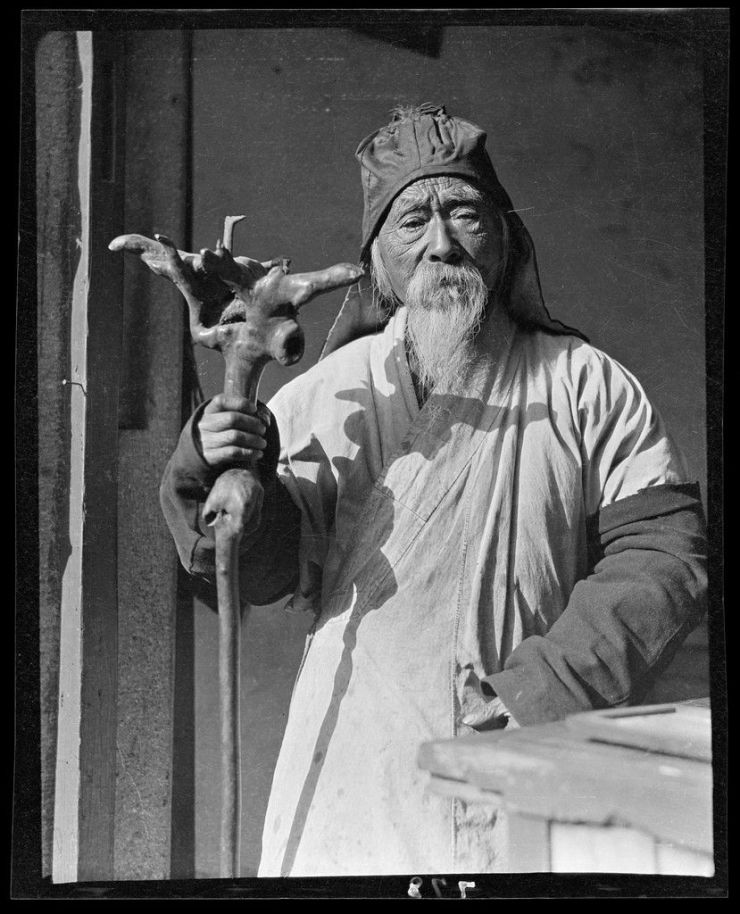
Courtesy of TED-Ed,
Vaccination also had been used in Turkey since time immemorial. Possibly this was a result of the experimentation of the first known toxicologist in history, Mithridates VI, King of Pontus (north of modern day Turkey), who claimed that one could be immunised against poisons by regularly absorbing small quantities of them. The Turks ‘vaccinated’ against smallpox by extracting traces of the contents of the pustule from mild cases of the disease and injecting them into healthy people. This was a rather risky practice and some people died from the effects of the vaccination. I recommend that you don’t try this at home.
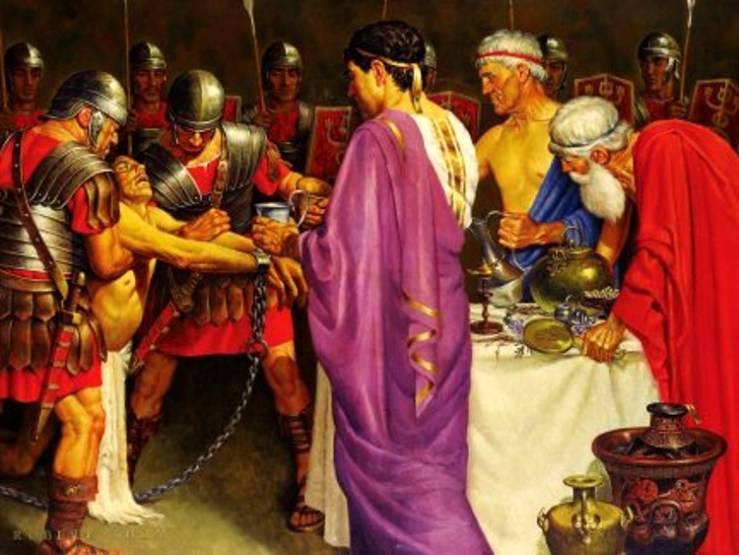
Re the chains above, I suspect it was hard to come by volunteers!
The Jenner vaccination method was introduced into France by the Duc de la Rochefoucauld-Liancourt. Meanwhile, the notion of attenuated germs made progress. It was obvious that one could not inject the actual germs of a disease against which one wanted to immunise, for fear of triggering the disease itself. It was recognised that inoculation with an attenuated germ could help the organism to recognise a germ and defend itself against it. This is why this principle of attenuation was implemented by Pasteur in his preparation of a vaccine against rabies. In 1885, Pasteur was presented with a 9-year-old child, Joseph Meister, who had been bitten by a rabid dog. Although not a doctor, Pasteur responded to the challenge: he used the vaccine on the child with successful results. Modern vaccination had been born.

The influence of Pasteur (courtesy of National Geographic):
The only important modification made subsequently was the introduction of vaccines obtained through genetic engineering. These were brought into use in 1983, the first one commercially produced being the vaccine against hepatitis B in 1986.
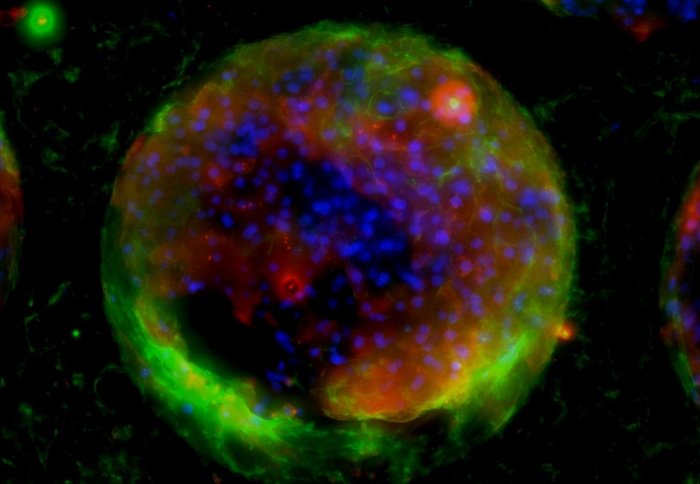
The above image shows how artificially generated liver cells interact with the Hepatitis B virus.
“The Girl with the Flaxen Hair” by Claude Debussy, performed by Emmanuel Ceysson (courtesy of medici.tv):
THOMAS EDISON’S LAMP

A lightbulb moment courtesy of VoicePlay!
Thomas Edison is one of the best-known and most prolific inventors of all time. He was granted 1,093 US patents. At his family home in Port Huron, Michigan, home-schooled 12-year-old Edison set up his first laboratory in his bedroom. When he was 14, Edison built a working telegraph at home. By the age of 16, he was working as a telegraph operator and for the next five years he travelled, working at a number of different telegraph offices in several different cities. At the age of 21, he decided to devote all his time to inventing.

In 1873, he invented the ‘Quadruplex Telegraph’, the rights to which he sold to Western Union. With the proceeds , Edison bought in 1876 34 acres of land in the countryside of Menlo Park, New Jersey. In his new property he set up a full research and development laboratory – the first of its kind in the world. In Menlo Park he set out to improve the recently invented telephone.
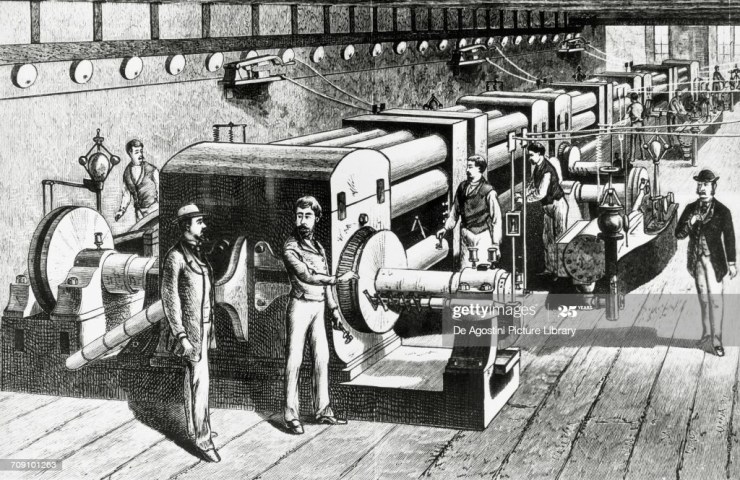
The most important invention to come out of Menlo Park was the light bulb. Edison demonstrated the new technology in December 1879, lighting the workshop in a public demonstration. His success with electric light led him to work on a system to distribute electric power and to set up a bulb-making factory. Edison patented the system in 1880, and by 1882, he set up a power station at Pearl Street, New York. He continued to invent many more ideas, like Kinetoscope, the first device for showing moving pictures.
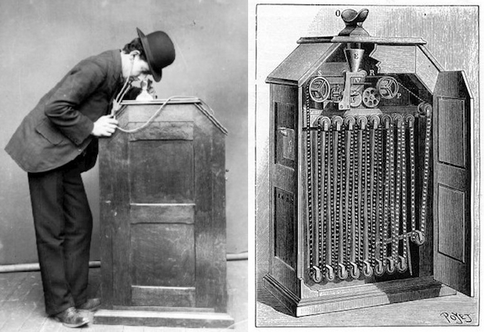
Edison died in 1931. After his death, US President Herbert Hoover encouraged Americans to turn off their lights for one minute, in tribute to the contribution made by America’s greatest inventor.
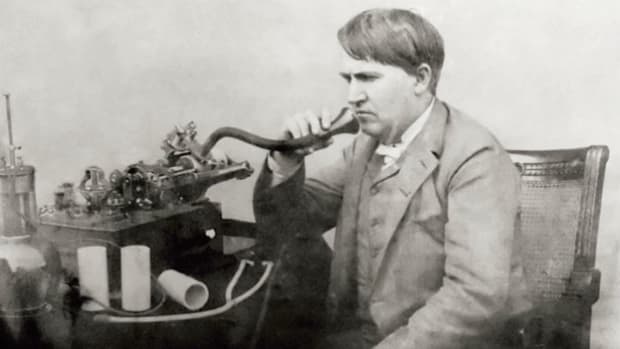
Above is Thomas Edison working on his telephone.
Courtesy of Biography:

COFFEE

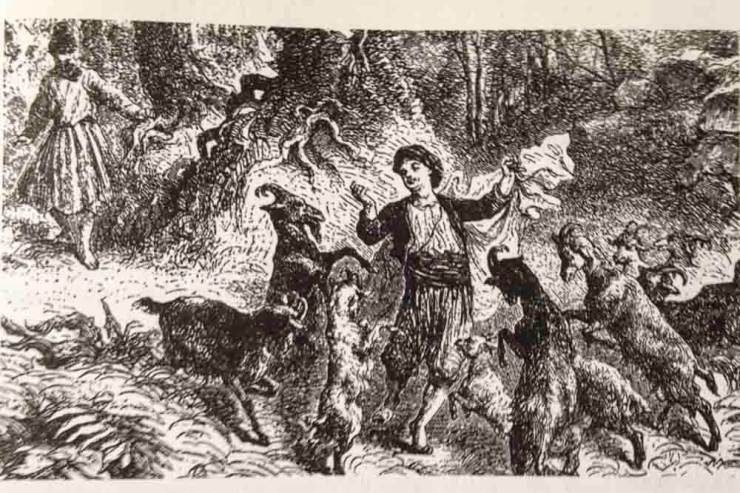
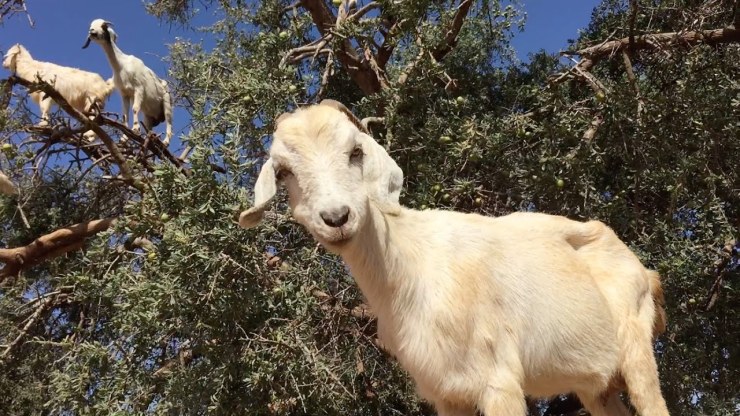
Around the year 850 BC, a young Ethiopian goat herder, Kaldi, was astonished to see that his goats were not sleeping at night. Watching them closely, he discovered that they were grazing on the red fruit of an unknown tree. Having tasted the fruit, he found that they had a stimulating, exciting effect on him too. The drink called coffee, a name derived from the province Kaffa in Ethiopia, where coffee is cultivated, was discovered around the time Kaldi discovered that his goats were insomniac.

Courtesy of ExplainerOfThings:
All coffee trees belong to the genus Rubiaceae. Coffee originated in Ethiopia and is an evergreen shrub whose cherry-like fruits contain the coffee beans.

Complete plants were not exported until the 15th century, destined for Arabia. Coffee houses were very popular in Mecca, then in Egypt and Turkey. Coffee was later introduced to the East Indies, West Indies, South America, and Africa. In England the first coffee shop was set up in Oxford in 1651 by an Armenian man, named Harutiun Vartian, at the parish of St Peter-in-the-East. Today, on the same site there is a cafe-bar called The Grand Cafe.
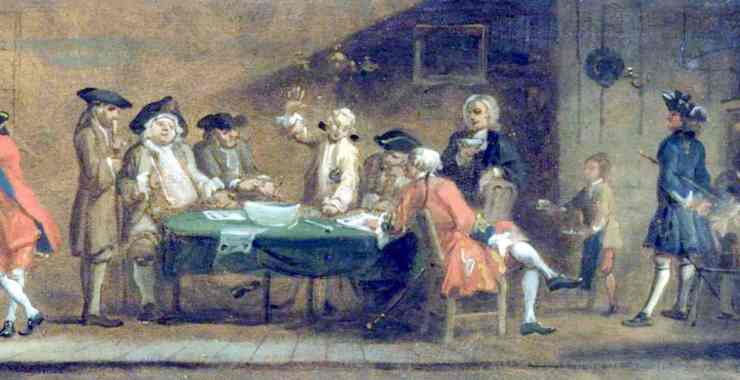
In London, the first coffee house opened later the same year.
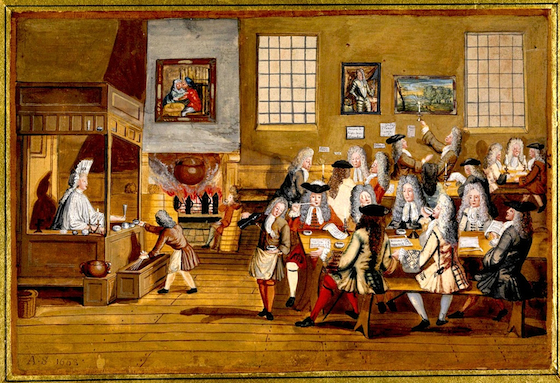
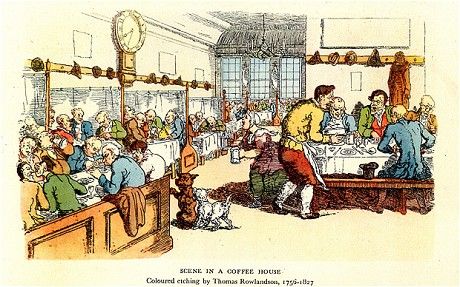
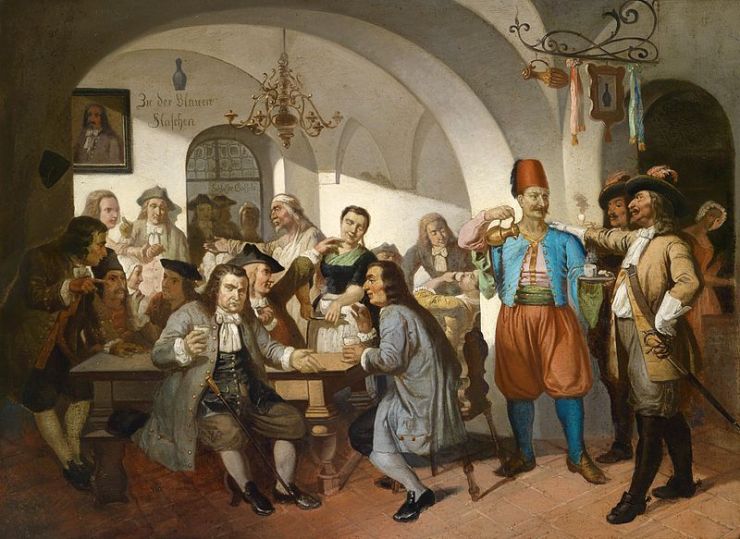
It also reminded me of the extraordinary story about the way coffee was first introduced to Europe. It was during the siege of Vienna by the Ottoman Empire led by Suleiman the Magnificent. A Polish man, Jerzy Franciszek Kulczycki, a traveller and an explorer living at the time in Vienna, decided to help King John Sobieski to repel the siege. As he spoke eight languages, including Turkish to perfection, he dressed in Turkish clothes and during the night left Vienna for the Turkish camp. Talking to the men in the camp he was able to find out what was planned. Back in the city, he was able to warn the king and prevent problems during the attack. After the siege was destroyed and the Turks repelled, the King asked him what he would like to have as a reward. To everyone’s surprise, Kulczycki asked for a huge number of bags of brown beans. No one could think what they were for. In a short time, Kulczycki opened a shop/drinking establishment, called The Blue Bottle where he served an aromatic drink – coffee made tastier to European likings by the addition of milk and honey. Everyone, including the King, loved the beverage, and that is how coffee conquered Europe.
Aria from “Coffee Cantata” by J.S. Bach (courtesy of cake kim):
CHARLES BABBAGE AND HIS ANALYTICAL ENGINE
26 December 1791 – 18 October 1871
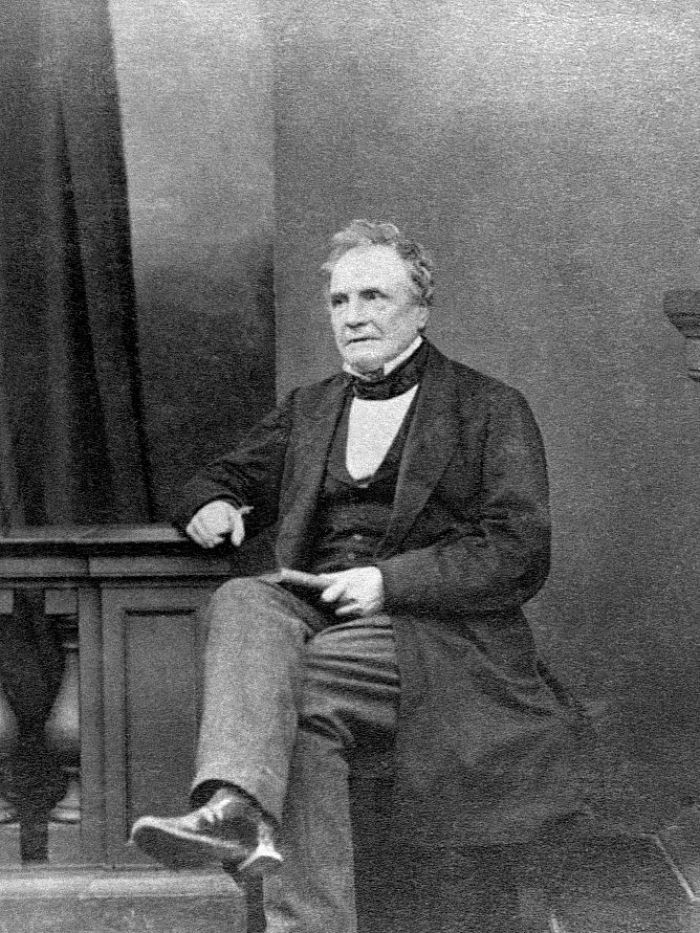
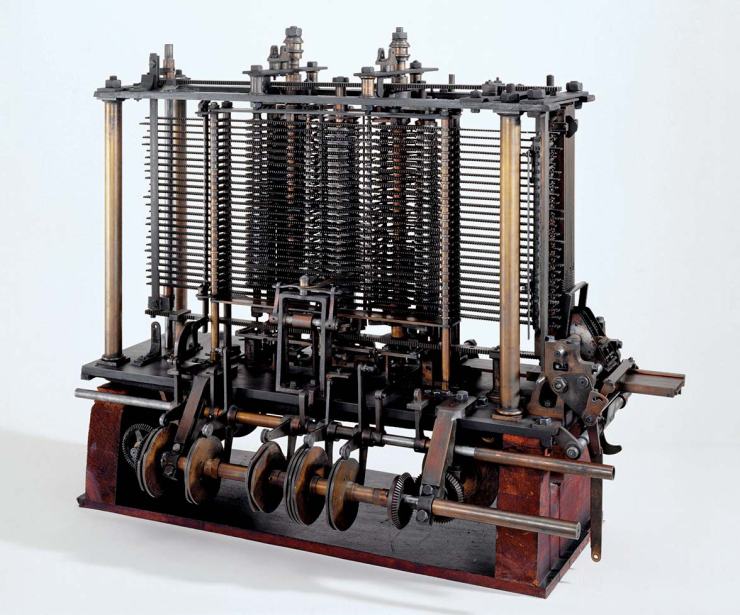
Babbage’s design inspired the pioneers of the modern computer. Long before the invention of the modern computer, Babbage, a mathematical genius, designed machines that would carry out complicated mathematical operations. He invented the world’s first programmable computing device but he also contributed to the development of business efficiency and railway travel.
As a child, Babbage was extremely inquisitive. In his autobiography, he wrote that whenever he had a new toy, he would ask his mother ‘What’s inside it?’, and would always break things open to find out how they worked. This curiosity gave him an understanding of mechanisms and machines.
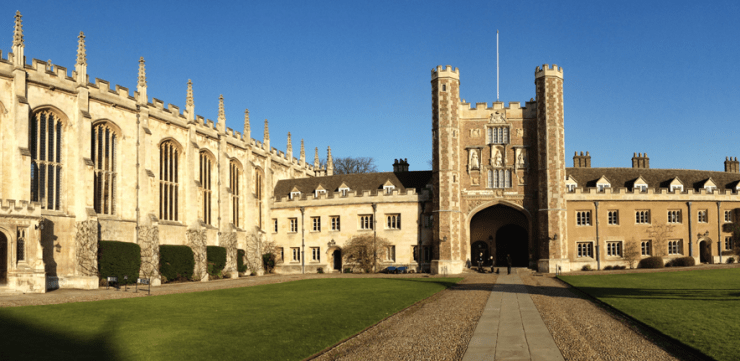
In 1810, he went to study mathematics at Trinity College, Cambridge University. At the time, mathematicians and engineers relied on books filled with tables of numbers to carry out calculations. In 1812, Babbage moved college, to Peterhouse. In the library there, he realised that there were large numbers of mistakes in the numerical tables, and that they were down to human error.

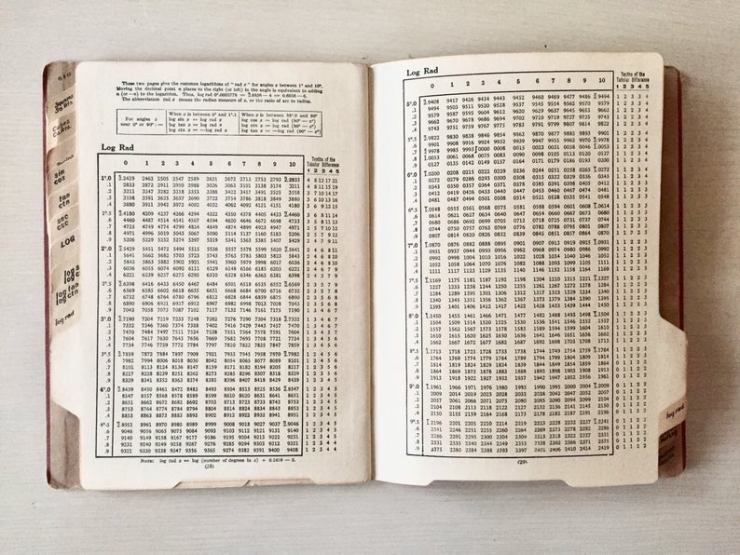

Babbage envisaged a machine that would be able to calculate these tables at speed and remove the risk of human error.
In 1822, Babbage presented to the Royal Astronomical Society a proposal to build a calculating machine. The society granted Babbage money, and he hired an engineer to oversee the job. In a workshop close to his house, the engineer, Joseph Clement, a skilled toolmaker and draughtsman, set to work.

Babbage’s Analytical Engine was the first known design for a mechanical general all-purpose computer. Although never finished because of a dispute between Babbage and the engineer, the concepts it utilised in its design were at least 100 years ahead of his time. Programs and data would be inputted using punched cards. Output consisted of a printer, a curved plotter and a bell. The machine memory would be capable of holding 1000 numbers of 50 decimal digits each. The programming language it was to use was very similar to that used in the early computers 100 years later, well before Alan Turing’s concept.
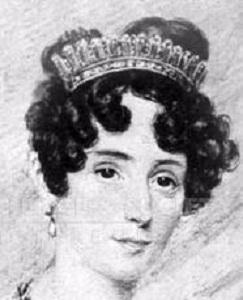
Charles Babbage’s beloved wife, Georgiana
Flute Sonata No. 2, BWV. 1031 “Siciliano” by J.S. Bach (trancr. Kempff), performed by Lang Lang:
In 1827, his father, his wife and one of his sons died, and Babbage stopped work and took time to travel in Europe. While he was travelling, he dreamed up a more general calculating machine, which would be able to follow a set of instructions. Babbage envisaged a machine that would have a printer that would output the results. By 1835, he had produced the first of many designs for an ‘Analytical Engine’ – the forerunner to the modern programmable computer. His design was expressed in 500 large engineering drawings, a thousand pages of engineering calculations and thousands of pages of sketches. In 1991, the Science Museum in London followed Babbage’s design and constructed it; in 2005, they added a printer that also had been part of Babbage’s original design. Both machines worked perfectly.
Courtesy of Computer History Museum:
Babbage’s designs inspired the pioneers of the modern computer and this is what he is remembered for, but he also had a significant influence on other fields. While travelling in Europe in the 1820s, Babbage toured factories and studied the manufacturing process. In 1832, he published a book called ‘On the Economy of Machinery and Manufacture’, which was the beginning of studies into the efficiency of business and industry – what is now called operational research. He applied his methods to mail in Britain, and the result was the world’s first cheap and efficient national postal system.

He also studied the efficiency of the railways, which were in their infancy at the time. He invented a special carriage filled with equipment that would record the bumps in the tracks during a journey, and a device to move objects off the track ahead of the train – affectionately called a cowcatcher. The concept was used on trains around the world.

Through his inventions, Charles Babbage is recognised worldwide as GENIUS.
“The Poetry of Reality (An Anthem for Science)” (courtesy of melodysheep):

 naturetails
Hard to say which of these inventions we could do without Joanna. I am still mystified at anti vaxers who continually say vaccines are unproven. I am still chuckling imagining the sleepless goats after injecting the caffeine from the coffee beans. As to the computer, well, I use this for so many things, I can’t imagine being without it. Thanks for your informative post. Happy Thursday. Allan
LikeLike
Great compilation of discoveries through ages, Joanna! Good job!
LikeLiked by 1 person
Thank you, Indira, for the wonderful comments, which are greatly appreciated!
Joanna
LikeLiked by 2 people
Terrific article, Joanna. I was especially interested in the section about coffee. I hadn’t known much about its discovery. I’m a coffee addict to a significant extent. I drink about three full cups each day.
LikeLiked by 1 person
Thank you, Neil, for the wonderful comments, which are much appreciated! I just added that due to a WP error, this post should be posted as scheduled on 12 February, and not today. I wonder what will be published next week?!
Joanna
LikeLiked by 2 people
Which is your personal favourite ? I think many would say coffee and I certainly like that story best, including the way it found its way to Vienna. These days I don’t drink it but I used to love Cappuccino. Computers are wonderful but sometimes I yearn for those times before they took over our lives! Most enjoyable collection Joanna
LikeLiked by 1 person
Thank you, Carolyn, for the wonderful comments, which are greatl
LikeLiked by 1 person
Thank you, Carolyn, for the wonderful comments, which are greatly appreciated!
Joanna
LikeLike
Learned so much new and more about this fascinating topic, Joanna. Does reinforce my amazement of the anti vaccine movement since vaccines have been so successful for centuries. To have the rise and spread of diseases mistakenly believed to be stopped years ago is very sad.
LikeLiked by 1 person
Thank you, Pat, for the wise comments, which are greatly appreciated!
Joanna
LikeLiked by 2 people
Joanna,
This is a truly engaging and beautifully curated article that brings the human journey of discovery vividly to life. From the long history of vaccination to Edison’s light, from the delightful story of coffee to the visionary ideas of Charles Babbage, each example shows that scientific progress is driven not only by technology, but by curiosity, courage, and compassion.
I especially appreciated the historical perspective on vaccination and the extraordinary foresight of Babbage’s Analytical Engine. The story of coffee was both informative and charming it made me smile while learning something new.
Thank you for such a thoughtful and well-balanced presentation. This series genuinely invites the reader to look forward to what comes next.
Warm regards,
Vijay Srivastava
LikeLiked by 1 person
Thank you so much, dear Vijay, for the wonderful and full of wisdom comments, which are greatly appreciated! There are several posts in this series, all scheduled to be published in the coming weeks. Unfortunately, WP made a mistake and published part 1 yesterday instead of next week on the 12th. As every post is set on the correct date, I wonder what they will do next Thursday!
Joanna
LikeLiked by 2 people
I was pleasantly surprised to see another post from you on the very same day, and I thank you wholeheartedly, Joanna, for beginning this new series on Great Scientific Discoveries.
As you have rightly observed, the more one reads, the more one becomes aware of one’s own ignorance. Yet reading is also the very means through which that ignorance gradually dissolves.
All four discoveries you have discussed right from vaccination to the first computer are of immense significance. The early understanding of germ theory, pasteurisation, and related breakthroughs marked turning points in human history.
I found the account of Charles Babbage and his visionary ideas particularly remarkable. I still remember my astonishment when the first mini-computer was installed in my bank which was gigantic, with endless paraphernalia. The same sense of wonder struck me when Ledger Posting Machines were introduced. And today, everything has effortlessly shrunk into the palm of our hands.
The story of coffee and its discovery and eventual introduction to Europe was delightful. The tale of the light bulb is equally fascinating. It is truly inspiring that despite being deaf and dyslexic, Thomas Edison achieved so much. He viewed his deafness as a blessing, spoke less, worked more, and transformed challenges into opportunities.
Equally moving is the role his mother played, when the school asked her to stop sending him, she took it upon herself to teach him. A mother can indeed change the course of her child’s life, something I have experienced personally.
The image of goats perched on trees is amusing, but the post itself is deeply educative. I strongly feel it should be read by all school students, especially in an age where knowledge is evolving every day. Human inquisitiveness knows no bounds, and so discoveries will continue to unfold, even in the age of AI.
Thank you once again for sharing yet another well-researched and fact-rich post.
LikeLiked by 2 people
Thank you, Kaushal, for the wonderful comments! Having two posts in one day was due to WP error! I hope that Part 2 next week will please you as this one! Thank you again, Kaushal, your kind words are greatly appreciated!
Joanna
LikeLiked by 2 people
Truly my pleasure, Joanna! You’re welcome, always!
LikeLike
Thank you, Kaushal!
Joanna
LikeLiked by 1 person
I find it very interesting how some (such as inventors and artists) come up with ideas that others seem unable to even dream of. I think it is due to a combo of intelligence and imagination. I found the info on vaccines very informative. Thanks for such an interesting post.
LikeLike
Thank you so much, Diana, for the wonderfully perceptive comments, which I love and greatly appreciate!
Joanna
LikeLiked by 1 person
Joanna, thank you for a fascinating series! Thomas Edison’s summer home and laboratory are near us and I have visited several times. I have heard that one of his original light bulbs still works!
I love the smell of coffee! I wish I liked the taste because medicine reports many health benefits. I am a tea drinker which also has health benefits, so I guess it’s OK.
The vaccine segment is so timely. Sadly, antivaxers in the US have caused a widespread epidemic of measles here.
Thank you Joanna for a science series which will prove very informative!
LikeLike
Thank you so much, Cheryl, for the wonderful comments, which I love and greatly appreciate! More next week!
Joanna
LikeLike
This post is very interesting, Joanna. I particularly enjoyed reading about vaccinations.
LikeLike
Thank you, LuAnne, for the kind comments, which are greatly appreciated!
Joanna
LikeLike
I so enjoyed this, Joanna! Vaccinations have rid our country of polio! The story about coffee was the most interesting.
LikeLike
Thank you, Punam, for the wonderful comments, which I very much appreciate!
Joanna
LikeLiked by 1 person
My pleasure, Joanna.
LikeLike
This is an inspiring post that reminds us how curiosity and the desire to understand the world—from vaccination to electric light, coffee, and the first computers—have transformed our history and improved our lives. Science, as Claude Bernard said, gives us one of life’s greatest joys: the joy of discovery.
Hugs, my friend Joanna.
LikeLike
Thank you so much, Lincol, for your wonderfully perceptive comments, which are greatly valued!
Joanna
LikeLiked by 1 person
Thank you so much, Joanna, for your sensitivity and your beautiful way of sharing your writing. It’s a true pleasure to read you and to be able to offer a few words. Big hug.
LikeLike
Thank you, Lincol, for the kind comments, which are greatly appreciated!
Joanna
LikeLiked by 1 person