
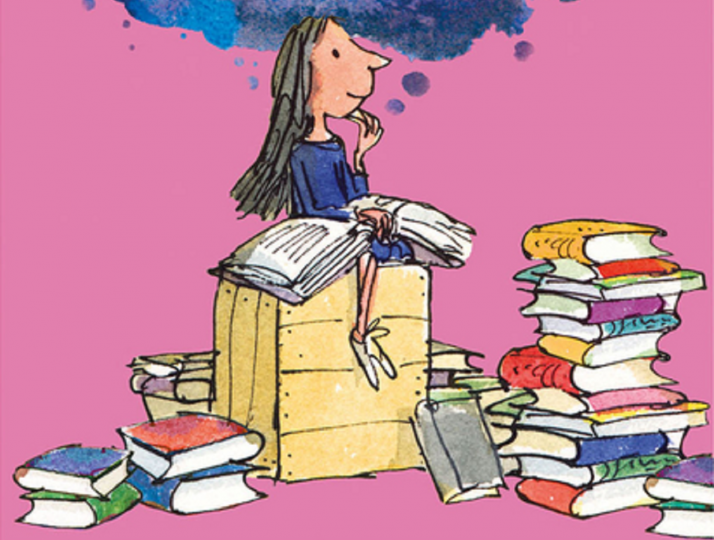
“There is no bond like having read and liked the same books.”
Edith Nesbit
“Tears in Heaven” by Eric Clapton, performed by Nylonwings:
Today’s post is back to the world of kindness, appreciation, and gratitude, and a book about the daily life of a family that had to work hard to survive which draws readers in by reminding them of their own families and their lives. And, overwhelmingly, how these stories can tell readers about human nature – and about the compassion, friendships, generosity, and gratitude that good books can breed.
EDITH NESBIT
15 August 1858 – 4 May 1924

Edith Nesbit was born in London and educated in England, France, and Germany, travelling with her mother and sister after her father’s death. Her father died when she was four, and it marked her for life – in many stories, Daddy is missing, or dead. Shunted around Europe by her mother – Edith’s sister had a chest complaint and attended a string of continental spas – she was packed off to a succession of schools she hated. She escaped from one by jumping through a window.

At 19 she met the handsome, womanising Hubert Bland. He had a waxed moustache and a monocle, and although he was a Cockney brush salesman, he shared her intellectual enthusiasm. They married weeks before their son, Paul, was born. Shortly after the wedding, while Bland was seriously ill with smallpox, his partner in the brush company absconded with all the money.

From then on, Edith supported the family; for the 34 years of their marriage, she was the financial mainstay. For 15 years, she churned out stories, novels, and poems that were as marketable as they were forgettable. It seems that it was not until Edith was pregnant with her second child, Iris, that she discovered that Hubert had been having an affair with a “fiancee” called Maggie who had a child by him. Edith eventually forced herself to meet Maggie and befriend her.
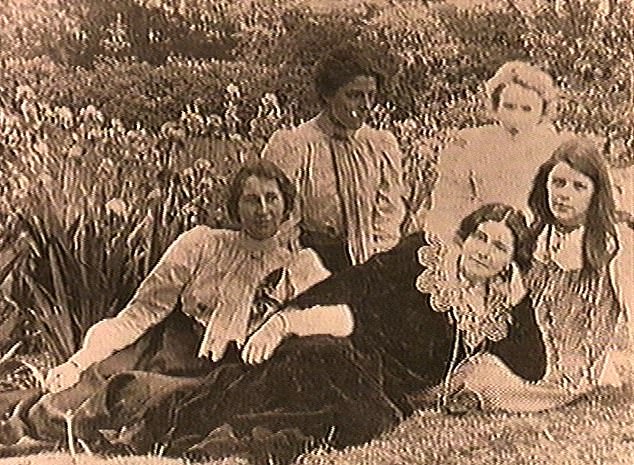
Edith Nesbit and her children
Then, when Edith’s best friend, Alice Hoatson, became pregnant, Edith invited her to move in with them as a housekeeper to hide the stigma of illegitimacy. Not until six months after Alice’s child was born did Edith discover that Hubert was the father. There was a bitter row, but when Hubert threatened to leave with Alice, Edith agreed to let her stay on.
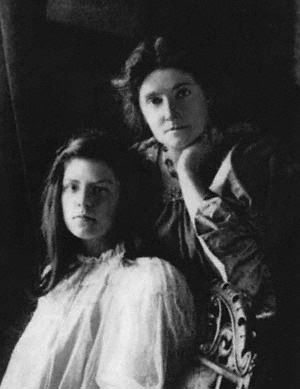
Edith and her daughter
Piano Concerto (2) The Love by Nigel Hess, performed by Lang Lang and the London Chamber Orchestra:
Edith’s writing made money, but not until she wrote as a child – Oswald Bastable who relates the adventures of the Bastable family – did she strike gold. Perhaps, because she had the emotional qualities of a child, she spoke to children as intellectual equals. The Treasure Seekers, published in 1899, was written with unprecedented directness, unlike any children’s book before it.
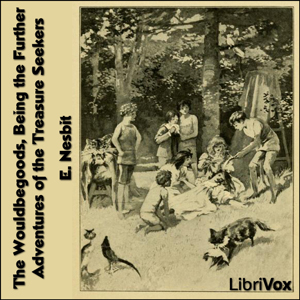
The stories Edith produced at the start of the 20th century, gulping gin and water as she wrote, were not only unsentimental but downright seditious by the standards of the time. Edith’s girls are as brave and adventurous as boys, and she was one of the first children’s writers to make a working-class boy the hero.
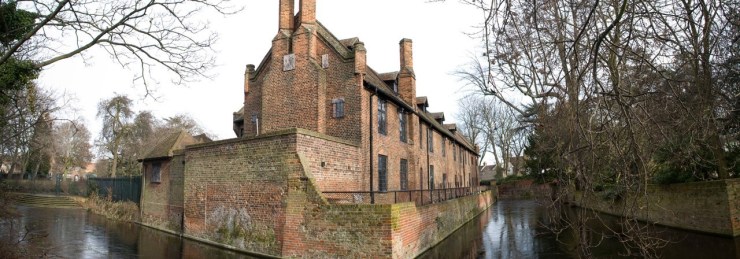
Her own children, and Alice’s, revelled in the freedom of their moated mansion in Eltham, but this carefree existence had its price. Edith’s youngest son Fabian choked to death during an operation for adenoids because no one had told him not to eat before the anaesthetic. It was after this tragedy that Edith began writing her masterpieces.
Courtesy of Chente Azul:
The Skipper, Edith’s second husband Thomas Tucker
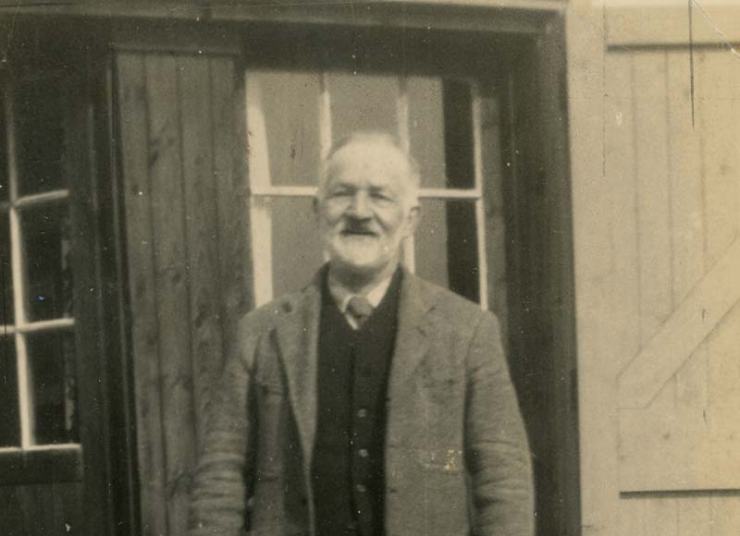
Hubert died in 1914 and Edith later married a retired marine engineer she called Skipper. Unlike Hubert, he believed in fidelity, and gave her seven years of happiness before she died, in 1924, her fame assured.
“Five Variants of Dives and Lazarus” by Ralph Vaughan Williams, performed by Jacques Orchestra (courtesy of AntPDC):
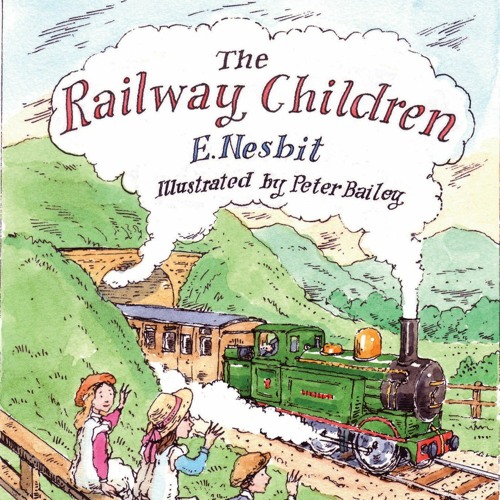
THE RAILWAY CHILDREN
The story features one of the most famous scenes in all of children’s literature when young Bobbie takes off her red flannel petticoat and waves it at an oncoming locomotive heading towards a crash. Its brakes squealing, the train stops inches away from the overwrought girl, who faints dead away.
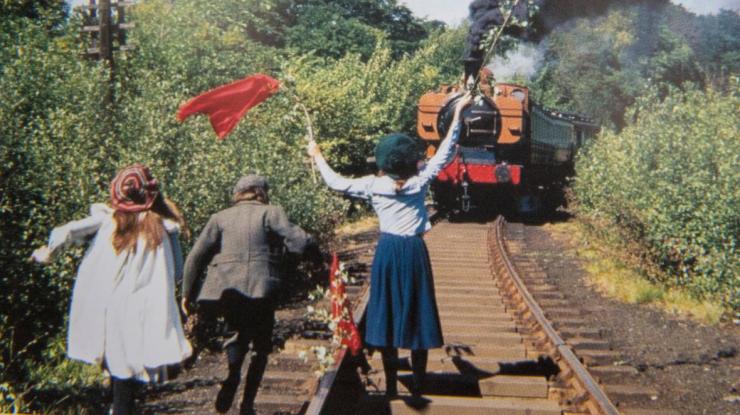
E. Nesbit, as she always dubbed herself, spent much of her life waving a red petticoat at society, daring it to stop her. Impulsive, tomboyish, and strikingly attractive, it was part of her charm that in some ways she never grew up. One biographer described her as having “all the caprices, the intolerances, the selfishnesses of a child; and with them went a child’s freshness of vision and hunger for adventure.”
Her free-living attitudes shocked the straight-laced Victorian era into which Edith was born. She lived in a menage a trois with her husband and home help in Eltham, south London. With her hair in a bob and bangles clattering on her arm, she’d ride her bike in her bloomers. She was an industrious and wholly original woman, whose stories read as though they were written yesterday. The Railway Children’s father is in prison, and the story is about their efforts to get him back.
The house in Yorkshire, where The Railway Children lived
One evening after dinner, Roberta’s, Peter’s, and Phyllis’s father, a government official, is visited by two men, who escort him away from their London home. Soon afterward, their mother announces that they must move to a cottage in the country and, once there, she becomes terribly busy writing stories for magazines to support them all. The children find solace in watching trains on the nearby railway line, and make friends with the station porter and guard.
Over the summer, they are caught up in several adventures, rescuing people from a fire and preventing a disastrous crash, but still, they pine for their father. What has become of him? And who is the old gentleman they wave to every day on the 9.15 Green Dragon?
Her stories deal with family life, often based on her own childhood, and the mother working to support her family is directly reflected in Nesbit’s own experience. There were many film adaptations, the latest was The Railway Children Return in 2022.
Courtesy of StudiocanalUK:
An extract from The Railway Children:
“And then came the distance rumble and hum of the metals, and a puff of white steam showed far away along the stretch of line.
‘Stand firm,’ said Peter, ‘and wave like mad! When it gets to that big furze bush step back, but go on waving! Don’t stand on the line, Bobbie!’
The train came rattling along very, very fast.
‘They don’t see us! They won’t see us! It’s all no good! cried, Bobbie. The two little flags on the line swayed as the nearing train shook and loosened the heaps of loose stones that held them up. One of them slowly leaned over and fell on the line. Bobbie jumped forward and caught it up, and waved it; her hands did not tremble now. It seemed that the train came on as fast as ever. It was very near now.
‘Keep off the line, you silly cuckoo!’ said Peter fiercely.
‘It is no good,’ Bobbie said again.
‘Stand back!’ cried Peter, suddenly, and he dragged Phyllis back by the arm.
But Bobbie cried, ‘Not yet, not yet!’ and waved her two flags right over the line. The front of the engine looked black and enormous. Its voice loud and harsh.
‘Oh, stop, stop, stop!’ cried Bobbie. No one heard her. At least Peter and Phyllis didn’t, for the oncoming rush of the train covered the sound of her voice with a mountain of sound.”
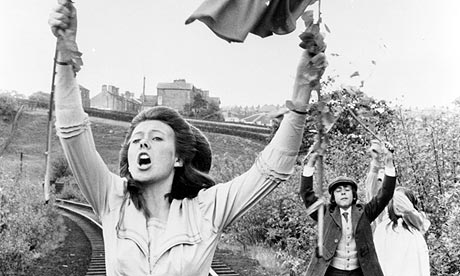
But afterward, she used to wonder whether the engine itself had not heard her. It seemed almost as though it had – for it slackened swiftly, slackened and stopped, not twenty yards from the place where Bobbie’s two flags waved over the line. She saw the great black engine stop dead, but somehow she could not stop waving the flags. And when the driver and the fireman had got off the engine and Peter and Phyllis had gone to meet them and pour out their excited tale of the awful mound just around the corner, Bobbie still waved the flags but more and more feebly and jerkily. When the others turned towards her she was lying across the line with her hands flung forward and still gripping the sticks of the little red flannel flags. The engine driver picked her up, carried her to the train, and laid her on the cushions of a first-class carriage. ‘Gone right off in a faint,’ he said, ‘poor little woman.”
Courtesy of Mary Sue Homeland Security:


 naturetails
Marvelous, Joanna. I have heard of (but never read) the Railway Children and now you have whetted my appetite to do so. Love the biography of this previously unknown artist. She had a life to be sure.
LikeLiked by 1 person
Thank you, Pat, for the wonderful comments, which I greatly appreciate, to be sure!
Joanna
LikeLiked by 1 person
Very welcome, Joanna.
LikeLike
Oh my goodness, Joanna. This is an amazing tribute to such an amazing woman and author. thank you for sharing this incredible hard to believe story! I am off to buy the book. I didn’t know her and what a life she had with the heartbreaks and forgiveness. I am in aww of her. I loved this clincher for me
“Hubert died in 1914 and Edith later married a retired marine engineer she called Skipper. Unlike Hubert, he believed in fidelity, and gave her seven years of happiness before she died, in 1924, her fame assured.”
Thanks for the introduction to her and her work.. Superb! xo
LikeLiked by 1 person
Thank you so much, Cindy, for your wonderful comments! Your kind words are greatly appreciated!
Joanna x
LikeLiked by 1 person
Thank you!
Joanna
LikeLiked by 1 person
I wasn’t familiar with this British writer, and I’m grateful for introducing her to me.
I found this post really interesting and engaging, with a wealth of information, images, music, and videos.
LikeLiked by 1 person
Joanna, this is a beautiful post. I was unaware of it growing up. It was only a few years ago that I discovered the movie,”The Railway Children.” I loved it and have watched it several times. It was wonderful learning more about the author of the book, Edith Nesbitt. You did a great job relating the author and her books to the times she and her family lived in. Fascinating! ❤️
LikeLiked by 1 person
Thank you, dear Cheryl, for your beautiful comments, which I love! I watched the film several times, too, and feel moved by the ending.
Joanna x
LikeLike
Thank you, dear Luisa, for the wonderful comments, which are very much appreciated!
Joanna x
LikeLiked by 1 person
I remember loving her books when I was a child but I never knew anything about her. She sounds like the sort of woman I would approve of and very advanced for her time! How nice to learn about her all these years later, through your delightful post. Thank you!
LikeLiked by 1 person
Thank you, Carolyn, for your wonderful comments, which I very much appreciate!
Joanna
LikeLike
Joanna, what a beautifully warm and insightful post. You have such a gift for weaving together the threads of an author’s life and their work, showing how one illuminates the other so powerfully.
Your opening about “kindness, appreciation, and gratitude” perfectly sets the stage for Edith Nesbit, a woman who embodied resilience in the face of so much personal hardship. It’s heartbreaking and inspiring in equal measure to see how her own struggles—the loss of her father, the weight of being the family’s sole provider, the profound betrayals by her husband—didn’t harden her but instead seemed to deepen her well of empathy. She didn’t just write about compassion and generosity; she lived it in the most complicated and painful ways, from welcoming her husband’s mistress into her home to channeling her grief over Fabian’s death into her masterpieces.
The image you ended with, of her spending her life “waving a red petticoat at society,” is just brilliant. It captures her fierce, unconventional spirit so completely. She was a force of nature, and through her timeless stories, she passed on that courage and that hunger for adventure to generations of readers.
Thank you for this wonderful dive into the life behind “The Railway Children.” It’s a poignant reminder that the stories that touch us most deeply are often born from a life fully, messily, and bravely lived. This was a true joy to read.
LikeLiked by 1 person
In very real ways, much of her life was tragic. Thanks for writing about her. I’m pretty sure I wasn’t familiar with her before.
LikeLiked by 1 person
Thank you, Neil, for your thoughtful comments, which are much appreciated!
Joanna
LikeLiked by 1 person
I am lost for words, dear Narasimhan, to thank you for your wonderfully analytical and perceptive comments! Having readers like you makes researching and writing my post a pleasure! Thank you again for your kindness!
Joanna
LikeLike
You’re so very welcome, Joanna. My pleasure! xo
LikeLike
Thank you!
Joanna x
LikeLiked by 1 person
I am trying to figure out why I do not know this author. What an incredible history and a sad tale of her 1st husband’s betrayals. I do know of the Railway Children. Thanks for all the history Joanna. Alan
LikeLiked by 1 person
Thank you, Allan, for your lovely comments, which are much appreciated!
Joanna
LikeLiked by 1 person
What a lovely post this week, Joanna! It instantly took me back to my own childhood days.
Though Edith Nesbit is best known for her enchanting children’s fantasies, her own life could easily inspire another remarkable novel. The way you narrated her background in your own words and style truly highlights your storytelling gift.
While Hubert’s waxed moustache made me smile, what struck me most was Nesbit’s extraordinary courage and conviction, especially her decision in befriending and even welcoming her husband’s fiancée, Maggie, into her home. It’s comforting to know she eventually found love and joy in her second marriage, which lasted until her final days.
Her commitment went beyond literature. She was socially and politically active too, founding the Fabian Society, after which she named her son. His early death was a deep loss, yet she kept his memory alive through her writings.
I was deeply moved by the mention of her father’s death when she was an infant. That sorrow found its way into her timeless classic The Railway Children, a story as unforgettable as you beautifully described. Having known families who’ve endured the pain of losing a breadwinner, I could relate to the children’s desperation to bring their father back from imprisonment. I was glad, though, that the story concludes on a happy note.
Thank you once again, Joanna, for such a beautiful and heartfelt post. The charm of your words was further enhanced by the thoughtful images, audio clips, and videos you chose carefully.
LikeLiked by 1 person
Thank you so much, dear Kaushal, for the wonderful comments, which I love as they lifted my spirits! Your great gift, Kaushal, is to make people happy and feel valued! Thank you again, your kindness is greatly appreciated!
Joanna
LikeLiked by 1 person
It’s truly my pleasure, dear Joanna, to go through your beautifully crafted posts. You’re so very welcome! Namaste!
LikeLike
Thank you so much, Kaushal, for your wonderful reply! Namaste!
Joanna
LikeLiked by 1 person
Who hasn’t read The Railway Children, or indeed one of its adaptations in film or TV. Fabulous post, dear Joanna. 🤗🙇♂️ ❤️
LikeLiked by 1 person
🩷🩷🩷
LikeLike
Thank you, dear Ashley, for the wonderful comments, which are greatly appreciated.
Joanna
LikeLiked by 1 person
You’re more than welcome 💐
LikeLike
Thank you for such an informative post. I was not familiar with this author. It is sad that she had a tragic life, but thankfully, she found a way to survive it.
LikeLiked by 1 person
Thank you, Diana, for your kind comments, which are greatly appreciated!
Joanna
LikeLiked by 1 person
Thank you ,Joanna ,for sharing this incredibly passionate story! As one of your readers has truly pointed out that it is an amazing tribute to such an amazing woman and a great author- Edith Nesbit !Thanks Joanna, for the introduction to her and her incredible work.She had a life full of struggles but fought the odds bravely to move ahead in life !The sorrow endured on the death of her son Fabian found its way into her timeless classic :The Railway Children, a story so beautifully described by you, Joanna! Namaste
LikeLiked by 1 person
Thank you, Dhirendra, for your wonderfully thoughtful comments, which I greatly appreciate! Namaste.
Joanna
LikeLiked by 1 person
My pleasure, Namastey 🙏
LikeLike
What a beautiful journey through the life and work of Edith Nesbit. The text reveals not only her immense talent but also the strength and sensitivity with which she faced a life full of challenges. It is moving to see how she transformed her experiences, even the most painful ones, into stories that continue to touch the hearts of generations. A reading that inspires gratitude for those books capable of reminding us of the importance of kindness, imagination, and family.
Hugs, my friend Joanna.
LikeLike