

“Mockingbirds don’t do one thing
but make music for us to enjoy.
They don’t eat up people’s gardens,
don’t nest in corncribs, they don’t do
one thing but sing their hearts out for us.
That is why it’s a sin to kill a mockingbird.”
Miss Maudie, “To Kill A Mockingbird”, Harper Lee
Courtesy of Colin Hogg:
“Clarinet Trio in A Minor, Op. 114: II. Adagio” by Johannes Brahms, performed by Yo-Yo Ma, Richard Stoltzman and Emanuel Ax:
“Until I feared I would lose it, I never loved to read.
One does not love breathing.”
Scout, “To Kill A Mockingbird”, Harper Lee
In this series, I wanted to continue to present books that will make a positive and uplifting impact on my readers’ outlook on life. Today’s post is about a book that has influenced many generations of readers and can be enjoyed from the age of 5 to 100, and beyond.
Main Title from “To Kill A Mockingbird” (1962) by Elmer Bernstein, performed by Royal Scottish National Orchestra:

To Kill a Mockingbird
Harper Lee
1926 – 2016
Courtesy of PBS NewsHour:
To Kill a Mockingbird is near the top of the list of most-beloved American novels. Set in Alabama, during the time of the Depression, it is the story of six-year-old Jean Louise Finch, better known as Scout, her older brother Jeremy, nicknamed Jem, and their father, Atticus Finch, a middle-aged lawyer whose brave defence of Tom Robinson, a black man accused of raping a white woman, provides the centre of the plot. Told through Scout’s eyes, the narrative renders a small-town experience through the hues of wonder and worry that colour every childhood, and through the lenses of illusions; they are about ideas of justice, the confidence that the wheels of the world might turn things to be right in the end, no matter what obstacles are thrown under it.

The famous film made with Gregory Peck as Atticus Finch (shown above) is largely faithful to the book, especially the nail-gripping trial of Tom Robinson. What the film doesn’t quite capture is the warmth and humour that pervades Scout’s telling, which is enlivened with a streak of satire that belies her age. Racial prejudice and violence in the community she inhabits are addressed eloquently. This widening sense of context enables her and the readers to recognise Atticus’s nobility and courage.
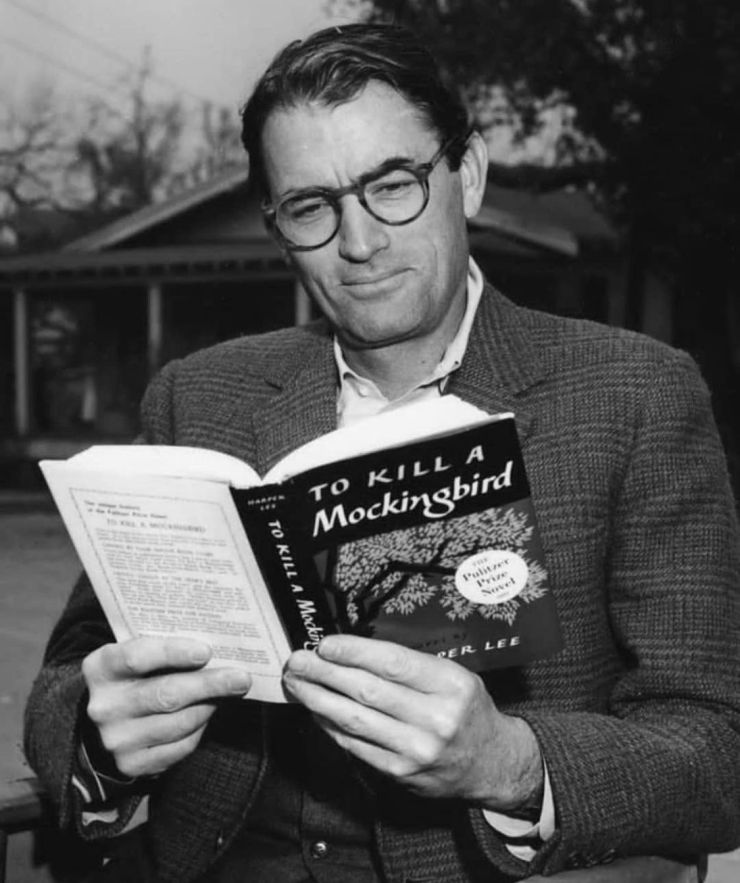
The novel was both a popular and critical success when it was first published, becoming an immediate bestseller and winning the 1961 Pulitzer Prize for Fiction. The Oscar-winning movie, realised the following year, added to its fame and reputation as a contemporary American classic. The movie adaptation looms as large in filmdom, as the book does in publishing.
Kinderszenen, Op. 15 No. 7 Träumerei by Robert Schumann, performed by Lang Lang:
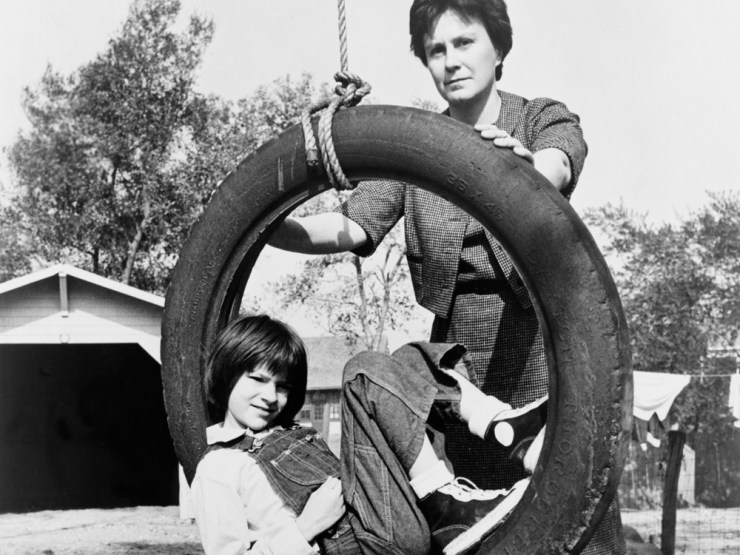
Courtesy of Bruce Derby:
Here is an extract from To Kill a Mockingbird:
“Mrs. Dubose was a morphine addict,” said Atticus. “She took it as a pain-killer for years. The doctor put her on it. She’d have spent the rest of her life on it and died without so much agony, but she was too contrary.”
“Sir?” said Jem.
Atticus said, “Just before your escapade she called me to make her will. Dr Reynolds told her she had only a few months left. Her business affairs were in perfect order but she said, “There’s still one thing out of order.”
“What was that?” Jem was perplexed.
“She said she was going to leave this world beholden to nothing and nobody. Jem, when you are sick as she was, it’s all right to take anything to make it easier, but it wasn’t all right for her. She said she meant to break herself of it before she died, and that’s what she did.”
Jem said, “You mean that’s what her fits were?”
“Yes, that’s what they were. Most of the time you were reading to her I doubt if she heard a word you said. Her whole mind and body were concentrated on that alarm clock. If you hadn’t fallen into her hands, I would have made you go read to her anyway. It may have been some distraction. There was another reason -”
“Did she die free?” asked Jem.
“As the mountain air,” said Atticus. “She was conscious to the last almost. Conscious,” he smiled, “and cantankerous. She still disapproved heartily of my doings and said I’d probably spend the rest of my life bailing you out of jail. She made Jessie fix you this box -”
Atticus reached down and picked up the candy box. He handed it to Jem.
Jem opened the box. Inside, surrounded by wads of damp cotton, was a white, waxy, perfect camellia. It was a Snow-on-the-mountain.
Jem’s eyes nearly popped out of his head. … In a flash, Atticus was up and standing over him. Jem buried his face in Atticus’s shirt front. “Sh-h,” he said. ” I think that was her way of telling you – everything’s all right now, Jem, everything’s all right. You know she was a great lady.”
“A lady?” Jem raised his head. His face was scarlet. “After all those things she said about you, a lady?”
“She was. She had her own views about things, a lot different from mine, maybe… I told you that if you hadn’t lost your head I’d have made you go read to her. I wanted you to see something about her – I wanted you to see what real courage is, instead of getting the idea that courage is a man with a gun in his hand. It’s when you know you’re licked before you begin but you begin anyway and you see it through no matter what. You rarely win, but sometimes you do. Mrs. Dubose won, all ninety-eight pounds of her. According to her views, she died beholden to nothing and nobody. She was the bravest person I ever knew.”
Jem picked up the candy box and threw it in the fire. He picked up the camellia, and when I went to bed I saw him fingering the wide petals. Atticus was reading the paper.”
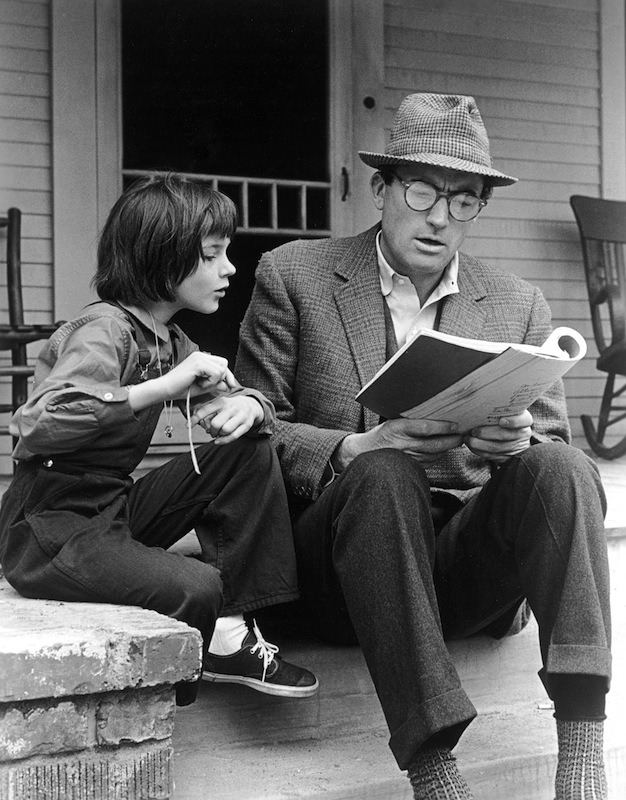
End Title from “To Kill A Mockingbird” (1962) by Elmer Bernstein (courtesy of Flicks and Music):

 naturetails
A wonderful selection, full of sensitivity and depth. “To Kill a Mockingbird” continues to teach us the true meaning of courage and compassion.
Sending you a warm hug from afar, dear Joanna.
LikeLike
Thank you, Lincol, for your wonderfully thoughtful comments, which are greatly appreciated!
Joanna
LikeLiked by 1 person
Thank you, Joanna. It’s always a pleasure to read your posts and share words with you.
A warm and grateful hug.
LikeLike