
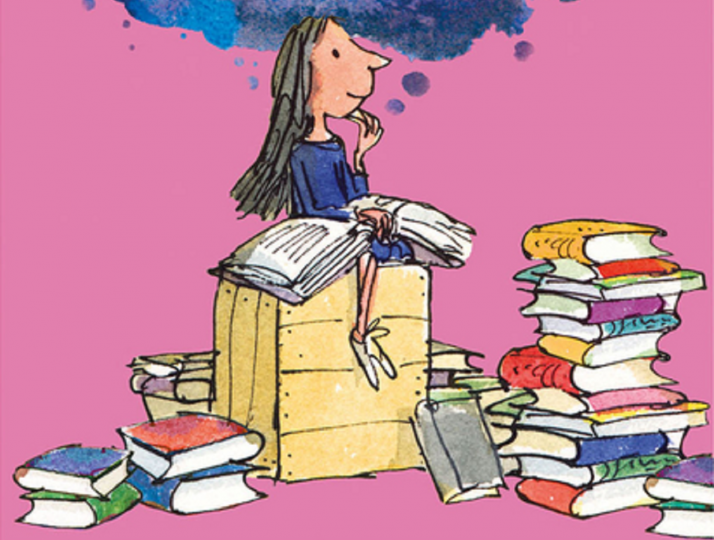
“You have been the last dream of my soul.”
Charles Dickens, A Tale of Two Cities
Courtesy of NutshellEdu:
“Suffering has been stronger than all other teaching,
and has taught me to understand what your heart used to be.
I have been bent and broken, but – I hope – into a better shape.”
Charles Dickens, Great Expectations
Courtesy of Bob Loblaw:
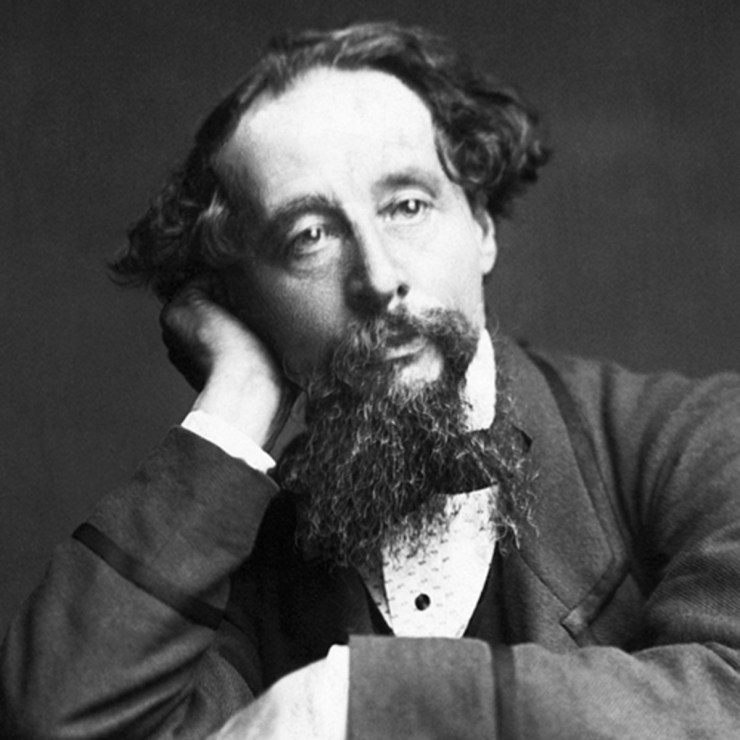
CHARLES DICKENS
1812 – 1870
As a recap for this final Dickens post, it is worth repeating that Dickens is acknowledged as the greatest English writer, the most ingenious one, in a class of his own. His books seem not to have been plotted by the writer but traversed with his gift of observation and inspiration, as physically present and psychologically unfathomable as possible to engage his genius. He leads his reader down murky alleyways, misleading avenues, often strange and vivid, a world of dreamscape, so compelling that it isn’t easy to put it down. In one of his books, the heroine is already dead, but as the story was first published in instalments, in New Year’s harbour crowds gathered awaiting the arrival of the ship, and calling anxiously to the crew, “Is Little Nell still alive?”
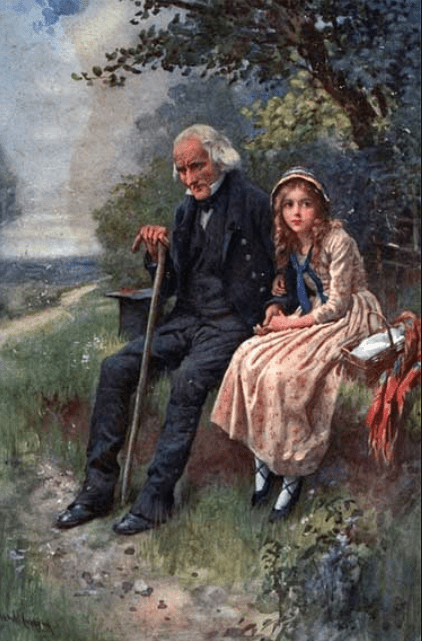
Little Nell and her grandfather from “The Old Curiosity Shop”
When we open one of his formidable tomes, the sense of excitement and expectation, of dynamism and pulsating reality, is overwhelming. His stories are ultimately about the fate of the hero but are more truly dependent upon discovering, one step at a time, the destination of his journey. Dickens’ “biographical” approach to writing is a reason why his supporting characters, who contribute so much to the pleasure of reading his stories, are so boldly drawn and might be described not as beings but as experiences. All of which provide the enduring popularity of all his books. Several have been adapted for film and television.
A Tale of Two Cities
“It was the best of times, it was the worst of times,
it was the age of wisdom, it was the age of foolishness,
it was the epoch of belief, it was the epoch of incredulity,
it was the season of Light, it was the season of Darkness,
it was the spring of hope, it was the winter of despair…”
A Tale of Two Cities may have the most famous opening of any novel ever written, but the frequent application of its words outside the novel’s specific context gives it an edge over the other writers. Echoing the dichotomies invoked in its opening sentences, the work unfolds in a series of parallels and mirrorings, alternating between London and Paris in the years before and during the French Revolution. Indeed, the plot turns on the uncanny resemblance between two men, Charles Darnay and Sydney Carton, the first a progressive noble from an aristocratic, cruelly reactionary French family, the second a brilliant but dissolute English lawyer who both represents and resents Darnay, ultimately coming to his rescue when the Frenchman falls afoul of the French Revolution’s unforgiving fervour.

An enthusiastic guide, courtesy of Books and Things:
Despite being among its author’s most widely read novels, A Tale of Two Cities is the least Dickensian. Swept along through the rapid movement of the complex plot and the frantic history that propels it, the narrative reveals the character through action and incident rather than through Dicken’s more typical reliance on dialogue and personality quirks.
Missing too is the sense of comedy that leavens and enlivens even the darkest of his other books. As a consequence, A Tale of Two Cities is the neatest storytelling contrivance in Dickens’s oeuvre. Although it lacks the warmth and humour of his other tales, it has the alternately intimate and violent passions of the Revolution – both brilliantly embodied in the baleful figure of Madame Defarge, knitting and scheming with ruthless intensity – to meld its themes of vendetta, betrayal, regret, sacrifice, and resurrection into a headlong chronicle of historical drama and personal nobility. The pageant concludes with Carton’s final thoughts, nearly as memorable in expression as the novel’s first lines: “It is a far, far better thing that I do, than I have ever done; it is a far, far better rest that I go to than I have ever known.”
“Violin Concerto No. 2 in D Major”, K. 211: III. Rondeau. Allegro by Wolfgang Amadeus Mozart, performed by Maxim Vengerov and Verbier Festival Chamber Orchestra:
Two extracts from A Tale of Two Cities follow:
(I) Monsieur Defarge enters his shop with the mender of roads and takes him to the attic with the three “Jacques.” The mender of roads tells his story.

“Defarge closed the door carefully, and spoke in a subdued voice:
‘Jacques One, Jacques Two, Jacques Three! This is the witness encountered by appointment, by me, Jacques Four. He will tell you all. Speak, Jacques Five!’
The mender of roads, blue cap in hand, wiped his swarthy forehead with it, and said, ‘Where shall I commence, monsieur?’
‘Commence,’ was Monsieur Defarge’s not unreasonable reply, ‘at the commencement.
‘I saw him then, messieurs,’ began the mender of roads, ‘a year ago this running summer, underneath the carriage of the Marquis, hanging by the chain. Behold the manner of it. I leaving my work on the road, the sun going to bed, the carriage of the Marquis slowly ascending the hill, he hanging by the chain—like this.’
Again the mender of roads went through the whole performance; in which he ought to have been perfect by that time, seeing that it had been the infallible resource and indispensable entertainment of his village during a whole year. Jacques One struck in, and asked if he had ever seen the man before?
‘Never,’ answered the mender of roads, recovering his perpendicular. Jacques Three demanded how he afterwards recognised him then?
‘By his tall figure,’ said the mender of roads, softly, and with his finger at his nose. ‘When Monsieur the Marquis demands that evening, ‘Say, what is he like?’ I make response, `Tall as a spectre.’’
‘You should have said, short as a dwarf,’ returned Jacques Two.
‘But what did I know? The deed was not then accomplished, neither did he confide in me. Observe! Under those circumstances even, I do not offer my testimony. Monsieur the Marquis indicates me with his finger, standing near our little fountain, and says, `To me! Bring that rascal!’ My faith, messieurs, I offer nothing.’
‘He is right there, Jacques,’ murmured Defarge, to him who had interrupted. ‘Go on!’
‘Good!’ said the mender of roads, with an air of mystery. ‘The tall man is lost, and he is sought—how many months? Nine, ten, eleven?’
‘No matter, the number,’ said Defarge. ‘He is well hidden, but at last he is unluckily found. Go on!’
‘I am again at work upon the hill-side, and the sun is again about to go to bed. I am collecting my tools to descend to my cottage down in the village below, where it is already dark, when I raise my eyes, and see coming over the hill six soldiers. In the midst of them is a tall man with his arms bound — tied to his sides — like this!’
With the aid of his indispensable cap, he represented a man with his elbows bound fast at his hips, with cords that were knotted behind him.
‘I stand aside, messieurs, by my heap of stones, to see the soldiers and their prisoner pass (for it is a solitary road, that, where any spectacle is well worth looking at), and at first, as they approach, I see no more than that they are six soldiers with a tall man bound, and that they are almost black to my sight — except on the side of the sun going to bed, where they have a red edge, messieurs. Also, I see that their long shadows are on the hollow ridge on the opposite side of the road, and are on the hill above it, and are like the shadows of giants. Also, I see that they are covered with dust, and that the dust moves with them as they come, tramp, tramp! But when they advance quite near to me, I recognise the tall man, and he recognises me.'”
“Mother Nature” by Miguel Berkemeier:
(II) Mr Lorry and Sydney Carton have an exchange on leading a good life.
“They were both silent.
‘Yours is a long life to look back upon, sir?’ said Carton, wistfully.
‘I am in my seventy-eighth year.’
‘You have been useful all your life; steadily and constantly occupied; trusted, respected, and looked up to?’
‘I have been a man of business, ever since I have been a man. Indeed, I may say that I was a man of business when a boy.’
‘See what a place you fill at seventy-eight. How many people will miss you when you leave it empty!’
‘A solitary old bachelor,’ answered Mr. Lorry, shaking his head. There is nobody to weep for me.’
‘How can you say that? Wouldn’t She weep for you? Wouldn’t her child?’
‘Yes, yes, thank God. I didn’t quite mean what I said.’
‘It is a thing to thank God for; is it not?’
‘Surely, surely.’
‘If you could say, with truth, to your own solitary heart, to-night, ‘I have secured to myself the love and attachment, the gratitude or respect, of no human creature; I have won myself a tender place in no regard; I have done nothing good or serviceable to be remembered by!’ your seventy-eight years would be seventy-eight heavy curses; would they not?’
‘You say truly, Mr. Carton; I think they would be.'”

In A Tale of Two Cities Charles Dickens describes one of bloodiest events in European history; that is the French Revolution of 1789 and its immediate aftermath, the Reign of Terror (1793-94). In his preface to A Tale of Two Cities, Dickens proclaims his passion for truth in historical writing, as well as his admiration for the work of Thomas Carlyle, who also sought to convey historical truth:
PREFACE
“When I was acting, with my children and friends, in Mr. Wilkie Collin’s drama of The Frozen Deep, I first conceived the main idea of this story. A strong desire was upon me then to embody it in my own person; and I traced out in my fancy the state of mind of which it would necessitate the presentation to an observant spectator, with particular care and interest.
As the idea became familiar to me, it gradually shaped itself into its present form. Throughout its execution, it has had complete possession of me; I have so far verified what its done and suffered in these pages, as that I have certainly done and suffered it all myself.
Whenever any reference ( however slight) it made here to the condition of the French people before or during The Revolution, it is truly made, on the faith of trustworthy witnesses. It has been one of my hopes to add something to the popular and picturesque means of understanding that terrible time, though no one can hope to add anything to the philosophy of Mr. Carlyle’s wonderful book.”
A Tale of Two Cities is considered by one critic of Victorian fiction, Newlin, as the “most successful historical novel ever written” in English, and is the second bestselling novel of all time (200 million copies), beaten only by Don Quixote (500 million copies).
“Wachet auf, ruft uns die Stimme” (Sleepers wake), BWV 645 by J.S. Bach, performed by Yo-Yo Ma, Chris Thile, and Edgar Meyer:
Great Expectations
Courtesy of Books and Things:
Like David Copperfield, Great Expectations is the story of a child coming of age, told in the first person. Like David Copperfield as well, it is a story of a young man coming to grips with his unassuming legacy and practical place in the world. More nuanced and darker in mood than the earlier novel, however, Great Expectations is its author’s deepest work on the terrain of childhood and the fears and fates that spring from it.
Anchored in a Kentish village, around which the years and events of the complicated plot will revolve, the book returns Dickens to his native ground in search not of autobiographical details, but of the familiar spirits and psychological tempers that nurtured his imagination: the injuries of class, the uncertainties of love, the snobberies of fashion, the limited purview of personal agency, the coincidence – or is it more? – that links crime and fortune, or goodness and inequity.
Courtesy of The British Library:
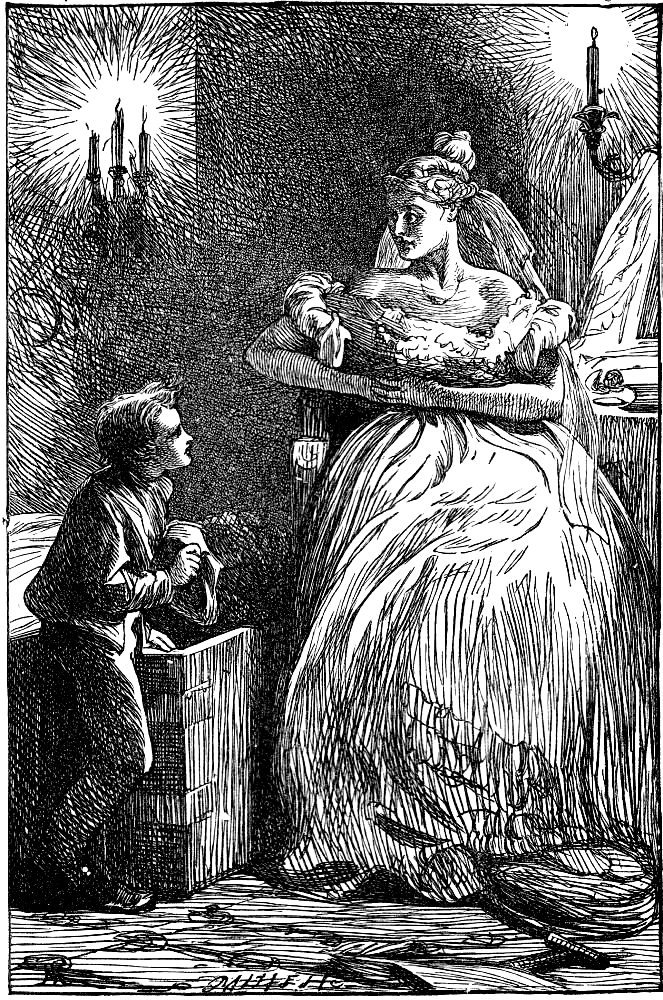
From the thrilling opening scene in which the young Philip Pirrip (or simply Pip, as he introduces himself) is surprised on a visit to his parents’ graveside by an escaped convict who presses the boy into his service, we are seized by the story and pulled into its embrace. As we follow Pip’s progress – his enthrallment to the alluring young Estella; his fascination with Miss Havisham (one of Dickens’s greatest characters, a woman so traumatised by disappointment that she has sat for years, transfixed by loss, in the setting of her unconsummated wedding celebration); the arrival of his “great expectations“ in the form of an inheritance whose source is mysterious; his estrangement from his good and noble brother-in-law, Joe Gargery – we are rapt by the choreography of character, incident, and brilliantly paced suspense.
Courtesy of DoctorDoLbozvonchik:
Dickens notoriously rewrote the final scene, mitigating the bleakness of his original ending to offer the promise of a fulfilling reconciliation between Pip and Estella. Whatever the particulars of the pair’s destiny, the rich satisfaction of the novel remains. In the end, Great Expectations is not really about expectations at all, but about regret, and as powerfully so as any book in our language. Where Pip’s literary sibling David Copperfield is discovering his future, making his way in the world, the protagonist of Great Expectations is uncovering his past, illuminating all the shadows of the self that remembrance can conjure. Moving with narrative verve between London and the countryside, the book depicts in vivid colours the humbling of youthful presumptions by the inscrutable and for the Lucky, at least – wisdom–inducing quandaries of life.
“In Moonlight” by Edward Elgar, performed by Pinchas Zukerman and the Royal Philharmonic Orchestra:
An extract, in which Herbert Pocket subtly corrects Pip’s poor table manners, gives him the nickname “Handel,” and tells him the whole story of Miss Havisham:
“We had made some progress in the dinner, when I reminded Herbert of his promise to tell me about Miss Havisham.
‘True,’ he replied. ‘I’ll redeem it at once. Let me introduce the topic, Handel, by mentioning that in London it is not the custom to put the knife in the mouth—for fear of accidents—and that while the fork is reserved for that use, it is not put further in than necessary. It is scarcely worth mentioning, only it’s as well to do as other people do. Also, the spoon is not generally used over-hand, but under. This has two advantages. You get at your mouth better (which after all is the object), and you save a good deal of the attitude of opening oysters, on the part of the right elbow.’
He offered these friendly suggestions in such a lively way, that we both laughed and I scarcely blushed.
‘Now,’ he pursued, ‘concerning Miss Havisham. Miss Havisham, you must know, was a spoilt child. Her mother died when she was a baby, and her father denied her nothing. Her father was a country gentleman down in your part of the world, and was a brewer. I don’t know why it should be a crack thing to be a brewer; but it is indisputable that while you cannot possibly be genteel and bake, you may be as genteel as never was and brew. You see it every day.’
‘Yet a gentleman may not keep a public-house; may he?’ said I.
‘Not on any account,’ returned Herbert; ‘but a public-house may keep a gentleman. Well! Mr. Havisham was very rich and very proud. So was his daughter.’
‘Miss Havisham was an only child?’ I hazarded.
‘Stop a moment, I am coming to that. No, she was not an only child; she had a half-brother. Her father privately married again—his cook, I rather think.’
‘I thought he was proud,’ said I.
‘My good Handel, so he was. He married his second wife privately, because he was proud, and in course of time she died. When she was dead, I apprehend he first told his daughter what he had done, and then the son became a part of the family, residing in the house you are acquainted with. As the son grew a young man, he turned out riotous, extravagant, undutiful—altogether bad. At last his father disinherited him; but he softened when he was dying, and left him well off, though not nearly so well off as Miss Havisham.—Take another glass of wine, and excuse my mentioning that society as a body does not expect one to be so strictly conscientious in emptying one’s glass, as to turn it bottom upwards with the rim on one’s nose.’
I had been doing this, in an excess of attention to his recital. I thanked him, and apologized. He said, ‘Not at all,’ and resumed.
‘Miss Havisham was now an heiress, and you may suppose was looked after as a great match. Her half-brother had now ample means again, but what with debts and what with new madness wasted them most fearfully again. There were stronger differences between him and her, than there had been between him and his father, and it is suspected that he cherished a deep and mortal grudge against her, as having influenced the father’s anger. Now, I come to the cruel part of the story—merely breaking off, my dear Handel, to remark that a dinner-napkin will not go into a tumbler.’
Why I was trying to pack mine into my tumbler, I am wholly unable to say. I only know that I found myself, with a perseverance worthy of a much better cause, making the most strenuous exertions to compress it within those limits. Again I thanked him and apologised, and again he said in the cheerfullest manner, ‘Not at all, I am sure!’ and resumed.
‘There appeared upon the scene—say at the races, or the public balls, or anywhere else you like—a certain man, who made love to Miss Havisham. I never saw him, for this happened five-and-twenty years ago (before you and I were, Handel), but I have heard my father mention that he was a showy-man, and the kind of man for the purpose. But that he was not to be, without ignorance or prejudice, mistaken for a gentleman, my father most strongly asseverates; because it is a principle of his that no man who was not a true gentleman at heart, ever was, since the world began, a true gentleman in manner. He says, no varnish can hide the grain of the wood; and that the more varnish you put on, the more the grain will express itself. Well! This man pursued Miss Havisham closely, and professed to be devoted to her. I believe she had not shown much susceptibility up to that time; but all the susceptibility she possessed, certainly came out then, and she passionately loved him. There is no doubt that she perfectly idolized him. He practised on her affection in that systematic way, that he got great sums of money from her, and he induced her to buy her brother out of a share in the brewery (which had been weakly left him by his father) at an immense price, on the plea that when he was her husband he must hold and manage it all. Your guardian was not at that time in Miss Havisham’s councils, and she was too haughty and too much in love, to be advised by any one. Her relations were poor and scheming, with the exception of my father; he was poor enough, but not time-serving or jealous. The only independent one among them, he warned her that she was doing too much for this man, and was placing herself too unreservedly in his power. She took the first opportunity of angrily ordering my father out of the house, in his presence, and my father has never seen her since.’
I thought of her having said, ‘Matthew will come and see me at last when I am laid dead upon that table;’ and I asked Herbert whether his father was so inveterate against her?
‘It’s not that,’ said he, ‘but she charged him, in the presence of her intended husband, with being disappointed in the hope of fawning upon her for his own advancement, and, if he were to go to her now, it would look true—even to him—and even to her. To return to the man and make an end of him. The marriage day was fixed, the wedding dresses were bought, the wedding tour was planned out, the wedding guests were invited. The day came, but not the bridegroom. He wrote her a letter—’
‘Which she received,’ I struck in, ‘when she was dressing for her marriage? At twenty minutes to nine?’
‘At the hour and minute,’ said Herbert, nodding, ‘at which she afterwards stopped all the clocks. What was in it, further than that it most heartlessly broke the marriage off, I can’t tell you, because I don’t know. When she recovered from a bad illness that she had, she laid the whole place waste, as you have seen it, and she has never since looked upon the light of day.'”
I think that this post has illuminated the genius and magic of the extraordinary writing of the novelist who captivated millions of his readers for different reasons: its distillation of lived and observed experiences gives us more imaginative substance than the most far-flung adventures, turning an unlikely protagonist into an unforgettable hero/heroine. And Dickens as a writer is immortal.
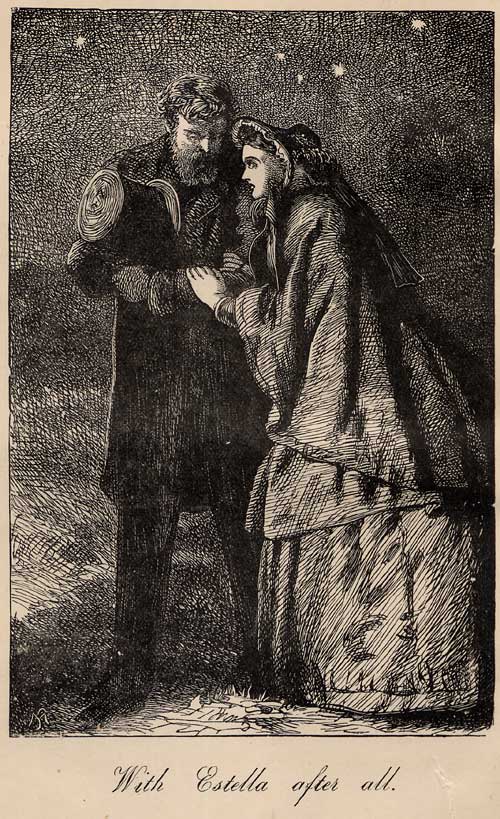
I will leave the final word to Dickens with another extract, where Pip returns home for a funeral, and tries to mend his relations with Joe and Biddy:
“Early in the morning I was to go. Early in the morning I was out, and looking in, unseen, at one of the wooden windows of the forge. There I stood, for minutes, looking at Joe, already at work with a glow of health and strength upon his face that made it show as if the bright sun of the life in store for him were shining on it.
‘Good by, dear Joe!—No, don’t wipe it off—for God’s sake, give me your blackened hand!—I shall be down soon and often.’ ‘Never too soon, sir,’ said Joe, ‘and never too often, Pip!’ Biddy was waiting for me at the kitchen door, with a mug of new milk and a crust of bread. ‘Biddy,’ said I, when I gave her my hand at parting, ‘I am not angry, but I am hurt.’ ‘No, don’t be hurt,’ she pleaded quite pathetically; ‘let only me be hurt, if I have been ungenerous.’ Once more, the mists were rising as I walked away. If they disclosed to me, as I suspect they did, that I should not come back, and that Biddy was quite right, all I can say is,—they were quite right too.”
Courtesy of University of Warwick:


Another wonderful summary of a great author and two of his best works Joanna. Dickens definitely had a compelling way of telling the story. Have a wonderful Thursday. Allan
LikeLike
Thank you, Allan, for your thoughtful comments, which are greatly appreciated!
Joanna
LikeLiked by 1 person
Thank you, Joanna, for the charming tour of the life and works of Charles Dickens. I read most of his books in high school and had watched a few movies made from them. One year for Christmas, my daughter gave me a boxed set of movies made from the books, which I have viewed many times. I may have watched every version of A Christmas Carol ever made!
Today, I quoted the first line of A Tale of Two Cities in an email describing this busy, stressful period of my life. I had forgotten that this book was by Dickens until I looked up the source as I was writing the email. Imagine my surprise when I opened your post today and read that this novel was somewhat different in tone from most of his other books. Maybe that is why it slipped my mind!
I need to go back and read a couple of your posts that I missed. Hopefully, things will return to normal soon, and I would hate to miss any of this series.
Thank you again, for posting about Charles Dickens.
Cheryl 💕
LikeLike
Thank you, Cheryl, for your wonderfully interesting comments, which are very much appreciated! I also love watching DVD adaptations of Dickens’ books! Thank you again, Cheryl, for being so kind!
Joanna xx
LikeLiked by 1 person
Reading Dickens is like working your way through a box of expensive chocolates. Each sentence so full of ingredients and flavours. A Tale of Two Cities may be my favorite but he had so many wonderful characters. As always an enjoyable post from you. I love that photo of Paris and the music. Many thanks!
LikeLiked by 1 person
Amazing summary of two very different works by Dickens, Joanna. The amount of work needed to do this is very evident. Well done.
LikeLike
I agree with you . . . “this post has illuminated the genius and magic of the extraordinary writing of the novelist . . .” Thanks for an enlightening post!
LikeLike
Thank you, Diana, for the wonderful comments, which are very much appreciated!
Joanna
LikeLiked by 1 person
Thank you, Pat, for your wonderful comments, which I very much appreciate!
Joanna
LikeLiked by 1 person
Thank you so much, Carolyn, for your thoughtful comments, which I greatly appreciate!
Joanna
LikeLike
Dear Joanna, 🙏
The depth and beauty with which you have presented the works of Charles Dickens is truly remarkable. In your writing, one does not find mere information, but the living atmosphere of that era and the inner-worldly struggles of its characters.
The echoes of pain, sacrifice, and self-surrender that resonate in Dickens’s stories have been expressed by you in such a way that they appear not only as history but as the spiritual journey of the human soul itself.
Whether it is the self-sacrifice of Sydney Carton or the self-realization of Pip, these episodes teach us that the truth of life lies not merely in expectations and struggles, but in that light which arises from suffering and transforms the soul.
Your writing is like a lamp reminding us that the ultimate purpose of both literature and life is the refinement of the soul. For bringing forth Dickens’s genius with such simplicity and heartfelt warmth, I offer you my sincere gratitude.
– Vijay
LikeLike
Thank you, dear Vijay, for the wonderfully analytical comments, which move me in their profound beauty, and I will cherish them. To have a reader like you, Vijay, makes all the research and writing of my post a pleasure! Thank you again, Vijay, from the bottom of my heart!
Joanna
LikeLiked by 1 person
Thanks so another wonderful installment of Charles Dickens, Joanna. What a wonderful tribute to his work. Our family friend is in the Christmas Carol coming up and i wish I could visit him performing live. 💓
LikeLike
As classic as it can get dearest Joanna. And may be my earliest memory of a cover of any book was his and this ‘Tale of two cities.’ Even though it is literature at its best it surprises me that it was present in our education board. You are right about the greatness of its opening lines. And is a reminder that I must make sometime out in future to re-read this classic. Thank you for this golden journey.
LikeLike
Thank you so much, dearest Narayan, for your words of wisdom and your resolve to read again the inspiring classics. Thank you again, Narayan, for your beautiful words, which I will cherish!
Joanna
LikeLike
Thank you, Cindy, for the wonderful comments, which I greatly appreciate!
Joanna x
LikeLike
This post is a wonderful analysis of several of Dickens novels, and a powerful tribute to Dickens himself. I live near Philadelphia, where there is a sculpture you might be interested in reading about. Here’s a link:
https://en.m.wikipedia.org/wiki/Dickens_and_Little_Nell_(Elwell)
LikeLike
I cannot thank you enough, Neil, for the wonderful comments and the most important link! Good to know you are not just a pretty face!
Joanna
LikeLiked by 1 person
Very welcome, Joanna.
LikeLike
Amazing series of book reviews!
LikeLike
Thank you, Indira, for your wonderful comments, which I greatly appreciate!
Joanna
LikeLiked by 1 person
This week you have written once again on Charles Dickens and his books. This is certainly fascinating, Joanna, but I’ll read and offer my detailed comments later.
LikeLike
Thank you, Kaushal. Please take your time!
Joanna
LikeLiked by 1 person
Joanna, early in your post you mentioned Dickens’ “biological” approach which led to rich supporting characters. Could you elaborate on that for me please? I am interested in learning more about creating rich supporting characters. Thank you.
LikeLike
All I can suggest, LuAnne, is reading as many books written by the master to learn how he creates each character. I write my reviews based on the books I read.
Joanna
LikeLiked by 1 person
Joanna, thanks so much for indepth look into Dickens’ life and two of his amazing works. You brought back memories of school.
LikeLike
Thank you, Punam, for your kind comments, which I much appreciate!
Joanna
LikeLiked by 1 person
My pleasure, Joanna. Your posts are a treat to read.
LikeLike
Thank you so much, Punam. You are very kind!
Joanna x
LikeLiked by 1 person
Thank you, dear Joanna, for once again choosing a Charles Dickens book this week. I was first introduced to him in high school, and I believe anyone who studied English in school or college must have come across his works too.
It’s truly remarkable that classics like A Christmas Carol, David Copperfield, Oliver Twist, and A Tale of Two Cities were all written by one brilliant author. I’m grateful to you for covering Dickens so thoroughly—your loving descriptions of his works are a service not only to those familiar with him, but also to those discovering him for the first time.
As you rightly noted, his biographical approach gave a unique depth to his characters, many of whom have become immortal in literature. I was especially moved by Sydney Carton’s character and his profound self-sacrifice. His final words—“It’s a far, far better thing that I do, than I have ever done”—remain unforgettable.
Dickens was deeply concerned with the plight of the poor, and his writings reflect this social awareness. A Tale of Two Cities captures the turbulence of the French Revolution, while Great Expectations explores the struggles of Pip, an orphan whose journey through childhood and youth mirrors many of life’s harsh realities. His unrequited love for Estella, in particular, may feel relatable to many including me during their college days.
The excerpts you shared bring out the intensity of Dickens’ exceptional storytelling, even for those new to his work. And as always, your thoughtful use of black-and-white images, audio, and video makes your article even more engaging.
Thank you once again, Joanna, for another wonderful and enriching post.
LikeLike
Thank you so much, dear Kaushal, for your wonderfully thoughtful and analytical comments, which I not only appreciate but will cherish!
Joanna
LikeLiked by 1 person
It’s my pleasure, Joanna. You’re always welcome!
LikeLike
Thank you so much, dear Kaushal, you are very kind!
Joanna
LikeLiked by 1 person
What a powerful quote of Dickens to open with Joanna –
“Suffering has been stronger than all other teaching,
and has taught me to understand what your heart used to be.
I have been bent and broken, but – I hope – into a better shape.”
What a lovely post from this literary genius! 🤗🎭📚
LikeLike
Thank you, Kym, for the wonderful comments, which are greatly appreciated!
Joanna x
LikeLiked by 1 person
WOW Joanna! You always amaze me! Well done! ❤️❤️❤️👏🏻👏🏻👏🏻
LikeLike
Thank you so much, dear Filipa, for your wonderful comments, which I appreciate greatly!
Joanna xx
LikeLiked by 1 person
You are so very welcome my dear Joanna. My pleasure! 😍💖😘
LikeLike
You have presented the works of Charles Dickens in a truly graceful & remarkable manner,Joanna.I feel so very much grateful to you for your great painstaking efforts to share the great classics of a such renowned writer !Undoubtedly Charles Dickens is acknowledged as the greatest English writer, the most ingenious one, in a class of his own !Thanks again for your precious share ,Joanna !Namaste.
LikeLike
Thank you, Dhirendra, for your wonderful comments, which are greatly appreciated! Namaste!
Joanna
LikeLiked by 1 person
🙏
LikeLike
A wonderful conclusion to this series dedicated to Dickens. What a beautiful journey through his genius, his sensitivity, and his unique way of portraying the human soul. Reading about A Tale of Two Cities and Great Expectations reminds us why his stories are still alive today: because they speak of the love, redemption, and hope we all share. I loved this entire article. 📖💫
Hugs, my friend Joanna. 🤗🤗🤗
LikeLike
Thank you, Lincol, for the wonderfully perceptive comments, which are greatly appreciated!
Joanna
LikeLiked by 1 person
You’re welcome, Joanna! I’m so glad you liked them.
Have a wonderful, light-filled day. Happy Sunday! 😊✨
LikeLike
Thank you, Lincol, for your beautiful reply! Best wishes to you!
Joanna
LikeLiked by 1 person
🤗🫂🤗
LikeLike