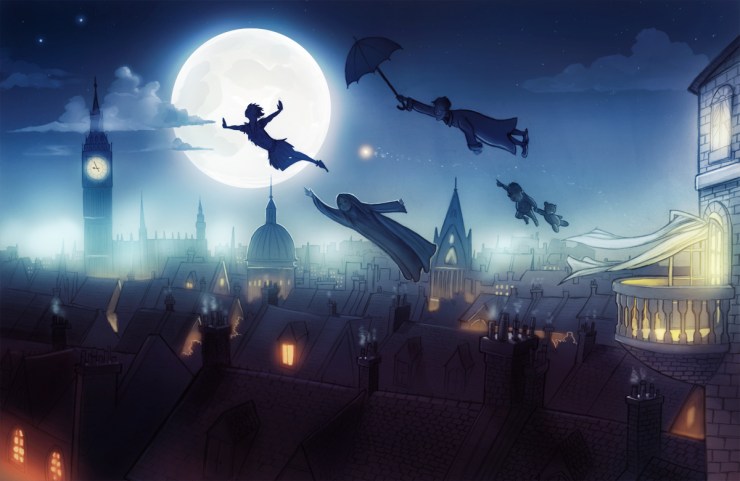

“The life of every man is a diary in which
he means to write one story, and writes another;
and his humblest hour is when he compares the volume
as it is with what he vowed to make it.”
J.M. Barrie
“The Kite,” “The Chess,” and “Neverland – Piano Variation in Blue” by Jan A.P. Kaczmarek (courtesy of Andrew Cooper):
“The moment you doubt whether you can fly,
you cease forever to be able to do it.”
“Peter Pan”, J.M. Barrie
Bird Creatures (courtesy of Claireonline):
J.M. BARRIE
1860 – 1937
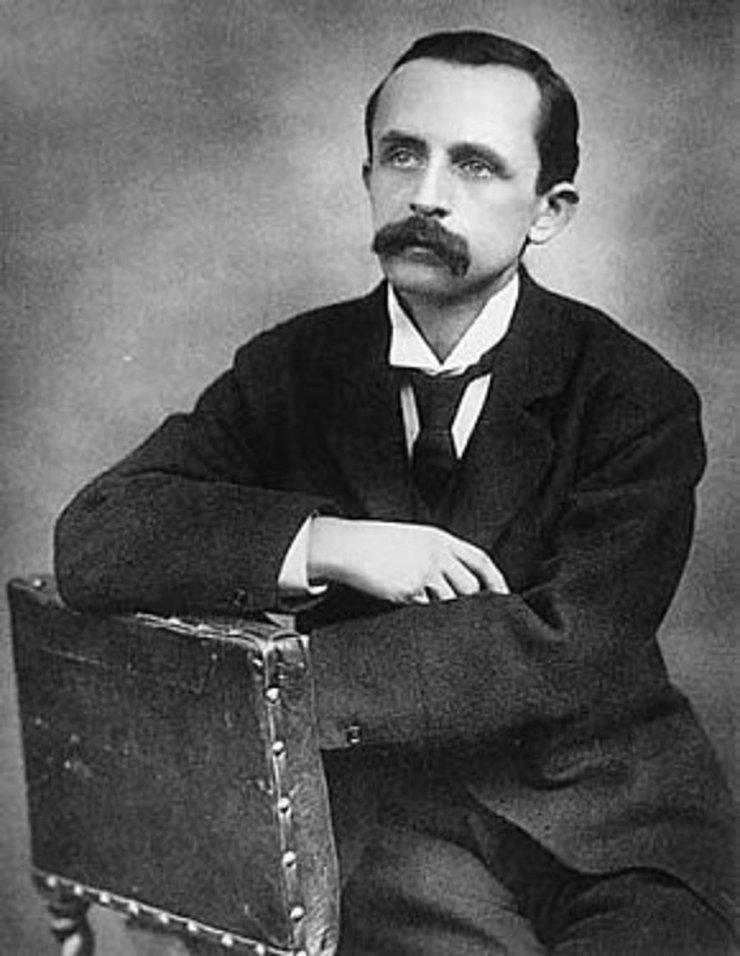
Courtesy of AncestralTayroots:
J. M. Barrie was born in Kirriemuir, Scotland, the son of a weaver. He was educated in Dumfries and Glasgow. He studied for an MA at Edinburgh University. He found work as a journalist on the Nottinghamshire Journal then, in 1885, moved to London to work as a freelance writer. His home town became the setting for a series of stories and novels, including the successful “The Little Minister.”
Arthur and Sylvia Llewelyn Davies
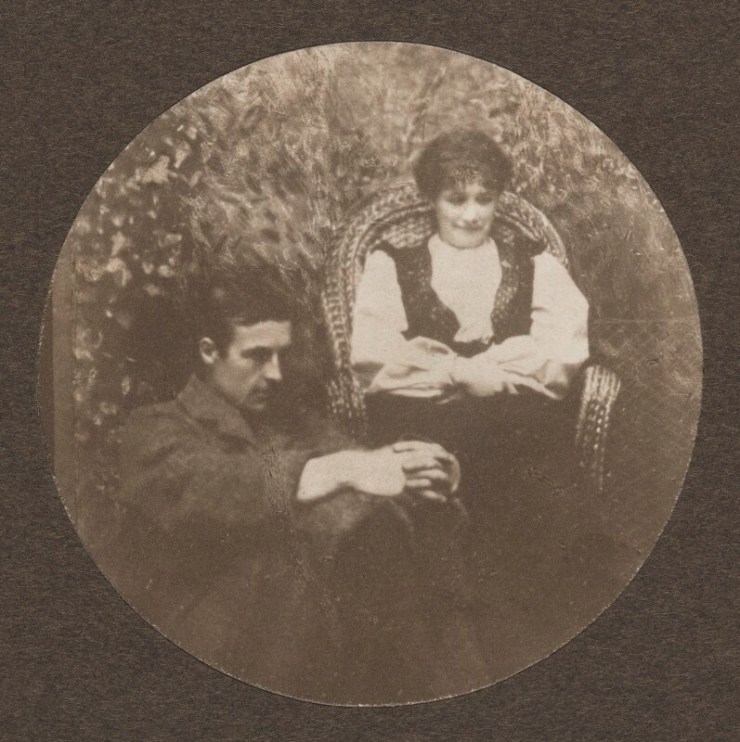
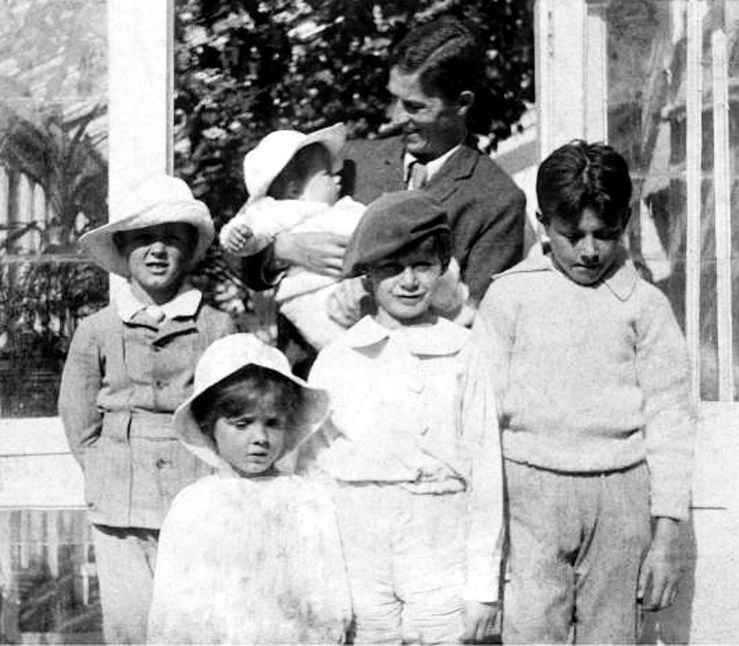
His first play, Richard Savage, was performed in 1891 and was followed by Quality Street and The Admirable Crichton. On the death of his close friends, Arthur and Sylvia Llewelyn Davies, Barrie became legal guardian to their five sons and Peter Pan was developed from stories he used to tell the boys at bedtime. It was first performed as a play in 1904, then published in book form in 1911.
Both Arthur and Sylvia died of inoperable cancers since in those days there was nothing, like chemotherapy, that could help them.
“Berceuse” by Armas Järnevelt, performed by Gothenburg Symphony Orchestra and conducted by Neeme Järvi:
Arthur Llewelyn Davies and his sons
The trailer for the 2004 film “Finding Neverland” (courtesy of Miramax):
Barrie donated the rights for stage productions of Peter Pan to Great Ormond Street Hospital in London, so that sick children continue to benefit from its success to this day. He was made a baronet in 1913, received the Order of Merit in 1922, and wrote many more successful plays before his death in 1937.

The gardens created by volunteers to give the sick children a “green” view, to help with their wellbeing.

PETER PAN
Everyone must be familiar with the classic Disney film about the boy who doesn’t want to grow up, but J.M. Barrie’s book provides an altogether more poignant tale of the lives of Peter and the Lost Boys. Everyone certainly knows the story of Peter Pan and the Darling children – Peter’s loyal fairy, Tinker Bell, or his mates in Neverland, the Lost Boys, or their fierce foe, Captain Hook – through the many justly popular stage or screen adaptations of J.M. Barrie’s tale.
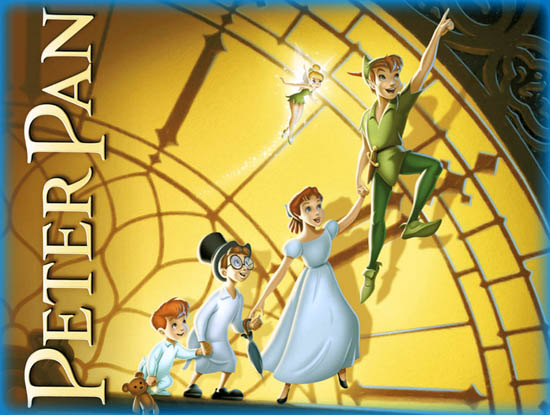
The novel, adapted from the original theatrical presentation, is a winning mix of drama and fantasy and has fuelled many productions, including a perennially appealing Disney animated film. Like its flying protagonist, Peter Pan is a story that may revel forever in never growing up.

Despite your familiarity with the outline of the story, reading it for the first time, you will find excitement and adventure on every page – Peter trying to stick his shadow back on with soap, teaching Wendy how to fly, alongside the intricacies of fairy lore and some scary adventures amongst pirates and redskins in the colourful world of Neverland.

“Lost” by Peter Gregson (courtesy of Sono Luminus):
We all know characters like Peter Pan; irresponsible, forgetful, fiercely independent and living only for the moment.

Will, they always stay the same? If so, what will become of them? Part of the attraction of Barrie’s magical world is the authenticity of the intense human emotions he explores. The story will astonish you with its sophistication, allusiveness, and compelling, yet paradoxically reflective, storytelling. For all its fantasy and adventure, the book is very much written from an adult perspective: it is, in a way, a long meditation on the inevitability of leaving the magical precincts of childhood.
“All children, except one, grow up,” it begins, and while Peter is the ageless wonder who soon charms us, his endless youth cannot sustain the reality of life.
“Mrs. Darling first heard of Peter when she was tidying up her children’s minds. It is the nightly custom of every good mother after her children are asleep to rummage in their minds and put things straight for the next morning, repacking into their proper places the many articles that have wandered during the day.”
There follows an extraordinary disquisition on the “map of a person’s mind” that will amuse young readers with its whimsy and fill older ones with wonder, and probably a few tears, as they reach its conclusion, that nothing will stand still.
Uniquely targeted, with perfect aim, at both children and adults, Barrie’s masterpiece is the perfect vehicle to introduce a family to the pleasure of reading aloud, for it allows each audience to lose itself in its own transporting reverie.

“To Hold the Stars in the Palm of Your Hand” by Chad Lawson:
An extract from “Peter Pan”:
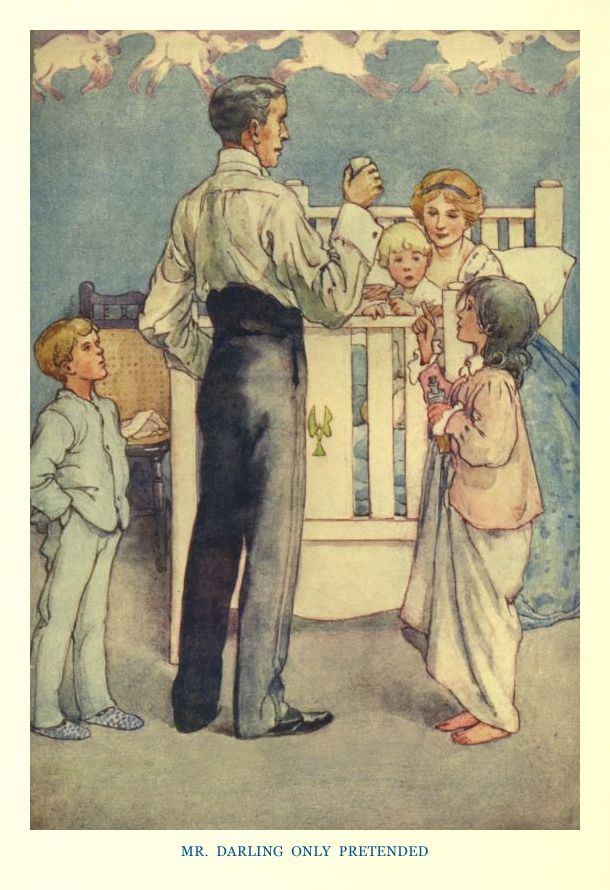
“All children, except one, grow up. They soon know that they will grow up, and the way Wendy knew was this. One day when she was two years old she was playing in a garden, and she plucked another flower and ran with it to her mother. I suppose she must have looked rather delightful, for Mrs. Darling put her hand to her heart and cried, ‘Oh, why can’t you remain like this forever!’

This was all that passed between them on the subject, but hence-forth Wendy knew that she must grow up. You always know after you are two. Two is the beginning of the end. Of course, they lived at 14, and until Wendy came her mother was the chief one. She was a lovely lady, with a romantic mind and such a sweet mocking mouth. Her romantic mind was like the tiny boxes, one within the other, that come from the puzzling East, however many you discover there is always one more, and her sweet mocking mouth had one kiss on it that Wendy could never get, though there it was, perfectly conspicuous in the right-hand corner.

The way Mr Darling won her was this: the many gentlemen who had been boys when she was a girl discovered simultaneously that they loved her, and they all ran to her house to propose to her, except Mr Darling, who took a cab and nipped in first, and so he got her.”
“In Search of Peter Pan” by Kate Bush (courtesy of MrMarrs):
 naturetails
Brilliant share, Joanna. Illustrating both the Disney version and some of the book which we may not be familiar. Delicious. 🧚🪄
LikeLiked by 2 people
Thank you, Pat, for your lovely comment, which is very much appreciated!
Joanna
LikeLiked by 1 person
Thanks for sharing your gift with us. 😍
LikeLike
Thank you, Pat, and you are welcome!
Joanna
LikeLiked by 1 person
I remember the Walt Disney animated version of Peter Pan. It came out in 1953. It’s possible I saw it back then in a movie theater. In any case, I definitely saw it on TV.
I enjoyed your article. Take care.
Neil
LikeLike
To have your parents die so young is tragic yet how fortunate those children were to have Barrie as their guardian. He must have been an exceptional man with a very kind heart. I think children are much misunderstood or maybe it’s that in our hectic modern world no-one has the right amount of time for them. I particularly like the old drawings and the old photographs and you always find such nice music. Not to mention the murmurations…I find them bewitching. Wonderful, Joanna.
LikeLike
The first I recall about Peter Pan was the Disney production created the year I was born. I must have been 6 by the time I saw it and it captivated me then and for many years. Each version reinventing the other but telling the same great story from the early 1900s. Some are just natural story tellers and J.M. Barrie’s story has stood the test of time. Have a wonderful Friday Joanna. Allan
LikeLike
Wonderful post! I have to believe that a part of J. M. Barrie also never grew up. Otherwise, he would not have been able to write Peter Pan in the way that he did. It was also nice to learn that he donated rights for stage productions to a hospital.
LikeLike
Thank you, Diana, for your thoughtful comments, which are greatly appreciated!
Joanna
LikeLiked by 1 person
Thank you so much, Allan, for your wonderfully interesting comments, which as always are greatly appreciated!
Joanna
LikeLiked by 1 person
Thank you, Carolyn, for your thoughtful comments, which resonate with me! I knew that you will appreciate the parts about the birds!
Joanna
LikeLike
Thank you, Neil, for your kind comments, which are much appreciated!
Joanna
LikeLiked by 1 person
Thank you for the wonderful inspiration at the start of my day, dear Joanna. So many gems in there! Have a beautiful weekend gracious lady and generous writer. 💐
LikeLike
Thank you, dear Michele, for your wonderful comments, which are greatly appreciated!
Joanna xx
LikeLiked by 1 person
You’re very welcome. 🌼 xx
LikeLike
Thank you, Michele!
Joanna x
LikeLiked by 1 person
PS. Thank you, dear Michele, for being so kind!
Joanna x
LikeLiked by 1 person
Thank you, Joanna, for such an excellent overview of a truly remarkable fantasy tale—one that has sparked dreams and inspired both children and adults alike. It perfectly captures what we often refer to as the Peter Pan Syndrome.
The origins of Peter Pan are both intriguing and poignant, centred around the concept of a child who refuses to grow up. It’s fascinating — and also rather moving — that a child must abandon childhood, for he embodies the desire to remain carefree, adventurous and free of the responsibilities and trials that come with adulthood. His heart remains focussed on play and freedom.
I was deeply impressed by J. M. Barrie’s care and dedication towards the orphaned children of his friends and how he told them stories. I had also read that the story reflects aspects of Barrie’s own childhood, including the loss of his brother.
You have beautifully described Barrie’s life and his creative genius behind Peter Pan. His generosity is evident in the way he handed over the production rights to a hospital so that sick children could continue benefiting from its success.
Opening your post with that lovely Barrie quote truly set a wonderful tone. I thoroughly enjoyed your audio and video clips and the well-chosen images. Thank you again, Joanna for yet another delightful and thoughtful post.
LikeLike
Thank you, dear Kaushal, for your wonderfully analytical and generous comments, which are deeply appreciated, especially as you found time to read and review my post on the important celebrations of 79th Independence Day! Your kindness is much appreciated!
Joanna
LikeLiked by 1 person
It’s my pleasure, Joanna. In fact, I got late today due to celebrations only. You are welcome, always!
LikeLike
Thank you, much appreciated, Kaushal!
Joanna
LikeLiked by 1 person
Wow, I have to read this now! Thanks for the reminder, Joanna!
LikeLike
Thank you, Harini, for your wonderful comment, which is greatly appreciated!
Joanna
LikeLiked by 1 person
An interesting review. I have to admit that as a child I did not enjoy Peter Pan or Alice in Wonderland. Such dark stories. He must have written about lost boys, because he took care of his friends 5 boys, and I’m sure they often cried and missed their parents terrible. What a Saint he was to take on this role as father!! Thank you for sharing.
LikeLiked by 1 person
Thank you so much, Monica, for your thoughtful comments, which are greatly appreciated!
Joanna
LikeLiked by 1 person
Peter Pan always sneaks in that reminder that yeah, we’ve gotta grow up, but we don’t have to lose the spark. Such a beautiful reflection, Joanna.
LikeLiked by 1 person
Thank you, Ritish, for your wonderful observations, which resonate with me!
Joanna
LikeLike