

“In every walk with nature one
receives far more than he seeks.”
John Muir
“The Color of the Sky” by Chad Lawson:
“All of our discontents for what we want appear to me
to spring from want of thankfulness for what we have.”
“Robinson Crusoe”, Daniel Defoe
“Infinite Gratitude” by Lisbeth Scott:
DANIEL DEFOE
1660 – 1731
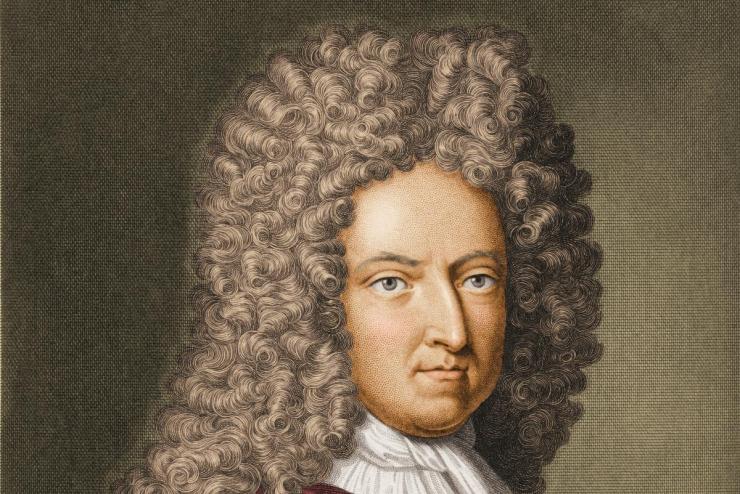
Courtesy of Course Hero:
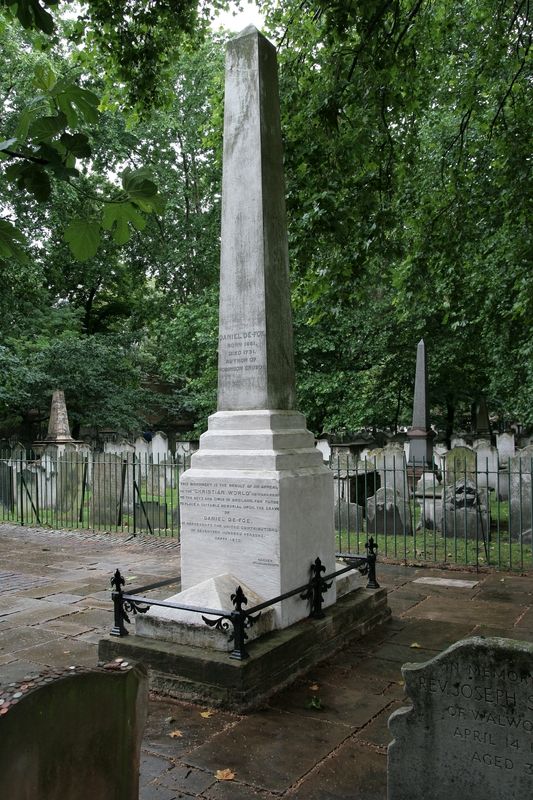
Daniel Defoe was born in London, the son of a butcher. His father wanted him to become a minister (priest), but he preferred to go into a trade as a hosiery merchant, among other money-making schemes. He took part in Monmouth’s rebellion against James II in 1685, and while hiding in a churchyard he noticed the name, Robinson Crusoe carved on a gravestone and later gave it to his famous hero.

Defoe first achieved notoriety for a satirical pamphlet, The Shortest Way With the Dissenters (1702), which landed him in prison for seven months, but this failed to deter him from political writing. He had trouble finding a publisher for Robinson Crusoe (1719), but it was later to become his most famous work and is now claimed by many critics to be the first true novel.
The first edition of the novel

Moll Flanders (1722) and Roxana (1724) followed, and altogether he wrote an astonishing 560 works in his lifetime, including travel guides, journals, and many more inflammatory pamphlets. He died in 1731 at his lodgings in Ropemaker’s Alley in London’s Moorfields.
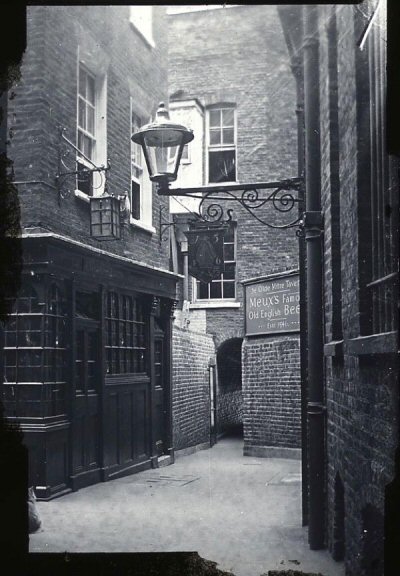
Defoe’s monument grave in London

“Equinox: 1” by Oliver Davis, performed by Kerenza Peacock and Budapest Scoring Orchestra, conducted by Peter Illenyi:
ROBINSON CRUSOE

Courtesy of Oxford Academic:
In one of the world’s most famous stories, Robinson Crusoe is shipwrecked on an island somewhere in the Pacific and wrestles with loneliness and despair as he struggles to stay alive. With the ingenious use of some supplies and utensils salvaged from the ship, he manages to build a house and then a boat, and forage enough food to live on.

Should you ever need it, how to survive on a desert island (courtesy of How to Survive):
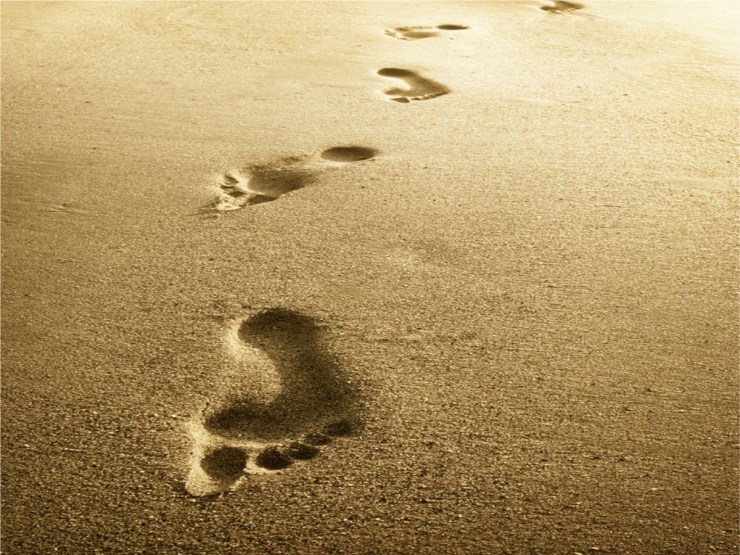
One day, years later, he finds a footprint in the sand and realises he is not as alone as he had thought.
The story is simple and compelling: against the advice of his father, a young man eschews the boring certainties of a comfortable life and runs off to sea in search of adventure. Despite misfortune on his first voyage, he persists in pursuing the promise of travel, until at last, he finds himself on a desert island, the sole survivor of a shipwreck.
Crusoe overcomes his despair and applies himself to creating a home in his unfamiliar surroundings. For the next two decades, in solitude, he re-creates in his island wilderness as much as he can of the civilised world.

From the book’s opening sentence, Crusoe addresses, Crusoe addresses the reader in a voice – direct and declarative in a manner of casual speech, that was something new in literature. But it is only when Crusoe begins building his lonely habitat, narrating in matter-of-fact detail his projects and activities, that Defoe’s genius truly takes hold.

As Nobel Laureate J.M. Coetzee has observed, “For page after page – for the first time in the history of fiction – we see a minute ordered description of how things are done.” What Coetzee terms Defoe’s “pure writerly attentiveness” highlights what he describes with unexpected presence:
“By being a great artist and forgoing this and daring that in order to give effect to his prime quality, a sense of reality – Defoe comes, in the end, to make common actions dignified and common objects beautiful. To dig, to bake, to plant, to build – how serious these simple occupations are; hatchets, scissors, logs, axes – how beautiful these simple objects become. Unimpeded by comment, the story marches on with magnificent downright simplicity.”

And we march with it, until, like Crusoe, we are brought up short by a footprint on the beach:
“It happened one day about noon,” we read, “going towards my boat, I was exceedingly surprised with the print of a man’s naked foot on the shore, which was very plain to be seen in the sand.”
With this startling discovery, Defoe’s story opens out to welcome first “my man Friday,” whom Crusoe saves from cannibals, and then the victims of another shipwreck. By the time he is rescued himself after twenty-eight years, Robinson Crusoe can embark for England from the midst of a small community that has taken root in the long-lonely precinct of his ordeal.
But not before, alone on his island, he has cast a narrative spell that has enthralled readers for over three centuries. The book has had many film adaptations over the years.
An extract from Robinson Crusoe:
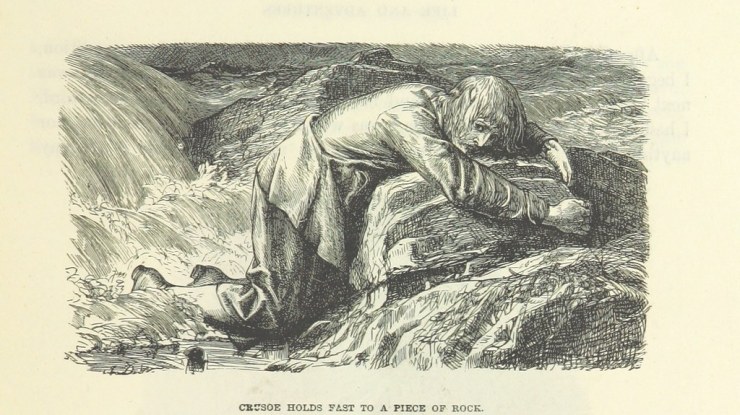
“September 30, 1659. I, poor miserable Robinson Crusoe, being shipwrecked during a dreadful storm in the offing, came on shore on this dismal, unfortunate island, which I called ‘The Island of Despair; all the rest of the ship’s company being drowned, and myself almost dead.
All the rest of the day I spent in afflicting myself at the dismal circumstances I was brought to – vis. I had neither food, house, clothes, weapon, nor place to fly to; and in despair of any relief, saw nothing but death before me – either that I should be devoured by wild beast, murdered by savages, or starved to death for want of food. At the approach of night I slept in a tree, for fear of wild creatures; but slept soundly, though rained all night.

October 1. In the morning I saw, to my great surprise, the ship had floated with the high tide, and was driven on shore again much near the island; which, as it was some comfort, on one hand – for, seeing her set upright, and not broken to pieces, I hoped, if the wind abated, I might get on board, get some food and necessities out of her for my relief – so, on the other hand, it renewed my grief at the loss of my comrades, who, I imagined, if we had all stayed on board, might have saved the ship, or, at least, that they would not have been all drowned as they were; and that, had the men been saved, we might perhaps have built us a boat out of the ruins of the ship to have carried us to some other parts of the world.

I spent a great part of this day in perplexing myself on these things; but at length, seeing the ship almost dry, I went upon the sand as near as I could, and then swam on board. This day also continued raining, though with no wind at all.”
Statue of Alexander Selkirk in Fife, Scotland

Courtesy of Welcome to Fife:
Defoe based his novel on the true story of Alexander Selkirk (1676-1721), a Scottish sailor who was put ashore on the uninhabited South Pacific island of Juan Fernandez in 1704, and was marooned for four years there until 1709. His extraordinary first-person narrative is a convincing psychological study of an individual in extreme circumstances, and Defoe’s great talent is to make you feel as if you are there, experiencing it alongside Crusoe.

“These Memories” by Hollow Coves:
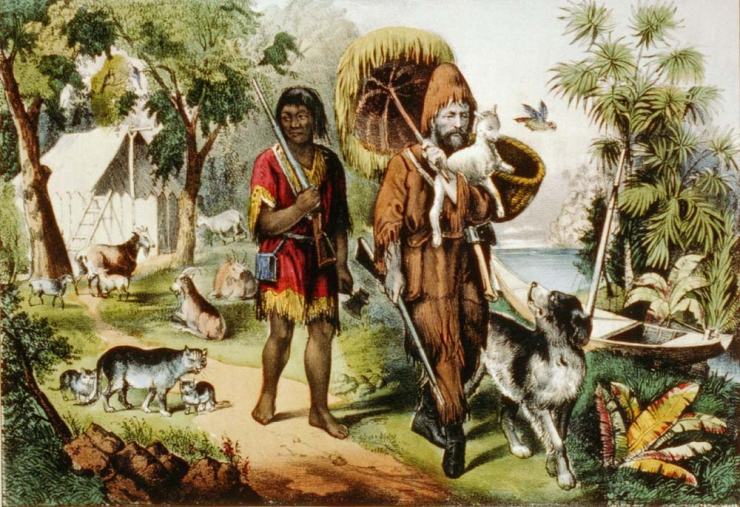
With his parrot and parasol, the castaway Crusoe is an emblem of survival, self-sufficiency, resourcefulness, and ingenuity that shapes civilisation from the raw materials of nature.

“By The Sleepy Lagoon” by Eric Coates (courtesy of Barry Hodgson):
PS As a child, I was so under the spell of this book that Crusoe’s method of working became mine for life.


Thanks for the amazing back story Joanna. I have read the novel a couple of times and seen a couple of movie adaptations. Still an enthralling type of story, as Tom Hank’s Castaway proves. An amazing career for a political activist and a long life for the day. Thanks for sharing. Happy Friday. Allan
LikeLike
Thank you, Allan, for your wonderful comment and for being the first to read the post! Your thoughtful words are much appreciated! One of my favourite books because it offered guidance on how things should be done in life, which I followed.
Joanna
LikeLiked by 1 person
Dear Joanna, once again I must confess I have no words to express the fascination your fabulous articles inspire in me.
This rich post on Defoe, his Robinson Crusoe, and the origins of the story captivated me.
Thank you also for the wonderful images, videos, and music.
LikeLike
What a wonderful surprise to find another post today, full of delightful images, music and interesting information. I too was very taken with the story of Robinson Crusoe. Defoe must have had quite an imagination to construct such a story. I certainly agree with his statement about discontent. Thank you for this extra treat!
LikeLike
Thank you, Carolyn, for your wonderful comments, which are much appreciated! You are right, we can learn a few important things from the talented man with a great imagination.
Joanna
LikeLike
Thank you, dear Luisa, for your beautiful comments, which lift my spirit!! Your kind words are greatly appreciated!
Joanna
LikeLiked by 1 person
You are so very welcome my dear Joanna.
It’s my pleasure as always!
LikeLike
Now I want to read the book!
LikeLike
Another terrific essay. Crusoe is a fine book. I like another of Defoe’s novels even more: A Journal Of The Plague Year. Have a good weekend!
LikeLike
Thank you, LuAnne, for the lovely comment, which made my day!
Joanna
LikeLike
Thank you, Neil, for your beautiful comments, which are greatly appreciated! I wrote about the most known, and filmed a few times book.
Joanna
LikeLiked by 1 person
You made the right decision, since Crusoe is by far his best-known work.
LikeLike
Thank you, Neil!
Joanna
LikeLiked by 1 person
Marvelous share, Joanna. It leads to the (almost) painful childhood joke, Who was the only person to get all of his work done by Friday? Robinson Crusoe, of course. I also enjoyed the book and some of the movie adaptations, including Disney’s Swiss Family Robinson.
LikeLike
Another wonderful post to sit enjoy, Joanna. I’ll savor each word and be back ❤️
LikeLike
Thank you, Cindy, take your time
LikeLike
Thank you, Pat, for your lovely comments, which are greatly appreciated, especially the wonderful joke!
Joanna
LikeLike
Dear Joanna, what a glorious post this week. As a child, this story was magical and exciting and I’m aware that these things are in short supply nowadays. Thank you for this and playing me out is one of my favourite tunes. Sleepy Lagoon by Eric Coates, a much overlooked composer; and of course the music used for the radio programme Desert Island Discs, which I grew up with, with Roy Plomley. Those were the days! 💌🤗😊
LikeLike
Thank you, Ashley, for such wonderful comments, which are greatly appreciated!
Joanna
LikeLike
Thank you for the in-depth and amazing story of Daniel DeFoe. I enjoyed reading it. I have never read Robinson Crusoe, but I might now! Thank you so much for sharing!
LikeLike
Thank you, Diana, for the wonderful comments, which are much appreciated! When a reader is persuaded to read the book I am reviewing, it makes me happy.
Joanna
LikeLiked by 1 person
Great post, Joanna, on the masterpiece “Robinson Crusoe “by Daniel Dafoe !I read the novel some 20 years ago & was mighty influenced by the masterful narration of Robinson Crusoe’s life on the island under very challenging condition of survival!Defoe based his novel on the true story of Alexander Selkirk (1676-1721), a Scottish sailor who was put ashore on the uninhabited South Pacific island of Juan Fernandez in 1704, and was marooned for four years there until 1709. His extraordinary first-person narrative is a convincing psychological study of an individual in extreme circumstances, and Defoe’s great talent is to make you feel as if you are there, experiencing it alongside Crusoe. Thanks for sharing ,Joanna !Namaste !
LikeLike
Thank you so much, Dhirendra, for your thoughtful comments, which are greatly appreciated!
Joanna
LikeLiked by 1 person
🙏🙏🙏
LikeLike
Thank you, Joanna, for this engaging post about Daniel Defoe and his magnum opus, Robinson Crusoe. I had read this gripping tale of survival and adventure years ago, and I also recall watching a film adaptation of it decades back.
It’s truly fascinating to revisit how Crusoe builds a shelter using whatever limited resources he can find, how he discovers a footprint on the shore—realising he’s not alone—and how he eventually rescues a young native from the clutches of cannibals.
Your post has beautifully captured his predicament, and the excerpts you’ve shared offer valuable insight into the story’s central themes. I particularly appreciated the details you provided about Defoe himself—born to a butcher, with a life full of ups and downs.
Despite a chequered past and the controversies stirred by his satires and pamphlets, he still managed to write books that have stood the test of time.
Thank you once again, Joanna, for this thoughtful post that took me on a nostalgic journey. It’s wonderful to know that this adventurous story captured your imagination as a child. As always, your choice of pictures, music, and video enriches the reading experience.
P.S. I don’t know how I missed this post, probably because I was in Indore.
LikeLike
Thank you so much, dear Kaushal, for your wonderful comments! I mention the family of a butcher whose son became the first author of an English novel because I remembered that you wrote once that the great talents are Divine inspired, and therefore it doesn’t matter when they come from. I knew that you were away, and I thought that you will read my post on your return.
Joanna
LikeLiked by 1 person
I never miss any of your posts, Joanna—if I do, it’s only due to unavoidable circumstances. As for being a butcher’s son, I’m reminded of Ratnakar, a dacoit by profession, who underwent a profound spiritual transformation to become Sage Valmiki, the revered author of the Ramayana.
LikeLike
Thank you, dear Kaushal, for your courtesy and beautiful reply! Namaste!
Joanna
LikeLiked by 1 person
💖 Love your opening quote that I truly agree with Joanna:
“In every walk with nature one
receives far more than he seeks.”
John Muir
Oh the nostalgia of remember this unforgettable masterpiece about “Robinson Crusoe“ by Daniel Defoe. You truly offer some intimate insights about Defoe’s journey. Thank you for sharing this excellent literary recap my friend. 📕📚📙
LikeLiked by 1 person
Thank you, dear Kym, for your wonderful comments, which are greatly appreciated!
Joanna x
LikeLiked by 1 person
You are so very welcome Joanna! My pleasure always! 😊💖🙏🏼
LikeLike