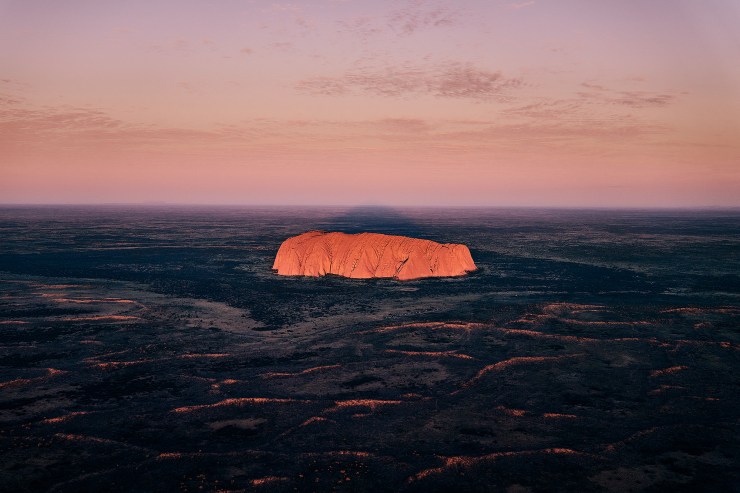


Uluru and Australia’s Red Centre

Above the Crest-tailed Mulgara
Courtesy of Ayers Rock Resort:
Uluru, also known as Ayers Rock, is world-famous for its startling red colour and is regarded as one of the great natural wonders. It is situated in the centre of Australia, in the southern part of the county’s Northern Territory and at the far-eastern end of the Great Sandy Desert. Uluru is the biggest single piece of rock in the world; it is made of arkose sandstone, and its height is 348 metres. What is visible is in fact just a summit of a much larger piece of rock, with most of its bulk lying underground, possibly to a depth of several kilometres. Uluru is a relic from the process of major mountain formations that have been eroded over millions of years.

Courtesy of FactSpark:
Uluru holds special significance to local Aborigines, not just as a rock but as a mysterious personality, and caves around the base of it contain hundreds of paintings depicting traditional Aboriginal life. Uluru is also famous for the changing colours and light patterns that dance across its intense rust-coloured form. A few years ago it was announced that climbing onto the rock was no longer allowed on request from the Aborigines’ leader as they continue to regard Uluru as central to their spiritual life.

Courtesy of Tom Cowey:
The Sandy Desert surrounding the rock covers 405,200 square kilometres and extends west from Uluru into the state of Western Australia. The landscape compromises extensive sand plains, with sand dune fields, from which rise rocky outcrops. Rainfall is minimal but rising to 300 millimetres around Uluru. There are a few permanent water sources and they are located around the periphery of the desert. The average temperature in the daytime is 22 degrees Celsius rising to 45 degrees Celsius in summer, and dropping in winter to almost freezing point.
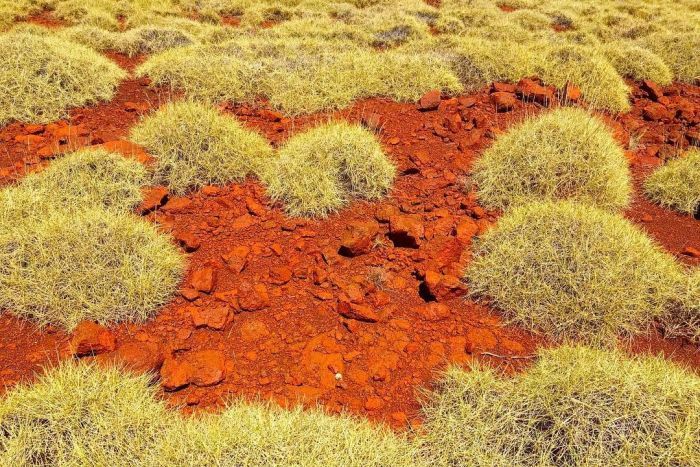
Uluru is a defining symbol of the desert and an excellent place to search for wildlife. Tussock grassland is dominated by species such as Spinifex. Large parts of the desert are covered by clumps of Spinifex, a most drought-resilient plant that provides a valuable habitat for small birds in particular. The tussock vast root system enables the plants to obtain moisture from the soil and stabilises the sand dunes on which they grow. Scattered throughout the desert are shrubs and small trees like Desert Walnut, Mulga Acacia, Desert Bloodwood and Desert Oak.

The wildlife around Uluru is particularly diverse due to the microclimate that is generated by the rock itself. Rainfall locally is higher than in the wider desert beyond and the area around Uluru has recorded 21 species of native mammals, 178 species of bird, 72 species of reptile, and many thousands of insects.
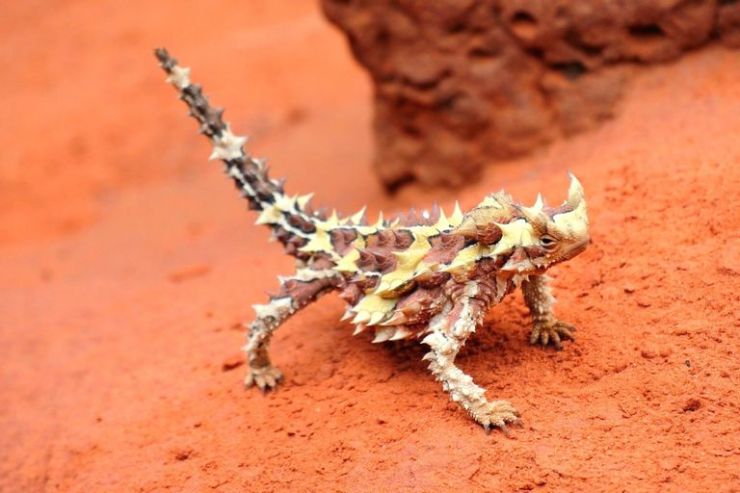
One of the most remarkable reptiles found in the Red Centre is the Thorny Devil. They are extraordinary looking lizards that can grow to 20 centimetres long and have a body pattern that provides excellent camouflage against the sand of the desert. It moves along in a jerky motion like a wind-up toy and with its tail raised. The lizard’s body is covered with spikes to deter predators, although they are not poisonous. This creature’s bizarre appearance is not its most remarkable aspect. In an adaptation that is hard to believe, it is able to channel any moisture that collects on its body, from dew, towards its head via a system of external capillaries and tiny grooves between its spines. This network leads to its mouth enabling it to drink. It is one of the examples of the ingenuity of nature when presented with a challenging environment.

Another notable creature is Main’s Frog which endures periods of drought by burying itself underground and surviving on the water that it has absorbed into its body in time of rain. When the rain comes back, the frog digs himself out, feeds, reproduces and then stocks up on its water reserves before going underground once more. At times of heavy rain, hundreds of frogs may emerge simultaneously making a strange call rather like the bleating of a particular farm animal – hence their alternative English name, Sheep Frog.

The Great Sandy Desert is home to many mammals, among them Dingo Dogs, Red Kangaroo and Hopping Mouse. In the 19th century, camels were brought to Australia. With the development of the motor industry, they become unwanted and pushed out into the desert where they thrived. With over a million feral camels grazing on vegetation that is used by the farmers and their cattle it became a serious problem. The government intended to cull at least 650,000 of them but met with the opposition from many naturalists who maintain that would be cruel.

I should mention the many snakes that slither across Australian deserts and the landscape, such as Australian brown snake, Taipan, Red-bellied black snake, Spotted python, Tiger snake, Mulga snake, Desert death adder, Eastern brown snake, but by now I feel somewhat queasy and so I better stop the count. Needless to say, most are highly venomous. The Eastern brown snake is the most aggressive one and is responsible for more deaths in Australia than any other snakes. Its bite will kill within 45 minutes and the description of what and when gets paralysed is the stuff of nightmares. I hope readers will understand why I won’t be including pictures of any of the reptiles.
As an antidote, I would like to include a picture of a symbol of Australia – the koala. Although not a desert dweller, the koala is of great importance, especially now, since its numbers were significantly reduced by bush wildfires.

There are quite a few deserts in Australia and the Great Sandy Desert is the second largest covering 267,250 square kilometres. It wouldn’t be possible to write about all of them in this post and therefore I will write about the most interesting one after Uluru:
The Simpson Desert and the Inland Sea of Lake Eyre

It covers some 580,000 square kilometres and has a range of different arid landscapes, from dune fields and stony plains to low eroded low hills. Lake Eyre is the world’s largest salt lake, and at some 15 metres below sea level, the lowest point in Australia. It also includes one of the world’s largest internal drainage basins. Regarded as one of Australia’s great natural desert features, the lake is fed largely by water from the Warburton River. There is no outlet to the sea and so the basin fills with the seasonal rainwater, followed by rapid evaporation. This results in the formation of salt pans that are for much of the time covered by a crust of salt that can be half a metre thick but after the monsoon rain, the lake water can swell to a depth of two metres or more. However, this results in the salt crust dissolving and raising the salt level in the lake’s water to saturation point. The heavy salty water sinks under the fresh and drinkable water that comes to the surface. The resulting flooding transforms the arid, parched and lifeless parts of the surrounding desert into a vibrantly green, full of life landscape. The desert erupts in colourful displays of brilliantly yellow flowers, Fleshy Groundsel, but the extent of the growth of the grasses and shrubs depends on local rainfall.

Courtesy of Tim Lindner:
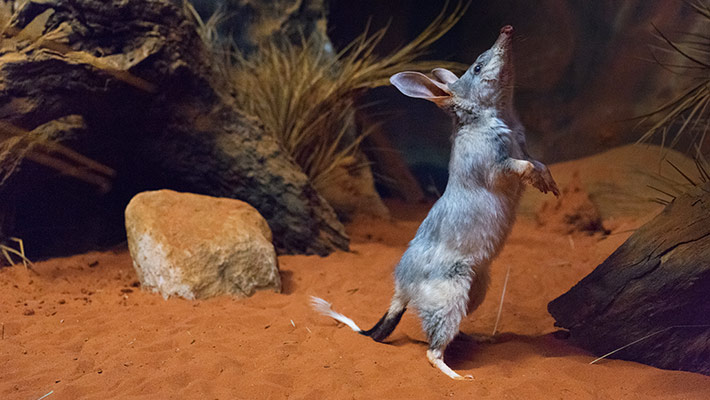
The wildlife of the Australian deserts includes the most popular and cute mammal, Bilby. It lives singly or in pairs, is nocturnal, and feeds on insects, seeds and bulbs. Once widespread, it has now declined in numbers which prompted a conservation campaign, including captive breeding. There is even a National Bilby Day which is held every September.
Courtesy of Australian Wildlife Conservancy:
Australia’s ‘wild dog’, Dingo is present in the Simpson Desert in larger numbers. Its history is curious as it is likely that it was brought to Australia as a domestic animal by Asian seafarers. The earliest surviving fossil remains for Dingos are most likely from Thailand, dating back almost 6,000 years. This would indicate an original and close link with the Indian Wolf, although Dingos are now regarded as feral dogs. Aborigines developed an early relationship with Dingos, using them as guards dogs and in hunting. Dingos hunt in small groups, preying on kangaroos and wallabies.

Outstanding among the many reptiles found in the Simpson Desert is the highly specialised Lake Eyre Dragon. A small creature, about 7 cm long, it lives only on the inhospitable salt flats where it feeds on ants. To avoid the heat it burrows under the salt crust and when the lake periodically floods, the dragon will move temporarily toward the sandy shores until waters recede, and then moves back to the salt flats. To cope with the extremely harsh conditions, the Lake Eyre Dragon developed a pale skin to reflect the heat and its sunken eyes have black-rimmed fringed lids to cope with wind and glare.

Over 239 species of birds have been recorded locally which is a surprisingly high number for a desert region. The lake attracts many waterbirds, among them Pink-eared Duck, Grey Teal, Red-necked Avocet and Black Cormorant. The Red-necked Avocet comes to the Lake Eyre in large numbers when conditions are favourable to breed and it feeds on tiny organisms which it scoops up with sideways sweeps of its long bill

When the water levels are right, a vast numbers of pelicans gather at Lake Eyre to nest. They fly from hundreds of kilometres away to take advantage of the temporary conditions inland. When not feeding, they spend long periods resting and preening.

This is just a small selection of the diverse and large wildlife population of the Simpson Desert and Lake Eyre. Conservation efforts are helping in preserving this natural wonder forevermore.
Courtesy of Australian Wildlife Conservancy:

 naturetails
Our exposure to Australia is limited and we have never been to the interior deserts which make up a good part of this continent. Uluru has always fascinated us, even more so after our limited interaction with Aborigines in 2012 and 2014. The wildlife is both diverse and unique here. I love the look of the Thorny Devil and the birdlife. Strangely enough, we have Avocets (American) in our small Northern city that don’t look substantially different than the one you have shown. As to the snakes, I have heard that there are more thinks that can kill you in Australia than most other places on Earth. Thanks for this post Joanna. Allan
LikeLike
Beautiful! I’ve been to Uluru ( Ayers Rock) and I have ridden a camel through that dessert to a winery too. 🙂
LikeLike
Thank you, Allan, for your interesting comments! The deserts and their wildlife are important to explore as they suggest a possible future for our planet. Thank you again, Allan, for your thoughts which are much appreciated!
Joanna
LikeLiked by 2 people
Thank you, Jeanne, for your lovely comments! Apart from the wine, there must have been a picnic too?!
Joanna
LikeLiked by 1 person
Yes, there was. It was quite a beautiful adventure. I’ve been to6 out the 7 states in Australia. I have only NOT been to Western Australia. 🙂
LikeLike
You are such a glob-trotter, Jeanne! Thank you!
Joanna
LikeLiked by 1 person
I try, but I still have A LOT more to see and experience too. 🙂
LikeLike
All on your bucket list, Jeanne!
Joanna
LikeLiked by 1 person
What a fascinating history, and what a wide variety of wildlife! I have seen Uluru in photos and movies, and it is wonderful to learn more about it! The Bilby captured my attention. It looks a bit like the small rabbits we have here in Florida. Our squirrels, deer, and rabbits are the same as those farther north, just smaller. I am glad to hear that they are being protected from extinction.
LikeLike
Thank you for this beautiful and interesting post, Joanna.💕 Have a great weekend!
LikeLike
Thank you, Cheryl, for your wonderful comments which are much appreciated!
Joanna x
LikeLike
beautiful pictures & fascinating write-up! thank you, Joanna🙏🏼❤️
LikeLike
I had no idea there are camels in Australia, let alone so many of them!
LikeLike
That thorny devil is quite a creature. Glad to learn about it.
LikeLike
I’ve always been so fascinated with Ayers Rock, although I’ve never visited there. This is another stellar post Joanna. Thanks for sharing and have an awesome weekend my friend. 🦘🥰🌞
LikeLike
What an incredible and beautiful place! Thank you for sharing and bringing it to life, Joanna.
LikeLike
Your posts are a great antidote to the world’s current problems Joanna, and this is yet another fabulous addition. The detailed information about Uluru and the Simpson Desert would be reason enough to give it 5 stars, but the images and videos that accompany it send this post into the stratosphere. Wonderful! No other word for it.
LikeLike
Thank you, Malc, for your wonderful comments, a true antidote to world daily news! You know how to lift my spirits! Thank you again, Malc, for making my day!
Joanna x
LikeLiked by 1 person
Thank you, Michele, for your kind comments which are much appreciated!
Joanna
LikeLiked by 1 person
🥰
LikeLike
Thank you, dear Kym, for your wonderful comments which are greatly appreciated!
Joanna x
LikeLiked by 1 person
Thank you, Steve, for your lovely comments which are much appreciated!
Joanna
LikeLike
Thank you, Neil, for your interesting comments which are much appreciated!
Joanna
LikeLiked by 1 person
Thank you so much for your wonderful comments which are greatly appreciated!
Joanna
LikeLiked by 1 person
Thank you, Joanna, for this captivating post that beautifully explores the fascinating world of Australian deserts.
Uluru, or Ayers Rock, a massive isolated Rock formation stands as the the world’s biggest monolith made of sandstone. As a geology student, I am particularly drawn to its remarkable geological features, but the region’s diverse flora and fauna add even more intrigue. The rock’s ancient paintings depicting Aboriginal life, along with its ever-changing colours and light patterns, make it an extraordinary sight.
I was especially fascinated by the unusual story of camels and thoroughly enjoyed learning about the adorable Koalas and nocturnal Bilbies. Australia’s deserts are truly a treasure trove of unique biodiversity and captivating tales. The drought-resistant plant Spinifex and other shrubs thrive here, alongside an impressive array of wildlife. The Thorny Devil reptile, various snake species—including the notably aggressive Eastern Brown Snake—and the remarkable Main’s Frog, with its incredible water retention strategy, highlight nature’s incredible adaptability.
Lake Eyre, the largest salt lake in the world, is a stunning spectacle within the Simpson Desert. Its ecosystem, home to waterbirds like the Red-necked Avocet, resilient Dragons, and the wild dog, Dingo, further enriches this extraordinary landscape.
Deserts are a testament to nature’s resilience, showcasing incredible survival strategies among both flora and fauna. They remind us of the importance of adaptation in our own lives. Once again, Joanna, many thanks for yet another fascinating post, thoughtfully enriched with engaging videos and relevant images.
LikeLike
Thank you so much, dear Kaushal, for your wonderfully analytical comments! As usual, you have covered every detail of my post, and I can only thank you from the bottom of my heart for your kind words! You are right about the importance of exploring the way nature adapts to the harshness of the deserts as it might be helpful in the future climate change of our planet. Thank you again, Kaushal, your kind words are deeply appreciated!
Joanna
LikeLiked by 1 person
How beautiful. I would have never thought deserts to be places of such beauty. But thanks to your wonderful posts, I do now. Thanks!
LikeLiked by 1 person
That Thorny Devil lizard and the Lake Eyre Dragon are incredible adaptations to the harsh desert environment. And I’m glad to hear about conservation efforts to preserve these natural wonders. Even in the harshest conditions, life finds a way to thrive – and that’s a lesson we can all learn from.
LikeLiked by 1 person
Thank you, Ritish, for your wonderfully thoughtful comments which as always are greatly appreciated!
Joanna
LikeLiked by 1 person
Thank you, Diana, for your wonderful comments which are greatly appreciated!
Joanna
LikeLiked by 1 person
I always think Australia and South America have the most interesting and unique animals. Your post is fascinating, Joanna, and I learnt about a few animals I’d never heard of, like the bilby. What a cutie!
LikeLiked by 1 person
Thank you, Harini, for your lovely comments! I think all the deserts are fascinating and there is much we can learn from their resilience given climate change and the future of our planet. I love Bilby too!
Joanna
LikeLiked by 1 person
Yes Ma’am. I want to see and experience as much of the world as I can. 🙂
LikeLike
My dear Joanna, once again I have to say that I have no words to express the fascination that your fabulous articles arouse in me.
This further part, with its images, videos and descriptions, as always, fascinated me
I am really proud to have met such an interesting and erudite person like you 😘😘😘
LikeLiked by 1 person
Thank you, dearest Luisa, for your wonderful comments! I don’t deserve your praise because I just researched the subject and presented the facts to my readers. Mind you, dear Luisa, having readers like you make my work a great pleasure! Thank you!
Joanna xx
LikeLike
Knowing how determined you are, Jeanne, you will achieve everything and more!
Joanna
LikeLiked by 1 person
AWWWW!!!! You are always so sweet. Thank you Joanna. 🙂
LikeLike
Thank you, Jeanne, I am as sweet as you are clever!
Joanna
LikeLiked by 1 person
🙂 🙂 🙂
LikeLike
Just what I need right now, Joanna! Your desert series is wonderful, so fascinating and as you know, I love animals and birds as well as the beautiful scenery. Thank you for a bright spot in my day.
LikeLiked by 1 person
Thank you, Carolyn, for your wonderful comments! Thank you also for making my day special and happy!
Joanna x
LikeLike
You are more than welcome, dear Joanna!
I meant every word! 💞
LikeLike
Thank you, Luisa, you are very kind!
Joanna x
LikeLiked by 1 person
It’s always a pleasure to read your posts minutely as it contains amazing pictures and videos to help explain the facts. You’re always welcome, Joanna!
LikeLike
Thank you, Kaushal, you are very kind!
Joanna
LikeLiked by 1 person
I had no clue Uluru has such a wide variety of wildlife! Amazing photos and videos, Joanna. I was also quite amazed to know that they have camels too.
LikeLiked by 1 person
The opening photo of Uluru is stunning! Thank you, for this amazing story of Australia’s deserts. 💌🤗💓🙏
LikeLiked by 1 person
Thank you, Ashley, for your lovely comments which are much appreciated!
Joanna
LikeLiked by 1 person
Thank you, Punam, for your wonderfully interesting comments which are much appreciated!
Joanna
LikeLiked by 1 person
You are very welcome, Joanna. Thanks to you I am learning new things.
LikeLike