
“Flora” by Ludovico Einaudi (courtesy of Darko):
In my previous post about Abu Ward, I paid tribute to a man who without the benefit of higher education had the wisdom to articulate what has been known to humans for thousands of years that ‘the essence of the world is a flower.’
It is thought that the first botanical drawings appeared 2000 years ago. They were included in medical texts to prevent any misunderstanding as it could have been fatal. In the time of Emperor Nero, a Greek physician Pedanius Dioscorides published the first botanical illustrations in his five volumes De Materia Medica.
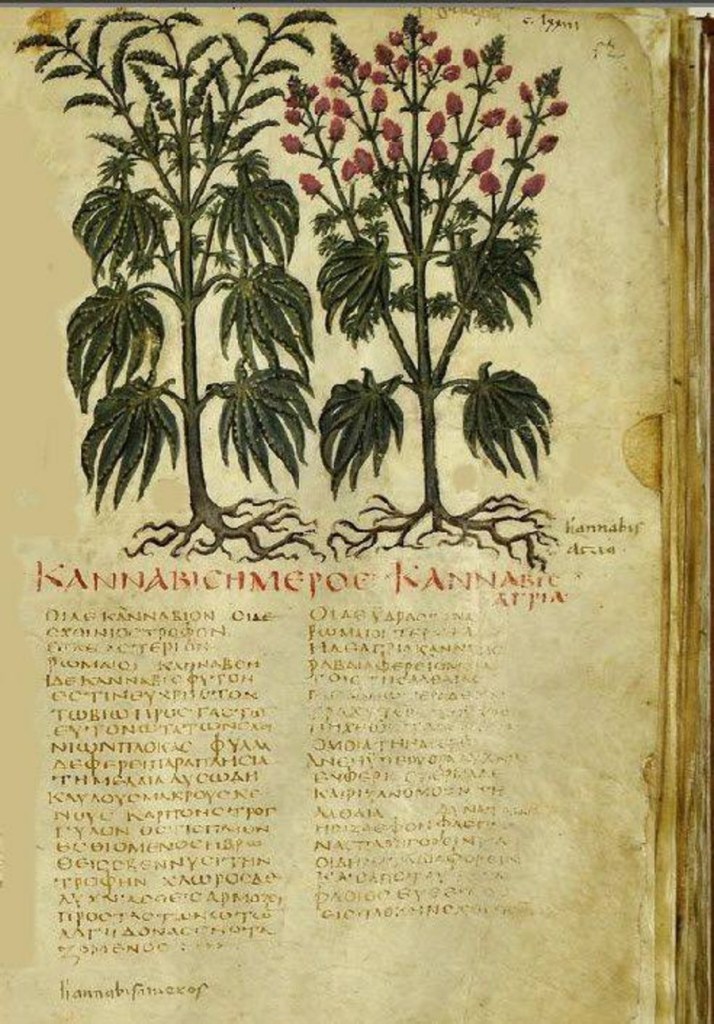
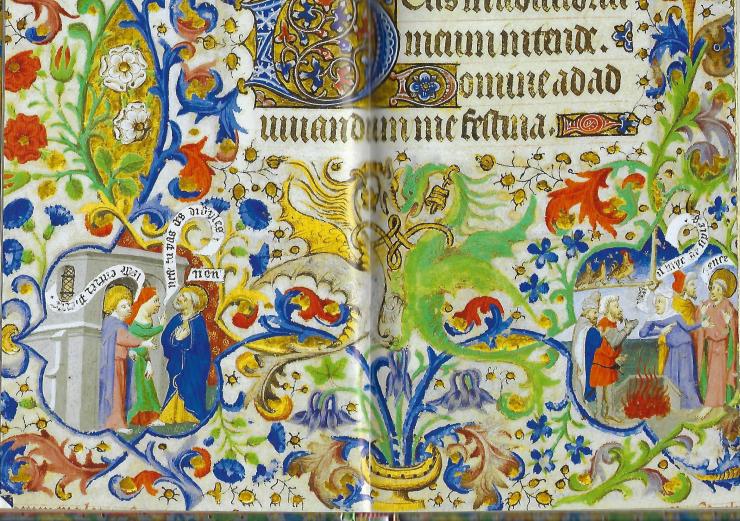
The Middle Age monasteries were the source of many illuminated manuscripts, and although not precisely devoted to the drawing of flowers, they always had monks adding some botanical plants, mainly flowers, to beautify the pages.


“The Flower Duet” from “Lakmé” by Léo Delibes (courtesy of OpusBoa):
The 18th and 19th centuries became famous for botanical illustrations as many illustrators produced scientific drawings of flowers and plants. It coincided with the explosion of the scientific revolution, and the desire to learn, to observe and to discover. The most famous was the Flemish painter Pierre Joseph Redouté. He was especially admired for his drawings of roses, although there were many others like Otto Wilhelm Thome, William Jackson Hooker, Walter Hood Fitch and William Henry Prestele, to mention just a few. Redouté excelled in botanical drawings of roses by perfecting the technique of engraving. His three volumes of 250 roses were produced to the Empress Josephine’s order. He was appointed her chief court painter. When he died in 1840, there was no one who could paint botanical illustrations in such an exquisite way.


“The Rose” performed by Hauser (courtesy of YE’S Channel):
The need for books with colourful illustrations of flowers remained and it was best represented by the famous and highly valued Maria Sibylla Merian (1647 – 1717). Tsar Peter the Great noticed her work during his travels in Europe and admired her work so much that he bought a large selection of her watercolours. After his death, the paintings were given to the Academy of Science. Unusually for women of that time, she was not only uniquely talented but also successful in business dealings and marketing her work. By all accounts, she was an emancipated and remarkable woman.
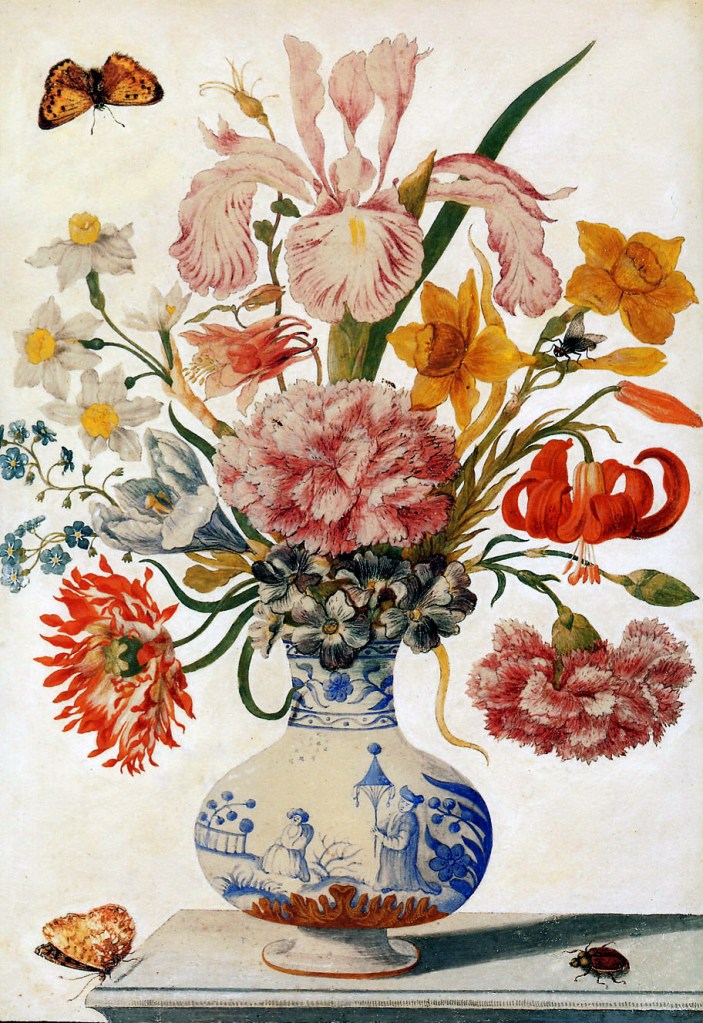

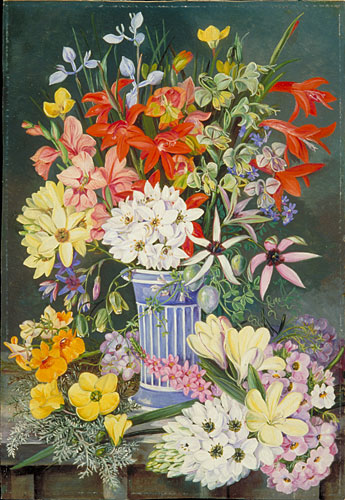
In England, at the time there was another highly talented woman, Marianne North (1830 – 1890), a brilliant illustrator, who travelled the globe in search of the most exotic plants and flowers. She was so prolific that to display all her work, a gallery was built in Kew Gardens. Every inch of the walls, from the floor to the ceiling, are covered with her colourful paintings, that dazzle visitors with their spectacular brightness and originality. There has been no one since that could have made such a lasting impact on the world of botanical paintings.

The contemporary American painter, Georgia O’Keeffe (1887-1986), who was famous for her paintings of magnified flowers, said: ‘When you take a flower in your hand and really look at it, it’s your world for the moment. I want to give that world to someone else. Most people in the city rush around so they have no time to look at a flower. I want them to see it whether they want to or not.’ In 2014, her painting Jimson Weed/White Flower No1 was sold at Sotheby’s for £30 million. I rest my case.

The Victorians created The Language of Flowers, an elegant if not quaint little book that gave the meaning to hundreds of flowers. While most had only one meaning, the rose had forty of them. Starting with the obvious one: Rose……………………….Love, it then covered most of the well known.

Rose, Austrian………………………Thou art all that is lovely
Rose, Boule de Neige…………….Only for thee
Rose, Bridal…………………………….Happy Love
Rose, Burgundy……………………….Unconscious Beauty
Rose, Campion…………………………Only deserve my love
Rose, Christmas……………………….Relieve my anxiety
Rose, Deep Red…………………………Bashful shame
Rose, Musk, cluster…………………..Charming
Rose, White……………………………….I am worthy of you
Rose, Yellow……………………………….Decrease of love, Jealousy
Those are just a few examples, but it is enough proof that The Rose is the most loved and admired of flowers. Its beauty and its intoxicating scent enslave us all. Rose petals are used as fragrant confetti that is thrown over newlyweds or used to decorate the bed in a honeymoon suite. Rose oil is an expensive ingredient in the production of many perfumes. There is even an exquisite jam/confiture made by rubbing certain rose petals with sugar, absolutely delicious on freshly baked scones.
“Rose” by Ludovico Einaudi (courtesy of Elliot):

 naturetails
Dear Joanna, thank you for this beautifully illustrated piece about flowers, without them the world and our lives would be so much less! 💌🤗💕😘🌹😊
LikeLike
Thank you, dear Ashley, for your wonderful comments which are greatly appreciated!
Joanna
LikeLike
What a lovely collection of exquisite paintings. Flowers have always inspired artists but to paint a true image of one takes great talent. I would be hard put to choose a favourite flower. The all are special in their own way. As always, you have included wonderful music. Thank you Joanna!
LikeLike
Beautiful illustrations and history, Joanna. I loved it.
LikeLike
Thank you, Carolyn, for your wonderful comments which are greatly appreciated!
Joanna
LikeLike
Thank you, Pat, for your generous comments! Your thoughts are much appreciated!
Joanna
LikeLiked by 1 person
Definitely my pleasure, Joanna.
LikeLike
Thank you!
LikeLiked by 1 person
My favorite flowers are the ones on flowering trees, because the flowers there are so amazingly numerous. Fine essay, as always , Joanna.
LikeLiked by 1 person
Thank you, Neil, for your kind comments which are much appreciated!
Joanna
LikeLiked by 1 person
Its felt like an tribute to life’s greatest gifts to us humans. Whom most of us take for granted, almost over look. May be no more. Essay and the included apt soundtracks will keep giving us the essence of the world of flowers every time we look at one. Thanks, Joanna.
LikeLike
Thank you, Narayan, for your wonderfully eloquent comments which are much appreciated!
Joanna
LikeLike
It can’t be any coincidence that many girls are named after flowers: Rose, Hyacinth, Primrose and Violet are just a few that immediately spring to mind. It got me wondering as to what you would like to be called if you were named after a flower. How about Jasmine? The name is Persian in origin apparently and means ‘gift from God’. I can’t think of anything more appropriate, can you?
LikeLike
Thank you, Malc, for your wonderfully erudite comments! Your thoughts are much appreciated!
Joanna
LikeLiked by 1 person
It’s interesting that one of the medieval manuscripts showed cannabis. I wonder what the monks thought of it.
LikeLike
Thank you, Steve, for your interesting addition to my posts as usual! I think monks might have used it for their joints.
Joanna
LikeLike
A humorist would say that’s how marijuana cigarettes came to be called joints.
LikeLike
Thank you, Seve, for being always one step ahead!
Joanna
LikeLike
Thank you, Joanna, for this beautiful post on flowers—nature’s silent music, spoken through the earth’s lips for the world to admire. The seamless transition to the post about Abu Ward adds a sense of continuity.
I thoroughly enjoyed the historical insights into flower illustrations, accompanied by exquisite visuals. Redouté’s rose artwork is truly remarkable, while the paintings of Maria Merian and Marianne North are equally captivating. Their contributions have left a lasting legacy. Georgia’s quote carries a profound and exceptional message. Ending the post with the rose—the king of flowers—was a perfect choice of yours.
For a post like this, illustrations play a crucial role, and you have provided them in abundance, beautifully complemented by soundtracks that leave a lasting impression on the reader’s mind.
Love is a flower, and a flower is love—may both continue to flourish together. Thank you, Joanna, for yet another fascinating and enchanting post!
LikeLike
Thank you so much, Kaushal, for your wonderfully analytical comments! I love every word of your thoughts and deeply appreciate all!
Joanna
LikeLiked by 1 person
Such gorgeous illustrations, Joanna! Reading through the history of botanical illustrations was both informative and engaging, especially with the music and the images. It’s fascinating how these illustrations have left such a lasting impact. Than you for sharing!
LikeLike
Thank you, D, for your wonderful comments! I have always been fascinated by old manuscripts, and I have a few in my collection. Your lovely thoughts are greatly appreciated!
Joanna
LikeLike
My pleasure, Joanna! You’re welcome!
LikeLike
Flowers and flower illustrations are so delightful, and your post is redolent with them! In India we make a sweet called gulkand with rose petals, and rose essence is often added to other desserts.
LikeLike
I recently read a book you will surely love : The Sky Beneath Us by Fiona Valpy. Do get hold of it if you can!
LikeLike
Thank you, Harini, for your wonderful comments which are much appreciated!
Joanna x
LikeLiked by 1 person
Thank you, Harini, I will!
Joanna
LikeLiked by 1 person
Such an apt title and such gorgeous paintings. A feast for eyes and souls this post is, Joanna! Xoxo
LikeLike
Thank you so much, Punam, for your wonderful comments which are much appreciated!
Joanna
LikeLiked by 1 person
A delicate feast for the eyes.
LikeLike
Thank you, LuAnne, for your lovely comments which are greatly appreciated!
Joanna
LikeLike
My pleasure always, dear Joanna.
LikeLike
Thank you, Punam!
Joanna x
LikeLiked by 1 person
The history of botanical art is so fascinating, and the pics are gorgeous. And roses, oh roses… they’re just the best 🌹
LikeLike
Thank you, Ritish, for your wonderful comments which are much appreciated! I love roses too, and I have planted almost hundred in my wildlife garden!
Joanna
LikeLiked by 1 person
Wow that’s amazing. My father also loves to plant roses all over out little garden. Last month he brought white roses too. They are so gorgeous
LikeLike
It is wonderful to hear this, Ritish! Thank you!
Joanna
LikeLiked by 1 person
What an incredible presentation and your images complement your message so delightfully Joanna. I am so ready for Spring…it’s in the air my friend! 🌹🌺💐🌸🌻
LikeLike
Thank you, dear Kym, for your wonderful comments! I cannot wait for Spring!
Joanna xx
LikeLiked by 1 person
You’re so very welcome my dear Joanna and girl, that makes two of us anticipating Spring’s arrival. Oh I can’t wait to get outside and breathe in Mother Nature’s essence! Hugs! 🌺🥰💐
LikeLike
Amen!
LikeLiked by 1 person
😊💖🤗
LikeLike
Flowers are the bright accessories of nature. We were lucky enough to visit Orto e Museo Botanico in Pisa in 2019. The Botanical Museum founded in 1591 had some great flower and plant studies. Happy Saturday Joanna. Allan
LikeLike
Thank you, Allan, for your wonderful comments! How fortunate that you can travel to many interesting places!
I remember that you planted flowers and vegetables in your beautiful garden.
Joanna
LikeLiked by 1 person
It will likely take to May before we can plant much here. I can’t wait. 🪷🌺
LikeLike
I cannot wait for spring too!
Joanna
LikeLiked by 1 person