
“Happiness can be found in the darkest of times,
if one only remembers to turn on the light.”
Albus Dumbledore, from “The Prisoner of Azkaban”

“Winter Solstice” by Eimear Quinn:

“Ring out the old, ring in the new,
Ring, happy bells, across the snow:
The year is going, let him go;
Ring out the false, ring in the true.”
Alfred Lord Tennyson
“Tundra” by Ola Gjeilo (courtesy of Mount Royal Kantorei):
Winter is a season like no other. The world of many plants and animals becomes a time of rest and hibernation. For humans, December is a time of intense activity as Christmas approaches. The drab world of winter cities is transformed by lights of elaborate design hanging across the streets, and shop windows are at their most colourful. Wreaths with red ribbons hang on doors of most houses, and decorations make their interiors festive and jolly. It is a time of putting up Christmas trees, a time of pine garlands, multicoloured tinsel, gold stars and sparkling baubles. It is a time of log fires and brisk walks after Sunday lunch. A huge Christmas tree is erected in Trafalgar Square. It is a yearly gift from Norway to Great Britain for our help in liberating their country during World War II. And it is an unbreakable link with the past. It is a time of reflection.
“Wexford Carol” (courtesy of Elaine Hagenberg Music):

Winter Solstice rituals around the world (courtesy of Christel Veraart):
“Solstice Carole” by The Wyrd Sisters, performed by Merrigan (courtesy of Merrigan):
After the Christmas celebrations comes January. This is the most significant month of the year as it has symbolised for millenia a new beginning. The end of the old and the start of the new. The name January comes from the Latin word, janua, which means a door. It isn’t only a door that moves back but is also a symbolic doorstep of going out and forward; it leads from yesterday and into an eagerly anticipated future. Janus was a Roman god who protected the doorsteps of human abodes and the gates of the cities. He was a symbol of the shadowy line that divides yesterday’s past from the future of tomorrow. He had two faces, one looking back and one looking forward, on the same head. That is why in January we pledge to refrain from our ‘sinful’ drinking, smoking, overeating and other bad habits for at least a month, but come February and our good intention becomes just that, good intentions only, at least for a few of us.

The winter’s cold taut air and lack of sun slows life. At this time all the birds that have not migrated need our help. The bird table should have as much variety as possible – seeds of all sorts, raisins, dried mealworms, lots of fat and any crumbs of our soft foods. One of the most popular songs that Mary Poppins sings is: ‘Feed the birds, feed the birds…’, and as the film is shown on TV each Christmas, it makes children put food out, and brings ‘a smile to birds’ cold faces.’
“Feed The Birds” sung by Julie Andrews from the film “Mary Poppins” (courtesy of Omoto Nagie):

“In the Bleak Midwinter” (courtesy of Mousehole Films):
In northern European countries, winter is white with the blinding whiteness of the snow set against the horizon, where the iron-cast sky merges with the frost-bound earth. Even in our technologically advanced age, there is great delight to be a part of a kulig, a sledge cavalcade. Several large sledges cushioned with sheepskins offer comfortable seating for the revellers. The horses, usually in pairs, and the jubilant coachmen shouting ‘Who-ha!’, glide at full speed among the flurry of snow under the sledge runners. It is winter’s equivalent of summer gondola trips in Venice.
Courtesy of Wiktor Sajdak:
“Sleigh Ride” by Leroy Anderson (courtesy of Nigel Fowler Sutton):
Winter brings skiing sports and the Olympics. On lakes, natural or man-made, scores of people practise ice-skating. In Finland and Russia some brave souls go for a morning swim in ice-cold water, and surprisingly live to tell how invigorating and beneficial this experience is. All I can say is rather them than me!
Courtesy of Caters Clips:
One of Scotland’s best-known paintings, The Reverend Robert Walker Skating on Duddingston Loch, attributed to Henry Raeburn:
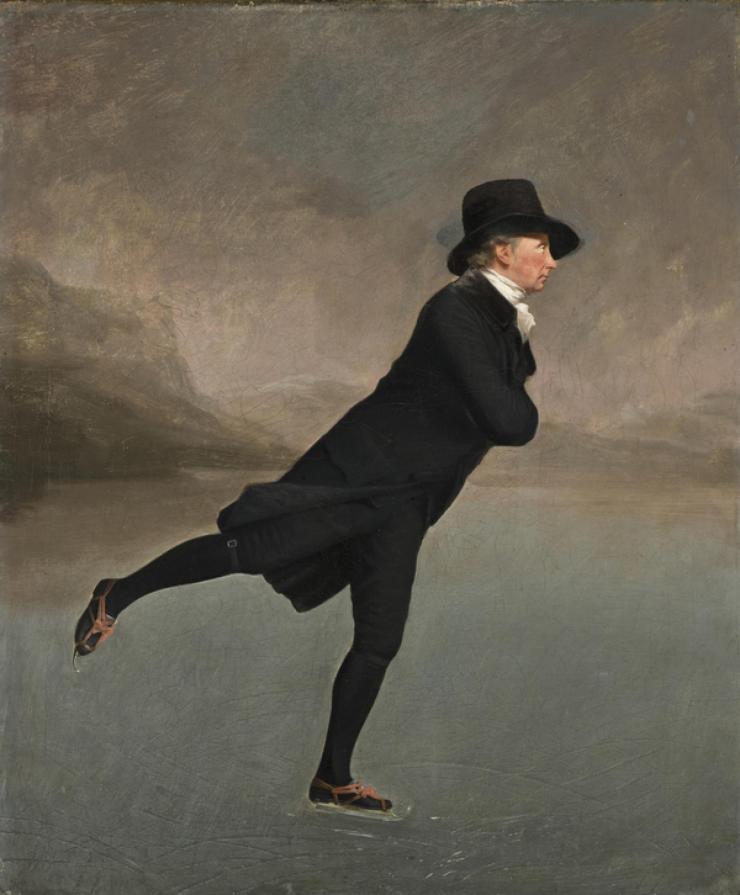
Courtesy of nationalgalleries:
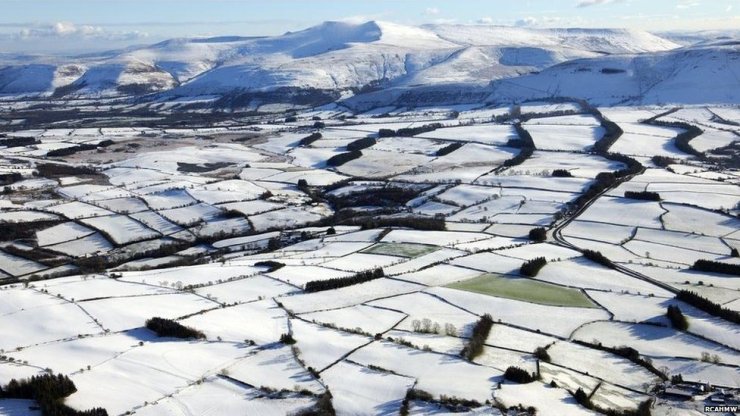
Winter temperatures in the Northern Hemisphere fall well below 0 degrees Celsius. In London, during the time of Samuel Pepys, the Thames froze solid for a few months enabling people to walk across, set up market stalls and even enjoy this unusual happening.

Skating on thin ice, literally (courtesy of National Geographic):
Water is affected not only by heat and cold but also by air pressure. Although clouds are obviously formed by evaporation, our high atmospheric pressure is the reason that the oceans or big rivers don’t evaporate away totally. Water has other odd properties. It is at its heaviest at 4 Celsius degrees and ice floats on water lightly even though is solid. Most people think of water as a liquid to swim in or to drink but the two separate elements of which it is composed exist as two gases: oxygen and hydrogen. The wonder of nature at its best.
“Winter” from “The Four Seasons” by Antonio Vivaldi, performed by Itzhak Perlman and the London Philharmonic Orchestra (courtesy of Batuhan Birol Keskin):
“Carol of the Bells” (courtesy of Patrick Dexter Cello). The melody for this Christmas carol is based on a prehistoric Ukranian folk chant ‘Shchedryk’ which celebrates the winter Solstice.
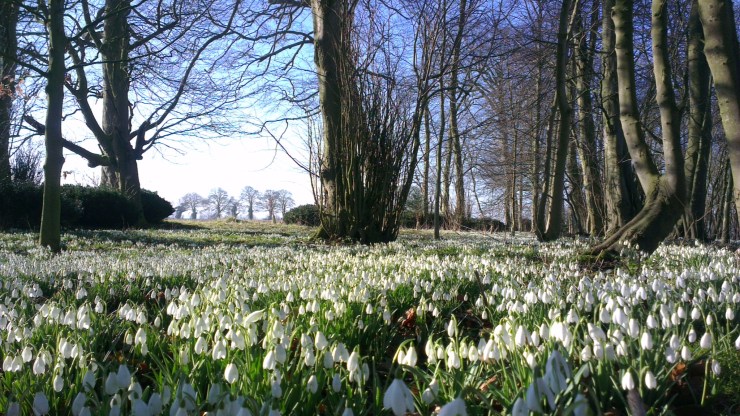
The end of February is the beginning of winter’s end. By now the whole northern world yearns for the warmth of the sun and for the first sign of Spring – snowdrops. We know spring is well on its way when forsythia’s branches burst with an amazing display of masses of gold flowers. After that, the catkins buds are at the ready to welcome Spring, as much as we are.
“Snowdrop” by Debbie Wiseman (courtesy of Debbie Wiseman – Topic):
Courtesy of Artur Homan:
Forsythia, the first flowering bush of Spring

“Winter Interlude” by Miguel Berkemeier:
City names are not accidental, and the city I am writing about here although Genoa now, in the Middle Ages was called Janua. As already mentioned, in Latin, it means the door, not only the door to go out but also the doorstep that is dividing the whole wide world from the abode behind it. It symbolises the new step toward the future and the link with the past. It had two faces symbolising the past and the future. The first month of the year was called January as it closed the last moments of Winter of the cold old year and was opening the path leading to Spring.
“The Two Faces of January” by Alberto Iglesias (courtesy of Alberto Iglesias – Topic):
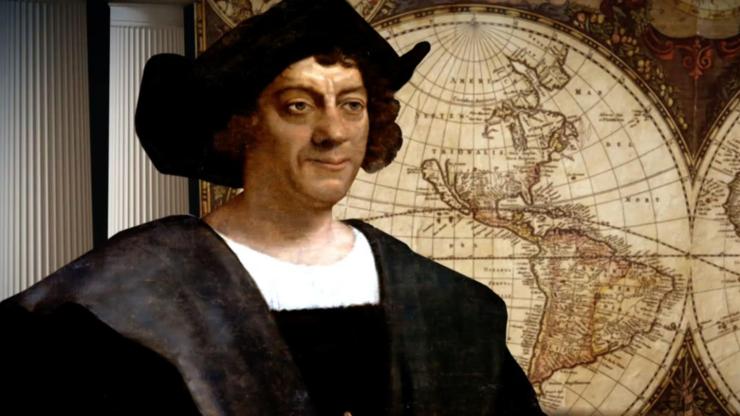
Genoa was in the centre of travellers sailing in search of India’s gold, and the spices of the East. It was in Genoa that a man, who wanted to close the doors on the old world and to open the way to the new wide world, was born, Christopher Columbus.
Christopher Columbus
A mini bio of Columbus (courtesy of Biography):
City of Genoa, Italy
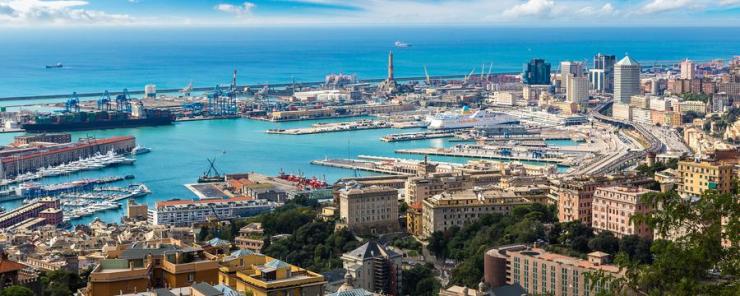
Courtesy of ALL in 4K:
Courtesy of Evgeny Soin:
I am going to tell you the story of the most famous son of Genoa, the greatest violinist that ever lived, Niccolo Paganini. Although at the end of this post, I will provide a few book titles, it will be my own tale about Paganini which I have known for a very long time. Are you sitting comfortably? Then I shall begin.
Niccolo Paganini was born on 27 October 1782, in Genoa, the third of the six children of Theresa and Antonio Paganini. There is a legend connected with his birth and his superhuman ability to play the violin and it started on the night of his birth. The Paganini family lived in a poor neighbourhood of Genoa, a typical grey maze of houses connected to each other through dirty corridors with the passage going across from one side to another in Passo di Gatta Mora. The midwife summoned to Theresa Paganini’s house tripped on the loose steps to their house and swore, “For Devil’s sake!” just as the door opened, and the harsh meowing sound of the just-born baby Niccolo, filled the air. The child cried all through that rainy and windswept night in cold October.

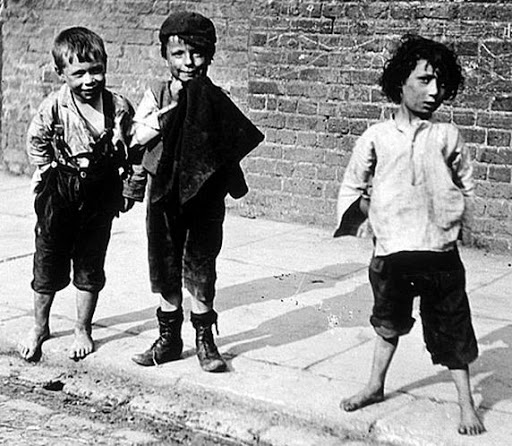
At that time there was a large, long building at Passo di Gatta Mora, dilapidated with black window frames and holes in the greenish with age walls, it was a place for the poorest called, “Albergo dei poveri”. Every day a group of dirty children would spill from there and fill the street with shouting, running, fighting and playing, throwing paper boats into the pools of water in the ground. Among the children, one could see a tiny monkey with a large forehead, sticking out square jaw, a very long nose and curly black hair, On the ugly face, surprisingly, stood out a pair of beautiful, agate eyes with long eyelashes. It was a startling contrast to the awkward body with thin legs and arms almost touching his knees and the very long fingers of a child; it was Niccolo.
His father was a fairly successful gambler and during one of his few days of absence to the casino, a young Niccolo stuck at home with a fever picked up his father’s lute and started to play. He was so absorbed in his playing that he didn’t hear his father’s return. Antonio stood listening and smiling, behind him stood his mother. When Niccolo stopped playing, Antonio clapped and for the first time put his hand on the boy’s curly, black hair. The child looked up shyly at his father, “Uh, what a horrible creature you are!”, said Antonio turning away from Niccolo. Antonio brought from another room an old violin and gave it to his son. “You will learn to play the violin and you will earn good money. What I lose in the casino, you will earn back on the violin.”
An Italian lute

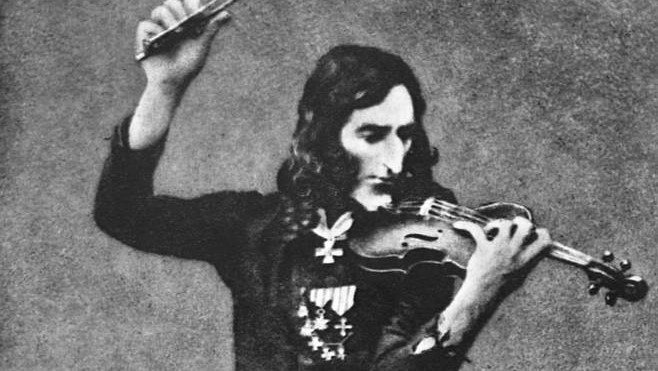
Paganini playing the violin

This was the first lesson of playing the violin and Niccolo had difficulty in understanding his father. Antonio was impatient and would slap him frequently. Next, he brought a long ruler and hit Niccolo’s hands; they soon were covered in bruises. Getting angrier and angrier, he locked the boy in a cupboard and told him to play the first practice, and that he would stay there until he got it perfect.
 Within a few weeks, Niccolo learned to play well and read the notes. One day during the absence of his father, Niccolo came out with his violin and played Carmagnola, a revolutionary tune, very popular at that time. Within minutes the women and men living in the building surrounded Niccolo and sang Carmagnola. This was the first time that he had played in front of a large audience, a group of adults, and he felt excited and proud. It was the beginning of a difficult time for Niccolo. His father, impatient to capitalise on his son’s talent, decided to take Niccolo across the neighbouring towns and cities on a tour. It was a far too premature decision as a tiny child didn’t have the stamina to travel and practise relentlessly under Antonio’s cruel regime. Even when his hands couldn’t hold the violin any longer and he collapsed with exhaustion on the ground, Antonio would kick and slap him, demanding obedience. The beloved to Niccolo violin became an instrument of torture. If anyone were to look in Niccolo’s eyes he would see the depth of human misery.

From the film The Devil’s Violinist, Paganini David Garrett plays at the tavern (courtesy of nikix1):
The tour was the start of the fame, fortune, and unprecedented adulation of Niccolo Paganini. It was written by many of those who could witness the divine power of his playing that in his hands the violin became a live organism, specially created to play what was a miracle, his interpretation of the world around, and of the wonder of Paganini’s genius. When he played, the elated audience could hear the sound of bells from the church’s tower, the image of green fields suffused with sunshine, and the sound of grazing animals. With his playing, he evoked the journey through vineyards, gardens full of tulips, and the vibrant beauty of the blooming, green world. In the different, silvery, and high, clean tones, the spell-bound listeners could see the snowy peaks of the distant mountains, the streams cascading into the lakes below.

“Whispers in the Wind” (courtesy of Brandon Fiechter’s Music):
Paganini’s hearing was legendary; he could hear people speaking word for word in the whole street while he was in his third-storey mansard room.
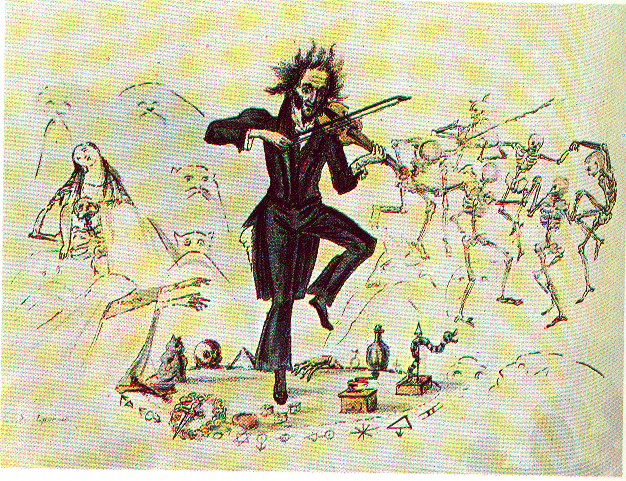
The great, the noble, and the Church fought to have his services. When Niccolo played in any of the many churches in towns, to which Antonio was taking his wife and son, the crowd waiting to hear him would bring an unparalleled rise in the Church’s revenue. There were offers of concerts and one nobleman connected with the Stradivarius family gave Niccolo a Stradivarius after hearing him play with a passion that would elevate a piece of music into a masterpiece. Throughout his life, Paganini would attract envy, spite, and hate as well as fortune. When he grew up, women were ready to do anything to have his attention. Many were attracted by his passion displayed not only in his playing. The fact that he was ugly seemed only to add to his appeal.
“Rhapsody on a Theme of Paganini Op. 43: Variation XVIII” by Sergei Rachmaninov (courtesy of piano77man77):
There is not enough space here to describe the eventful path to glory, Paganini had to tread, the studying of the theory of music. the concert music of la vistas, adagios and cantilenas. All this was happening at a time of great political turmoil in France and in Italy. During his concerts, Paganini would paint with the sound of his violin the thunder of the uprisings, the revolution, and the gigantic upheavals that shook Europe; at the end of the concert, the ecstatic crowd would sing the included combined bit of La Marseillaise and Carmagnola. Also, there is not enough space here to tell you about his life of extensive travelling to all corners of Europe, instead I will show you just a few pictures…
“Liberty Leading The People” by Eugene Delacroix

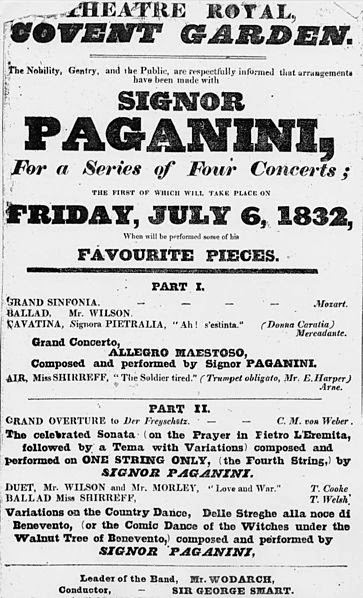

Later, Paganini had a wife, Antonia Bianchi, and a son, a pretty boy with blond hair and blue eyes, Achillino. The boy was 14 when Paganini died, and he loved his father. Paganini left his fortune to him. His life wasn’t peaceful and even in death, it was not free of controversy and problems. His unique talent couldn’t be analysed in human terms, it can only be compared to a magical wand that had power over the world of mortals. His hand moved over his violin like lightning as if the instrument was an extension of his heart. This instrument spoke the human language and was understood by all, but the only one who could speak it was Paganini.

Sonata No. 12 in E minor by Paganini, performed by David Garrett (courtesy of davidgarrettmusic):
As a sidenote, the spelling of his first name is varied.
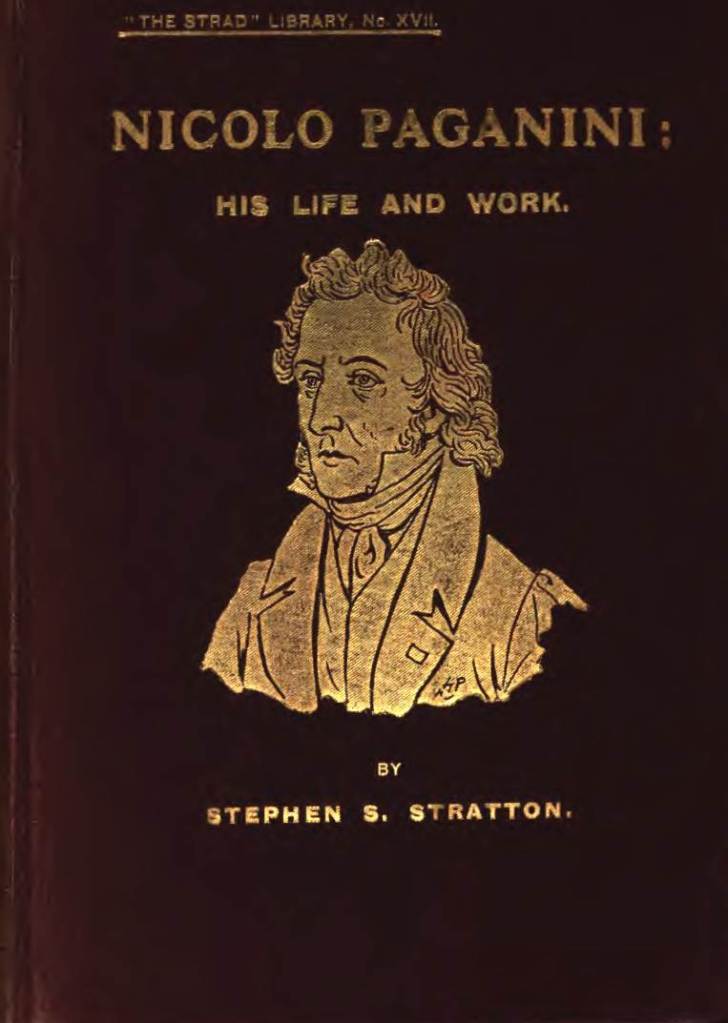
Here are a few books to consider as I promised:


It just remains to wish all my readers a very Happy New Year! The composer Debbie Wiseman wrote a piece of music for the new year, dedicated to looking to the future with the “hope of better times to come”. The work , “A Lustre to this Day”, is performed by the cellist Steven Isserlis and the pianist Mishka Rushdie Momen (courtesy of Classic FM):
And André Rieu provides a cheering version of the traditional finish with “Auld Lang Syne”:

 naturetails
Wow, splendid videos and imagery make the post a visual treat!
LikeLike
Another fantastic post Joanna. You have outdone yourself once again by weaving fascinating images and information, beautiful music and stunning videos into such an engaging presentation. A treasure trove of valuable information linked together in a fabulous way.
Thank you! Thank you from the bottom of my heart – I can’t find any other words to express my admiration for you 🤗
PS: I’ll be posting about “In the Bleak Midwinter” in a few days.
LikeLike
Thank you, dear Luisa, for your wonderful comments! Your words lifted my spirit!
Joanna x
LikeLiked by 1 person
As always, this take on a subject is distinctively yours.
Given your interest in Swami Vivekananda, you’ll appreciate that the root in Latin Iānus (Jānus), who was the god of doors and of the beginning of a year, is the same root that’s in Sanskrit yānam, meaning ‘the way,’ which is found in the Buddhist terms Hinayana and Mahayana.
Happy passage from 2024 into 2025.
LikeLike
Thank you, Steve, for your wonderfully erudite comments! I do appreciate your addition to my knowledge!
Happy New Year 2025!
Joanna
LikeLike
Thank you, Indira, for your wonderful comments which I much appreciate! Happy New Year 2025!
Joanna
LikeLiked by 1 person
This post has enough material in it for at least three fascinating posts, Joanna. Magnificent.
LikeLike
Thank you, Pat, for your generous comments, which are greatly appreciated!
Joanna x
LikeLiked by 1 person
Very welcome and well deserved, Joanna.
LikeLike
Thank you so much, Pat, you are very kind!
Joanna x
LikeLiked by 1 person
This is a lovely, informative post, Joanna–truly a New Year’s gift to us. I appreciate all the time and attention you devoted to assembling it. Happy New Year!
LikeLike
Thank you, Annie, for your wonderful comment, much appreciated!
Joanna
LikeLiked by 1 person
What a wonderful post, Joanna including so much beautiful music, my favourite being Christina Rossetti poem set to Gustav Holst’s music. Thank you. 🤗😘🤗
We still have a few days to go before this wonderful month, January, and of it’s the beginning of a fresh New Year. With that in mind, let’s hope and prey that the world will find peace and comfort for all those caught up in wars and traumas around the world. 🙏🙏🙏
LikeLike
Thank you, Ashley, for your wonderfully thoughtful comments! Let’s hope! All the best for the New Year 2025!
Joanna
LikeLiked by 1 person
I don’t think I can do justice to your post by writing a comment after one reading only! But write I must because this is such an amazing post. There is so much to savour in terms of audios and videos and the written word. From Janus to Genoa to Paganini…just Fantastic!
Wishing you a very happy new year! Xoxo
LikeLike
The same etymological root for ‘to go’ appears in the Slavic languages, including Polish: https://en.wiktionary.org/wiki/Reconstruction:Proto-Slavic/j%D1%8Cti
LikeLike
Thank you, dear Punam, for your wonderfully analytical comments! Your praise is deeply appreciated! All the best in the New Year 2025!
Joanna x
LikeLiked by 1 person
Thank you, Steve!
Joanna
LikeLike
You are always very kind, dearest Joanna ❣️
I thank you both for this and for your precious friendship 💞
LikeLike
You are very welcome, Joanna. I’ll be reading this post again. Thank you!
LikeLike
Thank you, Punam!
LikeLike
Thank you, dear Luisa! I cherish your friendship!
Joanna
LikeLiked by 1 person
💌🎅🤗
LikeLike
A wonderful reflective post, always enjoy your added videos too. Andre Rieu, a perfect ending. Happy New Year soon! 🎉
LikeLike
Goodness, Joanna, if I didn’t know better, I would say you too are a fan of Winter. But maybe only because it precedes Spring? What a wonderful collection of beautiful images and music to celebrate it. How I wished I could have learned to skate and to do as that man does, on the thin ice in order to hear it sing! Marvelous. And then you segue to Paganini with more great music and details. Herculean work goes into your posts Joanna! Thank you so much.
LikeLike
Thank you so much, Carolyn, for your beautiful and thoughtful comments! You are right, of course. Knowing that Spring is coming makes me appreciate Winter. I am happy you liked the music and the New Year’s tale!
Joanna x
LikeLike
Thank you, Monica, for your lovely comments! All much appreciated! May I wish you all he best in the upcoming New Year 2025!
Joanna
LikeLike
It’s good to see you on top form again Joanna. You pack so much into these posts that it takes me ages to read them, but every minute is time well spent. The New Year is indeed a time to reflect back over the year before, but it is also a time to look forward to the year ahead.
You’ve managed to capture the feeling of winter perfectly, but I’ve a feeling that you can’t wait for spring to arrive, but as our years advance we mustn’t wish our time away because life is far too short for that. I loved the story about Paganini as well as all the video clips and music that make your posts such a delight to read.
Thank you for all the posts you’ve done this year and I wish you and all those who are dear to you a great New Year and fabulous 2025.
LikeLike
Thank you, Malc, for your wonderful comments! You are right, I am counting the days to spring! I am glad that you liked the post and the music. Thank you for your good wishes, and may I wish you a healthy, happy, and peaceful 2025!
Joanna
LikeLiked by 1 person
🌹❣️🌹
LikeLike
The initial quotes, poems, and images beautifully set the tone for this captivating post about the wintry month of January, a season of reflection and renewal.
You’ve skillfully illustrated the symbolism of January through the example of Janus, the Roman God, representing the transition from the old to the new. I also appreciate your thoughtful concern for birds, captured in the song, “Feed the birds, feed the birds.” Your mention of winter activities like Kulig, skiing, and skating added a delightful touch to the season’s charm.
I’m glad you referenced Columbus and India’s gold and wealth, which drew the attention of foreign mercenaries too. India, as you noted, was also a coveted destination for spices.
However, it was Niccolò Paganini’s extraordinary talent and tragic story that struck me deeply. Even upon rereading, I was awestruck by his superhuman ability to play the violin. Yet, his harsh upbringing, political entanglements, and unfortunate end remain sombre aspects of his life. It’s thoughtful of you to refrain from delving into the grim details of death.
Thank you, Joanna, for resharing this fantastic post, enriched with stunning images, engaging videos, and wonderful music, which make it truly mesmerising. Wishing you a very happy, healthy, and prosperous New Year 2025!
LikeLike
Thank you so much, Kaushal, for your wonderfully analytical comments! You have covered every point of my post and I can’t thank you enough! Your comments always have such a unique quality that I wait to read them before being able to relax in the knowledge that I have done a good job. May I wish you a happy, healthy, and peaceful New Year 2025!
Joanna
LikeLiked by 1 person
An absolute delight of a post Joanna. Thank you so much. I particularly liked the image of a skater seemingly skating on clouds, very surreal!
LikeLike
Thank you, Peter, for your lovely comments! All your thoughts are greatly appreciated!
Joanna
LikeLiked by 1 person
A very fine essay. Here’s to a fulfilling 2025!
LikeLike
Thank you, Neil, for your lovely comments, much appreciated! May I wish you a happy, healthy, and peaceful New Year 2025!
Joanna
LikeLiked by 1 person
It’s truly my pleasure to read your well crafted posts, and offer my comments. You’re always welcome, Joanna!
LikeLike
Thank you again, Kaushal, you are very kind!
Joanna
LikeLiked by 1 person
As a child, my siblings and I skated on ice that would sing to us as we soared along its surface. That crisp sound transported me back to those earlier days. As for Paganini’s violin music, it is at once haunting, melodic and reflective. Thank you, Joanna, for a delightful end of year post. Stewart
LikeLike
“Happiness can be found in the darkest of times, if one only remembers to turn on the light.” So very true. I wish you a wonder New Year!
LikeLike
Thank you Joanna and here’s to a healthy and happy year ahead for you too x
LikeLike
Thank you, Malc!
Joanna x
LikeLiked by 1 person
Thank you, Diana, and all the best in the New Year 2025!
Joanna
LikeLiked by 1 person
Thank you, Stewart, for your wonderful comments! I am glad that you like the music too! May I wish you a happy, healthy, and peaceful 2025!
Joanna
LikeLike
Lovely to see you back, Joanna! Thank you for the fascinating story of Paganinni’s life, I always learn something interesting from your posts! And I love that painting of the Reverend Robert Walker skating!
LikeLike
A very happy New Year to you and yours!
LikeLike
Thank you, Harini, for your generous comments! I am happy that you liked the story of Paganinni’s life, I wish I could skate!
Joanna
LikeLiked by 1 person
Thank you, Harini, and I wish you the same!
Joanna
LikeLiked by 1 person
As always, what a feast and education! Thank you. Have a blessed 2025.
LikeLike
Joanna, what a refreshing approach to rest and hibernation my dear! 😴💤🥱 During our celebration of lights and garnering our strength, “The Two Faces of January” reminds us to move from our winter interlude into the arms of spring itself. Beautifully composed my friend. Thank you for sharing! 🥶💐🌞
LikeLike