
“On earth there is no heaven, but there are pieces of it.”
Jules Renard
“Una Mattina” by Ludovico Einaudi (courtesy of Sergio Montanari):
“A friend may well be reckoned the masterpiece of nature.”
Ralph Waldo Emerson
“Theme from Limelight” by Gheorghe Zamfir
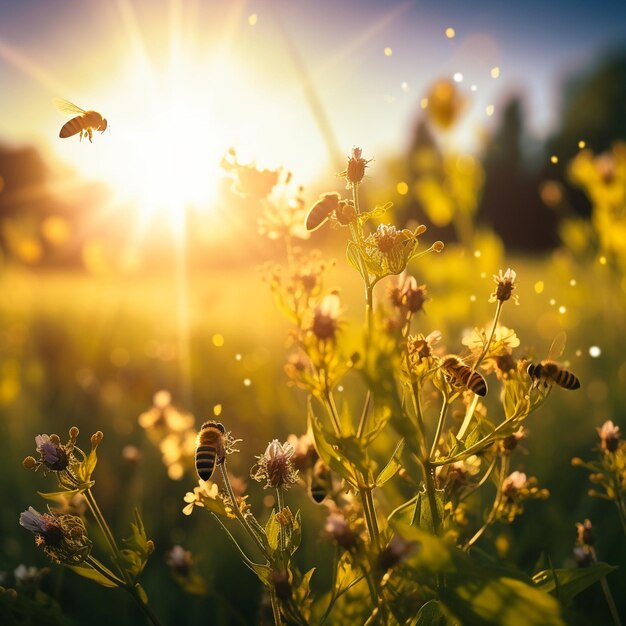
Honey has been in existence as long as honeybees have been, that is for thousands of years. The ancient Egyptians used honey to help to heal wounds and burns. The thick, exquisitely scented and tasting liquid was valued in equal measures by humans and bears. We all remember reading how Winnie the Pooh devoted his life to eating honey.

In London, there are beautifully carved beehives on the roof of Fortnum and Mason, the Queen’s favourite emporium. The legendary hotel, The Ritz of Piccadilly, installed quite recently their own beehives on the roof, together with a garden, although the bees have also privileged access to the gardens of Buckingham Palace close by. When the first 35 jars were produced, their top chef was almost beside himself with excitement.

So, what is so special about honey, apart from the ambrosial taste? Honey is rich in antioxidants. Although it contains no fibre, fat or protein, its value is in its content of bioactive plant compounds, including organic acids and phenolic compounds like flavonoids. This combination makes honey a powerful aid in reducing the risk of heart attack, stroke and some cancers. It is also good for eye health. It improves cholesterol, helps to suppress cough, especially in children, and is more effective than common cough medication. The darker the honey’s colour, the more potent is its effect, Manuka honey is the one to use for respiratory problems. Honey also lowers blood pressure. It is low in calories; a tablespoon contains 64 calories and the natural sugar (collected from the nectar of flowers) contains fructose, glucose, maltose, and sucrose. This is the reason why honey is less ‘bad’ than sugar for diabetics. The benefits of using honey are therefore many: it kills bacteria and disinfects wounds, soothes a sore throat (mixed with lemon), and induces sleep. As one author wrote: ‘A tablespoon of honey at the evening meal makes you look forward to bedtime.’ Honey is also good as a cure for diarrhoea but should not be given to infants under one year old. A drizzle of honey on porridge in the morning plus a few apricots will make you smile all day long. Honey is highly recommended by all the bears of the world.

How bees turn nectar into honey:
“The Flight of the Bumble Bee” by Rimsky Korsakov captures perfectly the energy of these amazing creatures:
Avocados are incredibly nutritious. Anyone recovering from an illness knows that avocados will restore their physical strength faster than any pills or supplements. Those who eat avocados daily will not get ill in the first place. Here are the reasons why: an avocado has zero cholesterol, no salt, contains more potassium than bananas, has calcium, iron, fibre, protein, and vitamin A, vitamin C, vitamin D, vitamin B5, vitamin B6, vitamin K, vitamin E, vitamin B2, vitamin B3, also zinc, copper, magnesium, phosphorus, and folate. It is very versatile to serve, from mashed on toast to seriously effective salad combinations. Here is my version, a salad that will regulate blood sugar and prevent clots: 1 avocado sliced, 3 tablespoons of cooked mixed beans, 2 giant-headed spring onions with the green parts, chopped, one clove of garlic, a few cubes of Feta cheese and a dash of extra virgin olive oil. A touch of black pepper and if liked, a skein of sauerkraut but it is optional. Eaten daily it will give you a good chance to live forever.
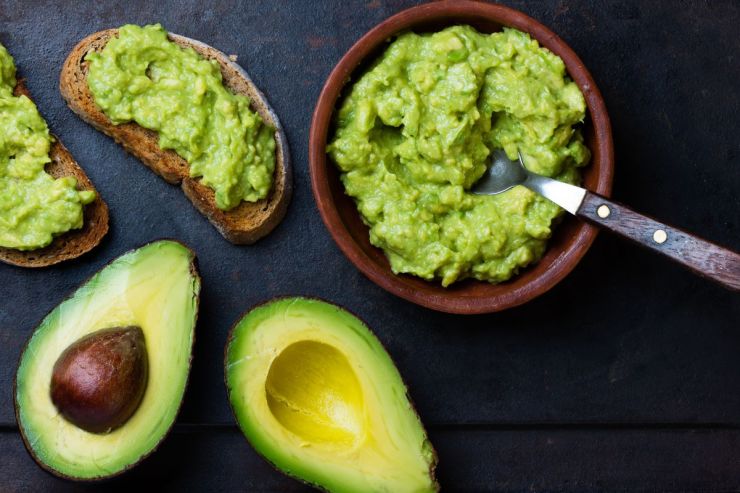
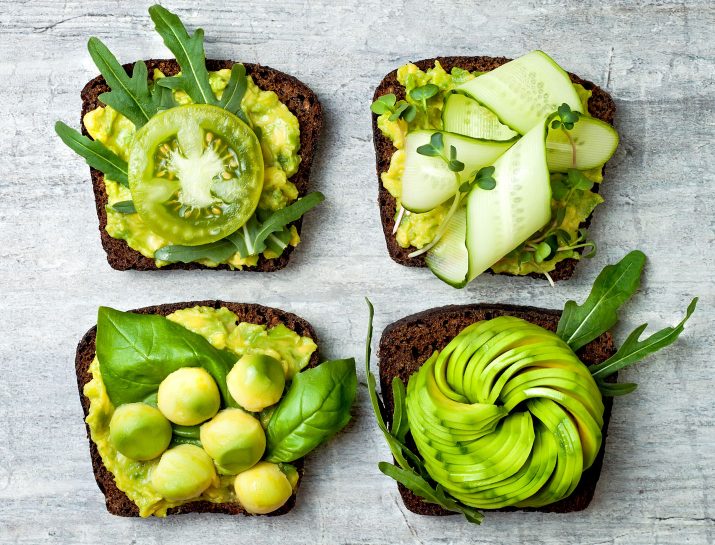
Avocado toast in four delicious ways by Jamie Oliver:
Tomatoes have an enviable concentration of a special type of carotene, lycopene. Studies from many countries discovered that men who eat tomatoes several times a month have a significantly lower risk of developing several cancers. Eating tomatoes helps prevent appendicitis. I would also add that just looking at a tomato salad, as the typical Italian flag symbol, that is beautifully presented – a round display of sliced large tomatoes, intercepted with slices of mozzarella cheese and sprinkled with a handful of fresh basil leaves makes you excited with anticipation of the rich, mellow taste. Eating this salad makes you feel well and happy. It has to be as important as looking after your appendix. And then there are the vine tomatoes, jewel-like in their baby form, and of an exquisite taste that I would want to be a part of my last meal on earth. Cooked tomatoes, even ketchup, are greatly effective for anyone striving to be healthy. Tomatoes induce euphoria.
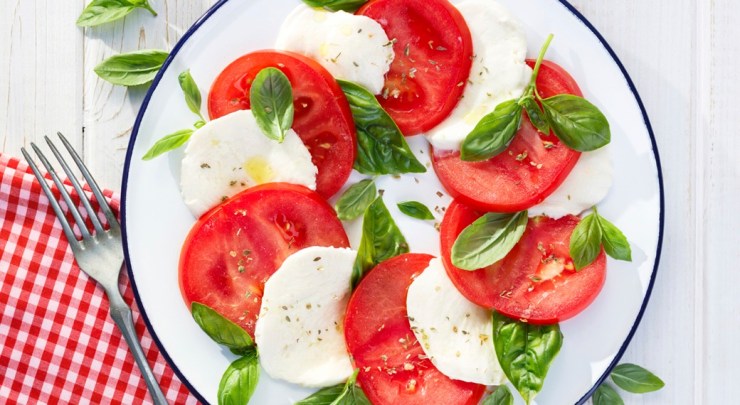

A speedy and delicious tomato sauce recipe by Jamie Oliver:
Chilies have been used the world over as remedies to ward off senility, as a cure for arthritis, for relief of a sore throat, as a treatment for conjunctivitis, for prevention of lung cancer or as a local anesthetic for toothache, among many more less salubrious. Take your pick. Reading about many scientific studies it becomes obvious that if you want the medical benefits of chilies, you need to learn to get used to the hot taste by starting small and then building up the amount. It is worth the effort as they act as an expectorant, act as a decongestant, help dissolve blood clots, kill pain, and are excellent medicine for the lungs.

Black Cherries are well known to cure the painful symptoms of gout. Several studies confirmed that even people in wheelchairs, crippled with gout, were able to get up and walk after eating 200 grammes of black cherries a day. To maintain this effect, you have to eat cherries daily. Other studies linked black cherries with the cure of kidney stones and gall bladder ailments. They are also known to be a potent antibacterial agent in preventing tooth decay. It is difficult to think of any other medicine tasting so delicious.

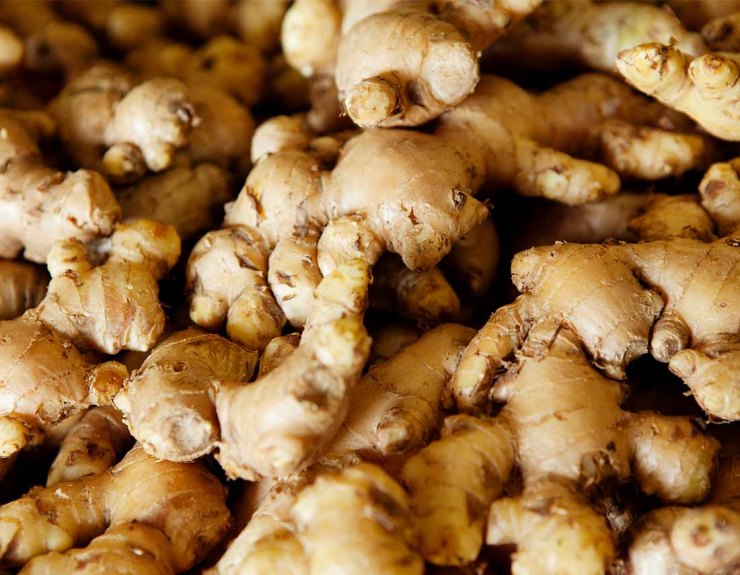
Ginger has been used for over 2000 years. Scientists proved, what the ancients knew, that ginger prevents motion sickness. In the Orient, it is common for fishermen or people on boats to chew crystallised ginger to ward off nausea. It is also a treatment for morning sickness and post-chemotherapy nausea. By chance, scientists discovered that ginger deters blood clots. In Japanese studies, it was discovered that ginger brings down blood cholesterol levels, relieves pain, prevents vomiting, reduces blood pressure and stimulates the heart. It also lowers the risk of stomach cancer. Ginger is used in many countries as an anti-inflammatory agent against arthritis, and as a relief from cold and flu. In cooking, adding ginger makes an ordinary dish a special one.
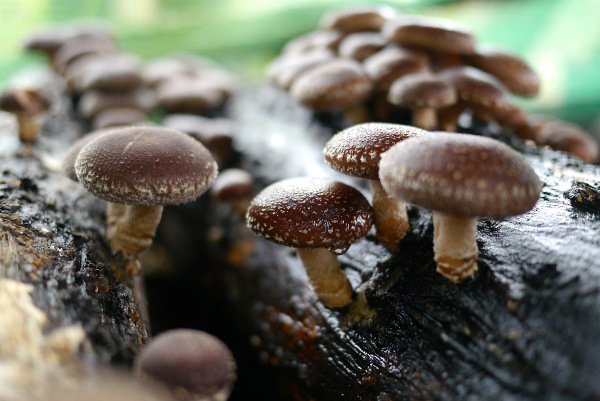
Mushrooms – In China mushrooms are regarded as life-prolonging. The symbol for the Chinese god of longevity, Shoulau, is a walking stick topped by a mushroom ornament. The best-studied mushroom is the shiitake. It was discovered that these mushrooms have a strong antiviral substance that stimulates the immune system. The compound, called lentinan, has proven to be successful in fighting cancers. Eating shiitake mushrooms lowers significantly blood cholesterol. By keeping the blood thin, the mushrooms prevent heart attacks and strokes. Needless to say, their popularity is growing rapidly.
Green and Black Teas have been used as medicine in China for 4000 years. Ancient Greeks called tea the ‘divine leaf.’ It was used as a remedy for colds, asthma, bronchitis, giving the name theophylline to a drug derived from tea. In Japan, a Zen Buddhist monk wrote in the thirteenth century about tea’s extraordinary power to prolong life. Green tea is made from the tea plant by drying the leaves. Black tea leaves are picked up from the same tea plant but then subjected to steam to prolong slow drying. This process allows for many chemical changes to take place. Apart from changing colour due to the breakdown of chlorophyll, it develops compounds called Catechins. They include polyphenols, tannins, and vitamin C. As they also inhibit the absorption of iron, it is not advisable to drink tea with or just after your meal. The established benefits of drinking Green and Black Teas include protection from various cancers and heart disease. It maintains dental health, protects against dementia and many other ailments. The recent findings published in Nature Communications that eating apples and drinking tea lowers the risk of cancer and heart diseases. That would explain the centuries-old ceremonies of tea-drinking in China and Japan as being linked with longevity. Excuse me, while I put the kettle on.

An aerial view of Meijiawau tea plantation in China:
Coffee came to Europe from Arabia in the 1600s but as a medicine and not a drink. One of the effects of the battle of Vienna was the discovery of coffee. During the siege, Jerzy Kulczycki, a Polish polyglot, disguised himself as a Turkish soldier and walked through the enemy camp to carry a message which restored the morale of the troops awaiting the arrival of the Polish King Sobieski, who successfully defended Vienna from the Turks. Kulczycki was rewarded for his bravery by King Sobieski. He was allowed to take any wartime prize of his choosing. Kulczycki took several hundred bags of coffee left behind by the Turks. He opened the first cafe serving coffee. To make the drink more to European tastes, he added milk and honey. It was a success. One of his coffee cafes is still in existence in Vienna today under the original name: ‘The Blue Bottle Coffee House.’

The French regarded coffee as a panacea for any respiratory problems, and as a brain stimulant. It is caffeine in coffee that relaxes the bronchial muscles, and boosts mental performance, brings greater alertness and extends attention span. Coffee is the world’s most popular drink, especially among students at exam time.
Bach dedicated his ‘Coffee Cantata’ to one of the patrons at the coffee shop he frequented:

“Samba” by Ludovico Einaudi (courtesy of A Thing of Beauty):

 naturetails
thanks for such useful info presented so beautifully❤️🙏🏼
LikeLiked by 1 person
Fascinating and very helpful, Joanna. I love caprese salad 🥗 with heirloom tomatoes and basil. Could never develope a taste for oily pesto, ironically.
LikeLiked by 1 person
Once again, a fascinating post! Thank you, Joanna, for this wonderful post. 💌🤗💓🙏
LikeLike
Thank you, Pat, for your kind comments! Pesto is the winner with millions of admirers! Don’t you like virgin olive oil? Perhaps you have to be brought up in Italy or with a Mediterranean diet! Anyway, you look good whatever you eat!
Joanna
LikeLiked by 1 person
Thank you, Ashley, for your beautiful comments! I am glad that you like it! Your kind thoughts are much appreciated!
Joanna
LikeLiked by 1 person
I don’t mind olive oil yet find pesto disgusting which puts me in the minority. Why ruin a marvelous salad by drenching it in an oil slick?
LikeLike
Very interesting, Gaby.
LikeLike
Thank you, GP, for your kind comment, much appreciated it
Joanna!
LikeLiked by 1 person
Dear Joanna, this post is a gastronome’s delight! You have listed all the foods that are my favourite.
Thank you so much for this audio-visual tour of nature’s pharmacy.
LikeLiked by 1 person
Sorry, Joanna. I have no excuse, but I will call it a senior moment.
LikeLiked by 1 person
It doesn’t matter, GP, as long as you don’t call mr Chops as I am vegetarian!
LikeLiked by 1 person
So much great information and for me it is good news as many of these items are included in my diet! I did not know about the beehives on top of Fortnum’s and the Ritz but it makes me happy to know it. I like the story of how coffee came to Europe. I don’t drink it myself these days but I remember that one of my colleagues always needed coffee when she had asthma attacks. I am a tea person. The only item I will avoid here is chilies. I enjoyed spicy food when I was young and that must suffice! As always you have included beautiful photographs and lovely music. For all of it, thank you Joanna!
LikeLike
Absolutely fascinating! So much research went into this – I’ve learned tons. And the images are stunning. 🙂
LikeLiked by 1 person
What a lot of interesting and helpful information, Joanna! Even more than their health benefits I’m fascinated by how foods make their way across the world. For instance, whatever did we do before the gift of potatoes and tomatoes from South America! A guy called KT Achala studied Indian foods and their origins, and wrote several fascination books on the subject.
LikeLike
haha, ok, it’s a deal!
LikeLike
Thank you!
Joanna
LikeLiked by 1 person
Joanna
LikeLike
Ah, the Queen, now a figure from what seems like ancient times. I remember from childhood when she was crowned.
In 2017, as we prepared to fly back to the United States from Auckland on our second visit to New Zealand, I stopped at a supermarket near the airport and used up almost all of our remaining New Zealand currency buying containers of Manuka honey. We gradually went through them over the next few years; one still remains with a last little bit of honey in it. Our local branch of Costco, a large American warehouse chain, has been carrying Manuka honey for several years now.
People know that coffee contains caffeine—the very name of that substance is based on a form of the word coffee. People also know that regular tea contains caffeine. Much less well known is that yaupon, a small holly tree native to the southeastern United States, also contains caffeine in its leaves. Some companies sell yaupon tea.
The Emerson quotation is from his essay “Friendship.”
LikeLike
Thank you, Steve, for your wonderfully interesting comments! As always, greatly appreciated! Thank you for your erudite editions.
Joanna
LikeLike
There’s so much information to digest here Joanna and what a mine of information you are. I learnt so much from this post and I’m going to make sure that I start including more of these ingredients in my diet from now on. It’s no wonder that you look so young.😊
LikeLike
What a fabulous post Joanna. All my favourites in one compendium. I love all the pollinators that visit my yard, even the yellow jackets. If any of them get inside our screened deck, I make sure to capture them and release them back into the yard, unharmed. Coffee is much maligned but we do enjoy our coffee time twice a day. I do love your music selections by Ludovico Einaudi as well. Thanks for making me aware of him. Have a wonderful weekend. Allan
LikeLike
?
LikeLike
Thank you, Allan, for your wonderful comments! Your beautiful thoughts are much appreciated!
Joanna
LikeLiked by 1 person
Thank you, Malc, for the wonderful comments! Adding any ingredients and maybe more after the next post cannot harm you for your complement.
Joanna
LikeLiked by 1 person
Honey is a remarkable substance, and so beautiful to look at! Lovely post Joanna!
LikeLike
Thank you, Joanna, for presenting Part II of “Nature’s Pharmacy.” In fact, our kitchens are a natural pharmacy, containing nearly everything we need for our well-being. You’ve covered seven essential items in this section, starting with honey.
Ayurveda, our alternative system of medicine, aligns with this approach. For example, Ayurvedic practitioners often recommend honey-based mixtures with ginger and holy basil (tulsi) to alleviate respiratory issues like coughs and colds. Honey’s numerous health benefits make it a vital component of a daily diet.
The other items you mentioned are also excellent for health. I especially appreciated your salad recommendations. Black cherries are my personal favorite. I regularly enjoy green chilies with my meals and prefer tomatoes as sauce or chutney. I’ve experienced firsthand the effectiveness of ginger; when I had to give a full day of lectures for a week, with a dry cough, but chewing ginger pieces provided me much-needed relief.
Thank you, Joanna, for yet another valuable post for health-conscious readers. Your images and videos made it even more engaging and easier to understand.
LikeLike
Thank you, for your kind comments, much appreciated.
Joanna
LikeLike
Love this and I’ll be back to read further, Joanna. You have summed up the most importance of our honey bees and the nutrients they deliver and the gifts in teaching us all on so many levels. Not sure you saw my post on the Honey Bus… but you would LOVE the book. Hugs and love
🐝🍯💗
LikeLike
Thank you, Carolyn, for your wondrfully interesting comments
JoannaAll much appreciated!
LikeLike
THANK YOU, Cindy, for your kind comment, much appreciated!
LikeLiked by 1 person
You’re so very welcome, Joanna❣️
LikeLike
Another wonderfully researched and presented post Joanna. So very interesting and informative, and anything including Jamie Oliver I absolutely adore so that was a real bonus for me. Thank you.
LikeLike
What a deliciously, delightful continuation of your well researched message about the amazing power of nature’s pharmacy Joanna. Many of these items are concepts we grew up with because there were no unlimited supply of pharmaceuticals to take. The beauty, the bounty, the essential products Mother Nature produces to heal and nourish our bodies is beyond our wildest imaginations. Thank you for sharing and enlightening us with your passionate information for us to digest. Thanks so much! 🍎🍌🍉🌽🥑🧄🥦
LikeLiked by 1 person
Thank you, Kym. I am away from home and cannot publish or properly comment for some time.
Joanna x
LikeLiked by 1 person
No problem my dear Joanna! You deserve a break my friend. Take care of yourself! Hugs and smooches to you! 😊💖😘🙏🏼😍
LikeLike
That was a fascinating read, Joanna. I love learning about the natural world and how it can benefit our health. I’m definitely inspired to incorporate more of these natural remedies into my daily routine. Thanks for sharing your knowledge.
LikeLiked by 1 person
Thank you, Ritish, for your wonderful comments! As I am away from home, I have not been able to publish for a while.
Joanna
LikeLiked by 1 person
Yeah, I was thinking that. It’s alright, Joanna. Take all the time you need. Take care!
LikeLike
Thank you, Ritish, you are very kind!
Joanna
LikeLike
Thank you, Peter, for your wonderful comments! I am away from home but hope to be back soon
Joanns
LikeLiked by 1 person
A post of great utility to the health conscious, Joanna !You have so well underlined the virtues of healthy eating for keeping up good health in general!Also you elaborated the importance of Ayurveda & associated medicines! Kindly keep up the great job of enlightening people on such invaluable aspects of life 👌
LikeLike
Greetings Joanna! Good evening to you. What a delightful and insightful blog post! After a long time I visited your blog, that also due to a special reason to know and share your post that Plant has Intelligence. And obviously I saw your latest on nature. Excellent post and most useful post for the mankind. And as usual I wish to highlight my thoughts. Four points I will elaborate in first place. Ginger and Mushroom in second phase. Actually I am lover and regular user of all these as Ayurvedic products.
Thank you for sharing these rich insights into nature’s bounty. Your knowledge and passion shine through in every line!
Best regards. Namaste
Arun.
LikeLiked by 1 person
Dear Joanna,
I like blackberries but are not available in local shops and too costly for us. For Coffee, I take it often during evening instead of tea. For other items, as a regular user of all these wonderful items, I can’t help but appreciate the highlights on my second comment on the items you’ve shared:
Thank you so much Joanna for capturing the essence of these health-boosting treasures so well!.
Best regards.
LikeLiked by 3 people
Thank you for another fascinating and interesting article, Joanna! Your post is delightful!
LikeLike
Thank you, Filipa, for your wonderful comments that made my day!
Joanna x
LikeLiked by 1 person
💙🙏🏻
LikeLike
Xxx!
LikeLiked by 1 person
It’s interesting to hear what you share on your blog. Mother Nature is always within everyone’s reach in all its manifestations.
A pleasure to visit your blog, dear Joanna.
LikeLiked by 2 people
Thank you, Lincol, but what has happened to you in your beautiful poetry daily posts?
Joanna
LikeLiked by 1 person
Hello Joanna. Nice to hear from you. I hope you’re well. The truth is I try to write every day but there are cloudy days where ideas resist being written.
A huge hug from a distance.
LikeLike