

“Renaissance” by Giovanni Marradi (courtesy of Tatiana Blue):
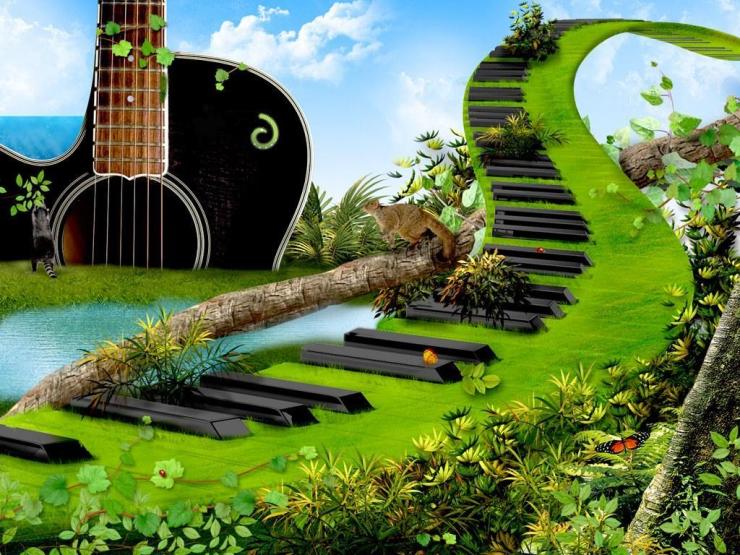
“Rest, nature, books, music… such is my idea of happiness”
Leo Tolstoy
“Madison” by Ola Gjeilo (courtesy of Trym Ivar Bergsmo):
“Music produces a kind of pleasure which human nature cannot do without”
Confucius
“Dawn” from “Winter Songs” by Ola Gjeilo and 12 ensemble:
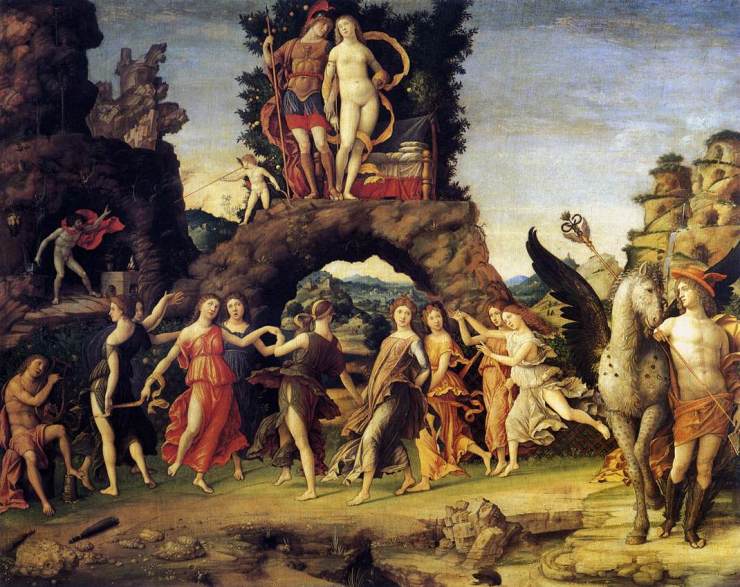
“Echoes in Rain” by Enya (courtesy of Mauro Lucio):
Given the enthusiastic response from readers to my republished post about Mozart’s Starling, I thought a natural follow up this week would be to revisit the connections between nature, music and humans.
From prehistoric times, nature and humanity have been closely linked. Nomadic tribes and cave dwellers depended on the world around them. They danced to bring on rain or chanted to appease the wind, the sun, and forests. The ancient Egyptians played many instruments – drums, rattles, castanets, bells, and sistrum, in their worshipful rituals. In ancient Greek mythology, the music Muse, Euterpe (“giver of much delight”), was most respected, as she bestowed her musical ability on Orpheus. When his beloved wife, Eurydice, died suddenly, in desperation he went searching for her to the gates of the Underworld and played his lyre. His mournful singing moved even the gods and he could see his wife again.
Music and creativity in Ancient Greece (courtesy of TED-Ed):
A Chinese proverb reflects the symbiosis between nature, music, and humans:
‘A bird does not sing because it has an answer. It sings because it has a song.’
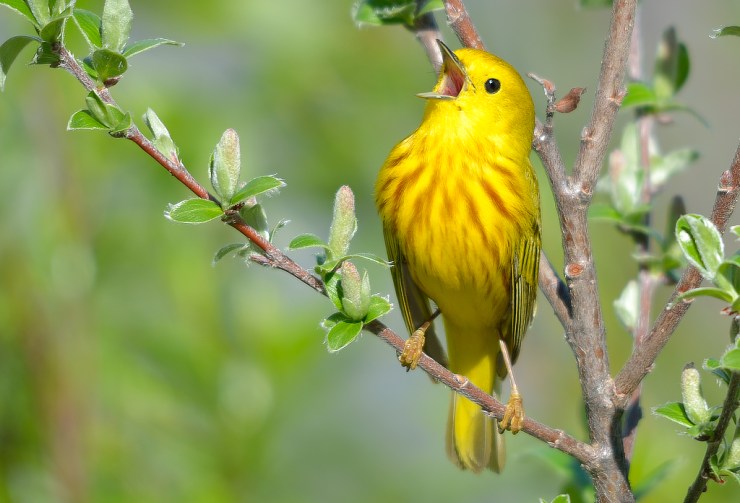
Nightingale singing at sunrise (courtesy of Wildlife World):
Courtesy of pianoTV:
Beethoven – wrote that he often preferred the company of a tree to that of a man and that his ideas came from his daily walks. Not surprisingly, in his greatly popular Symphony No 6 Pastoral, you can hear the call of a cuckoo. In the second movement, Scene by the Brook, toward the end is a cadenza for woodwind instruments that imitates bird calls. Beethoven helpfully identified the bird species in the score: nightingale (flute) quail (oboe) and cuckoo (two clarinets).
Scene by the Brook (II), Symphony No. 6 by Beethoven (courtesy of Edward):
As we saw last week, Mozart‘s favourite place for writing his music was in the open garden with his pet starling on his shoulder, both whistling the notes from his compositions.
Lang Lang explains and plays an excerpt from the Violin Concerto No 17 in G Major:
The inspiration for the book Mozart’s Starling:
Wagner‘s inspiration came from his walks in the Swiss Alps.
“Edelweiss” (courtesy of tomy simson):
The list of the great composers inspired by nature’s beauty is long but here are some other examples:
Delibes – the immensely popular ‘Flower Duet’ from Lakmé is about Lakmé and her servant Mallika singing as they gather flowers by a river; this presentation is courtesy of gdoremi:
Delius – ‘The walk to the Paradise Garden’ from ‘A Village Romeo and Juliet’ was written as an orchestral interlude.
Mendelssohn – Hebrides Overture (Fingal’s Cave) was created after his walks in the Scottish countryside.

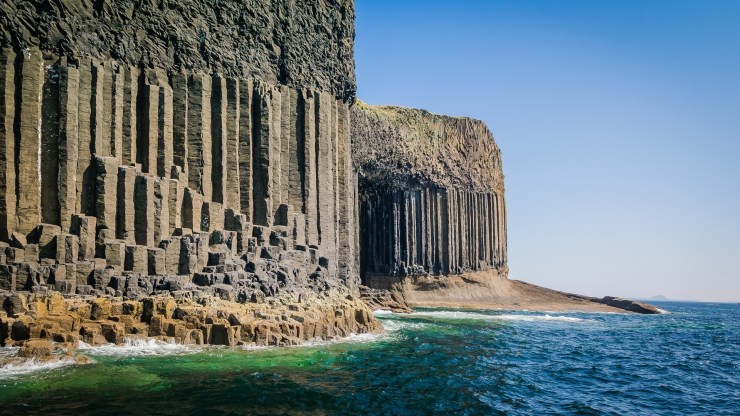
Fingal’s Cave, Island of Staffa (courtesy of guydecervens):
Often regarded as the first “impressionist” composer, Debussy’s music was frequently inspired by nature. He wrote “There is nothing more musical than a sunset.” in the French publication Musica in 1903. “He who feels what he sees,” continued the pioneering composer, “will find no more beautiful example of development in all that book which, alas, musicians read but too little — the book of Nature.”
Debussy – Preludes include the movements ‘Mists’, ‘Dead Leaves’, and ‘Bruyeres (Heather)’

“Bruyeres” by Claude Debussy (courtesy of Thespianists):

Bizet – An aria in his opera Carmen includes the lyrics: ‘The flower that you had thrown me, I kept with me in prison… I became intoxicated by its fragrance.’
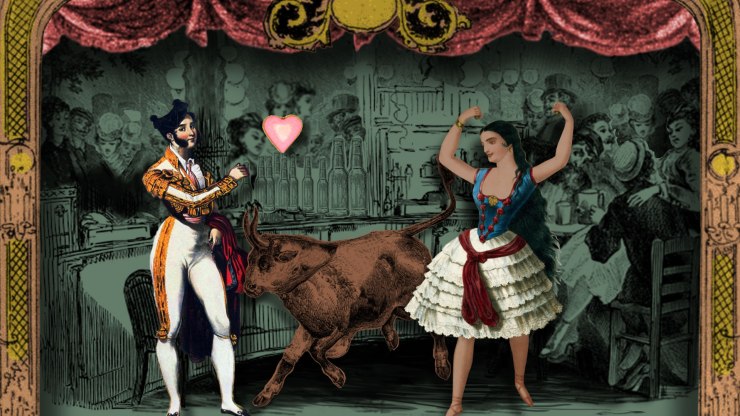
Borodin – wrote in his song ‘From my tears sprang flowers’; ‘Many blooming flowers spring forth from my tears, and my singing becomes joined with the chorus of the nightingales.’
Howells – he wrote a Christmas carol with the lyrics about the animals in the stable taken from the anonymous-century text.
Puccini – created the beautiful string quartet piece ‘Crisantemi’, inspired by the flowers Chrysanthemums. This was featured in my post “Do Plants Have Intelligence?”
Tchaikovsky – In his greatly popular ballet The Nutcracker there is a Waltz of the Flowers. A string of beautiful flowers performs a dance.
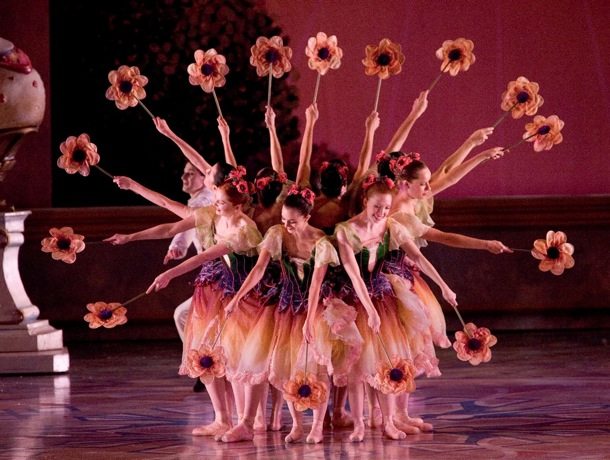
Vivaldi – the universally loved ‘Four Seasons’ has bird calls in ‘Spring’, and a swarm of wasps in ‘Summer’.
Johann Strauss II – composed the waltz medley ‘Roses from the South’.
Saint-Saëns – his cello solo ‘The Swan’ from The Carnival of Animals, was created for the ballerina Anna Pavlova. Here performed by Yo-Yo Ma and Kathryn Stott:
Debussy – his famous ‘La Mer’ was created to global acclaim and was recorded by many orchestras. Charles Trenet composed an even more famous piece of music, a song recorded by many top singers, all praising the beauty of the sea.
This version is performed by Chantal Chamberland (courtesy of Gerda Kersseboom);

Joseph Kosma – was the composer behind the very much loved ‘Autumn Leaves’, a haunting, heartrending melody; this was featured in my post “Ode to Autumn.”
Schubert – composed one of the most well-loved songs ‘Die Forelle’. It was performed by many soloists, among them Elizabeth Schwarzkopf. I love this song with a passion because you can just ‘see’ and hear the happy trout splashing in the stream. I also won a book prize for knowing all about this song during a quiz at a school concert. I still have this book with a dedication on the front page.

“Die Forelle” (The Trout) by Schubert (courtesy of Yury Revich):
Delacroix the painter wrote about Chopin‘s music: ‘It mingles with the songs of the nightingales and the scent of roses.’

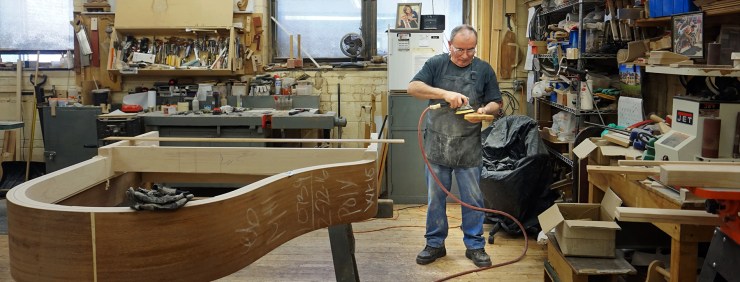
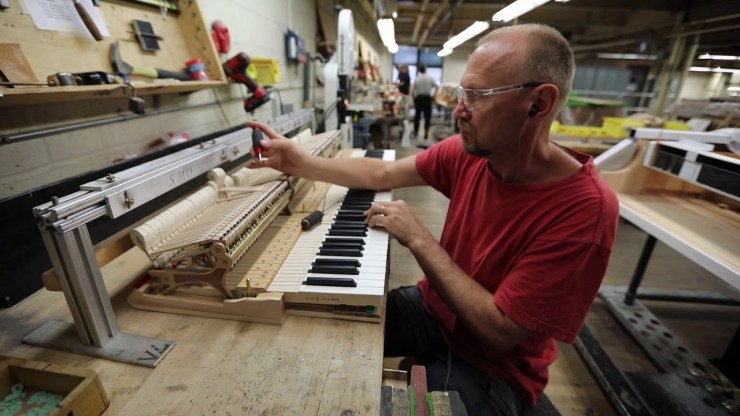
In 1797 in Langelsheim (Germany) a baby boy was born into a poor family. One of twelve children, he was baptised as Heinrich Engelhard Steinweg. During the preparations for the battle at Waterloo, Private Stenweg found a few bits of wood and some wire, and build a lyre and played it to raise the morale of his comrades. Forty years later he emigrated to the United States with his wife and seven of his nine children. After changing his name to Henry E. Steinway, he founded in 1853 a piano-making factory. This was the birth of Steinway, the best piano in the world. I understood why when I watched a tour of the Steinway factory in a fairly recent documentary. The attention to detail of all the craftsmen working there was unprecedented in our time.
The Making of a Steinway (courtesy of Steinway & Sons):
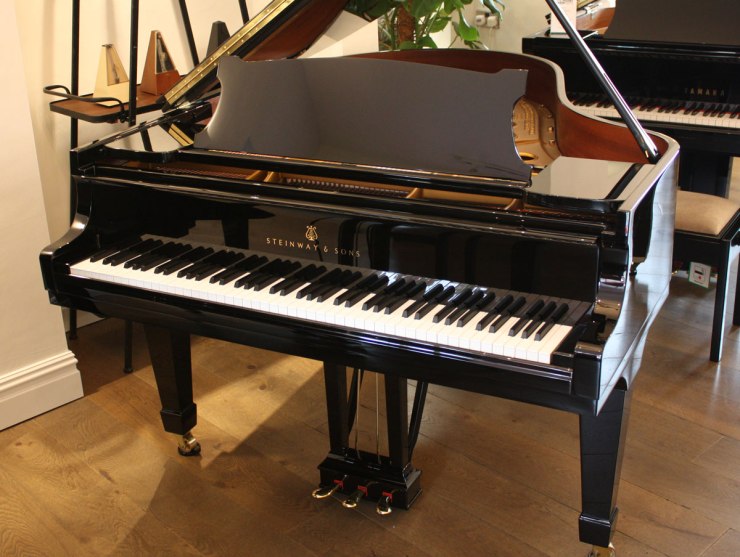
“The Heart Asks Pleasure First / The Promise” (Edit) by Michael Nyman from the film “The Piano” (courtesy of Michael Nyman – Topic):
The emergence of concert halls brought virtuoso piano players to the fore. One of many eccentric players was Henri Herz who before the concert would assure his American audience that he was indeed a virtuoso piano player. He was known for his spectacular settings at the concert halls. In one he stated that there were 1000 candles illuminating the concert hall. One man instead of listening to the music counted all the candles and on finding that there were ‘only’ 992, got up and loudly demanded his money back. This made Herz even more popular among the public.
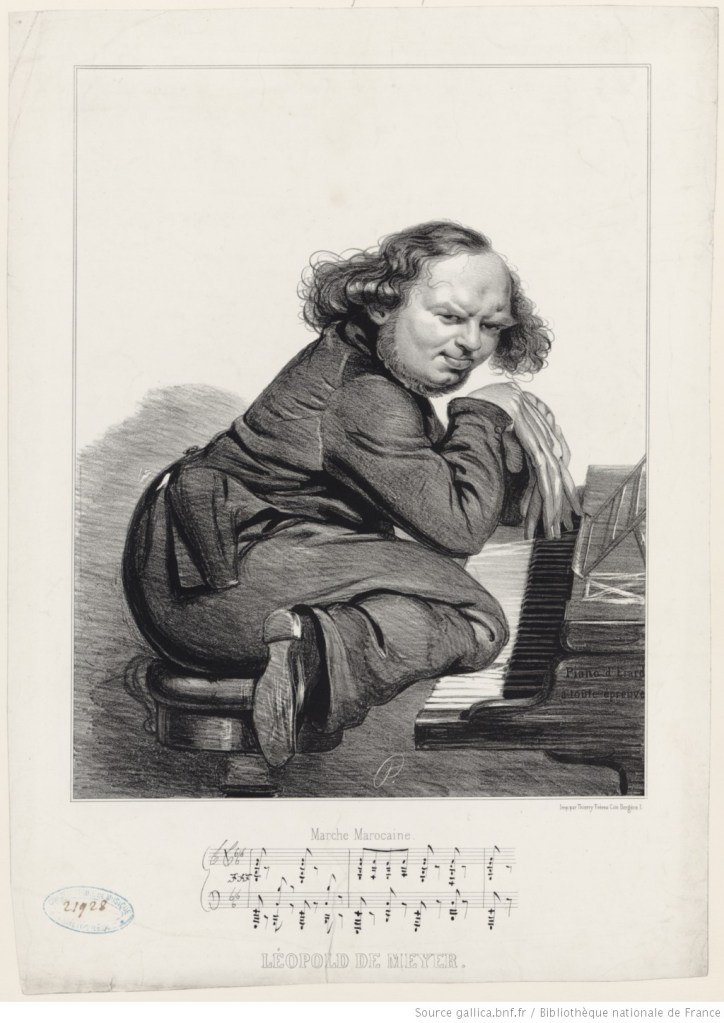
Soon America started sending their own virtuoso piano players to Europe. One of them was Léopold de Meyer, who while talented had somewhat odd habits. Before the beginning of his concert, he would sit among the public. When the moment came when he should be already sitting at the piano, he would run forward among the chairs, and then with a huge jump would land on the podium. After taking his morning coat off, and inviting the audience to do the same, he would light a cigar and then proceed to play. When he finished his program, he would continue to impress the audience by doing imitations on the piano of bell ringing, and loud cattle mooing, all this by banging the piano with his fists, elbows and even his nose.
Interesting was the career of the famous pianist Liszt. He was worshipped to the point that after a concert the horses of his carriage were taken away so the crowd could pull ‘chosen by the gods’ to the hotel. This was interrupted on the way by hysterical women who tried to pull out at least a few hairs from his head; while some were fainting, others would race home to write Liszt letters professing their undying love and a desire to throw themselves under his feet in supplication.
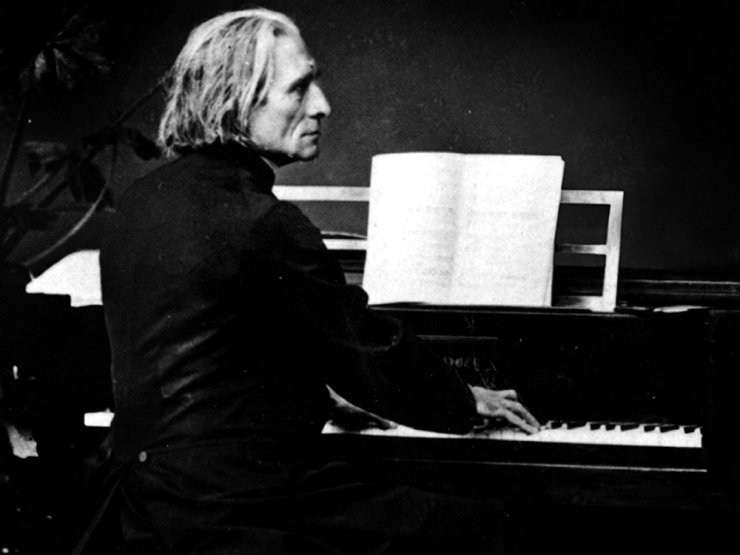
A mini-biography of Liszt (courtesy of Biography):
Liebestraum No. 3 by Liszt, performed by Lang Lang on Steinway & Sons Spirio:
Liszt’s main rival Thalberg made so much money that he retired earlier and bought land and a mansion in Italy and for the next 15 years grew vineyards for wine. His mansion was stuffed with exquisite carpets, priceless objects of art, and the best furniture. The only piece of furniture missing was a piano.
“Piano Concerto No. 2 in C minor II. Adagio sostenuto” by Sergei Rachmaninov, performed by Vladimir Ashkenazy and Concertgebouw (courtesy of DNfather):
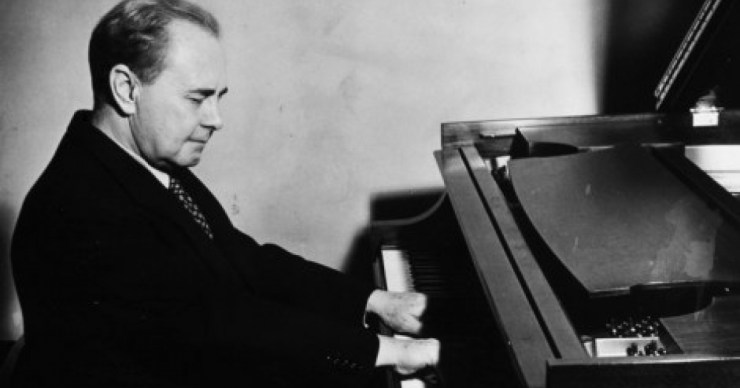
When Rachmaninov was asked who is the best pianist in the world, he replied: ‘ There is Josef Hofmann’. Who? You may well ask. The pianist Josef Hofmann (1876 – 1957) was born near Krakow in Poland. His father was a composer, conductor, and professor of piano at a Conservatory. It is not surprising that young Josef learned to play the piano at three years old. At eight he was playing to spellbound audiences. As a young man, he was not only a virtuoso piano player but a composer and a prolific inventor. He was referred to as ‘twice the Genius’, and had over 70 patents. They included the invention of windscreen wipers, based on the pendulous movement of the metronome. The Ford car company began mass production of windscreen wipers. Among his other numerous patents, there are pneumatic shock absorbers for cars and aeroplanes, proto-GPS and a solution decreasing the resistive drag of piano keys, still used in Steinway pianos. It was his idea for the well-known spiral-shaped heater for boiling water, an electric clock, and even the motorboat. He spent most of his life in America and is regarded as a Polish American pianist.
I am running out of space and have to stop now but with one last thought – isn’t life in all its glory and diversity – unmissable and beautiful?
Beautiful nature around the world (courtesy of Annemieke van Leeuwen):
The beauty of planet Earth (courtesy of legolasdk):

Courtesy of Silgor:

 naturetails
Incredible post on connection of music human and nature.The music in the videos connects instantly, also the detailed post gives an idea of its importance with human evolution from drum beats to bird songs,piano and instrumental soothing music.Thanks for sharing.
LikeLiked by 2 people
Dearest Joanna, your post fascinated me so much that I don’t have enough words to express my appreciation … and also my amazement for the incredible connections between music and nature.
I confess that I haven’t watched ALL the videos, but I will come back to enjoy them in a more peaceful moment
LikeLiked by 2 people
Thank you so much, Prafulla, for your wonderfully insightful comments! Music is the most important part of human life from time memoriam. Thank you again, Prafulla, your thoughts are greatly appreciated!
Joanna
LikeLiked by 1 person
Your always welcome dear
LikeLike
Thank you, dearest Luisa, for your wonderful comments! Of course, you need time to watch everything! Take your time!
Joanna x
LikeLiked by 2 people
Thank you!
Joanna
LikeLiked by 1 person
A patron of Schubert’s liked “Die Forelle” well enough that he commissioned Schubert to write a chamber piece now known as the Trout Quintet. One of its movements incorporates variations of the song. The relevant Wikipedia article notes that “The piano quintet was composed in 1819, when [Schubert] was 22 years old; it was not published, however, until 1829, a year after his death.” Of all the famous classical composers, Schubert died the youngest.
LikeLiked by 2 people
Thank you, Joanna! 💚🍀
LikeLiked by 1 person
The words that you found identified as a Chinese proverb actually seem to be a slight variant of what Joan Walsh Anglund, an American creator of books for children, first wrote in 1967. A Quote Investigator article gives the history.
LikeLiked by 1 person
Thank you, Steve, for adding interesting points to my post!
Your erudition is greatly appreciated!
Joanna
LikeLike
Your stories, videos, and details are wonderful, informative, and almost overwhelming in their rich and luscious details, Joanna. You have a real flair for pulling art, music, history, and nature together in such a delicious broth of delight.
LikeLiked by 1 person
Thank you so much, dear Pat, for such wonderfully generous comments! You made my day! Thank you! Your kind words are deeply appreciated!
Joanna xx
LikeLiked by 1 person
You are very welcome and the words are well deserved.
LikeLike
Thank you, dear Pat, for your kindness, and lifting my spirits!
Joanna xx
LikeLiked by 1 person
Love your integration of music and creativity, applied with interesting points of educational inserts my dear Joanna. 😊🙏🏼🥰 This is a great follow-up to your previous post. So lovely! 💖
LikeLiked by 1 person
It’s taken me ages to get through this one Joanna. So much information and so much wonderful music to listen to and all put together in your inimitable way. The making of a Steinway piano really captured my imagination. Unfortunately, we were never in a position to buy one of those but I would have loved to have had the opportunity to have played one.
The connection between nature and music can be a very profound one and you’ve captured that connection perfectly by showing us how these great composers were influenced by the world around them. This has to be the best medicine for anyone who is suffering from any form of mental illness or anxiety – and it costs next to nothing.
Thanks for reposting this one as I never saw it first time around. Great stuff again Joanna.
LikeLiked by 1 person
Thank you so much, Malc, for your wonderful comments! We know that nature heals not only people affected with any mental problems but in all circumstances, and on the day-to-day connection, makes us feel better and happy. Thank you again, Malc, for your time and kind words, all greatly appreciated!
Joanna
LikeLiked by 1 person
You’re more than welcome Joanna.
LikeLike
Thank you!
LikeLiked by 1 person
Joanna ,your Vidio with a beautiful chirping bird & the deeply soothing audios certainly possess great therapeutic touch !I enjoyed a lot & think we should recommend these melodies to cetain medical wards where patiets are battling severe pain !Thanks for sharing.Namastey
LikeLiked by 1 person
Thank you, Dhirendra, for your beautiful comments! Yes, nature has healing power, and indeed should be used in many places. Thank you again, Dhirendra, for your thoughts, much appreciated!
Namaste!
Joanna
LikeLiked by 1 person
🙏🙏🙏
LikeLike
Thank you so much, dear Joanna!
You are a treasure and I appreciate your kind words❣️💐🤗
LikeLike
Thank you, dear Luisa!
Joanna xx
LikeLiked by 1 person
🌹🙏🌹
LikeLike
I love this post Joanna. Music and nature belong together whether the music is from nature or man. Walking in the forest, it is hard not to be inspired by birdsong, wind and rustling leaves. Thanks for all the wonderful sound and video choices. Happy Friday. Allan
LikeLiked by 1 person
Thank you, Allan, for your beautiful comments! I wholly agree that nature and music belong together! Even a murmuring brook creates music!
Thank you for your time and thoughts, Allan, much appreciated!
Joanna
Thank you for your time and thoughts, A;
LikeLiked by 2 people
I’m delighted, Joanna, that you chose to write today about the profound connection between nature, music, and humans and even birds and animals. Nature, with its rhythmic waves, rustling leaves, and birdsong, offers the raw materials for music, reflecting a deep sense of harmony and balance. Humans have always found inspiration in these natural sounds.
You have talked of nomadic tribes’ dancing and Egyptian instruments. Wealso Ragas which have their roots in ancient Indian music and spiritual traditions. Every raga has a mood and time to play. I wonder whether there can be any human life without music. Everybody has a song, but what’s needed is a melodious tone and an appropriate raga.
Some dairy cows tend to produce more milk when stimulated by the sounds of certain types of music, according to research. While I may not be as great as Beethoven, it’s interesting that many of my ideas also come to me during my morning walks.
The story of Orpheus and Eurydice is truly moving. The stories of Henry Steinway, Henry Herz, and Josef Hoffman are astonishing to learn about as well. In addition to beautiful images and quotes, you’ve included 25 videos in this post, making it truly a musical experience. Thank you very much, Joanna, for your time and effort in publishing this post.
LikeLiked by 2 people
Thank you, Kaushal, for your wonderful comments! Nature inspires all of us, and I know that seeing a baby ladybird sleeping among the rose petals first thing in the morning makes me happy for a whole day! Thank you for pointing out the connections with Indian music as I love to learn more. I wrote about the connection with the music of my guru, Swamiji, and saw all the instruments used at the time. Thank you again, Kaushal, for your time, and your kindness, all much appreciated!
Joanna
LikeLiked by 2 people
It’s truly my pleasure to read your post. You are welcome!
LikeLike
Beautiful nature and moving music, what’s not to love! Thanks, Joanna. 😊
LikeLiked by 1 person
Thank you, Michele, for your beautiful comments! It seems many readers love nature and music!
Thank you again, Michele, for your time and kind words, all much appreciated!
Joanna
LikeLiked by 1 person
You’re welcome and thank you for another rich share. 💛
LikeLike
Joanna…how many hours did you put into this wonderful assembly of music, videos and interesting information?! I shall have to return and go through it again a little at a time. Indeed, I agree that so much of music is inspired by Nature. We seem to enjoy many of the same composers and performers. Beethoven’s Pastoral has long been one of my most cherished pieces but there are so much wonderful music and we live in an age where we can call it up as we wish which may be the greatest gift of modern technology. Those last 3 videos of our beautiful planet are another treat. Thank you once again, Joanna!
LikeLiked by 2 people
What a lovely post connecting music and nature, Joanna. Two elements of life we can’t live without. Thank you! 🩷🎶
LikeLiked by 1 person
Thank you, Lauren, for your wonderful comments! Your kind words are greatly appreciated!
Joanna x
LikeLiked by 1 person
Always my pleasure, Joanna. xo
LikeLike
Loved this post, Joanna. You’re a genius for connecting the dots between nature, music, and humans. I especially enjoyed learning about lesser-known figures like Josef and Henri.
You’re so right, life is pretty amazing and we shouldn’t miss out on its beauty.
LikeLiked by 1 person
Thank you, Ritish, for your wonderfully insightful comments! I wholly agree with you, we are here to wonder at nature’s beauty, and to make the world a better place for future generations. Thank you again, Ritish, for your thoughts and time. They are greatly appreciated!
Joanna
LikeLike
Music is amazing at transforming our thoughts, and our moods. A wonderful post with so many great videos. Thank you for brightening our day, Joanna.
LikeLiked by 1 person
Thank you so much, Monica, for making my day with your wonderful comments and reading many posts It is greatly appreciated!
Joanna x
LikeLiked by 1 person
Amazing, Joanna! Thank you for this magical musical tour! 🎶💌💐💓🤗🙋♂️
LikeLiked by 1 person
Thank you, Ashley, for your beautiful comments! I realized that many readers love music, and I obliged. I am glad you liked it!
Joanna x
LikeLiked by 1 person
Of course. I’m not logging in as much, just need a break. Then we have to decide, how far back to we look at everyone’s post as the point of not logging on was to free the brain a little bit, you know. At any rate, I did see yours and I enjoyed them. If I don’t respond, it’s because I am working, taking a break, working on my books, etc. Only so many hours in the day. 💕
LikeLike
What gorgeous photos and music along with the beauty of nature that connects us all, Joanna. Wonderful post as always. 💗💗💓
LikeLiked by 1 person
You may be interested in this book that just came out.
LikeLike
Thank you, Steve!
Joanna
LikeLike