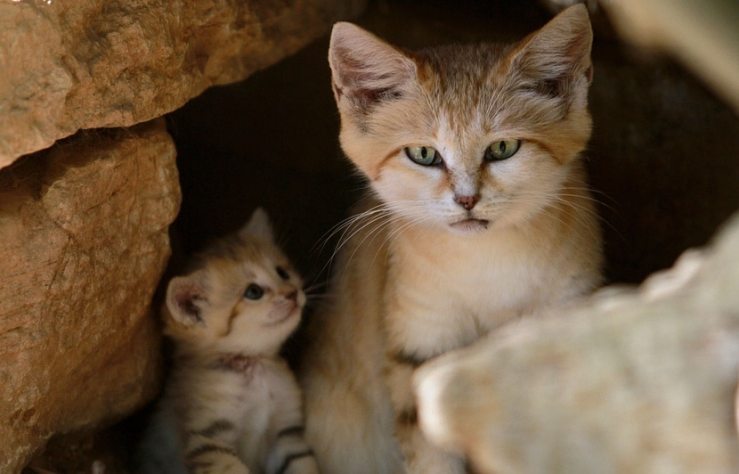
Above is shown the Sand Cat.
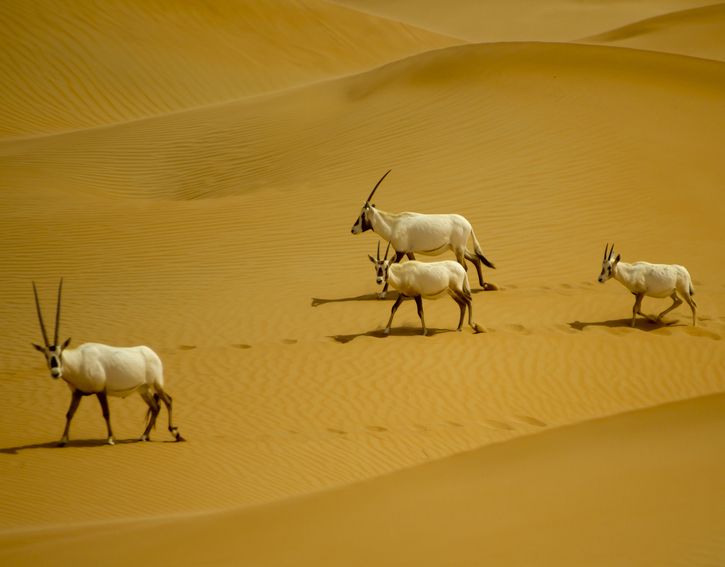
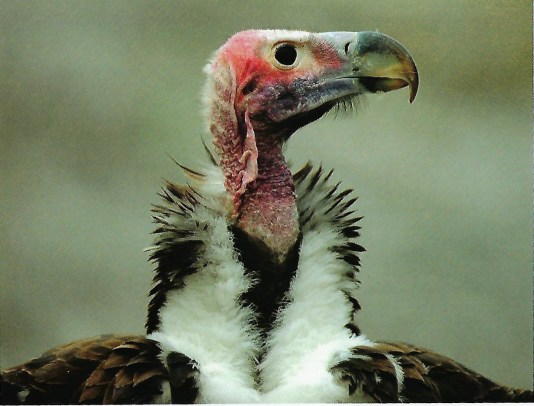
Above are shown the mystical White Oryx. Below is shown the Lappet-Faced Vulture.
The White Oryx of Arabia’s Empty Quarter

Courtesy of George Steinmetz:
The White Oryx has always enjoyed a special, almost magical status. Well adapted to the harshest of environments, it can go without water for weeks, and with the ability to disappear into the desert at will, this white antelope was always revered by Bedouin for its resourcefulness, physical strength, and virility. The White Oryx traditionally played an important part in Bedouin folklore. The first Europeans to explore Arabia saw in the white oryx a vision of the unicorn, a mythical animal with a horn. In recent times the oryx has become a conservation icon, rescued from the brink of extinction and symbolic of man’s efforts to help save his environment.

The Arabian Oryx lives in small herds of a mature male and a few females with their young. Sub-adult males are usually solitary but occasionally join with others to form a bachelor herd. The Oryx’s white coat reflects sun rays, helping to keep it cool in summer. During the colder winter weather, the white hairs stand on end, exposing the black skin below, which then absorbs warmth from the sun. Splayed hooves allow the Oryx to walk easily over soft sand and serve as shovels for digging hollows in the sand in which to shelter from sandstorms. They have few natural predators, with only the Wolf a threat but only to young or sickly animals. An adult Oryx can inflict serious injuries with its horns should it get caught.
Courtesy of RONXDRONE:

Much of Oman is extremely arid, but the southern fringe has an annual monsoon called the Khareef. For a few weeks, the landscape is transformed by fresh vegetation. The boundary between the rejuvenated by rainfall, green zone, and the desert beyond can be seen clearly. The rain fills with water any shallow holes in the ground and is greeted with appreciation by wildlife. Travellers have recorded seeing crowds of birds appearing seemingly from nowhere to drink in the temporary pools.
Courtesy of Oman Observer:
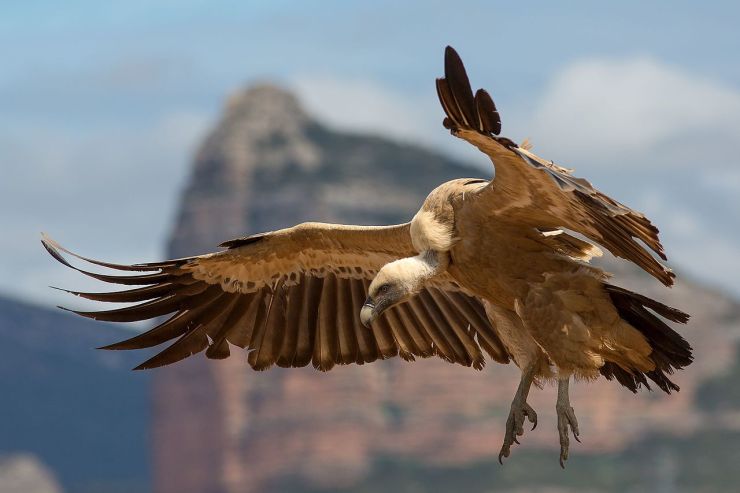
Below an eagle

Courtesy of Lucie Debelkova Photography:
Birdlife in the Empty Quarter includes several species of lark, eagles, and vultures. The Houbara Bustard was once widespread here but is now rare. Historically, the local Bedouin lived around the edge of the desert and only ventured deeper in winter after the periodic rain produced new, green pastures on which they could graze their camels. The first expedition to the area by Europeans was in the 1930s when Bertram Thomas and Harry Philby made their journey across what was then one of the world’s last great unexplored wildernesses. They both recorded that the wildlife they saw was surprisingly diverse in birds, mammals, and invertebrates. Their main interest was, however, the elusive oryx.
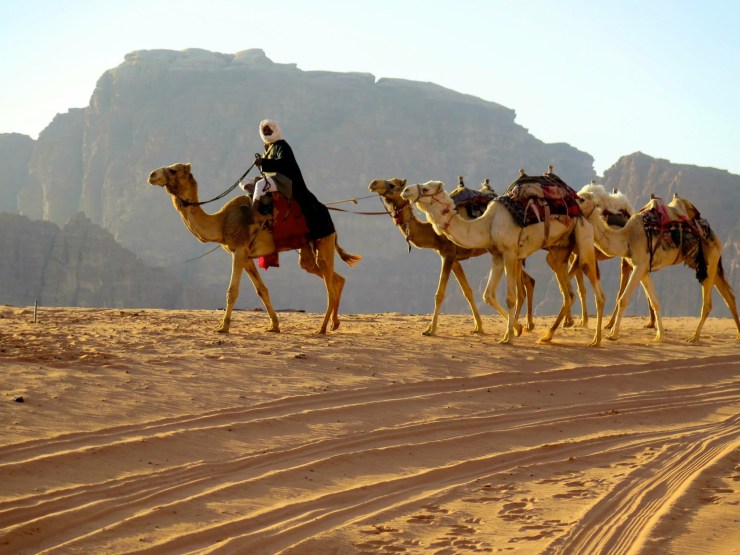
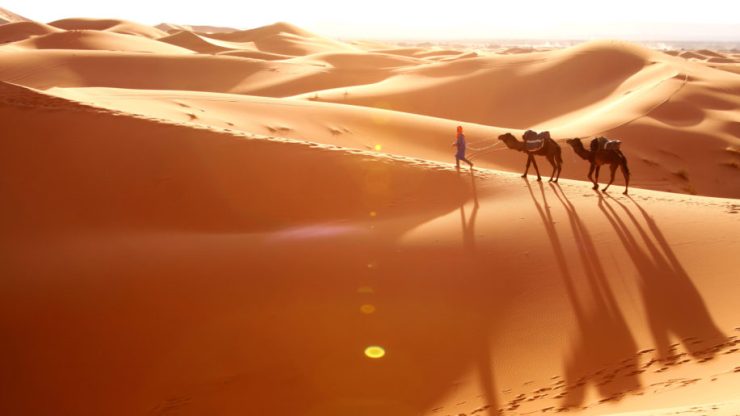
Arabian Oryx are highly mobile, moving endlessly across the desert in search of vegetation. They can cover 20 kilometres in one night and are capable of detecting rainfall at a range of several kilometres. Although they prefer to eat grasses, they will graze on a variety of vegetation, and even dig up tubers and roots. The harshness of the conditions is probably the reason for their smaller, than other oryx species, stature, as they are only a metre or so high at the shoulder. The size of the herd also depends on the amount of food available, from 20 to 30 when there is plenty, and only five in bad times.

The fortunes of the desert’s wildlife took a downturn in the early years of the twentieth century which brought motorised transport and modern firearms. Bedouin always killed gazelle, oryx and ostrich for food and hides. As they hunted on foot and used bows and arrows, the numbers of killed animals were small. With the arrival of firearms, it was possible to kill a large number of animals very quickly, and killing for ‘sport’ took root. Meanwhile, vehicles were now able to cover the distance in a few hours which used to take days. The remote parts of the desert became open to human interference and the population of larger mammals went into freefall.
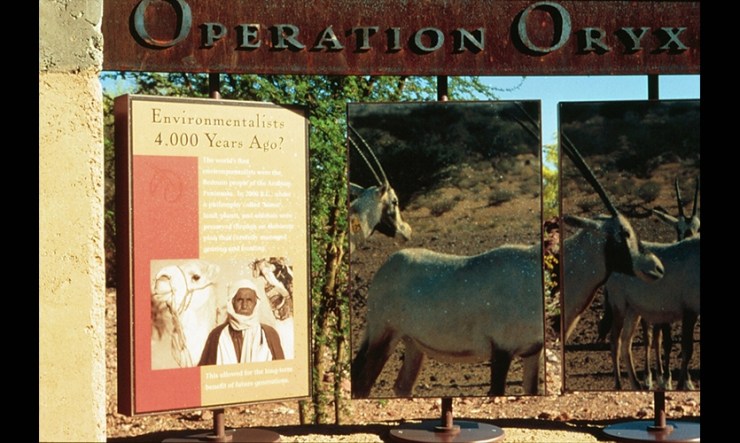

By the 1960s the numbers of oryx, in particular, were critically low, verging on extinction. At this time a captive population had been established at Phoenix Zoo in the USA under the programme ‘Operation Oryx’. It proved to be highly successful, and it is safeguarding the future of the species, at least in a captive situation. I find ironic that after a long-running campaign to close zoos, now they are the only safe place for the oryx. There are hopes that once the appropriate conditions and better security are established, it will be possible to introduce the species to the wild. The location considered is a remote plateau in the heart of Oman and close to the Empty Quarter. It has extensive gravel plains, and the landscape is notable for the heavy mists that cover the sparse vegetation. These are good conditions for oryx, which loves grazing on wet foliage.
The other animals of the desert include Ruppell’s Sand Fox. It is a nocturnal creature that spends daylight in an underground shelter-den. Small but resilient, Sand Fox is common across Arabia and North Africa.

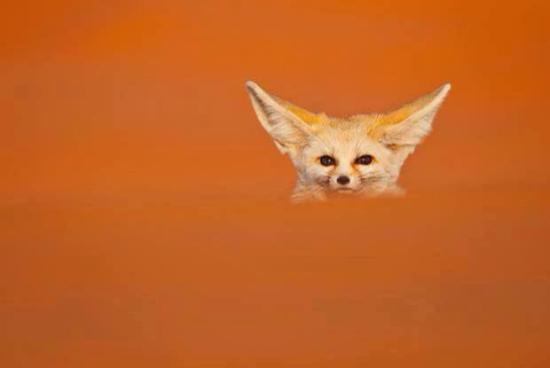
The largest of the lark species found in the Omani desert is the Hoopoe Lark that is distinguished by its long bill. Like many desert birds, it will often run away from danger rather than taking to the air.

The future of wildlife, particularly in Oman, is uncertain as lucrative commodities lie beneath the sand and rock. The discovery of oil and valuable natural resources has transformed Gulf states in many ways. The region’s deserts are no longer remote and undisturbed and are increasingly affected by development and new infrastructure. After the exploration of hydrocarbons was carried out on a large scale, UNESCO took the decision in 2007 to remove its World Heritage Site status – the first time anywhere in the world that this had been done. Prospecting for oil, in particular, has already opened up many desert areas in the Middle East and elsewhere to other forms of exploration, and wildlife has generally been a loser in such situations. However, there is some hope as the reintroduced herds of Arabian Oryx are now thriving in Israel, Saudi Arabia, and the United Arab Emirates. In the future focus has to be on maintaining the long-term security and wellbeing of those animals that are returned to the wild.
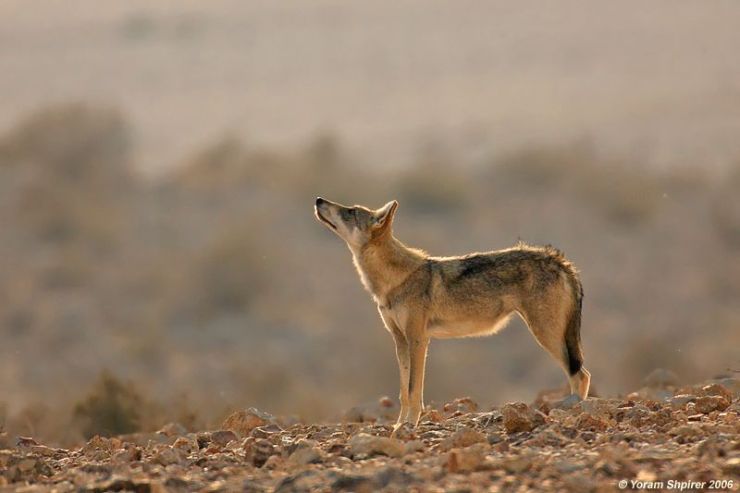
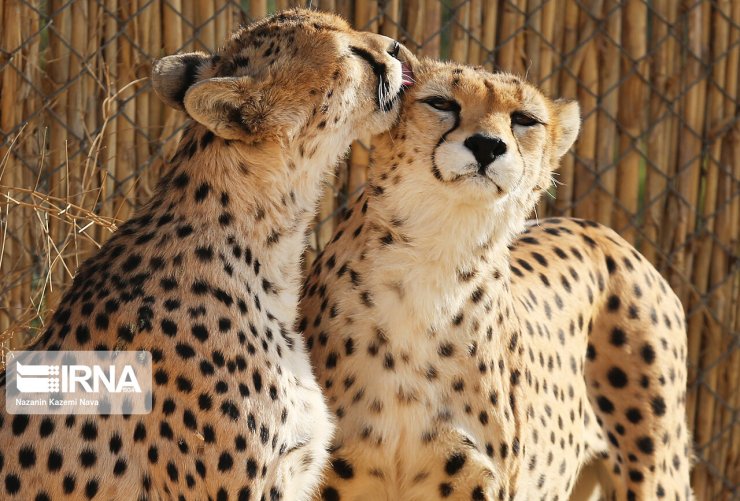
Below – all the animals in the danger of being extinct.


 naturetails
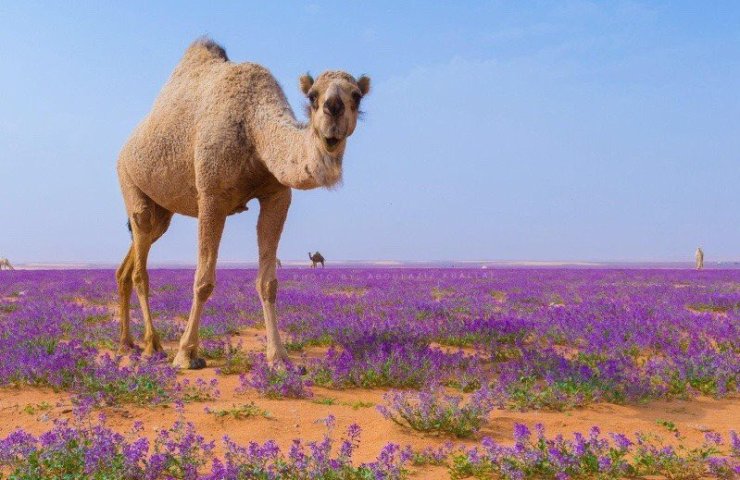
The picture of the camel amid the lavender flowers is a juxtaposition few of us would have expected.
LikeLiked by 2 people
Thank you, Steve, for your interesting reflexions! There are so many images of the desert that are surprising and wonderfully interesting, I can only wish to have a few more lifetimes to see it all…
Joanna
LikeLike
Such beautiful and exotic animals should be preserved at all costs. Thanks for sharing
LikeLike
Beautiful White Oryx!
LikeLike
Thank you, Sadje for your wise comment! I couldn’t agree more with you!
Your thoughts are greatly appreciated!
Joanna
LikeLiked by 1 person
Yes, they are wonderful! Thank you for reading!
Joanna
LikeLiked by 1 person
It’s a pleasure. Thank you
LikeLike
George Steinmetz’s video is wonderful. What a unique way to capture such remote sights. It must be a little daunting to fly over such a vast desert so unprotected but presumably there was a helicopter following at a distance. As always you have found some gorgeous images and films. It is, as you say, ironic that zoos are now the only means of preserving many species. I hope they can all be saved. The 2007 decision by UNESCO is depressing. It makes one wonder if anywhere is safe. I have never been able to understand the appeal of “killing for sport”. There is no challenge in hunting with a gun, so the only thing it proves, as far as I can see is that the hunter is morally deficient. I have rather strong views! Thank you for all the lovely pictures!
LikeLiked by 1 person
I’m not sure why but the images here of the White Oryx blow me away. What a beautiful animal. Magical, mysterious! 💌🤗💓🙋♂️
LikeLike
Thank you, Carolyn, for you wonderful comments! My views are even stronger, but
it might offend some of my readers.
There is a powerful movement of people dedicated to conservation of wildlife on our planet, and I live in hope that they will succeed .
Thank you again, Carolyn, your thoughts are deeply appreciated!
Joanna x
LikeLike
Thank you, Ashley, but you are not alone! There are some creatures inspiring such
Extraordinary feelings! I feel the same…
Joanna
LikeLiked by 1 person
💕🌺
LikeLike
xxx!
LikeLiked by 1 person
Once again I was fascinated by your wonderful post and beautiful images.
What can I say, dear Joanna? I thank you wholeheartedly for sharing the result of your valuable research with us
LikeLike
Magnificent creatures in a rough terrain.
LikeLike
Thank you, dear Luisa, for your wonderful comments! With readers like you, writing my posts is a pleasure!
Joanna
LikeLiked by 1 person
When I worked at the airport in Seattle, we dealt with a lot of people (men almost exclusively) who travelled with “sporting” rifles. It was hard for me to be civil with them.
LikeLike
Thank you, GP, for your kind comment! It is always difficult to believe how resilient the wildlife creatures are, when finding the facts about them.
Joanna
LikeLiked by 1 person
I don’t know how you copped, Carolyn!
Yet, there is almost universal condemnation for those psychopaths !
Joanna x
LikeLike
Oh my goodness Joanna, I am simply in awe of the elusive oryx and those other adorable wildlife creatures you featured found in Oman. In all of my fascination I am saddened by all of those animals in danger of becoming extinct. 😥 Thank so much for another well-documented report of environmental awareness found in the deserts and sandstones around the world Joanna! 🥰🌎💖
LikeLike
Another excellent segment. Love the animals, particularly the sand cat and the oryx. Well done, Joanna.
LikeLike
Stunning photos and it was interesting learning about folklore from the region.
Thank you very much, Joanna.
LikeLike
Thank you, Michele, for your lovely comments! All greatly appreciated!
Joanna
LikeLiked by 1 person
Thank you so much, Kym, for your wonderful comments! As there are so many people devoted to saving the wildlife, I do hope that they all be successful.
Thank you again Kym, your thoughts are greatly appreciated!
Joanna x
LikeLiked by 1 person
Thank you, Pat, for your lovely comments! I think the oryx got everyone attention and sympathy, and there is something unwordly about this beautiful creature…
Thank you again, Pat, and your kind words are deeply appreciated!
Joanna
LikeLiked by 1 person
My pleasure to read about such a fascinating place and inhabitants.
LikeLike
Thank you, Pat, you are very kind!
Joanna x
LikeLiked by 1 person
💞😇👍
LikeLike
As ever, you are most welcome, dear Joanna! 💖
LikeLike
Another wonderful, informative, post Joanna. Thank you so much.
LikeLike
Joanna,
Your inclusion of the many adaptations of wildlife to hot, arid deserts was most informative. Small stature, reflective white color hairs that become erect exposing darker skin when the temperature cools, running rather than flying to conserve energy, etc.
I also admired the camel standing in a field of lavender colored flowers. I questioned how Steve Schwartzman knew they were lavender (rather than lavender colored), although the stalk structure is typical. A bit of sleuthing reveals that lavender is heat and drought tolerant and several subspecies thrive in desert. My hat’s off to him for making that connection. Stewart
LikeLike
Dear Joanna, thank you for one more fascinating post on desert wildlife of the Middle East. The birdlife in the Arabian Peninsula’s Empty Quarter is remarkable, thriving in an area largely untouched by human presence due to extreme heat and limited water.
I found the insights into the oryx particularly intriguing, from its unique ability to detect rainfall to its successful rescue from extinction. Amidst those who hunted with firearms, there are also those dedicated to conservation, underscoring the importance of preserving the ecosystem.
It’s awe-inspiring to see how animals here have adapted to endure the challenging climate, a testament to the creator’s design ensuring survival for all. Unfortunately, the impact of oil prospecting has further endangered wildlife. UNESCO’s removal of world heritage site status is certainly a disappointing development. Perhaps, akin to Operation Oryx, there’s a pressing need for Operation Wildlife.
Your shared pictures and videos are truly amazing. The Arabian music in the videos is incredibly soothing. After returning from my recent trip, your post about desert life and its wildlife is a delightful way to reflect on the beauty of these arid landscapes. Thank you, Joanna, for such an outstanding post.
LikeLike
Thank you, dear Kaushal, for the wonderful comments, and your pinpointing the interesting and important issues. You are right that there should be a movement to save ALL wildlife!
I am glad that you are back because you were missed, not only by me, but by all your readers!
Your kind words about my writing are deeply appreciated!
I too, Kaushal, have overwhelming feeling of wonder when writing about the deserts, and this is where I find the inspiration and passion to write more…
Joanna
LikeLiked by 1 person
Thank you, Peter, for your kind comments! Greatly appreciated!
Joanna
LikeLiked by 1 person
I can’t thank you enough, Joanna, for your kind words. You’re an inspiration for others. Always welcome!
LikeLike
Oh my dear Joanna, I wish the same thing too. You are so very welcome and thank you so much for your insight my friend. Hugs and cheers! 🥳💖😘
LikeLike
Thank you, Kym, and likewise!
Joanna
LikeLiked by 1 person
My pleasure Joanna! 🥰💖😍🥂😘
LikeLike
Another beautiful post Joanna. The animals here are rugged and fascinating and the region is fascinating with the heat. Of course I love the kitties but all of your pictures are incredible❣️
LikeLike
Thank you, Cindy, for your wonderful comments!
I love writing about nature because the diversity and beauty of animals is astonishing!
Thank you again, Cindy, your thoughts and your time are greatly appreciated!
Joanna x
LikeLike
Mesmerizing as always! 🙂
LikeLike
Thank you, Eva, for your lovely comments, and for liking so many others! All greatly appreciated!
Joanna
LikeLike
Yet again I am enthralled by the fascinating adventure you have organised for us readers on this page. Beautifully resourced and presented. Thank you so much, Joanna. It took me a while, but I was so much looking forward to going through this. Bless you. What an awesome creation and amazing technology to be able to capture and share these images.
LikeLike
Thank you, Dawn, for your wonderful comments, much appreciated!
Joanna x
LikeLiked by 1 person