Wadi Rum of Lawrence of Arabia Fame

The majestic beauty of the red-sandstone scenery of Wadi Rum was immortalised in David Lean’s 1962 film ‘Lawrence of Arabia’, and it would be still recognised by TE Lawrence today. The film is about the Arab Revolt against the Turks during the First World War. The spectacular landscape impressed TE Lawrence to such a degree that he wrote: ‘Deep alleys, fifty feet across, divided the crags, whose plans were smoothed by the weather into huge apses and bays, and enriched with surfaces fretting and fracture, like design…They gave the finishing semblance of Byzantine architecture to this irresistible place; this professional way, greater than imagination.’

Indeed, the epic scale of the vast sandstone buttresses, reaching 1,700 metres at their highest point and towering over the 2-kilometre-wide sandy wadi bed below, is quite overwhelming. The dramatic sculpted rocks, carved by millions of years of wind, sand and water erosion, are spectacular, especially at sunrise and sunset. Many canyons, enfilades and gullies divide the vast rocky bastions, forming a maze of corridors and dead-ends, making this mesmerising landscape a place of romantic notions. Wadi Rum supports diverse and interesting wildlife that include Oryx, Hyrax and Verreaux’s Eagle among many others.
Below is an aerial view of part of Wadi Rum
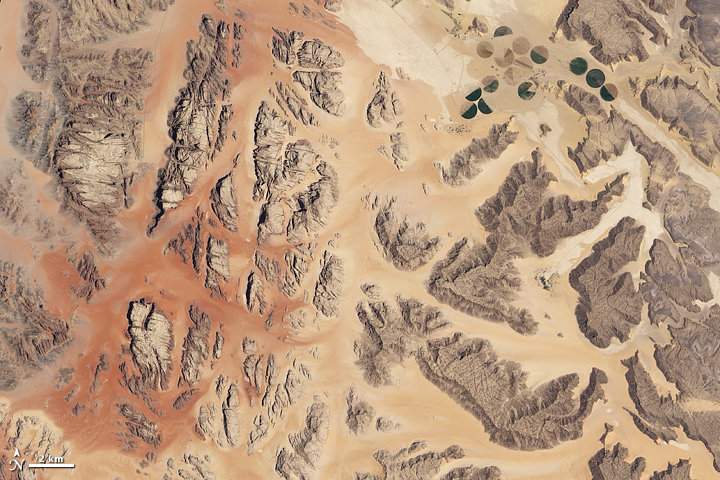
Courtesy of Dong Uk Shin:
Wadi Rum is well known as the Great Rift and is among the world’s most remarkable geological features, and it is the only one that can be seen clearly from the moon. The Great Rift is 40 million years old and is a relative newcomer, geologically speaking. It extends for 6,500 kilometres, from Lebanon south to Mozambique; the Rift then makes its way from the heart of the Middle East down along the Red Sea before suddenly weaving south through the Ethiopian Highlands, Kenya and Tanzania. All the way along there is an epic chain of dramatic features in their own right that includes many lakes, escarpments and open planes. Great Rift is indeed not a single element but a complex series of separate rift systems that are all interconnected and are still evolving as the associated tectonic plates continue to shift, grind and jostle their way about.
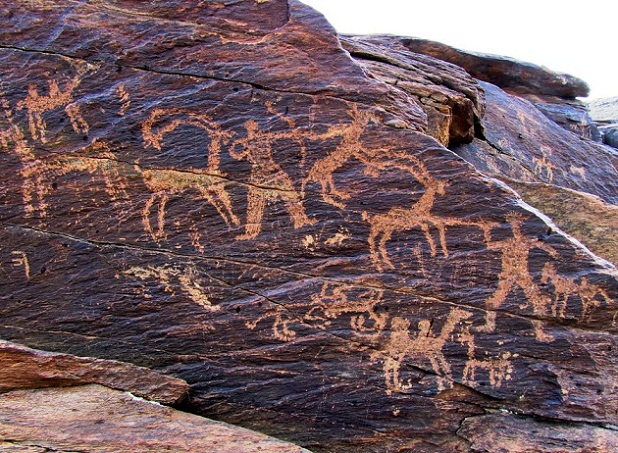
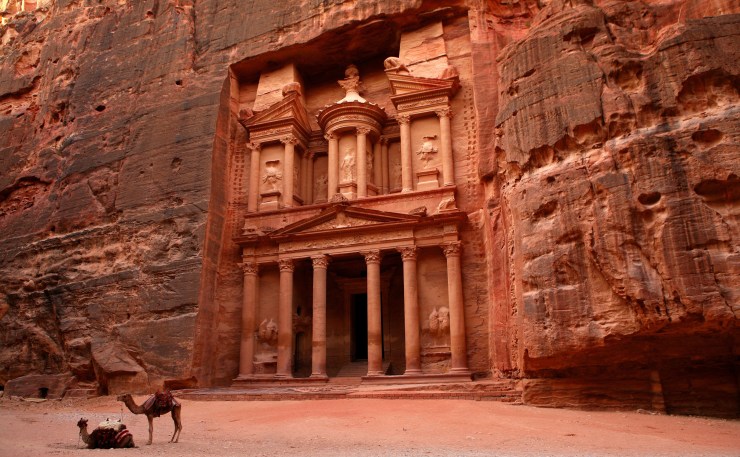
There is evidence of human presence dating back many thousands of years and Wadi Rum was then an important centre for the Nabateans, who as early as the sixth century BC were controlling passage from their capital at Petra, some 100 kilometres to the north. They traded on the traditional overland route for the transportation of precious goods from south Arabia, such as frankincense and myrrh, and strategically the position of Wadi Rum was vital. It was also a significant site for wildlife with cave paintings carved into the rock side showing images of oryx, ibex, and ostrich. In recent years this part of Jordan and the neighbouring parts of Israel have become known as one of the world’s major flyways for migrating birds, with many millions of birds funnelling through this narrow neck of land every spring and autumn.
Below is shown the Sinai Rosefinch.
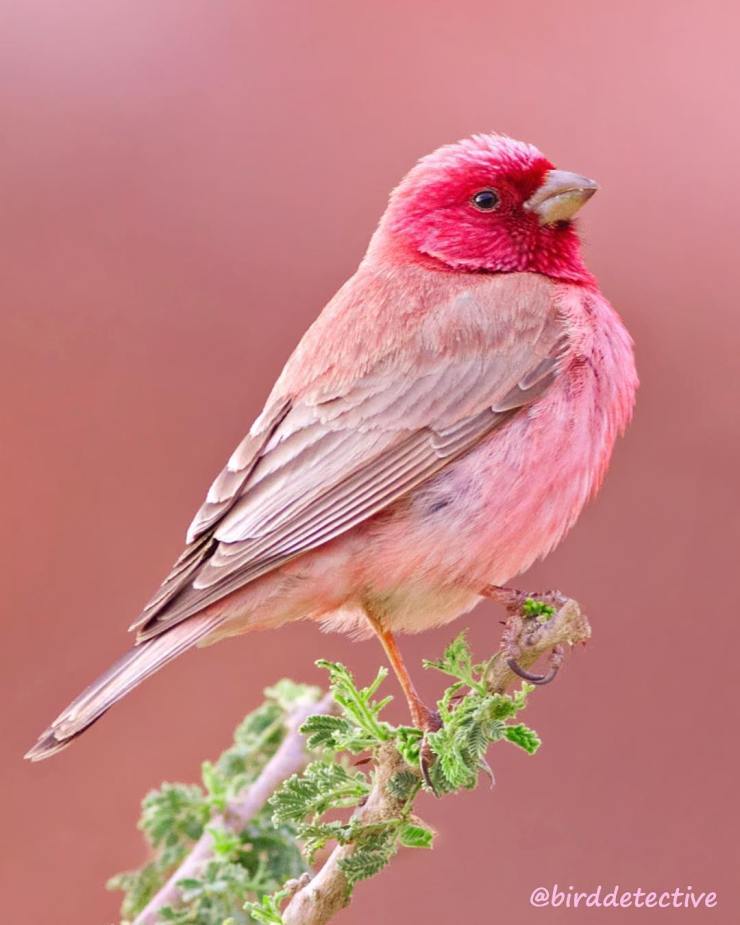
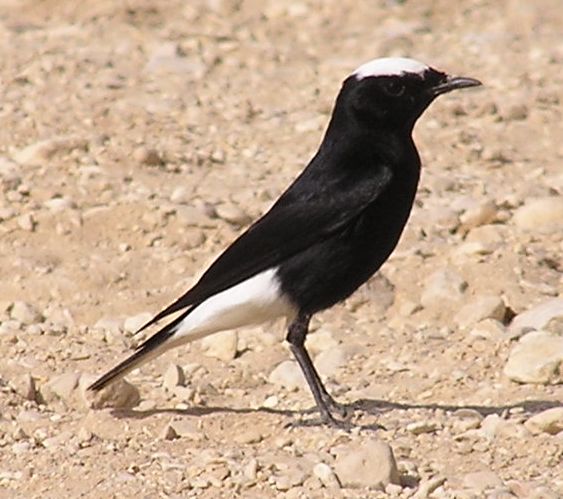
Resident birds at Wadi Rum include many typical desert species. Among those most often seen are the Mourning Wheatear and the White-crowned Black Wheatear, Bar-tailed Desert Lark, and Desert Lark. One of the very colourful birds present here is the Sinai Rosefinch.
Below is shown the White-crowned Black Wheatear.

Above is shown the Bar-tailed Desert Lark.
Wadi Rum has a large population of long-legged Buzzards but its most charismatic bird is Tristram’s Grackle whose sound is the defining sound of the desert. The birds are often seen in Petra when they fly around the magnificent Nabatean ruins.
Courtesy of Birding Visions:
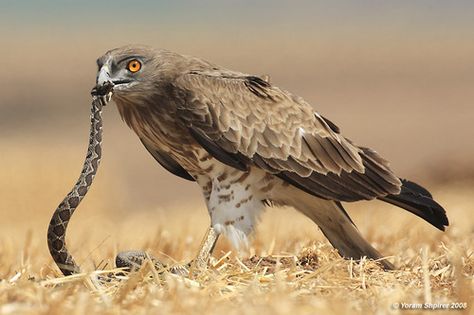
During the migrating season, birds of prey take over Wadi Rum with as many as 1000 birds seen in one day. Three species are predominant – the Honey Buzzard, the Steppe Buzzard and the Steppe Eagle. My very favourite is the Short-toed Eagle because instead of feeding on young migrating birds, it prefers to hover over rocky slopes looking for the food on which it feeds exclusively: snakes that oblivious to the danger are basking in the sun.
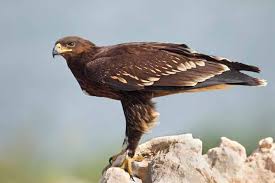
For his heroic work, I think my hero deserves two pictures.
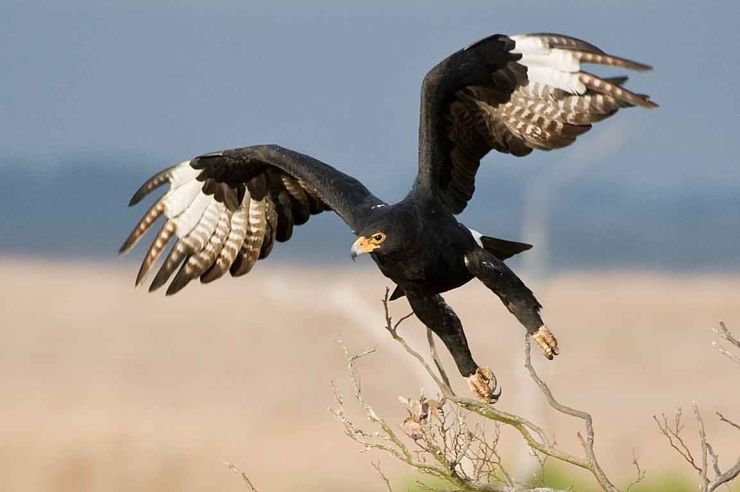
Hyrax are widely distributed in the Wadi Rum but are not easily seen. Best located by their distinctive alarm calls, they live in small groups and spend much of their time sunbathing on rocky ledges. This delights their main predator, the Verreaux’s Eagle, a magnificent looking bird.
Below a family of plump cuties – Hyrax, hiding from Verreaux’s Eagle

One of the hardest birds to see at Wadi Rum is the elusive and enigmatic Hume’s Tawny Owl. Strictly nocturnal it is widely distributed and its numbers are increasing.
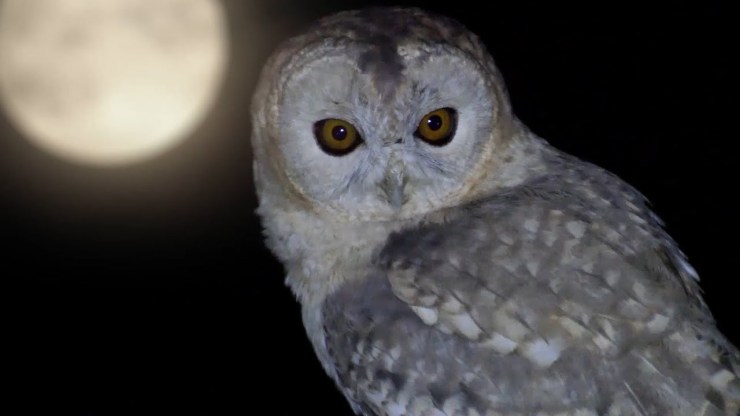
Courtesy of Adel Barham:
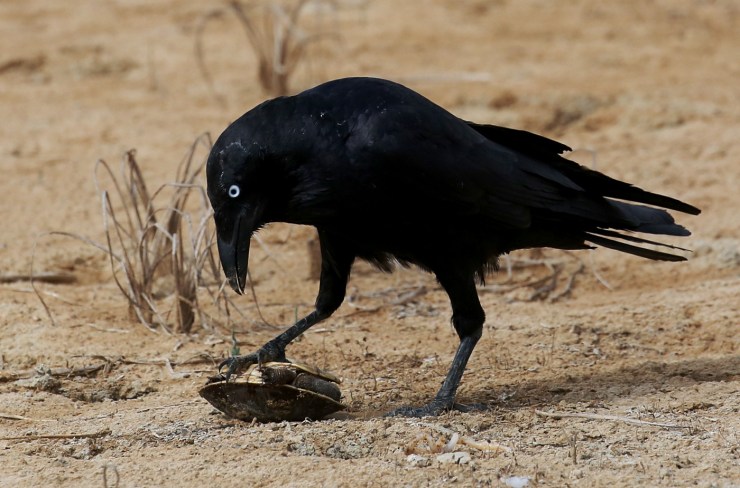
The Brown-necked Raven is a classic Middle Eastern desert bird. It is often seen soaring overhead and calling raucously. He feeds on anything and everything, from berries, small reptiles and invertebrates to sickly lambs and roadkill. He survives as he is not regarded as ‘good meat.’
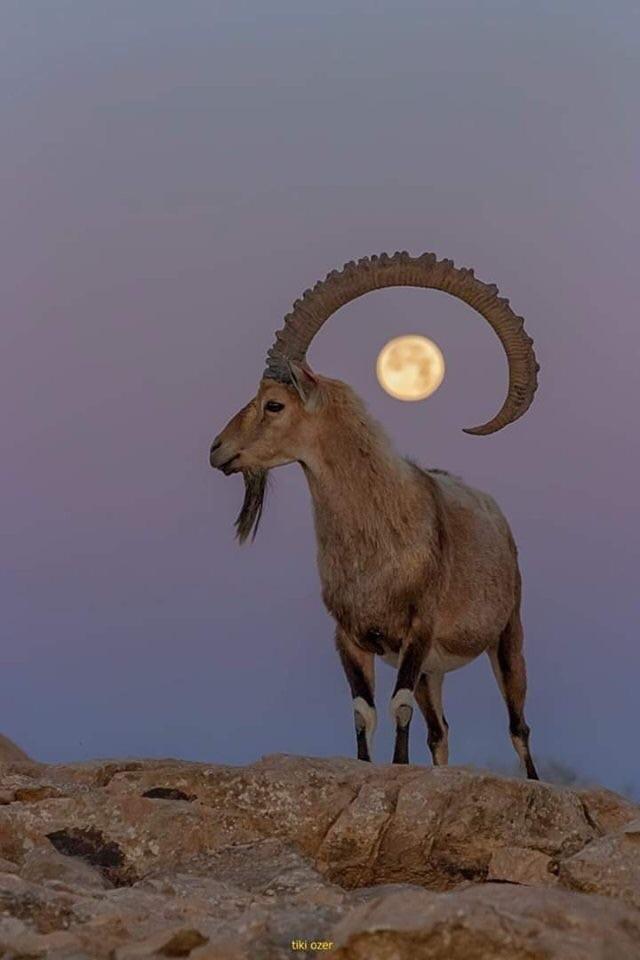
Mammals at Wadi Rum are limited in numbers and diversity. Many of the larger species are extinct or severely depleted due to overhunting. One surviving species lives in an inaccessible to humans location and is the Nubian Ibex. The male has an impressive pair of horns that are used in the annual rut in aggressive tussles between rivals. Ibex live in small groups and rarely leave the rocky slopes that protect them.

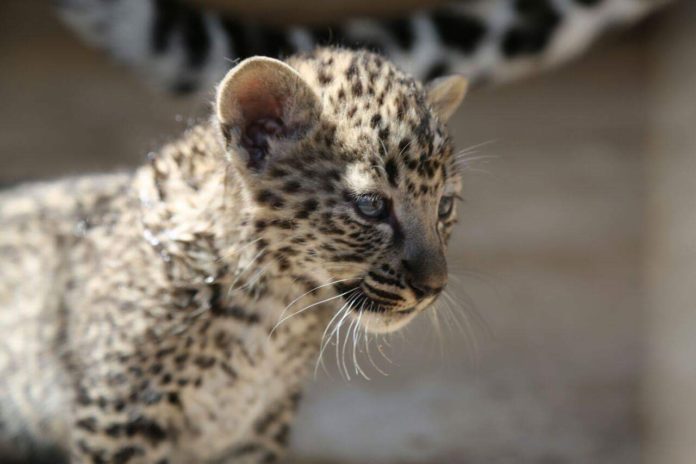
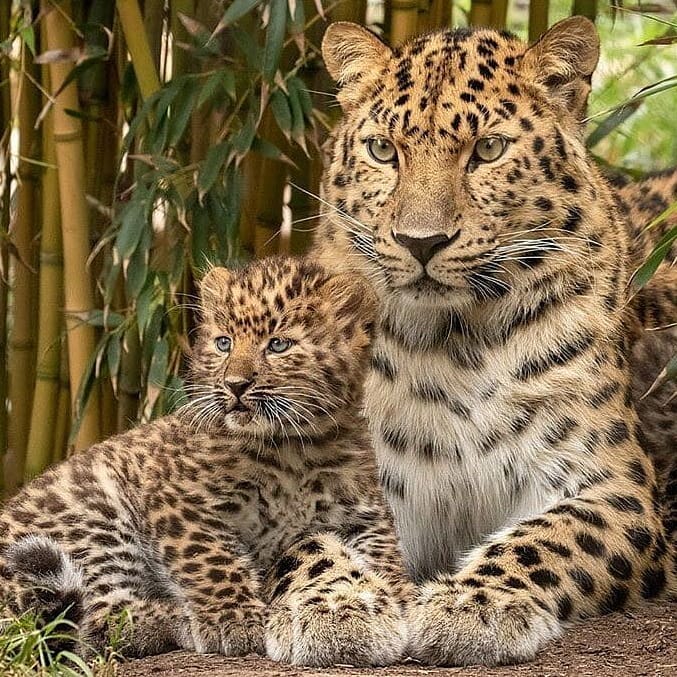
As the population of larger mammals dwindled, it affected the numbers of their natural predators. This was particularly the case with the Arabian Leopard who used to be quite common but is now extinct in Wadi Rum. The local Bedouin, fearful for their sheep and goats being attacked, shot or trapped the leopards who normally would pray on ibex. As the numbers of ibex dramatically declined due to overhunting, the leopard turned to livestock and constant persecution wiped out all of them in Wadi Rum. It is the same situation across the entire Middle East range, and the few remaining in Israel and the Sinai Desert are used for captive breeding to ensure that the Arabian Leopard doesn’t become extinct.
The other main predator in Wadi Rum is the desert wolf, another victim of heavy human persecution. Wolves traditionally have been shot on sight by local people, who also lay traps and poisoned bait for them. The indiscriminate nature of these practices has had an impact on other predators such as the Striped Hyena, Caracal, and Sand Cat. This is the dilemma facing desert wildlife conservation. One of them, the enigmatic caracal, was once plentiful, but now numbers have severely declined. This big cat is solitary and feeds on small mammals and birds. The Caracal is capable of leaping up to 3 metres in the air to catch birds in flight.
Below is shown the Caracal demonstrating his enviable skills.

There is some encouraging evidence that attitudes here are gradually changing. Over 700 square kilometres are now covered by the Wadi Rum Protected Areas designed to save wildlife and offer new opportunities for local people to benefit from the protection of nature, including working as guides and wildlife protection wardens. The area is also developed as sustainable eco-tourism.
The Lost Ibises of Palmyra
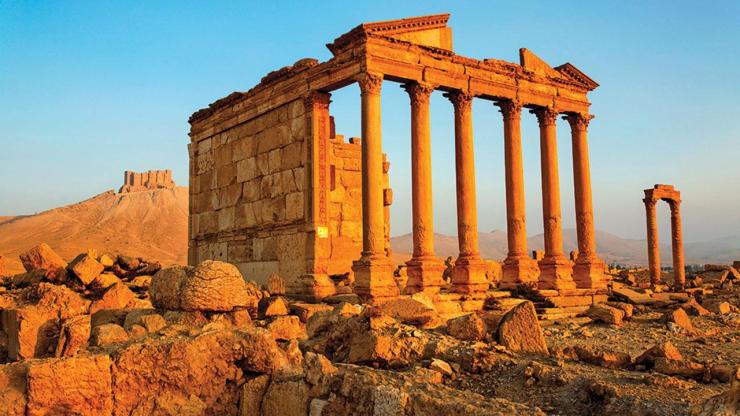
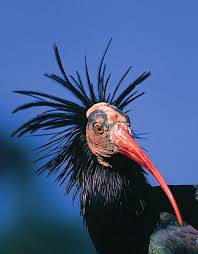
The magnificent ruined city of Palmyra, once ruled over by Queen Zenobia and conquered by the Romans, lies at the heart of the Syrian Desert. Herds of wild ass, gazelle and oryx were once a common sight here but were wiped out by overhunting. It was, therefore, exciting news received some time ago that a relict breeding colony of North Bald Ibis was discovered deep in the heart of the Syrian Desert. This odd-looking bird used to be found in parts of the European Alps and across North Africa and the Middle East, but by the early 1990s, it had declined to the point where fewer than a hundred pairs survived. These were divided between Morocco and Birecik in Turkey. The two groups were regarded as ecologically and morphologically distinct from each other, one of the most obvious differences being that the birds in Turkey were migratory whereas those in Morocco were sedentary.
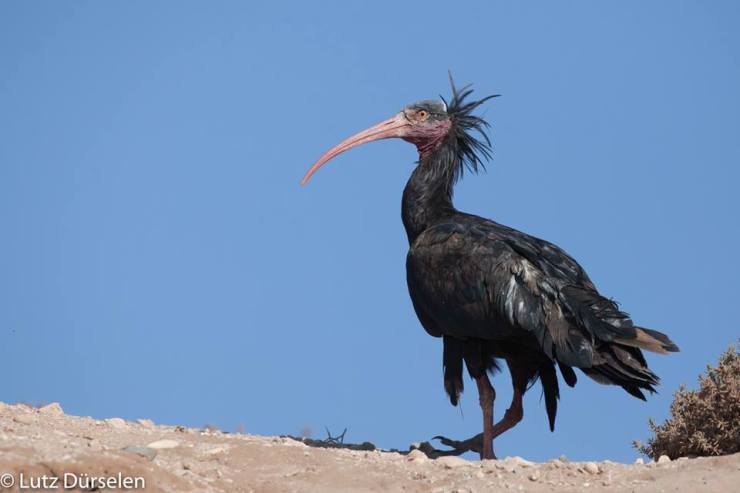
Historically the Bald Ibis was widely distributed in Syria but it was considered extinct by the 1950s, mainly as a result of overhunting. There was a hope that the birds persisted somewhere but their location remained unknown until April 2002 when seven birds were found nesting on cliffs near the celebrated ancient city of Palmyra, in the middle of the Syrian Desert. By 2010 the total population had fallen to just three birds. As it stands, it is impossible to ensure adequate protection for these bizarre-looking but interesting birds, which is frankly tragic. Conservationists are currently looking at ways in which human intervention might help. This situation is replicated across much of Syria, which was once rich in wildlife. This situation was to change dramatically with the advent of motorised transport and improved firearms. Suddenly the desert became less remote, and even the swiftest of animals were incapable of outrunning a car. Today the Syrian Desert is largely devoid of large mammals. The trapping and shooting of birds is a problem across much of the Middle East and the Mediterranean. For instance, the ‘fig-birds’ are trapped in their thousands, while on their migrating route and sold for the table at the markets. Improved environmental awareness could reduce the death toll, but who will undertake such a Herculean task?
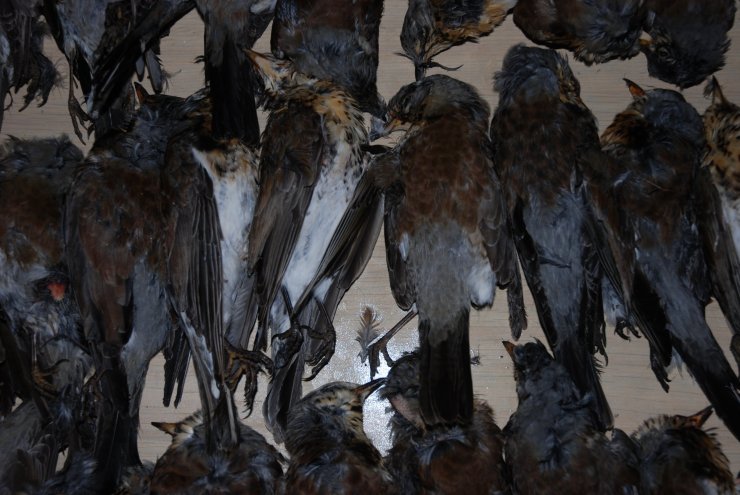
As the recent civil war has devastated a large part of Syria and caused the death of thousands of people, and the refugee camps are full of desperate, frightened children, is it reasonable to expect that those left bereft of everything will care what is happening to the Syrian wildlife?


 naturetails
Such magnificent photos.
LikeLike
Thank you, Sadje, for your kind comment! Greatly appreciated!
Joanna
LikeLiked by 1 person
You’re most welcome 🙏🏼
LikeLike
Fascinating overview and pictures, Joanna. The wildlife is incredible.
LikeLiked by 1 person
Thank you, Pat, for your kind comments! Indeed, the wildlife of this part of the world is special and worth protecting!
Joanna
LikeLiked by 1 person
Thak you!
Joanna
LikeLiked by 1 person
Thanks for the introduction to Wadi Rum. Wikipedia says of it: “Wadi Rum is one of Jordan’s most popular tourist sites, attracting 162,000 tourists in 2017. Wadi Rum is home to the Zalabieh tribe, who developed eco-adventure tourism and services throughout the protected area. Using local guides and services brings many benefits to the protected area. In particular, it enables people to continue earning a living from the land and helps to ensure that the protected area remains protected.”
LikeLiked by 1 person
Thank you, Steve, for your kind impute to my post! Only time will tell if protection works…
Joanna
LikeLike
Complete agreement on that, Joanna.
LikeLike
🩷🩷🩷
LikeLike
Thank you, Pat!
Joanna
LikeLiked by 1 person
Wonderful, informative essay. This is a part of the world I’ll never see in person. Thanks for bringing it alive.
LikeLiked by 4 people
Thank you, Neil, for your wonderful comment! Your words are much appreciated!
Joanna
LikeLiked by 1 person
Amazing choice of photographs Joanna! I really love the cave paintings, and the ibex seems to be a subject!
LikeLiked by 1 person
Thank you, Dorothy, for your kind comments! Yes, the wildlife of all deserts is fascinating! More posts on deserts will follow.
Joanna
LikeLiked by 1 person
It’s amazing how they adapted to such harsh weather.
LikeLike
Thank you, GP, for your kind comment! They don’t have a choice, either adapt or perish. This is our future too!
Joanna
LikeLiked by 1 person
I’m afraid humans feel these days that they can have the life they want, someone else will have to do the changing.
LikeLike
They will soon find out that this is our destiny!
Joanna
LikeLiked by 1 person
The diversity of wildlife is fascinating. Each creature adapting in different ways to their environment until the arrival of mankind. Only there is nothing very kind about our species. Of course there are many who care deeply for Nature, for the planet and for all those wonderful animals and they do good work thought I don’t wonder that they must be disheartened at times. I have long supported the Snow Leopard Conservancy and they are having some success working with the people whose animals are predated, similar to what you describe in Wadi Rum.
That film, Lawrence of Arabia is stunning. My brother took me to see it in London, on a huge screen. I shall always remember it as something very special. Thank you for reminding me and for another lovely post!
LikeLike
Thank you, Carolyn, for your wonderful comments! The future of the wildlife in many deserts is precarious, and it is heat braking! Still, I can only hope that those of us who care will succeed in our efforts.
Old classics are unforgettable!
Thank you, Carolyn, for your thoughts, they are much appreciated!
Joanna
LikeLike
💛
LikeLike
Thank you for your lovely comment! I am glad that you liked it!
Joanna
LikeLike
WOW Joanna, these are some amazing, fascinating, cute and majestic creatures. The landscape is indeed mesmerizing. I have never heard of a Hyrax. They are so adorable. It’s so sad that war can change the landscape and life in such an extreme and tragic way. But this tribute to the wildlife in the Middle East and our responsibility around the world to contribute to the conservation efforts to protect our endangered species (including humans!). This is a great read my friend. Great research! 🦔🦙🦅🦇🦉
LikeLike
I know that I will never visit the landscape that is a desert but there is something there that draws me to find out more. Desert brings words to mind, like barren or empty, but of course they are not these things, if anything they are full of life! And yet, the desert offered a stillness where the Desert Fathers & Mothers found peace of mind to contemplate. 🙏🤗🙋♂️
LikeLiked by 1 person
Thank you, Ashley, for your wonderful comments! You have rightly pinpointed that it was a desert used for solitude, thinking, and meditating by many greats in history of mankind.
Many more interesting posts about the deserts and its wildlife to follow.
Joanna
LikeLiked by 1 person
I always need to find some quality time to read your posts Joanna, and this is the reason why. I’ve never travelled to either of these areas, but at least you’ve given us a wonderful account of what these desert areas are like.
Telling us how so much wildlife has occupied both the Wadi Rum and the Syrian Desert, I have to say that it saddens me to see how so many species have declined – and it’s not even because of climate change. Years ago, I used to subscribe to the National Geographic magazine but I had to stop buying it because the articles were so depressing at times.
Having said that, I don’t find your posts at all depressing, because in amongst the inevitable negatives of the modern world, you always find a way of giving us hope – and that picture of sleeping under the starts says it all.
LikeLiked by 1 person
Thank you so much, Malc, for your wonderful and uplifting comments! We have to find hope, Malc, because without it, there is no life. There are many people involved in saving the creatures so pressures to our planet, and they will succeed at least in some cases if not in all.
Thank you, Malc, for your wise thoughts!
Joanna
LikeLiked by 1 person
You’re right Joanna. There are some fantastic people doing lots of fantastic things out there.
LikeLike
Yes!!
Joanna x
LikeLiked by 1 person
Thank you, dear Joanna, for one more captivating post on deserts, and this time on Wadi Rum and Syrian Desert. Wadi Rum is also known as the Valley of the Moon probably due to its visibility from the moon, as you said.
The geological wonders of Wadi Rum, carved into sandstone and granite rock, piqued my interest. Your vivid description of the 40-million-year-old Great Rift, stretching 6500 kms, along with the accompanying video, creates a mesmerising virtual geological excursion for me. The ancient human and wildlife presence, including birds and mammals, adds another layer of fascination.
The mention of Raven’s meat reminds us that sometimes embracing a bit of “bad” can be beneficial. Your desert narratives prompt contemplation about the creator of such diverse landscapes, flora and fauna, fostering a belief in a supreme being controlling everything.
Concerns about mammal scenes, hunting, and resultant extinction is troubling, but it’s good to know that a large area has now been protected.
The impact of overhunting, leading to the appalling extinction of animals like the Ibis in the Syrian Desert, shows the endless nature of human greed.
Thanks again, Joanna, for yet another engaging post enriched with relevant pictures and videos.
LikeLiked by 2 people
Thank you Joanna for yet another interesting and fact packed post on the world’s deserts. Nature is resilient and, hopefully, will manage to adapt in many instances to accommodate man’s stupidity. Sadly, some species are unlikely to survive.
LikeLiked by 3 people
Thank you, Kaushal, for your wonderfully analytical comments! If I could, I would love to see Petra, the wonder of the world! I do hope that we manage to save most of the creatures living in various deserts as they are a precious link with our past. There are a few more interesting deserts and the wildlife posts, and you will like them, I am sure!
Thank you again, Kaushal, for your time and kind words, it means a great lot to me!
Joanna
LikeLiked by 1 person
Thank you, Peter, for your kind comments! I very much hope so too! Our unique nature is priceless!
Thank you again, Peter, your time and wise thoughts are greatly appreciated!
Joanna
LikeLiked by 1 person
It’s always a pleasure to read your posts, that too, in rapt attention. You’re welcome, Joanna!
LikeLike
Thank you, Kaushal! You are always welcome!
Joanna
LikeLiked by 1 person
Lovely celebration of this wildlife!
LikeLiked by 1 person
Thank you, Layla, for your kind comment! Much appreciated!
Joanna
LikeLiked by 1 person
A wonderful tribute to this incredible wildlife, Joanna. The photos are stunning!
LikeLiked by 1 person
Thank you, Lauren, for your kind comments! There are a few more posts about the wildlife in the deserts, and while diverse, all creatures are extraordinary in their beauty.
Thank you again, Lauren!
Joanna
LikeLiked by 1 person
I agree with you, Joanna. All creatures are beautiful!
LikeLike
Thank you, Lauren!
Joanna
LikeLiked by 1 person
Thank you for another amazing article, Joanna! 🧡🧡🧡🧡
LikeLiked by 2 people
Thank you, Filipa, for your lovely comments! Greatly appreciated!!
Joanna x
LikeLiked by 1 person
I love your work!
LikeLike
Thank you, Filipa, you are very kind!!
Joanna xx
LikeLiked by 1 person
Another show stopper, Joanna! Wadi Rum is such an amazing place. The animals and terrain are wonderful. I LOVE how each desert has it’s own gifts. The pink bird is amazing and those horns are unbelievable on the Nubian Ibex!!! Thanks my friend❣️
LikeLike
Thank you, Cindy, for your wonderful comment! I think this series illustrate the best the amazing diversity and beauty of nature on our unique planet!
Thank you again, Cindy, for your time and kind words, all greatly appreciated!
Joanna x
LikeLike
Oh Joanna, i wasn’t expecting such a stop to a magnificent essay that to me looked like i was wandering in an Abbas Kirostami movie. Your humour is contagious you know. I can actually sense it in your sentences without exclamations.
And many years ago i did watch Lawrence of Arabia and its landscape, the cinematography is the only thing that i remember even now. Beautiful birds and extraordinary words on one of the most challanging issues amongst a challenging world order today. This one was a short or it looked like to me, crispier and to that point of no return article. Lovely.
LikeLiked by 1 person
Thank you, Narayan, for your beautiful reflexions and comments about the wildlife and the desert in my last week’s post. I thought you will like it because it is like the interesting places on your bucket list that you wanted to see. And Petra is so extraordinary that I am often told it is a must visit in one’s lifetime.
The film “Lawrence of Arabia”, now classic, seems to be seen by everybody, and its landscape indeed stays in memory forever, and one more reason to one day be there.
Thank you for your mention of my sense of humour, especially as we share one, and find the same things amusing. There are a few more posts following his one, about the wildlife of he deserts, and you will like the diversity and beauty of nature in all of them.
There are efforts being made to save and protect as much of the wildlife as possible and I hope that will be continued forever.
Desert is also the most suitable place to find inner peace, solitude, to pray, think and meditate, especially if one lives in a busy city.
Thank you again, Narayan, for your time and kind words,
Joanna
LikeLiked by 1 person