“Bailéro (Shepherd’s song of Auvergne hills) – Chants d’Auvergne” by Marie-Joseph Canteloube, performed by María Bayo and Orquesta Sinfonica de Tenerife (courtesy of J P Pedroso):
“The intuitive mind is a sacred gift,
And the rational mind is a faithful servant.
We have created a society that honors
The servant and has forgotten the gift.”
Albert Einstein
“Intermezzo” from “Cavalleria Rusticana” by Pietro Mascagni, performed by Hauser and the London Symphony Orchestra (courtesy of Hauser):
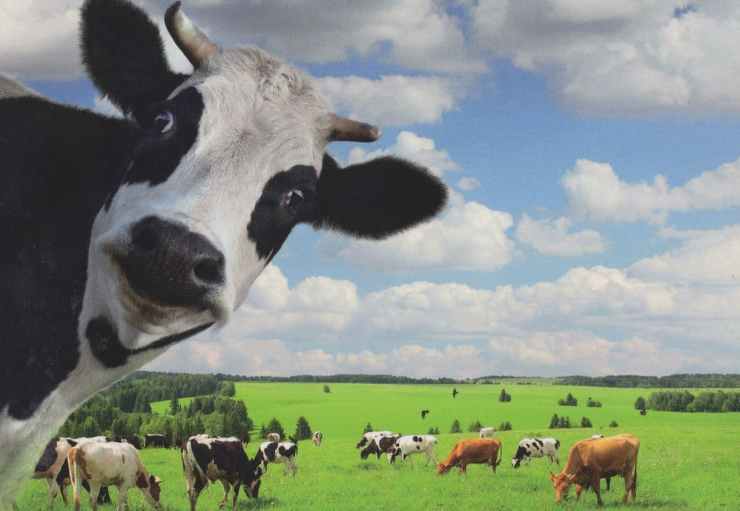
In this week’s post you will find everything you didn’t know about the secret life of cows. It will make you smile – become happier in just five minutes! I can recommend a beguiling book “The Secret Life of Cows” by Rosamund Young.
Courtesy of BBC Reel:
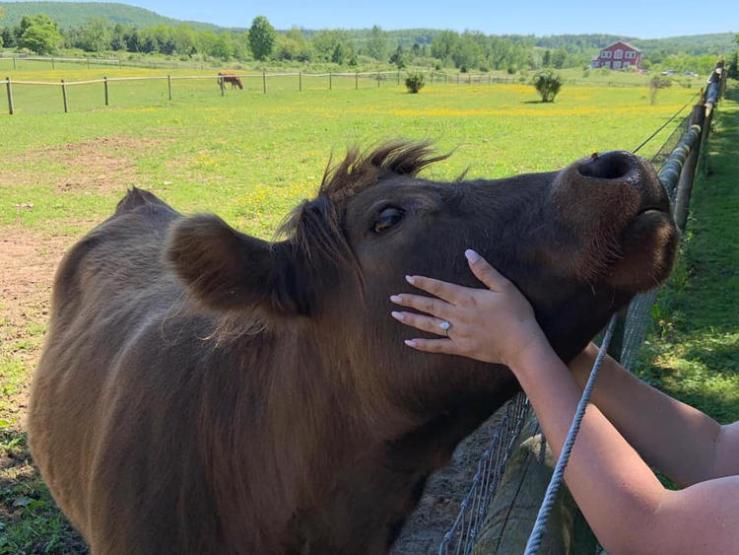
It has been reported that there is a new bizarre (not to me!) practice of cow hugging. Of course, it was invented as a result of the pandemic. As we were forbidden from cuddling other human beings, we began to look for comfort elsewhere. In Holland, where the practice originated, they call cow hugging “Koe knuffelen.” In the US, farms are charging anything up to $75 per cow-hugging hour.

At the Mountain Farm in New York (shown above), visitors pay to hug cows called Bella and Bonnie.
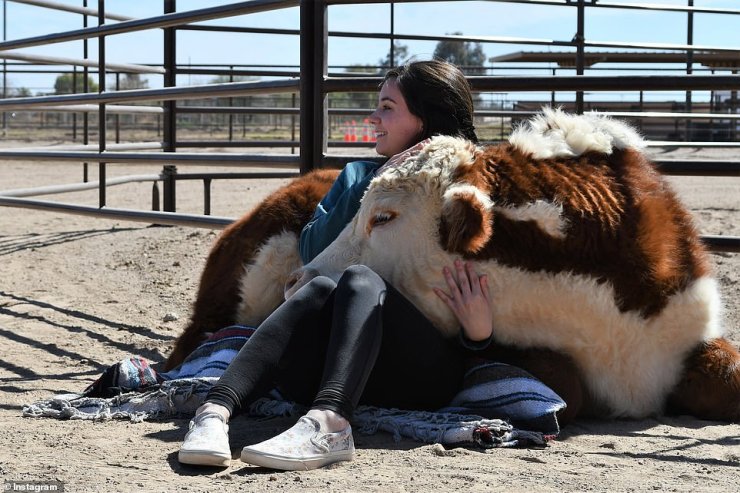
Aimee’s Farm Animal Sanctuary in Queen Creek, Arizona, also reported a boom. Owner Aimee told a reporter from the Washington Post that her nine cows, among them Moonicorn, who has only one eye and one horn, all love being cuddled by strangers. One visitor, Renee Behinfar, said that she cried when Sammy the cow lay her head in her lap and fell asleep. I suspect that I might cry too, if a 1,300 lb cow decided to have a nap on top of me, but Ms Behinfar insisted that hers were only tears of gratitude.
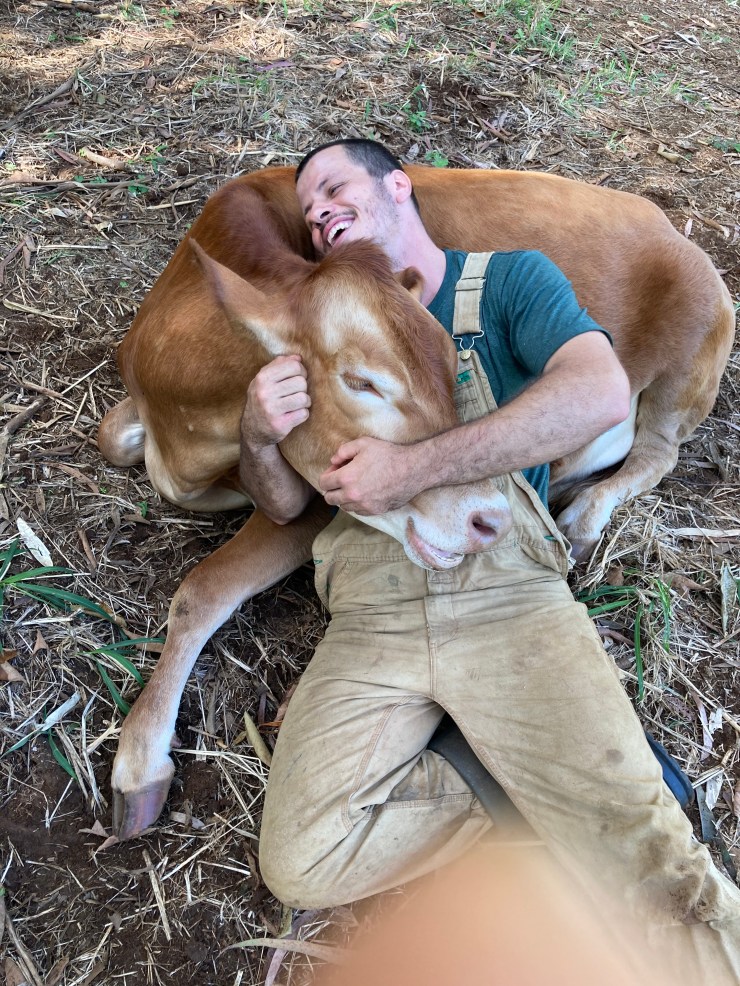
Scientifically, there are all sorts of biological reasons why cow hugging is good for us. It promotes positivity by boosting oxytocin, the hormone released in social bonding.
Courtesy of Kinder World:
I have empathy with all animals but unusually with cows which stems from my earlier experience when I was 15 years old. During my summer holidays, I would travel to a farm situated on top of a mountain and stay there for a few weeks every year. I loved to travel on the open carriage of the goods steam train because I could sit on the floor of an open platform and watch the passing landscape, while listening to the soothing sound of the steam and the wheels singing in unison.
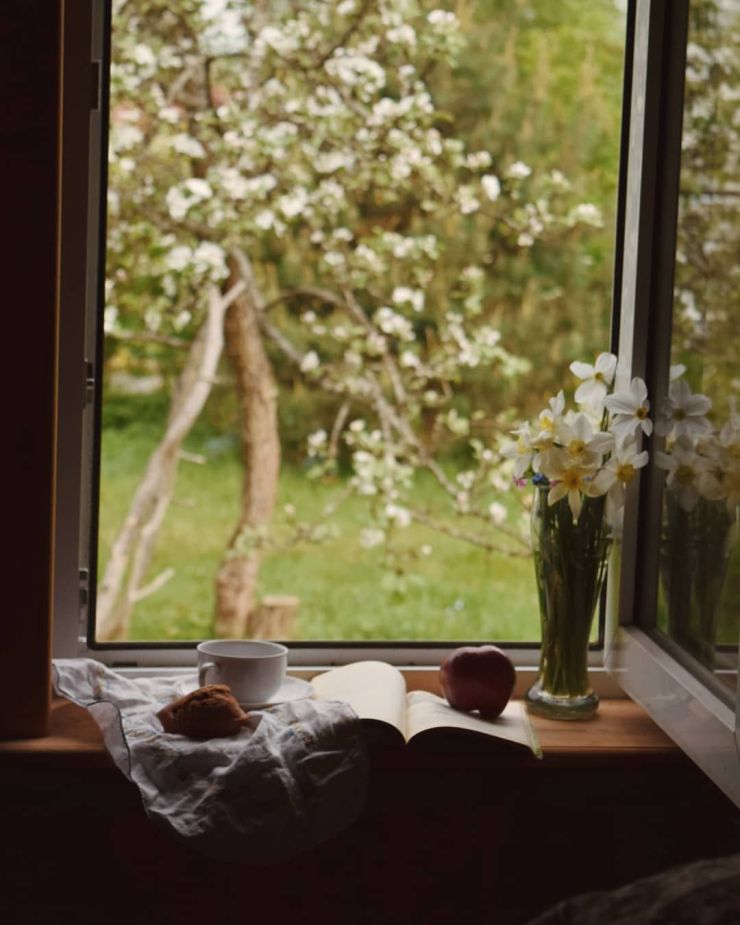
The farmers, long-time friends, knew that first thing in the morning after arrival, I would take all the cows to their grazing field, and then clean up their shed. It meant washing the walls and the floor thoroughly, wiping it dry, and filling it with fresh straw. The cows would come back for milking and to the clean, straw-smelling shed. They slept well that night. I slept very well too, happily tired, and in the most comfortable bed, I have ever known. It was a big wooden bed with all the pillows and eiderdown so light and fluffy, you just wouldn’t know that they were there if you didn’t see them. There were the freshness and the faint scent of wood as the house was built of wood, although you would not realise this as the walls were rendered and painted white. The house was large and spacious, and my bedroom had the additional pleasure for me – the branches of an apple tree filling the open window.
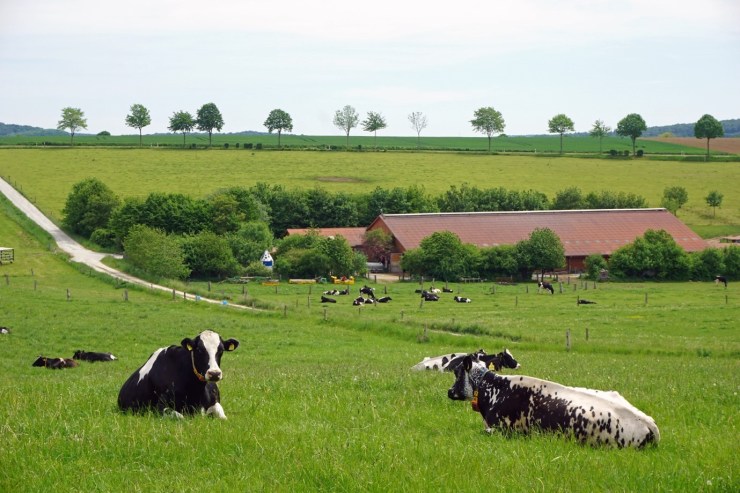
During my stay, I learned many things about cows’ personalities, intelligence, and memory. At the farm, the cows had space and liberty, and because of this, their response was to reveal their true and lovely nature. It was obvious that they responded better because they were well looked after. I instinctively knew already that animals deserve our care, respect, and understanding, and I wasn’t surprised that the cows recognised this, and I was never hurt by anyone of them.
“Myfanwy” by Joseph Parry, performed by Sheku Kanney-Mason:
In one of my posts, I wrote about a herd of elephants who remembered the man who saved them from being killed and would come back to the compound every year on the anniversary of his death to mourn him in silence. During my holiday stay, I would witness amazing examples of my cows’ logical, practical intelligence. The point I am making here is that animals living alongside us should be regarded as sentient creatures and not some inadequate servants of human beings.

One of the things that I have noticed during my weeks of observing the cows, was that if they were given the opportunity to be able to choose what to do during the day, for instance – staying outside or coming in for shelter, or walking on grass or straw or concrete, or a choice of their food – they would always know and choose what was the best for them. Cows are as varied in temperament and intelligence as people. Some can be highly intelligent, friendly, considerate, docile, inventive, and proud, others could be not so, the main thing is to treat them as individuals.
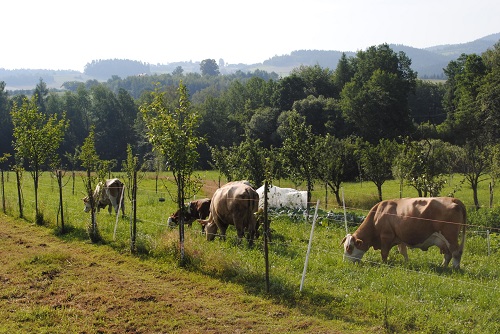
It is a well-documented fact that animals kept in cramped unfriendly conditions, and without the ability to move freely, would be badly affected in their development and behaviour. Stress can affect animals as well as humans, with similar consequences. The most important is that stress hormones reduce the efficiency of the immune system, which compromises the natural ability to resist parasitic infections.
“Scarborough Fair (Instrumental)” (courtesy of Crysantheme1):
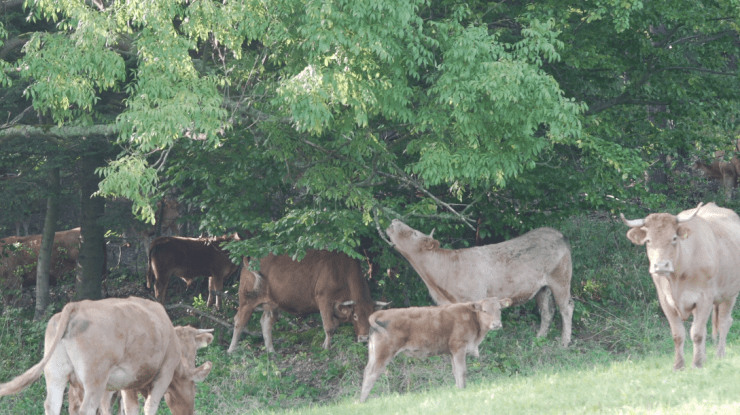
Cows regularly seek out plants they sense they need. They pick up blackberries, various leaves – hawthorn or willow, herbs – wild thyme and sorrel, even stinging nettles. But cows’ particular favourites are apples.

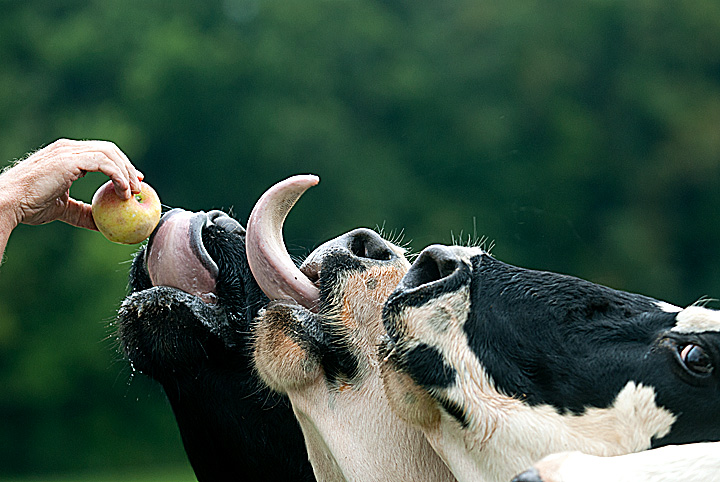
Many people assume that animals have no feelings, and they couldn’t be more wrong. It is enough to see the way cows respond to being cuddled even by strangers, let alone people they know and like. They like the companionship of other cows too and, they love their calves like we love our children.

Being so intelligent, cows can work out what to do in many circumstances and are capable to ask for help when it is needed. The companionship is very much evident between cows and sheep. When writing about many aspects of cows’ personalities I have to mention their language of communication. Cows moo for various reasons: fear, disbelief, anger, hunger, or distress. Often, when it is a question, it would be a stare, followed by a quiet moo.
It was reported that the cows who have sustained an injury will eat a large amount of willow tree leaves to relieve the discomfort. We know that origin of aspirin came from the willow tree. They will eat the leaves for as many days as they need and then they stop. Another proof, if one was even needed, how intelligent cows are. Those who live with cows will confirm that part of their communication skills is the use of stare. By persistent staring at the person whose attention they want to attract, they get the reward, it could be food, especially apples, or some help with a problem in the field.
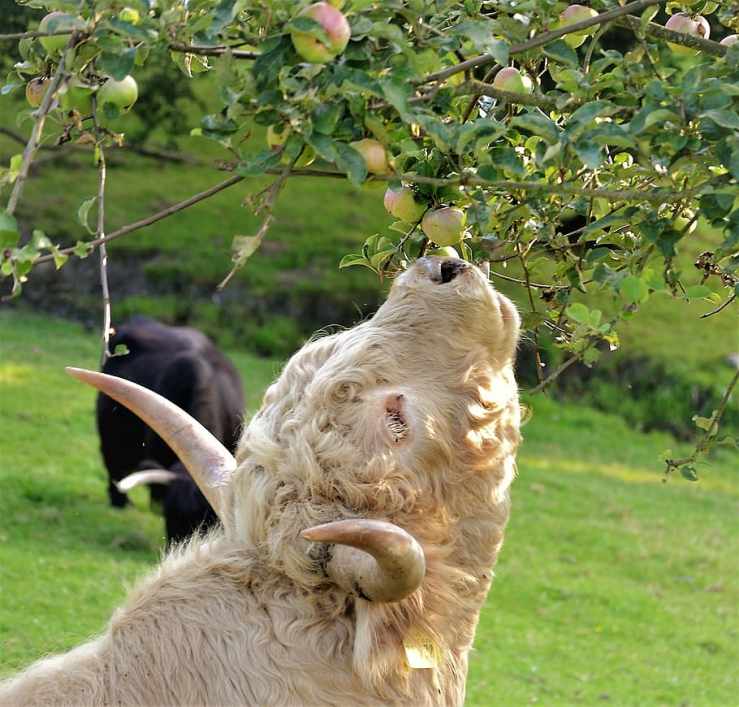
I have mentioned before that cows have a very good memory; they remember us as individuals, and that includes our faces. It is accurate as they notice our height, the way we walk, and even our voice. I noticed the same thing with all the wildlife in my garden, there even wasps and bumblebees come and ‘talk’ to me, not only as a greeting but when they need more sugar on the plate I provide for them in late summer. And, no I am not on ‘something’ or hallucinating, this is a fact, just ask Dr Dolittle. I am joking but only about the doctor, not about my close friendship with my wildlife. But back to the wonderful creatures, that the cows are. They recognised me, even after not seeing me for a year, and remembered that I would clean their house better than anyone else.

“Chasing Sheep Is Best Left To Shepherds” by Michael Nyman:
As sheep are good companions to cows, I need to say that they too have accurate memory. It might seem to be an unnecessary thing to say that all animals respond to kindness, but as not all humans do (“No good deed goes unpunished”, Oscar Wilde), I can, from my experience, vouch for that kindness to any creature is returned tenfold. This is why cuddling is so much appreciated by cows. It is useful to always have a small brush to hand to do some grooming during this bonding session, it will be appreciated. Cows are not colour blind, so they recognise their young among many by looking for the one that, firstly, is the same colour, then on close inspection use their sense of smell. Their sense of smell is used in many ways in their daily life, but one thing is certain – cows don’t like anyone wearing perfume. The subtle changes in head movement, the tightening of the neck muscles, or relaxing, all are significant signs of the cow’s mood or intentions. Head is used in their communication to greet, accept, and recognise another, a new member of their group.

Please allow me to digress and finish on another positive benefit. Scientists proved that listening to birds singing or chirping not only boosted physical health but also mental wellbeing. Birdsong can have striking health advantages by combating stress and annoyance. The research looked at recordings from 251 sites across 66 US national parks and found that tuning into nature can decrease pain, improve mood and enhance cognitive performance. One of the scientists, Dr Rachel Buxton said: “The pandemic has emphasised the importance of nature for human health. As traffic has declined during quarantine, many people have connected with soundscapes in a whole new way, noticing the relaxing sounds of birds. How remarkable that these sounds are also good for our health. These sounds are beautiful. They deserve our protection.” The findings were published in the journal Proceedings of the National Academy of Sciences.

I keep my Alexa switched on with a camera showing the back garden, and the sound of birds singing is so enjoyable that my writing seems to flow, and that is why so many readers like it!

“In Paradisum” from “Requiem” Opus 48 VII. by Gabriel Fauré, performed by Choir of King’s College, Cambridge (courtesy of KingsCollegeChoir):

 naturetails
Gem of a post once again , Joanna 👌This time on the Holi cow which are considered akin to mothers in India and are like our family members! Thank you so much for sharing such a great essay on cows🙏
LikeLiked by 1 person
Thank you, Dhirendra, for your beautiful comments! Your words are greatly appreciated!
Joanna
LikeLiked by 1 person
They’re so adorable! 🐮Thank you for sharing this, Joanna.
LikeLike
Thank you, Adel, for your beautiful comments! I agree with you, and your words are greatly appreciated!
Joanna
LikeLiked by 1 person
My pleasure , Joanna 🙏🙏
LikeLike
Thank you again, Dhirendra!
Joanna
LikeLiked by 1 person
Namastey 🙏
LikeLike
You are most welcome, Joanna.
LikeLike
I love the cows which are terms of endearment in our family❣️ what lovely videos and information you shared. I have a client that got a major infection from the cow licking her so I’d stick to hugging. xo ❤️
LikeLike
Interesting cow-hugging ‘therapy’ … and at $75 per cow-hugging hour! One should not take hugging one’s dog or cat for granted! Or even hugging a tree!
LikeLiked by 1 person
Thank you, Chen Song Ping, for your interesting comments! And you are right, nothing in this life can be taken for granted, perhaps with the exception of taxes!
Your thoughts are greatly appreciated!
Joanna
LikeLike
I must say what a moo-ving post 😂 The bond you share with the cows is truly admirable.
TBH I couldn’t help but reflect on the importance of our connection with nature after reading this.
LikeLike
Thank you, Ritish, for your witty and inspiring comments!
I am glad that your thoughts turned to nature, the essence of importance on our planet.
Thank you, Ritish, again, your reflections are greatly appreciated!
Joanna
LikeLike