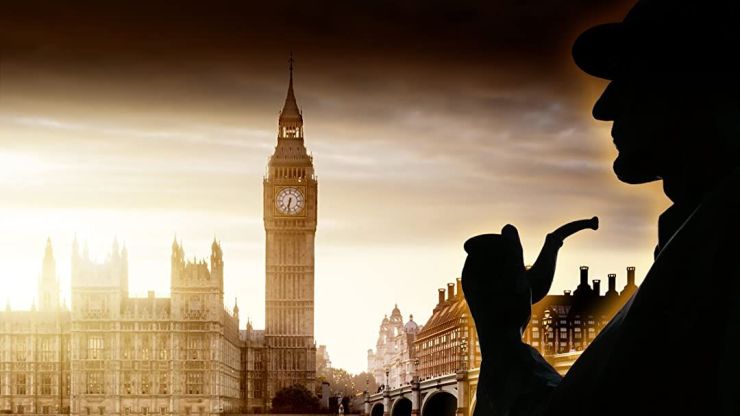

“The most dangerous condition for a man or a nation
is when his intellectual side is more developed than his spiritual.”
Arthur Conan Doyle
“The Logical Song” by Supertramp (courtesy of Cruz De Ferro Motoclube Brasil):
“Life is actually a series of encounters
in which one event may change those
that follow in a wholly unpredictable,
even devastating way.”
from Jurassic Park

“Dance of the Knights” from “Romeo and Juliet” by Sergei Prokofiev, performed by Gautier Capuçon, Jérome Ducros, and Orchestre Lamoureux:
SIR ARTHUR CONAN DOYLE
22 May 1859 – 7 July 1930

Courtesy of Oxford Digital Media:
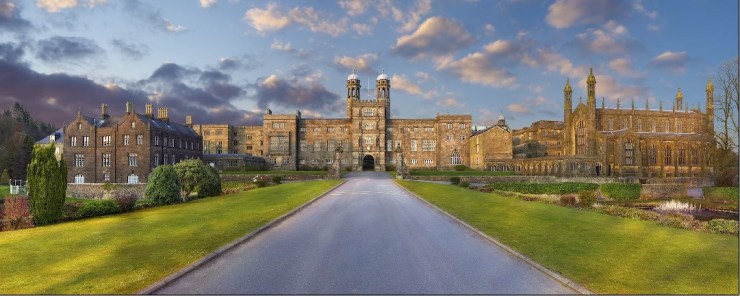
Arthur Conan Doyle was born in 1859 in Edinburgh and educated at Stonyhurst College and Edinburgh University. He qualified as a doctor and had a practice in Southsea, Portsmouth.
Stonyhurst College
Courtesy of BBC Studios:
Edinburgh University

The success of his creation, the detective, Sherlock Holmes, enabled Conan Doyle to abandon his career as a doctor to live by his pen; his ambition to make his literary reputation by writing historical novels rather than tales of detection was, however, rejected by readers as well as publishers, who demanded to read more of the stories about the eccentric detective whose genius has held readers in thrall for more than a century now.
“Discombobulate” by Hans Zimmer (courtesy of kia4465):
Courtesy of TED-Ed:
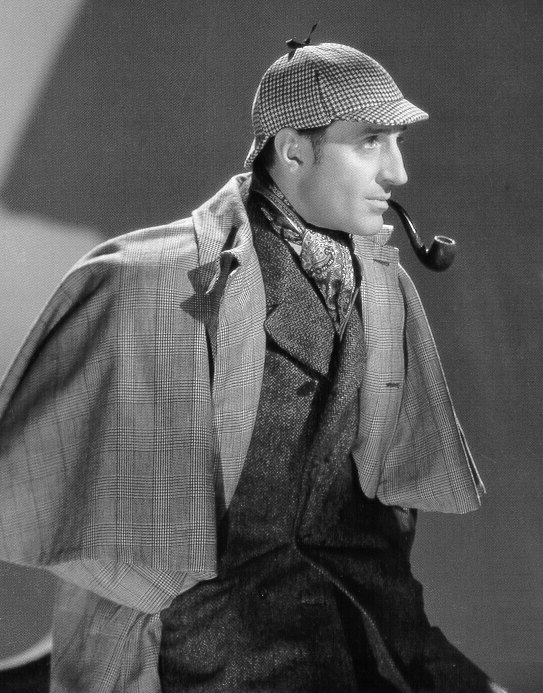
It would be hard to name another modern literary character who has achieved such international celebrity. Sherlock Holmes’ several intriguing qualities are immediately apparent: the excitable intellect, the passion for scientific inquiry, the preternatural skill at quickly interpreting, in revelatory detail, evidence that is in plain sight but invisible to everyone else.

“Violin Concerto in D Major, Op. 77: II. Adagio” by Johannes Brahms, performed by Frank Peter Zimmermann and Berliner Philharmoniker:
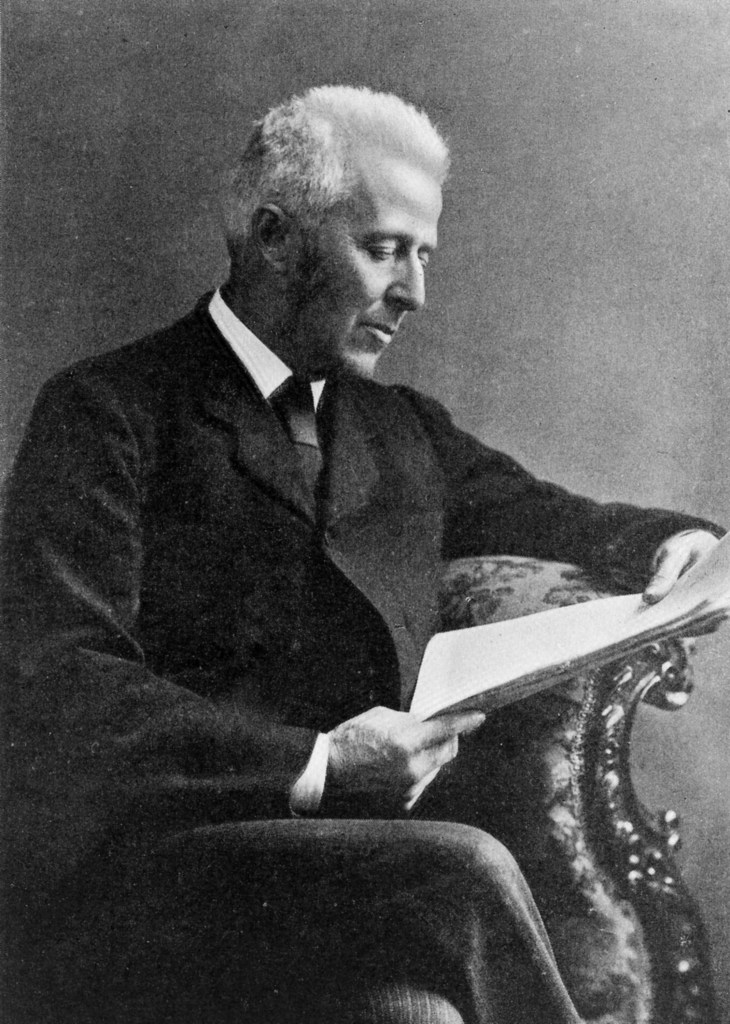
Conan Doyle’s conception of a scientific, rationally deductive detective was based in part upon Dr Joseph Bell, a professor with whom the author had studied during his medical education at the University of Edinburgh. “He was a very skilful surgeon,” Conan Doyle wrote in his autobiography, “but his strong point was a diagnosis, not only of disease but of occupation and character.”
Dr Joseph Bell
Courtesy of Royal Medical Society:
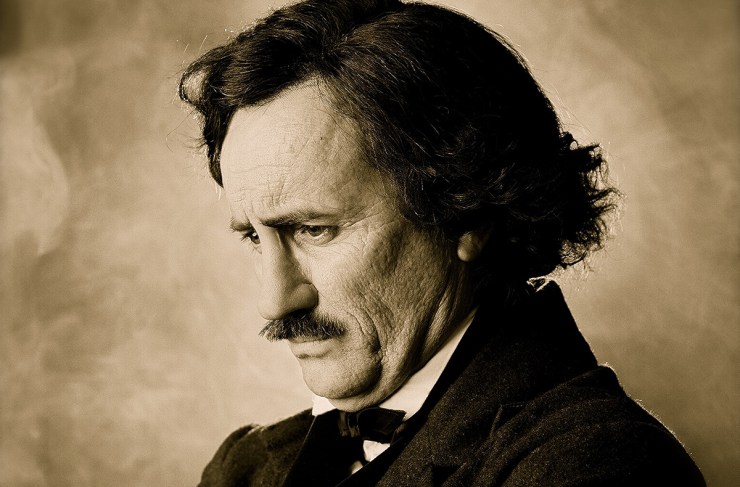
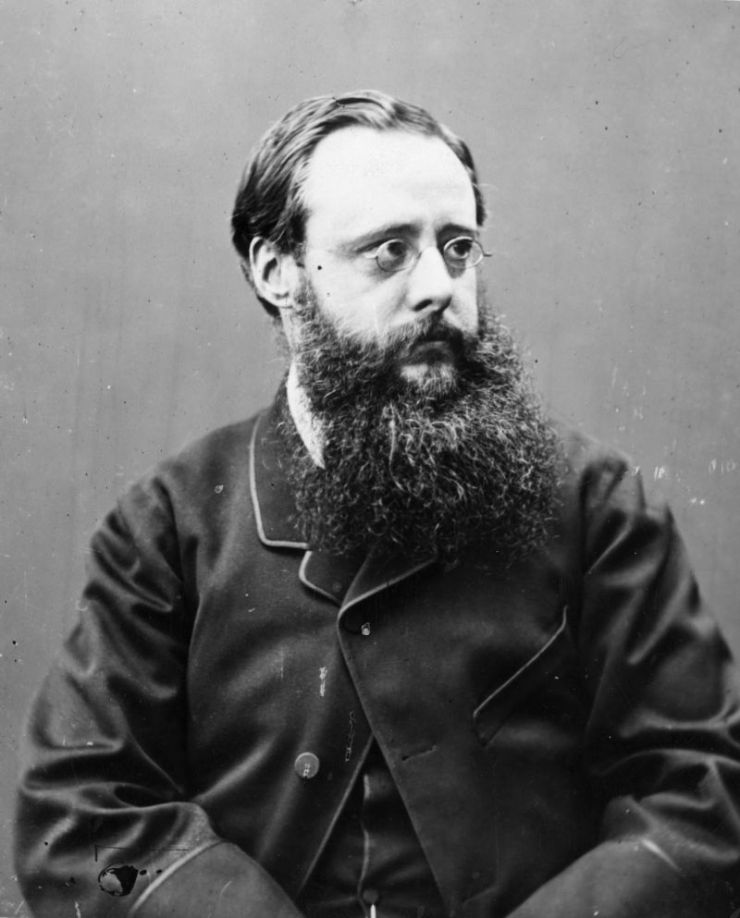
Combining Bell’s diagnostic gifts with elements drawn from the early detective tales of Edgar Allan Poe and Wilkie Collins, Conan Doyle imagined an investigator who would solve cases “on his own merits and not through the folly of the criminal.”
Edgar Allan Poe
Wilkie Collins
This was one of the reasons that perhaps for the first time in the genre, the detective himself became the focus of the reader’s fascination that was quick to take hold.

The editor of The Strand Magazine asked Dr Conan Doyle to write a few detective stories, and if the author had his way that might have been the end of Sherlock Holmes. When The Strand asked for more Holmes stories, Conan Doyle named an exorbitant price as a deterrent; to his surprise, they readily agreed to his terms. After this second set of cases had run, The Strand requested twelve more, and again the author named a price he was sure would be prohibitive. Once more the magazine happily agreed. Sherlock Holmes proved too popular to be put to rest.
“Frédéric Chopin (Variation) Nocturne in F Minor Op. 55 No. 1 for Piano, Violin, Cello” by Chad Lawson
(courtesy of Classical World • Klasik Dünya):
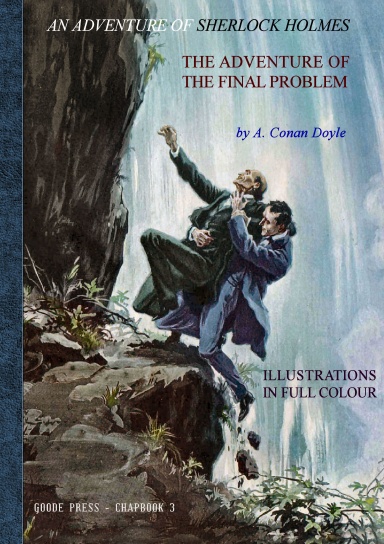
Indeed, eager to be free of his creation, Conan Doyle completed this additional Strand commission with “The Final Problem,” a story in which he seemed to kill Holmes off in an encounter with his arch-enemy. The outrage among readers was such that the author eventually reopened the Holmes casebook, producing a stream of new stories throughout the rest of his writing career.
Courtesy of Saxon Brack:

THE LOST WORLD
Doyle also wrote historical romances and his scientific novel The Lost World was the first of a series of stories to feature the cantankerous Professor Challenger. No one believes controversial scientist Professor Challenger’s story about prehistoric animals still living on a remote plateau in South America, so he takes an expedition back there to prove it.

Among the team is our narrator, the journalist, Edward Malone. What they find in the furthest stretches of the River Amazon is shocking, terrifying, and life-threatening. Will they all survive their trip back in time?


The tension in Conan Doyle’s fascinating adventure builds slowly, and he describes in detail the flora and fauna the team encounters along the way. His basic idea has inspired many other novels and films over the years, including Michael Crichton’s The Lost World and Steven Spielberg’s 1993 blockbuster Jurassic Park.

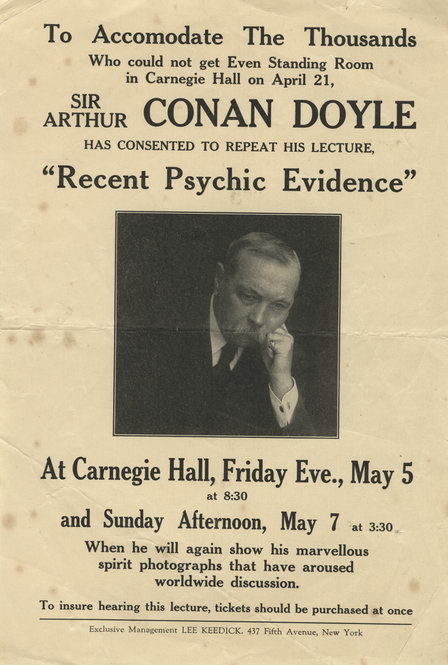
After Doyle’s son died in World War I, he devoted most of the rest of his life to the study of spiritualism and wrote several books on the subject. He died in 1930.
“Sir Arthur” by David Hicken:
An extract from The Lost World:
“Early next morning we were again afoot and found that the character of the country had changed once again. Behind us was the wall of bamboo, as definite as if marked the course of the river. In front was an open plain, sloping slightly upwards and dotted with clumps of tree-ferns, the whole curving before us until it ended in a long, whale-backed ridge. This we reached about midday, only to find a shallow valley beyond, rising once again into a gentle incline which led to a low, rounded sky-line. It was here, while we crossed the first of these hills, that an incident occurred which may or may not have been important.

Professor Challenger, who with two locals was in the van of the party, stopped suddenly and pointed excitedly to the right. As he did so we saw, at the distance of a mile or so, something which appeared to be a huge grey bird flap slowly up from the ground and skim smoothly off, flying very low and straight, until it was lost among the tree-ferns.
‘Did you see it? cried Challenger, in exultation. “Summerlee, did you see it?’
His colleague was staring at the spot where the creature had disappeared.
‘What do you claim that it was?’ he asked.
‘To the best of my belief, a pterodactyl.’
Summerlee burst into derisive laughter ‘A pter-fiddlestick!’ said he. ‘It was a stork, if ever I saw one.’

Theme from “Jurassic Park” by John Williams, conducted by John Williams and Vienna Philharmonic (courtesy of Deutsche Grammophon):

 naturetails
Thank you, Allan, for your wonderful comments! Greatly appreciated!
Joanna
LikeLiked by 1 person